Fact-checked by the SnapMessages editorial team
Quick Answer
Busy nurses on 12-hour shifts are using micro workout apps to fit in 2–5 minute exercise bursts between patient rounds. Top-rated options include Nike Training Club, 7 Minute Workout, and FitOn, each designed for zero-equipment, high-intensity intervals that boost energy and reduce musculoskeletal strain during long clinical shifts.
Micro workout apps are short-burst fitness tools that break exercise into sessions of 2 to 10 minutes, a format purpose-built for healthcare workers who rarely see a free hour. According to research published in the National Library of Medicine, even brief bouts of physical activity spread throughout the day produce measurable cardiovascular and metabolic benefits comparable to continuous exercise sessions.
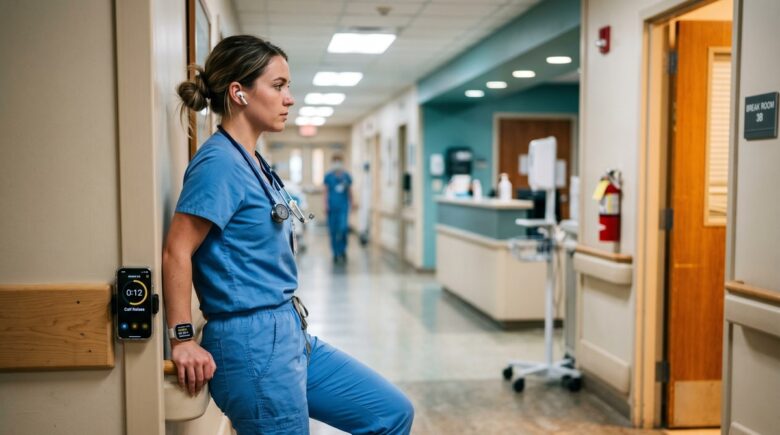
For nurses logging 12-hour shifts on their feet, the gap between wanting to stay fit and having time to exercise is vast. Micro workout apps are closing that gap, one break at a time.
Key Takeaways
- Brief activity bouts work: National Library of Medicine research confirms that short, distributed activity sessions produce cardiovascular and metabolic benefits comparable to continuous exercise.
- Nursing is a high-injury profession: The CDC’s National Institute for Occupational Safety and Health (NIOSH) identifies nursing as one of the highest-risk occupations for back and shoulder musculoskeletal injuries.
- Three 10-minute sessions match one 30-minute workout: A McMaster University study published in PLOS ONE found equivalent aerobic capacity improvements whether adults exercised in three short bouts or one continuous session.
- FitOn offers the shortest sessions on any major platform: At 5 minutes minimum, it leads competitors including 7 Minute Workout, Nike Training Club, StretchIt, and Freeletics for break-room use.
- The WHO’s 150-minute weekly target is reachable within shift hours: Three 7-minute sessions across a 12-hour shift, four days per week, totals 84 minutes toward the World Health Organization’s recommended activity threshold before any off-duty exercise is counted.
- Most nurses use only 20–30% of available app features: Activating offline downloads, custom duration filters, and wearable sync, via devices like Apple Watch, Fitbit, or Garmin, significantly improves long-term adherence.
Why Do Nurses Struggle to Exercise on Long Shifts?
Nursing is physically demanding, but walking hospital corridors does not replace structured fitness. The U.S. Bureau of Labor Statistics reports that registered nurses spend the majority of their shifts standing and walking, yet this occupational movement does little to prevent the muscle fatigue, back pain, and cardiovascular decline that accumulate over years in the profession.
The core problem is time fragmentation. A typical nurse might get one 30-minute meal break and one or two 15-minute rest breaks per shift. Traditional workout apps assume you have 45 to 60 uninterrupted minutes. That assumption fails entirely in a clinical environment.
The Physical Cost of 12-Hour Shifts
Musculoskeletal injuries are the leading cause of worker compensation claims among nurses. The CDC’s National Institute for Occupational Safety and Health (NIOSH) identifies nursing as one of the highest-risk professions for back and shoulder injuries. Micro workout apps address this directly by including targeted stretch-and-strengthen routines designed for people who stand and lift repeatedly.
Apps like StretchIt and 7 Minute Workout include nurse-relevant movements: hip flexor releases, thoracic rotations, and calf raises, all executable in a supply room or break area.
Key Takeaway: Nurses face 12-hour shifts where standard 45-minute workouts are impossible. NIOSH identifies nursing as a top occupation for musculoskeletal injury, making brief, targeted micro-sessions more practical and protective than conventional gym routines.
Which Micro Workout Apps Work Best for Nurses?
The best micro workout apps for nurses share three traits: sessions under 10 minutes, zero equipment required, and offline functionality for areas with poor hospital Wi-Fi. The apps below consistently rank highest among healthcare workers for these reasons.
| App | Shortest Session | Equipment Needed | Offline Mode | Cost |
|---|---|---|---|---|
| 7 Minute Workout | 7 minutes | None | Yes | Free / $9.99/mo premium |
| FitOn | 5 minutes | None | Yes (premium) | Free / $29.99/yr |
| Nike Training Club | 15 minutes | None | Yes | Free |
| StretchIt | 5 minutes | None | No | $9.99/mo |
| Freeletics | 10 minutes | None | Yes (premium) | Free / $49.99/yr |
FitOn: The Top Pick for Break-Room Workouts
FitOn stands out because it offers structured 5-minute routines, the shortest full-workout sessions available on any major platform. Celebrity trainer Cassey Ho and fitness coaches including Danielle Pascente lead many of the routines, lending credibility to the programming. FitOn also integrates with Apple Health and Google Fit, so steps and active minutes logged during a shift count toward daily goals.
For nurses who want to track their overall wellness holistically, pairing FitOn with one of the best water tracking apps to monitor hydration during long shifts is a highly effective combination.
Key Takeaway: FitOn offers sessions as short as 5 minutes with zero equipment, making it the most nurse-compatible wellness app for break-room use. It syncs with Apple Health and Google Fit to consolidate daily movement data automatically.
Does the Science Actually Support Micro Workouts?
Yes, and the evidence is stronger than most people expect. A landmark study from McMaster University, published in PLOS ONE, found that three 10-minute exercise sessions per day produced equivalent aerobic capacity improvements to one 30-minute continuous session in previously sedentary adults.
A 2021 systematic review in the National Library of Medicine confirmed that “exercise snacks”, bouts of activity lasting 1 to 10 minutes, significantly improve cardiorespiratory fitness, blood glucose regulation, and mood when performed consistently throughout the day.
According to research published in PLOS ONE by McMaster University’s kinesiology department, accumulating physical activity in short bouts throughout the day is not a compromise. For shift workers whose schedules make continuous exercise impractical, it is a legitimate and effective strategy for improving health outcomes.
For nurses, the psychological benefit matters just as much. Short wins during a grueling shift maintain motivation and reduce burnout perception. Nurses who build small physical rituals, a 5-minute stretch after a difficult patient interaction, for instance, report lower end-of-shift fatigue scores.
Key Takeaway: Research from McMaster University shows that three 10-minute daily micro-sessions match the aerobic benefits of a single 30-minute workout. For shift workers, exercise snacks are a validated, not merely convenient, fitness strategy.
How Do Nurses Actually Schedule Micro Workouts Into a Shift?
Timing is the hardest part. The most effective approach treats micro workouts like medication administration: scheduled, not spontaneous. Nurses who succeed with micro workout apps use a consistent 3-point structure within each shift.
- Pre-shift (5 minutes): A dynamic warm-up including hip circles, arm swings, and leg swings before the shift begins. Apps like Nike Training Club offer dedicated pre-activity warm-up modules.
- Mid-shift break (7 minutes): A targeted strength or cardio burst using 7 Minute Workout or FitOn. Air squats, wall sits, and push-ups require no equipment and minimal space.
- Post-shift cooldown (5 minutes): A stretching and breathing routine. StretchIt offers clinician-focused routines targeting the lower back, hips, and shoulders, the three sites most stressed in nursing work.
Notification scheduling is critical. Most micro workout apps allow custom reminder alerts. Setting a push notification for the 30-minute mark of a break prompts action before the break disappears. The mechanics behind how those alerts actually reach your phone are explained well in this breakdown of how push notifications work behind the scenes.
Consistency over intensity is the governing principle. The World Health Organization recommends adults accumulate at least 150 minutes of moderate-intensity activity per week. Three 7-minute sessions across a 12-hour shift, four days per week, totals 84 minutes, more than halfway to that target before any off-duty exercise is counted.
Key Takeaway: A 3-point shift structure, 5-minute warm-up, 7-minute mid-shift burst, 5-minute cooldown, lets nurses accumulate fitness within hospital hours. The WHO’s 150-minute weekly target becomes achievable without a single gym visit.
How Can Nurses Get the Most From Micro Workout App Features?
Most nurses use only 20–30% of available features in fitness apps. Unlocking the right settings dramatically improves adherence for shift workers specifically.
Features Worth Activating
- Custom workout length filters: FitOn and Nike Training Club both allow filtering by duration. Set the maximum to 10 minutes so you never scroll past relevant content.
- Offline downloads: Hospital Wi-Fi is unreliable. Download weekly routines at home. Freeletics and Nike Training Club both support full offline playback on downloaded sessions.
- Integration with wearables: Syncing with a Fitbit, Apple Watch, or Garmin device lets the app log activity automatically, even when you forget to open it manually.
- Rest-day routines: After consecutive shifts, recovery matters. StretchIt’s “recovery” category and FitOn’s yoga flows serve double duty as active rest and stress relief.
Productivity habits translate well here. Nurses who already automate other phone tasks, as described in this guide on automating repetitive tasks with iPhone Shortcuts, can set Shortcuts to open their workout app automatically at break time. That removes one decision from an already cognitively loaded shift.
Journaling progress also reinforces habit formation. Apps like Bearable let nurses log energy, pain levels, and mood alongside workout completion. Paired with one of the best journaling apps for daily reflection, this creates a full picture of how micro workouts affect shift performance over time.
Key Takeaway: Nurses who activate offline downloads, set custom 10-minute duration filters, and sync with wearables use micro workout apps far more consistently. Pairing apps with iPhone Shortcuts automation removes friction and makes break-time exercise nearly automatic.
Frequently Asked Questions
What are the best micro workout apps for nurses with no equipment?
FitOn, 7 Minute Workout, and Nike Training Club are the top three options for zero-equipment micro workouts. All three offer sessions under 10 minutes, include bodyweight-only routines, and work without a gym or props. FitOn’s 5-minute sessions are the shortest available on a major platform.
Do micro workouts actually help with back pain from nursing?
Yes, when the routines target hip flexors, glutes, and thoracic mobility. Apps like StretchIt offer clinician-focused routines that directly address the postural stress of nursing. Consistent short sessions are more effective than infrequent longer ones for chronic musculoskeletal relief.
Can you lose weight using only micro workout apps?
Micro workouts contribute to weight management but work best combined with dietary awareness. Research shows that high-intensity interval training in short bursts elevates metabolism for hours after the session ends. For weight loss specifically, Freeletics and FitOn offer the most calorie-dense short-format routines.
How many minutes of micro workouts should a nurse aim for per shift?
Targeting 15 to 20 minutes of accumulated movement per shift is a realistic and effective goal. Three sessions of 5 to 7 minutes, spread across pre-shift, mid-shift break, and post-shift, meets this target. The WHO recommends 150 minutes of moderate activity weekly, and this approach covers a meaningful portion of that within work hours.
Are micro workout apps safe to use during a nursing shift?
Yes, when used during designated break periods in appropriate spaces. Nurses should avoid high-impact movements in clinical areas and choose stretching or low-intensity routines if returning directly to patient care. Most apps allow filtering by intensity level, so selecting “low” or “recovery” routines during shift hours is straightforward.
Do micro workout apps work offline in hospitals?
Several do. Nike Training Club and Freeletics both support full offline playback after downloading routines on Wi-Fi. FitOn requires a premium subscription for offline access. Downloading a week’s worth of routines before each shift eliminates connectivity issues entirely.
Sources
- National Library of Medicine, Brief Physical Activity Bouts and Health Outcomes
- National Library of Medicine, Exercise Snacks: A Systematic Review of Cardiorespiratory Benefits
- U.S. Bureau of Labor Statistics, Registered Nurses Occupational Outlook
- World Health Organization, Physical Activity Fact Sheet
- PLOS ONE, McMaster University Exercise Snack Research