Fact-checked by the SnapMessages editorial team
Quick Answer
Wearable stress monitors measure cardiovascular and electrodermal proxies, primarily heart rate variability (HRV), skin temperature, and electrodermal activity, to infer stress levels. They do not measure stress directly. A 2024 meta-analysis found a pooled accuracy of 85.6% in controlled studies, but real-world accuracy drops to 59–78%. They work best as personal trend tools over weeks, not as clinical diagnostic instruments.
Wearable stress monitors are consumer devices that estimate physiological stress by tracking biomarkers such as heart rate variability, electrodermal activity, and skin temperature, none of which equals stress itself, but each of which reflects measurable nervous system activity. According to IDC’s Worldwide Wearable Device Tracker, global wearable shipments will hit 611.5 million units in 2025, representing 9.1% year-over-year growth, a figure that reflects how mainstream body monitoring has become.
What most buyers do not realize before purchasing is that the accuracy gap between lab conditions and daily life is enormous, that subscription costs can easily double the sticker price over two years, and that the very act of monitoring stress can, in some users, make it worse. This guide covers every angle you need: how the sensors actually work, which form factors perform best, what the science honestly says about accuracy, and how to protect your biometric data before you hand it to a company.
Key Takeaways
- Wearable AI stress detection achieves a pooled mean accuracy of 85.6% in controlled studies across 11,425 participants, but real-world naturalistic accuracy drops to as low as 59% (JMIR, 2024).
- 44% of Americans already own a wearable health tracker such as a smartwatch or smart ring, according to the 2023 Rock Health Digital Health Consumer Adoption Survey.
- A 2025 peer-reviewed analysis of 17 wearable manufacturers found that 76% scored high-risk on transparency reporting and 65% on vulnerability disclosure, with Xiaomi, Wyze, and Huawei as the worst performers (npj Digital Medicine, 2025).
- The global wearable medical devices market was valued at $42.74 billion in 2024 and is projected to reach $168.29 billion by 2030, according to Grand View Research.
- Multi-sensor fusion combining EDA and heart rate achieves approximately 95% classification accuracy using machine learning models, compared to substantially lower accuracy from either signal alone (Frontiers in Computer Science, 2024).
In This Guide
- What a Wearable Stress Monitor Actually Measures
- The Five Types of Stress Tracker: Which Form Factor Is Right for You?
- How Accurate Are These Devices? An Honest Look at the Science
- The Real Cost: Device Price, Subscriptions, and Paywalled Features
- Your Biometric Data and Who Owns It
- Can Monitoring Stress Actually Make You More Stressed?
- Matching Device to Lifestyle: A Buyer’s Decision Matrix
What a Wearable Stress Monitor Actually Measures
No consumer wearable measures stress directly. Every device on the market infers stress from cardiovascular and electrodermal proxy signals, and buyers should understand what each one genuinely reflects before trusting a single score on their wrist.
The Core Biomarkers Explained
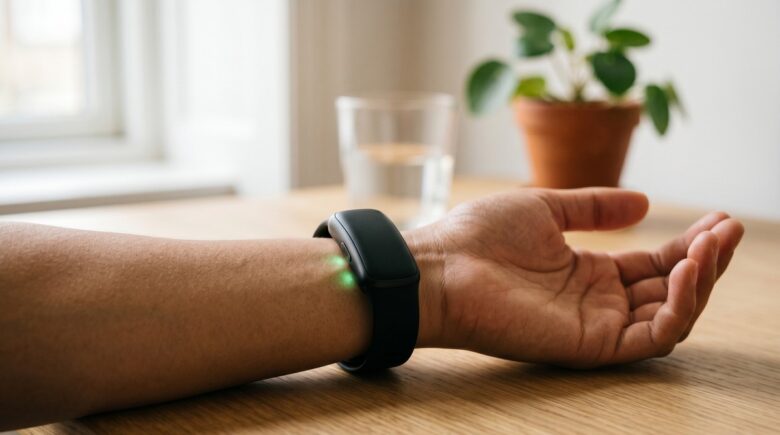
Heart rate variability (HRV) is the most widely used proxy. It measures the millisecond variation between successive heartbeats; a low HRV generally indicates the sympathetic (fight-or-flight) nervous system is dominant, while a higher HRV suggests parasympathetic (rest-and-digest) recovery. Electrodermal activity (EDA), sometimes called galvanic skin response (GSR), tracks tiny changes in skin conductance caused by sweat gland activation during emotional arousal. Skin temperature drops during acute stress as blood redirects to major muscle groups. Respiratory rate rises during both physical and psychological stress. Each of these signals reflects nervous system activity, not stress itself.
The deeper problem is definitional. There is no single universally agreed physiological signature of stress, which means every brand constructs its “stress score” using a proprietary algorithm. A Garmin stress score, an Oura Resilience score, and a WHOOP strain score are measuring different weighted combinations of the same raw inputs. Cross-device comparisons are essentially meaningless.
Why Wrist Sensors Struggle with HRV
Optical photoplethysmography (PPG) sensors on smartwatches estimate HRV by detecting blood volume changes through the skin. The wrist, however, moves constantly during normal activity, creating motion artifact that degrades signal quality precisely when stress is highest, during a difficult meeting, a commute, or a workout.
“It’s really difficult to deliver heart rate variability from the wrist when you have so much movement of the wrist.”
This is why a ring’s placement closer to the palmar artery, with less surface movement, typically produces cleaner HRV readings than a wristwatch during the same activity. It is not marketing language; it is sensor physics. The 2024 systematic review in Frontiers in Computer Science catalogued significant variability in device accuracy across HRV, EDA, ECG, skin temperature, and respiration studies, partly attributable to this sensor-placement problem.
The World Health Organization estimates that 280 million people worldwide live with depression, a figure frequently cited as a primary driver behind the surge in consumer demand for stress and mental health monitoring wearables.
The Five Types of Stress Tracker: Which Form Factor Is Right for You?
The market for wearable stress monitors has fragmented into at least five distinct categories, each built around a different philosophy of how stress data should be collected and displayed.
From Smartwatches to Specialized Bands
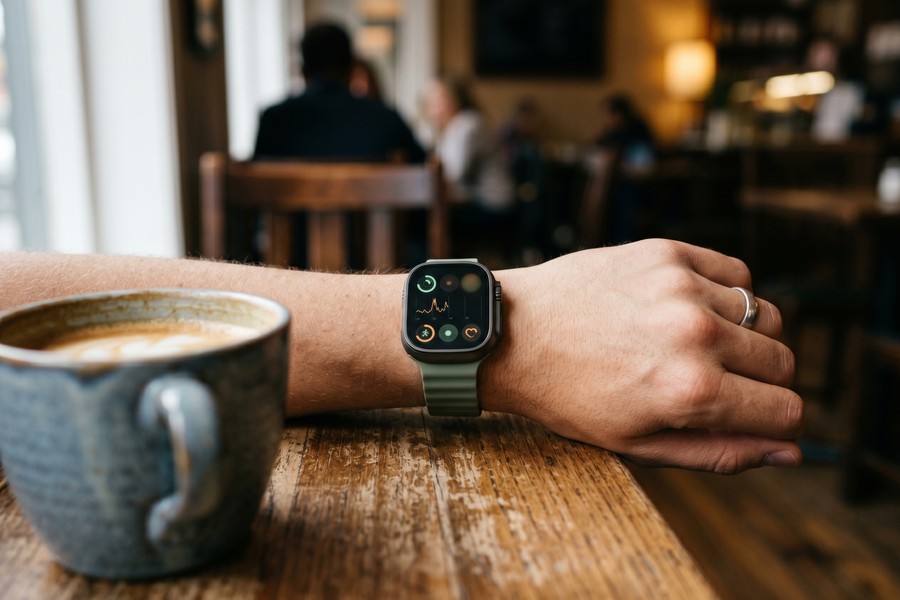
Smartwatches (Apple Watch, Garmin Fenix/Venu, Samsung Galaxy Watch) offer real-time alerts, onscreen stress scores, and integration with broader health ecosystems. The tradeoff is clear: the screen that makes them useful for real-time feedback also enables compulsive checking, and wrist movement degrades HRV quality during activity. Dedicated recovery wearables like WHOOP remove the screen entirely, reducing notification distraction and positioning the band slightly higher on the wrist for a cleaner optical signal.
Smart rings, led by Oura, combine longer battery life (approximately 7 days versus 1–2 days for most watches), less movement artifact, and a discreet form factor. They lack a real-time display, which means all data interpretation happens in the app. EDA-specific trackers like the Fitbit Sense 2 add electrodermal activity sensing to wrist-based HRV, giving the algorithm a second physiological channel to work with. Specialized therapeutic devices such as Apollo Neuro take a different approach entirely: instead of passively monitoring, they deliver low-frequency vibration to the body as a nervous system intervention, using biomarker data to guide timing.
An emerging category worth watching: sweat cortisol sensors and EEG-based headbands. Research prototypes combining continuous cortisol measurement with HRV data in a single wearable have already appeared in academic literature, and a small number are approaching consumer release. These devices measure a direct biochemical stress marker rather than a cardiovascular proxy, a meaningful distinction for users who need more than inference.
How Accurate Are These Devices? An Honest Look at the Science
The accuracy figures cited in device marketing almost always come from controlled lab conditions. The real-world numbers are considerably lower, and most consumer buying guides do not say so plainly.
Lab Accuracy vs. Real-World Performance
A 2024 meta-analysis published in the Journal of Medical Internet Research, drawing on 37 accuracy estimates across 11,425 participants, found a pooled mean accuracy of 85.6% for wearable AI stress detection. That figure, however, represents studies conducted largely under structured conditions. In naturalistic, real-world settings, a 4-month study published in JMIR Human Factors, for example, HRV-to-perceived-stress classification accuracy fell to 59%. Brands rarely cite the lower number.
The gap exists for straightforward reasons. Lab studies control for physical activity, caffeine, posture, and skin moisture. Real life does not. A brisk walk, a double espresso, or cold hands will all shift HRV and EDA readings in ways an algorithm may misclassify as psychological stress.
Multi-sensor fusion combining EDA and heart rate data achieves approximately 95% classification accuracy using machine learning models, compared to substantially lower accuracy from either signal alone, a strong argument for choosing devices with multiple sensor types rather than relying on HRV alone.
What “Stress Score” Algorithms Actually Represent
Every major manufacturer’s stress score is proprietary and unvalidated against clinical psychiatric standards. Garmin’s 0–100 daily stress score is built primarily on HRV. Oura’s Resilience score weights sleep continuity, resting heart rate, and activity recovery across multiple days. WHOOP’s Strain score leans heavily on cardiovascular load. None of these are validated diagnostic tools; none can identify a stress disorder. What they can do, reliably, is show you your own personal trend over weeks once a baseline is established, and that is genuinely useful for pattern recognition, even if the absolute number means very little.
The practical takeaway: treat your stress score as a relative index, not an objective measurement. A score of 72 on Tuesday is worth comparing to your own 30-day average, not to a neighbor’s score on the same device.
The Real Cost: Device Price, Subscriptions, and Paywalled Features
Hardware price is only the starting point. For most major stress-monitoring platforms, the features that justify the purchase are locked behind a monthly or annual subscription, and the total cost over two years can be substantially higher than the sticker price suggests.
Two-Year Cost Comparison Across Major Platforms
| Device / Platform | Hardware Price (USD) | Monthly Subscription | Approx. 2-Year Total | Key Stress Features Behind Paywall? |
|---|---|---|---|---|
| Oura Ring Gen 4 | $349 | $5.99 | $493 | Yes (Resilience, personalized insights) |
| WHOOP 4.0 (Peak Tier) | $0 (hardware included) | $39 | $936 | Yes (Stress Monitor requires Peak/Life tier) |
| Fitbit Sense 2 | $249 | $9.99 (Premium) | $488 | Yes (EDA scan history, advanced insights) |
| Garmin Venu 3 | $449 | $0 | $449 | No (core stress features free) |
| Apple Watch SE (2nd gen) | $249 | $0 (basic); $9.99 (Fitness+) | $249–$488 | Partial (HRV trends free; coaching behind Fitness+) |
The subscription lock-in risk is real and recent. WHOOP restructured its membership tiers in May 2025, moving its Stress Monitor feature exclusively to Peak and Life memberships. Users who purchased the device expecting stress monitoring on a lower tier found those features paywalled after the change. If a company can restructure tiers post-purchase, any feature you buy the device expecting can move behind a higher-cost plan. This is a material purchasing risk, and almost no competitor buying guide flags it explicitly.
Before purchasing any wearable stress monitor, check whether the specific stress features you want, not just the hardware, are available on the base subscription tier. Read the current app tier documentation, not the marketing page, because tier structures can change after purchase.
Your Biometric Data and Who Owns It
Biometric data from wearable stress monitors is among the most sensitive personal information a device can collect. The privacy picture across manufacturers is uneven, and several findings from 2025 research should directly influence your purchase decision.
How Manufacturers Rank on Privacy
A 2025 peer-reviewed systematic analysis in npj Digital Medicine evaluated 17 wearable manufacturers across privacy and security criteria. The findings were stark: 76% of brands scored high-risk on transparency reporting, and 65% scored high-risk on vulnerability disclosure. Xiaomi, Wyze, and Huawei were identified as the worst performers. Google, Apple, and Polar scored best among the cohort evaluated.
A strong privacy score does not guarantee clean behavior, however. Even Apple, rated low-risk in that analysis, reached a $95 million class-action settlement in 2025 over undisclosed Siri recordings captured by Apple Watch. A good privacy rating reflects a company’s stated policies and disclosed practices; it does not prevent an incident from occurring. This is worth weighing honestly before deciding that one brand is “safe.”
Practical Due Diligence Before You Buy
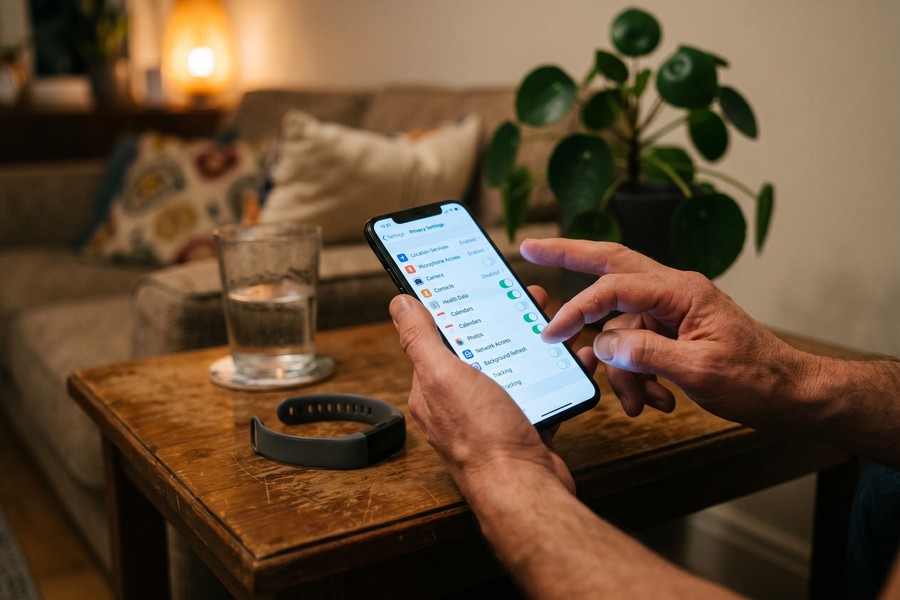
Three questions are worth answering before any purchase. First, does the app share biometric data with advertising partners or third-party analytics firms? This information is typically buried in privacy policies, not highlighted in marketing. Second, is the app subject to HIPAA? Most consumer health apps are not covered under the Health Insurance Portability and Accountability Act, meaning your stress and HRV data may not carry the legal protections you assume it does. Third, can you export and delete your data? Confirmed data portability and deletion rights are a meaningful indicator of a privacy-respecting product.
If digital security is a broader concern for you, it is worth reviewing how your devices connect and what data leaves your phone. The same discipline that applies to building a personal digital security routine applies directly to managing wearable health data: know what you are sharing, with whom, and under what terms.
The National Institute for Occupational Safety and Health (NIOSH) has published an ethical framework specifically addressing wearable sensors in the workplace, identifying the values conflicts that arise when biometric monitoring data is accessible to employers, a consideration that matters if you plan to use a stress monitor during work hours on a company network.
Can Monitoring Stress Actually Make You More Stressed?
Yes, for some users, it can. This is not a theoretical concern; it is a documented phenomenon with a clinical parallel in sleep research, and it is absent from nearly every product review on the market.
The Data Anxiety Loop
Clinical psychologists and peer-reviewed research have identified what some researchers call “technostress” in wearable health device users: a pattern where constant metric-checking becomes compulsive and the act of monitoring amplifies the anxiety it was meant to reduce. The parallel in sleep research is well-established: orthosomnia, a condition where patients become so focused on optimizing their sleep tracker scores that their sleep worsens. The same mechanism applies to stress monitoring. A high stress score during an afternoon meeting can itself generate a stress response, creating a feedback loop that the device never intended.
The physiological readings add a confounding layer. A stress score that spikes during a hard workout, after a strong coffee, or in the cold is not measuring psychological distress; it is measuring sympathetic nervous system activation that is entirely normal. Users who do not understand this distinction may interpret routine physiological variation as evidence of a chronic stress problem.
Using the Device as a Trend Tool, Not a Minute-to-Minute Monitor
The healthiest approach treats a wearable stress monitor as a longitudinal data tool, not a real-time alarm system. Looking at a 30-day trend to see whether your HRV baseline is falling week-over-week is genuinely informative. Checking your stress score every 20 minutes is not. Setting limits on real-time notification frequency, and resisting the urge to interpret single-session readings, preserves the tool’s value without the compulsive-checking downside.
Pairing stress tracking with active recovery practices amplifies the benefit considerably. If you are already using beginner-friendly meditation apps or building a daily reflection habit through journaling apps, a wearable stress monitor gives those practices measurable context, provided you resist treating the score as a verdict.
Matching Device to Lifestyle: A Buyer’s Decision Matrix
The best wearable stress monitor is not a single device, it depends almost entirely on what you want to do with the data and how consistently you will wear it.
Four Reader Profiles and What to Buy
For the chronic stress sufferer who wants longitudinal trend data rather than reactive alerts, Oura’s October 2025 Cumulative Stress metric, a 31-day view of physiological strain across five contributors including sleep continuity, is more appropriate than a daily reactive score. WHOOP’s Peak tier serves a similar purpose for users willing to accept the higher subscription cost. For the athlete who wants stress context alongside training load, Garmin remains the most integrated option: its Body Battery and stress features sit natively inside the same ecosystem as VO2 max, training readiness, and load metrics, all without a mandatory subscription.
For the privacy-first buyer who wants no subscription and no ongoing data relationship beyond initial setup, Garmin’s mid-range lineup (Venu 3, Forerunner 265) and Polar’s H10 chest strap offer core HRV tracking with data stored locally or exportable to third-party platforms. For the budget buyer seeking basic HRV tracking free, a second-generation Apple Watch SE or a current Fitbit device delivers reasonable baseline tracking with minimal upfront commitment.
The Practical Checklist Before You Buy
- Sensor quality and sampling rate: does the device capture HRV continuously, or only during dedicated rest sessions?
- App insight depth vs. raw data export: can you access your raw HRV and EDA data, or are you locked into the brand’s proprietary interpretation?
- Battery life relative to your habits: rings last approximately 7 days; most watches run 1–2 days on a charge, which affects wear compliance.
- Skin sensitivity and band material: silicone bands cause irritation for some users during extended wear; titanium or fabric alternatives are available for premium models.
- Ecosystem lock-in: does the device integrate with your existing health platforms (Apple Health, Google Fit, Garmin Connect), or does it require its own silo?
One honest concession worth making explicit: for most people, a mid-range device worn consistently for 3–4 weeks will deliver more actionable insight than a premium device worn sporadically. The sensor quality gap between a $250 device and a $450 device is smaller than the data quality gap between 30 days of continuous wear and 30 days of intermittent wear. Consistency matters more than hardware cost.
If productivity tracking is part of your broader health routine, pairing stress monitoring with a time-management system can make the data more actionable. Seeing that your HRV drops reliably on days with back-to-back meetings becomes immediately useful when combined with a tool like the Pomodoro technique for structuring focused work blocks. Stress data with no behavioral response attached to it is just numbers.
Oura introduced its Cumulative Stress metric in October 2025, offering a 31-day longitudinal view of physiological strain across five contributors, representing a clear industry shift from reactive, moment-to-moment stress alerts toward chronic stress pattern recognition over weeks.
The habit of tracking daily hydration is worth mentioning in this context: dehydration is a measurable physiological stressor that affects HRV and skin conductance readings, meaning users who ignore hydration while obsessing over their stress score may be inadvertently contaminating their own data.
Frequently Asked Questions
Do wearable stress monitors actually work?
They work as trend tools more reliably than as real-time stress meters. A 2024 JMIR meta-analysis found a pooled mean accuracy of 85.6% in structured studies, but real-world naturalistic accuracy falls to 59–78% depending on the study design. The devices are most useful when you track your own baseline over multiple weeks rather than interpreting individual readings.
Which wearable is most accurate for stress tracking?
Multi-sensor devices that combine HRV, EDA, and skin temperature produce meaningfully better accuracy than single-signal devices. Form factor matters: smart rings typically generate less motion artifact than wrist-based optical sensors during movement. Devices with validated, research-backed algorithms, Oura and Polar are frequently cited in academic literature, tend to outperform fashion-first smartwatches on this specific metric.
Is a smart ring better than a smartwatch for stress monitoring?
For HRV accuracy, yes, in most cases. A ring’s placement near the palmar artery with reduced wrist movement reduces optical sensor noise, which is the primary degrader of HRV quality during daily activity. The trade-off is no real-time display and limited immediate feedback. If real-time alerts matter to you, a smartwatch remains more practical despite the signal quality compromise.
Can a wearable stress monitor diagnose anxiety or a stress disorder?
No. Consumer wearable stress monitors are not medical devices validated for clinical diagnosis, and their stress scores are not validated against psychiatric diagnostic standards. They cannot identify generalized anxiety disorder, chronic stress syndrome, or any clinical condition. If you are concerned about a stress-related health issue, consult a licensed healthcare provider.
Are wearable health devices private and secure?
Privacy practices vary widely across manufacturers. A 2025 analysis of 17 manufacturers in npj Digital Medicine found that 76% scored high-risk on transparency and 65% on vulnerability disclosure. Before purchasing, verify whether the app shares data with advertising partners, whether the data is subject to HIPAA protections (most consumer apps are not), and whether you have confirmed data export and deletion rights.
What is heart rate variability and why does it matter for stress?
Heart rate variability is the variation in time between successive heartbeats, measured in milliseconds. A lower HRV generally indicates sympathetic nervous system dominance, associated with stress, fatigue, or illness. A higher HRV suggests parasympathetic recovery. It is the most studied physiological proxy for stress in wearable research, though it is affected by physical activity, caffeine, alcohol, temperature, and many non-psychological factors.
How long does it take for a wearable stress monitor to be useful?
Most platforms require at least 2–3 weeks of consistent wear to establish a personal baseline. Garmin’s Body Battery and Oura’s Resilience scores both explicitly state that early readings are less reliable before baseline calibration is complete. Readings in the first week should be treated as orientation data, not actionable insight.
Sources
- Journal of Medical Internet Research, Wearable AI Stress Detection Meta-Analysis (2024)
- Frontiers in Computer Science, Wearable Stress Detection Systematic Review (2024)
- World Health Organization, Mental Disorders Fact Sheet (2024)
- Rock Health, Digital Health Consumer Adoption Survey (2023)
- IDC, Worldwide Wearable Device Tracker (2025)
- Grand View Research, Wearable Medical Devices Market Analysis (2024)
- CDC / NIOSH, Ethical Framework for Wearable Sensors in the Workplace
- Wareable, Stress Monitoring Wearables Explained (featuring Dr. Steven LeBoeuf, Valencell)