Quick Answer
Phishing prevention messaging means checking a text or email’s authenticity before acting on it, using tools like sender verification banners, DKIM/SPF/DMARC checks, and independent callbacks. A Texas wellness freelancer avoided a fake payment request by spotting a failed authentication flag and confirming through a prior client thread, a check that took under two minutes.
Updated July 2026
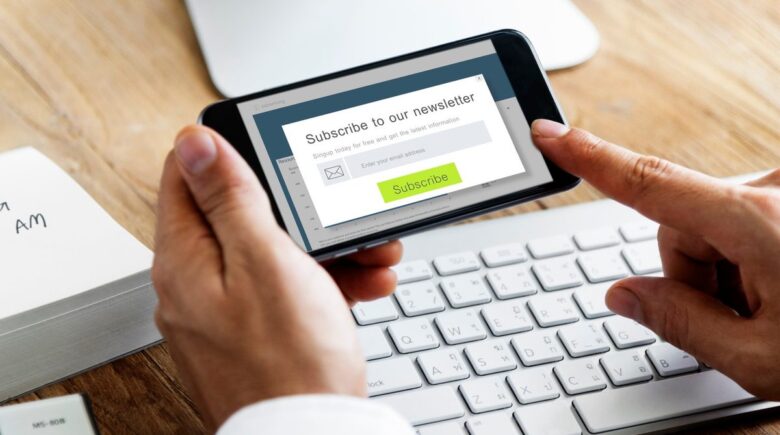
A Dallas-based nutrition consultant nearly lost a week’s income to a fake appointment-change text last October. The message looked routine: a client name she recognized, a rescheduled session, a link to “confirm payment details.” Phishing prevention messaging is the practice of verifying who sent something, and what they actually want, before you respond or click anything. The Federal Trade Commission warns that legitimate companies never ask for account information by text. That exact ask is what nearly made this scam work.
Solo health and wellness practitioners are unusually exposed. They handle payment details, appointment scheduling, and sensitive health notes over text and email daily, often with nobody watching for anomalies. This article covers what actually happened, which verification tools caught the fraud, and the specific habits any freelancer handling client health data should build into a daily routine.
Key Takeaways
- The FTC states that legitimate companies will not request account or personal information by text message, a signal that immediately flags most smishing attempts (FTC guidance).
- CISA recommends stopping phishing at the first phase by recognizing tactics like urgency and suspicious links before any credentials are entered (CISA phishing guidance).
- SMS-based two-factor codes are considered vulnerable to interception, and CISA advises phishing-resistant MFA methods like FIDO/WebAuthn instead (CISA MFA resource).
- The FBI’s Internet Crime Complaint Center has issued warnings about actors posing as support staff on commercial messaging apps to extract verification codes (FBI IC3 alert).
- Research presented at CHI 2024 on SMS verification systems (branded VeriSMS-style tools) showed measurable success defending against phishing aimed at patient and client outreach in healthcare-adjacent settings.
In This Guide
- What Happened to This Texas Wellness Freelancer?
- Why Do Wellness Freelancers Face Unique Messaging Risks?
- Which Message Verification Tools Actually Made the Difference?
- What Exact Steps Stopped the Attack?
- What Happened Right After the Close Call?
- Long-Term Habits for Messaging Safety in Health Work
What Happened to This Texas Wellness Freelancer?
A single text, dressed up to look like it came from an existing client, nearly triggered a costly mistake. The consultant runs a solo nutrition coaching practice out of Austin. What landed in her inbox read like a routine appointment reschedule, but a payment link was tucked inside.
The text named a client she’d worked with for months and referenced a session time that matched her actual calendar. That detail alone made it convincing. Scammers increasingly personalize smishing attempts using scraped scheduling data or prior breach information, a tactic the FBI’s Internet Crime Complaint Center has flagged as a growing pattern targeting people who run business through commercial messaging apps.
She almost tapped the link. Her hand was on the screen when something felt off. The phone number wasn’t saved as a contact, and the “confirm payment” phrasing didn’t match how this client normally wrote to her. That pause, brief as it was, saved her.
Why Do Wellness Freelancers Face Unique Messaging Risks?
Health and wellness freelancers handle a mix of sensitive data and frequent financial transactions, which makes them attractive targets. Nutrition coaches, personal trainers, and wellness consultants text clients about appointment times, supplement orders, and payment confirmations all day long. Every one of those patterns is something a scammer can imitate convincingly.
A solo freelancer doesn’t have a large clinic’s IT team monitoring for suspicious login attempts or flagged domains. Every verification decision falls on one person, usually checking messages between client sessions on a phone rather than a secured desktop. That isolation is exactly why the Cybersecurity and Infrastructure Security Agency pushes so hard on stopping phishing at the recognition stage, before any link gets clicked. There’s often no second line of defense.
Supplement order confirmations and wellness app subscription renewals open another blind spot. These messages look mundane, almost boring, and that’s exactly why scammers mimic them. A fake “your supplement subscription payment failed” text draws far less suspicion than an urgent bank alert, yet it can lead to the same stolen card details.
The FBI’s Internet Crime Complaint Center has specifically warned about scammers posing as support staff on commercial messaging platforms to trick users into handing over verification codes, a tactic distinct from older email-only phishing schemes.
Which Message Verification Tools Actually Made the Difference?
Three things caught this attack before it succeeded: authentication header checks, external sender banners, and app-based authenticators in place of SMS codes. None of them cost anything or required special software.
Email Authentication Signals: SPF, DKIM, and DMARC
Most email providers already run background checks called SPF, DKIM, and DMARC that verify whether a message truly came from the domain it claims. When those checks fail, apps like Outlook and Gmail usually show a warning banner or flag the sender as external and unverified. Freelancers rarely go looking for this. It’s already sitting in the interface, running for free.
Beyond SMS Codes: App-Based Authenticators
SMS codes can be intercepted or spoofed, which is why CISA recommends phishing-resistant multi-factor authentication such as FIDO or WebAuthn instead of text-message codes. For a freelancer managing client payment platforms, moving from SMS to an authenticator app closes a gap smishing attacks are built specifically to exploit.
Research on SMS verification systems presented at CHI 2024, sometimes described under the VeriSMS label, showed real effectiveness defending against phishing aimed at patient-style outreach. That’s precisely the category of message a wellness coach sends every day, and it’s a meaningfully different threat model than corporate email phishing, one most general guides skip over entirely.
Here’s how the three main verification methods stack up for a solo practitioner:
| Method | Typical Annual Cost | Phishing Resistance | Setup Complexity |
|---|---|---|---|
| SMS 2FA (text codes) | Free (personal phone) or $15–$180/year for dedicated services | Low; codes can be intercepted or spoofed | Minimal; often already enabled |
| App-based authenticator (Google Authenticator, Authy) | Free | Moderate; codes are device-bound, not transmitted over SMS | Low; scan a QR code |
| FIDO/WebAuthn (hardware security key or platform biometric) | $25–$50 one-time for a key; free for platform biometric | High; resistant to remote phishing and man-in-the-middle | Moderate; requires key purchase and registration |
What Exact Steps Stopped the Attack?
Verification took under two minutes. Pause, check the authentication signal, confirm through a separate known channel, that was the whole sequence. She didn’t click the link. Instead she opened her client management app and searched for the client’s name directly, ignoring whatever the suspicious text claimed.
She found the real client’s prior thread: a saved contact, months of message history. The phone number in the phishing text didn’t match it. One comparison exposed the fake in seconds, no technical background required.
Her mobile workflow, repeatable for any freelancer, looked like this: stop before tapping anything, open the app where the real client relationship lives (not the suspicious message itself), search for prior confirmed contact, and compare details. If anything doesn’t line up: no reply, no click, just delete or report. This mirrors CISA’s guidance to interrupt the phishing cycle at the earliest phase, before any credential or payment action happens.

What Happened Right After the Close Call?
She reported the number through her carrier’s spam tool and forwarded the text to the FTC’s short code. Then she quietly checked whether other clients had gotten similar messages. None had, which suggested the attempt was targeted rather than part of a mass blast tied to some larger data leak. No client notification was necessary, but she still tightened her authentication settings that same evening, dropping SMS as her payment platform’s two-factor method entirely.
Long-Term Habits for Messaging Safety in Health Work
Verification has to become routine, not a one-time reaction to a scare. The consultant now checks sender authentication on every message that touches payment or personal client information, no exceptions, even when a request looks completely ordinary.
She also consolidated client communication onto fewer verified platforms instead of juggling texts, emails, and three separate scheduling apps. Fewer channels means fewer places for a fake message to slip through unnoticed, a lesson that overlaps with how executive assistants use shared productivity apps to manage multiple calendars without losing track of what’s legitimate. Freelancers juggling multiple clients across different messaging tools run into a similar coordination problem, one covered in more depth in a comparison of Slack vs Microsoft Teams for freelancers handling multiple clients.
Set a personal rule: never act on a payment or scheduling request received by text without first checking it against an existing, saved client thread. If the number doesn’t match your contact list exactly, treat the message as unverified until proven otherwise.
Consider this: a freelancer paying for an SMS-based authenticator on a $15/month subscription platform is out $180 a year. Switch to a free app-based authenticator like Google Authenticator or Authy and that cost disappears entirely. Over a year, that’s $180 back in your pocket, money that could go toward insurance, software, or a security audit instead. The tradeoff isn’t convenience, it’s reliability: SMS codes still work today, but they’re not built for tomorrow.
If your current two-factor setup costs anything over $10 a month, switching to a free authenticator app saves at least $120 a year, a threshold worth acting on right now.
Reader scenario: Say you’ve got a 620 credit score and need roughly $8,000 to cover equipment and platform fees for a new wellness coaching venture. You’re likely looking at a loan rate around 18%, based on average APRs for subprime personal loans in Q1 2026 (). That works out to $1,440 in annual interest. Avoid a single phishing incident that could have led to stolen credentials or unauthorized payments, and you keep that capital intact. Prevention protects your financial runway just as much as it protects your security.
None of these tools guarantee complete safety. A determined attacker who compromises an actual client’s phone number could still slip past a callback check, and authentication banners only catch spoofing that email providers already detect, not every sophisticated forgery. Treat verification as a habit that cuts risk sharply, not one that eliminates it. Anyone managing sensitive client health data on a personal phone should also weigh the tradeoffs covered in using one phone for work and personal life, since blending business and personal messaging can make anomalies harder to spot quickly.
Frequently Asked Questions
What is phishing prevention messaging?
Phishing prevention messaging refers to the practice of verifying a text or email’s authenticity before acting on it, using tools like sender authentication checks, independent callbacks, and phishing-resistant multi-factor authentication. It shifts the response from immediate trust to a brief verification step first.
How can a freelancer tell if a client text is fake?
Compare the sending number against an existing saved contact or prior message thread rather than trusting the name displayed in the text. If the number doesn’t match, or the message asks for payment or personal details, treat it as unverified and confirm through a separate known channel.
Are SMS verification codes safe to use?
SMS codes beat having no second factor at all, but they’re vulnerable to interception and spoofing. CISA recommends switching to phishing-resistant methods like app-based authenticators or FIDO/WebAuthn wherever that’s an option.
What should a wellness freelancer do if they suspect a phishing text?
Don’t click any link or reply with personal information. Report the message to your carrier’s spam tool and, if it involves a financial platform, forward it to the FTC. Consider reporting it to the FBI’s Internet Crime Complaint Center too, if it looks like part of a broader scam campaign.
Do email authentication checks like SPF and DKIM cost anything to use?
No. These checks run automatically in the background of most major email providers, including Outlook and Gmail. Freelancers just need to notice the warning banners these systems already generate when a sender fails authentication.
Can phishing texts target supplement orders or wellness app subscriptions specifically?
Yes, and it’s an increasingly common tactic because these messages look routine and draw less suspicion than urgent bank alerts. A fake “subscription payment failed” text can lead to the same stolen card details as more obvious scams.
Does Texas have specific reporting resources for freelancers hit by phishing scams?
The Texas Attorney General’s office accepts consumer fraud complaints alongside federal reporting channels like the FTC and FBI IC3. Freelancers who lose money to a scam should also talk to a tax preparer, since theft-related losses can sometimes factor into business expense filings.
Can a scammer make a text appear as if it’s from a known contact?
Yes. Scammers can spoof the sender name shown in your notification preview, but the underlying phone number won’t match what’s saved in your contact list. That mismatch is exactly what exposed the fake in this case: the displayed name looked right, the number wasn’t.
What if I already clicked a link in a phishing text?
Close the page immediately without entering any information. Then run a security scan on your device, change passwords for any accounts you think may be compromised, and turn on phishing-resistant MFA if it wasn’t already active. Reporting the incident to the FTC and FBI IC3 creates a record that helps authorities track scam patterns.
How often should a freelancer update their message verification settings?
At least twice a year, or whenever you hear about a new phishing tactic targeting your client communication channels. Pairing this review with a password manager audit, as mentioned with Bitwarden vs 1Password, keeps your authentication layers current without demanding daily attention.
Sources
- Federal Trade Commission, How To Recognize and Report Spam Text Messages
- CISA, Phishing Guidance: Stopping the Attack Cycle at Phase One
- CISA, Multi-Factor Authentication Resources
- FBI Internet Crime Complaint Center, Public Service Announcement on Commercial Messaging App Phishing
- Federal Trade Commission, Consumer Advice Portal
- Texas Attorney General, Consumer Protection Division