Fact-checked by the SnapMessages editorial team
Quick Answer
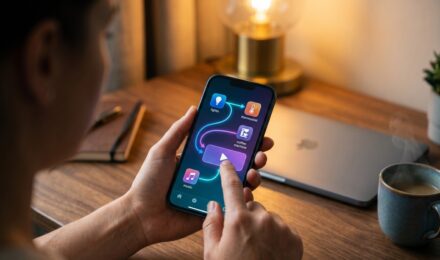
Social battery apps introverts rely on turn a subjective feeling of drain into a trackable metric. They let you log energy levels in real time, set recovery buffers, and plan around busy seasons. Tools like loggd.life recommend at least 1.5–2 times the event duration for solo recharge, and newer 2025 apps now include event-specific capacity alerts before you hit overload.
Updated August 2026
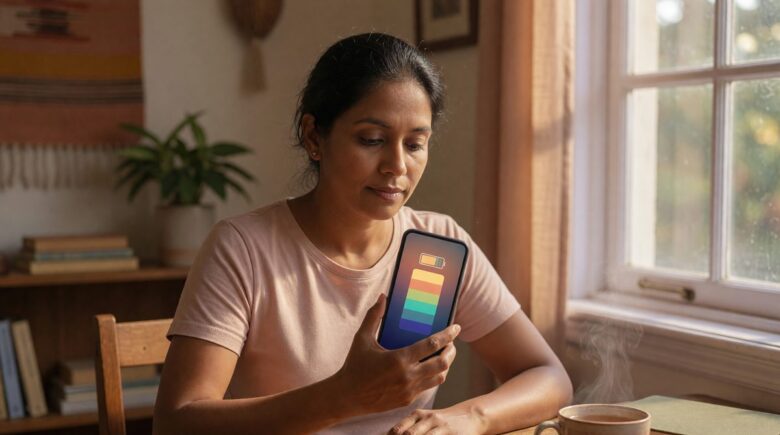
“Social battery” isn’t just a catchy metaphor introverts use. It describes a measurable drop in mental energy from social interaction, and for introverts, it depletes faster than it does for extroverts. That faster drain is rooted in how introverted brains process reward and stimulation. Psychology Today explains that introverts’ dopamine systems are more sensitive, which means social rewards can quickly tip into overstimulation. The result: a single high-energy gathering can bottom out a social battery in under an hour.
When everyday commitments pile up, holidays, year-end deadlines, back-to-back family obligations, that natural drain compounds. This guide walks you through how social battery apps introverts are using them to protect energy during those high-demand seasons. You’ll see the neuroscience behind the battery, the features that actually help, a direct comparison of the dedicated apps introverts are downloading right now, and the honest limits of trusting a phone screen to manage deeply human rhythms.
Key Takeaways
- Introverts’ dopamine sensitivity can be up to two times higher than extroverts’, causing social energy to drain more rapidly (Psychology Today).
- A 2023 survey by the American Psychological Association found 38% of people report elevated stress during the holiday season, a figure that spikes higher for introverts facing mandatory social events (APA).
- Dedicated social battery apps now offer real-time energy logging and recommend 1.5–2x the event duration as a solo recovery buffer, based on personality psychology research cited by loggd.life.
- Apps like Social Battery App (launched Nov. 2025) include friend-sharing features that let introverts communicate energy limits without awkward conversations.
- Consistent daily logging for just one week can reveal personal drain patterns, such as group size thresholds, that previously felt unpredictable.
In This Guide
What Does ‘Social Battery’ Actually Mean for an Introvert?
An introvert’s social battery is a finite reservoir of mental energy spent during any interaction that requires social focus. Neurobiologically, introverts favor the acetylcholine-mediated parasympathetic pathway, which supports calm, reflective states, while extroverts lean harder on dopamine-driven reward circuits. That wiring difference, documented extensively in research published in Frontiers in Psychology, means introverts burn through mental fuel faster in highly stimulating environments, even if the conversation is pleasant. The National Institutes of Health has traced this dynamic to the way dopamine reward-learning pathways respond to environmental stimulation, with introverts showing measurably stronger reactions.
A 30-minute networking happy hour can leave an introvert feeling as mentally spent as a three-hour project sprint. Signs of a drained battery include reduced verbal fluency, irritability, and an almost physical need to retreat. Healthline notes that many introverts require at least two hours of uninterrupted solitude to fully recharge after a draining social block. That need isn’t a preference; it’s a biological recovery period.
Contrast this with extroverts, who often feel energized by the same exchanges. An ambivert may sit somewhere in the middle, recharging with a mix of social and solo time. For an introvert, though, the drop is steep and predictable. A social battery doesn’t just run low; it can be proactively managed once you start measuring it. Just as you might use the best water tracking apps to hit daily hydration goals, applying the same consistent logging discipline to your social energy produces equally clear, actionable patterns.
Introverts’ dopamine systems are up to two times more sensitive than extroverts’, making the same social event feel mentally costlier and shortening battery life dramatically.
How Do These Apps Help Track and Predict Energy Levels?
The core job of a social battery app is to transform an internal, hard-to-quantify state into something you can see, log, and act on. Most of these tools work on a simple mechanic: you rate your energy level on a 0–100 scale at different points in the day, before and after social events, and the app builds a personal pattern over time. That’s the tracking layer. The prediction layer connects your logs to your calendar and suggests when you’ll likely hit empty.
Real-Time Logging and Personality Calibration
Apps like Social Battery App (iOS, November 2025) let you set a baseline by tagging your introversion intensity, mild, moderate, or strong, so the algorithm calibrates drain rates accordingly. You log pre-event energy, then post-event energy, and the app calculates a “drain score” for that activity type. After seven days of daily logging, the patterns become visible: a two-hour team dinner might drain you 60 points, while a quiet one-on-one coffee drops only 15 points. This data replaces guesswork. The concept isn’t unlike how credit bureaus such as Experian or Equifax build a FICO Score from accumulated behavioral data points over time; the more consistently you log, the more accurate and predictive your personal energy profile becomes. If you already use your iPhone’s built-in tools, learning how to automate repetitive tasks on iPhone using Shortcuts can help you trigger daily logging reminders automatically, removing one more friction point from the habit.
loggd.life, a browser-based social battery tracker, draws on personality psychology research, including Dr. Michael Cohen’s work on dopamine sensitivity, and recommends a recovery buffer of 1.5–2 times the event’s duration. That means a 90-minute party could require nearly three hours of protected alone time afterward.
Calendar Integration and Recharge Suggestions
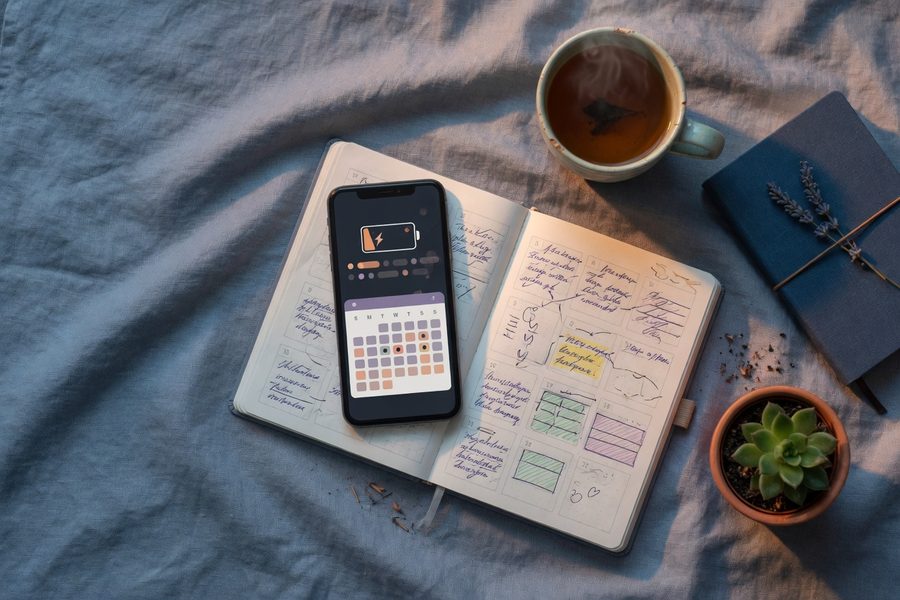
Prediction is where these apps earn their place on a home screen. By syncing with your calendar, the tool can forecast your battery level for the day ahead and flag “high-drain” clusters. If you have three social obligations on a Saturday, the app might suggest spreading them across the weekend or inserting a solo recharge block in between. Some apps, including Social Battery App, even send push alerts when you’re projected to hit 20% battery before the last event, giving you a chance to excuse yourself early or reschedule.
Recovery timing isn’t one-size-fits-all. The best apps learn your recharge rate, how many points you regain per hour of solitude, and adjust suggestions accordingly. This turns busy-season planning from reactive damage control into a proactive energy budget.
Why Do Busy Seasons Hit Introverts So Hard?
Busy seasons, November through January, or any multi-week crunch at work, layer mandatory social events on top of normal obligations. A 2023 American Psychological Association survey found 38% of people already report higher stress during the holidays; for introverts, that number is amplified because each additional event taxes a smaller pool of reserve energy. The cumulative drain becomes exponential, not linear. A dinner party on Tuesday that normally costs 40 battery points might cost 55 if you’re still partially depleted from a weekend gathering.
Compound this with seasonal factors: shorter daylight hours reduce natural solo recharge time, and cold weather can limit the walks or quiet outdoor breaks that introverts use as small recovery hits. The result is that an introvert enters a high-stakes month already running at a deficit, and can feel fully drained by mid-December. Using an app to forecast capacity gives you the data to say no before you’re in the red.
Work obligations layer on top of social ones. Consider how remote workers navigate video conferencing platforms; checking out a Zoom vs Google Meet comparison can help you choose the lower-friction option to preserve a few extra battery points on heavy meeting days. For introverts at companies like Google, Microsoft, or Salesforce, where back-to-back virtual meetings are standard during Q4 planning cycles, even platform friction adds up. Similarly, financial stress during the holidays, think Chase credit card statements, SoFi personal loan repayments, or year-end tax prep with tools like TurboTax or H&R Block, often forces additional social interactions with advisors, family members, and colleagues that introverts rarely account for in their energy planning.
Consider this: 48% of employees worldwide report feeling burned out at work (Gallup, 2024). If you’re in a high-demand role, even one event a week can push you toward burnout if recovery isn’t planned. For a typical introvert, that means a 45-minute team call with five people might cost 30 battery points. If you’re already drained from two such calls and a family dinner, you’re at 90 points lost from a 100-point baseline. A third event, even a low-stakes one, can push you to zero. The app helps you see that limit before it happens.
Which Apps Are Introverts Actually Using in 2025?
Not all social battery trackers are created equal. A few purpose-built tools have emerged that focus exclusively on energy management, rather than generic mood logging. Here’s a direct look at three options gaining traction among introverts in 2025.
| App | Platform | Key Features | Price |
|---|---|---|---|
| Social Battery App | iOS (Nov. 2025) | 0–100 battery meter, calendar sync, friend sharing, event-specific drain predictions, quick-exit alerts | Free; Premium $3.99/mo |
| IntroEnergy | iOS (2025) | Manual tracking with pattern recognition, solo recharge timer, gamified XP for recharge streaks | Free with one-time $4.99 unlock |
| loggd.life | Web browser | No-install energy logs, psychology-backed buffer recommendations, data stored locally | Free |
loggd.life stands out for its privacy-first approach: all your entries stay on your device, with no cloud sync. Social Battery App, as Lifehacker noted in a December 2025 review, offers the most polished interface and a friend-sharing feature that lets you send a “low battery” status to close contacts, removing the emotional labor of explaining why you’re leaving early. IntroEnergy, built from six months of personal tracking by a Reddit user, emphasizes gamification, earning XP for recovery blocks and hitting recharge goals. Each app takes a different angle, but all address the same gap: most mood trackers don’t account for social-specific energy budgets.
Before committing to a paid subscription, log your energy manually in a notes app for one week using a 0–100 scale before and after events. If you see a clear drain pattern, a dedicated tracker will likely pay for itself in avoided burnout.
How to Use These Apps During Busy Seasons
Having a social battery app is step one; using it to actually protect your energy during a packed December requires a deliberate routine. The most effective introverts treat these tools like a financial budget, not a fitness goal.
Pre-Planning Events with Buffer Times
Before a busy week starts, input every social commitment into the app and let it project your battery curve. Where the app forecasts a drop below 25%, immediately block solo recovery time, ideally 1.5 times the duration of the event that precedes it. Batching similar low-drain activities, like phone calls, on the same day can conserve energy by reducing context-switching costs. Treat those recovery blocks as non-negotiable as the events themselves.
This logic mirrors how financial planners at firms like Vanguard or Fidelity approach annual budget planning: identify fixed obligations first, then allocate the remaining capacity. An energy budget works the same way. Your “fixed obligations” are the non-negotiable social events; your recovery blocks are the equivalent of an emergency fund. The Consumer Financial Protection Bureau (CFPB) advises maintaining a financial buffer before discretionary spending; the same principle applies here. Spend energy on what you must, then protect what remains.
Daily Logging and Quick-Exit Alerts
Commit to logging your energy level at three fixed points each day: morning baseline, post-lunch check-in, and evening wrap-up. This three-point system catches mid-day crashes before they snowball into evening burnout. Enable push alerts at the 30% threshold so you get a heads-up while you still have social capital to excuse yourself gracefully.
Over a busy season, these micro-data points accumulate into a detailed map of your personal drain triggers. Think of it the way the Federal Reserve tracks leading economic indicators: no single data point tells the whole story, but consistent, structured logging over weeks reveals trends that intuition alone misses. The Scientific American has covered similar arguments for behavioral self-monitoring, noting that even crude numeric logs outperform unstructured self-reflection for identifying pattern changes.
Using Friend-Sharing Features Strategically
The friend-sharing feature in apps like Social Battery App removes one of the most exhausting parts of being an introverted guest: the verbal negotiation of your limits. By sending a pre-set “low battery” notification to a trusted contact before an event, you establish an exit signal in advance. That contact can then check in at a pre-agreed time, giving you a socially acceptable reason to leave without the emotional overhead of explanation. It’s a small system, but it converts what would otherwise be an awkward mid-event conversation into a pre-arranged, frictionless exit.
Real Results, Limits, and What to Keep in Mind
Introverts who’ve used these apps consistently for a full busy season report two main wins: fewer surprise burnouts and a cleaner conscience when setting boundaries. When your phone’s data tells you that last Tuesday’s dinner party cost you 65 battery points and you’re currently sitting at 40%, declining Thursday’s optional work happy hour stops feeling like antisocial behavior and starts feeling like evidence-based self-care. The app provides the external validation that many introverts struggle to give themselves.
The limitations are real. Logging fatigue is a genuine risk. If the act of opening the app to log your energy becomes itself a micro-drain, the tool starts working against you. Most heavy users recommend setting a cap of three logs per day maximum to avoid this. Second, no algorithm can fully capture context: a conversation with a grieving friend might drain your battery faster than a rowdy party would, but the emotional weight won’t appear in a drain-score calculation.
Third, these apps work best as a supplement to self-knowledge, not a replacement for it. A FICO Score tells you a lot about your financial health, but it won’t capture the full story of your relationship with money. The same is true here: a drain score is a useful signal, not a complete picture. For clinically significant social anxiety, resources from the American Psychological Association and licensed therapists remain the appropriate first line of support, not an iOS app.
And here’s a real downside: people who are not introverted, or who don’t experience social energy drain, may find the app unnecessary or even counterproductive. If your baseline energy doesn’t fluctuate significantly with social exposure, the app’s predictions won’t reflect your actual experience. Similarly, those whose work or social life is entirely low-stimulation may not benefit from the tracking framework. For them, the effort of logging could outweigh the insight.
Data privacy deserves attention too. If you’re sharing energy logs with friends or syncing to a cloud calendar through apps distributed via Apple’s App Store or Google Play, you’re generating a detailed behavioral profile. For a deeper look at how the apps you use every day handle your personal data, it’s worth understanding how to build a personal digital security routine that actually sticks so your self-care data doesn’t become a liability.
Frequently Asked Questions
What exactly is a social battery app, and how is it different from a regular mood tracker?
A social battery app is specifically designed to measure and predict the mental energy you spend during social interactions, rather than tracking general emotional states. While a mood tracker might log whether you feel happy or anxious, a social battery app quantifies energy drain on a numerical scale (typically 0–100), ties drain events to specific social activities, and uses that data to forecast when you’ll be depleted. The result is a planning tool, not just a diary, that tells you when to rest before you hit empty, which generic mood apps don’t typically do.
Are social battery apps only useful for introverts, or can anyone benefit?
While introverts are the primary audience, because their energy depletes faster and more predictably from social interaction, ambiverts and even extroverts going through unusually demanding seasons can benefit. Anyone experiencing burnout from social overload, caregiver fatigue, or high-obligation professional roles can use the logging and prediction features to prevent chronic depletion. The calibration features in most apps do allow you to adjust for different introversion levels, so the tool adapts to your actual drain rate rather than assuming a one-size-fits-all profile.
How long does it take to see useful patterns after starting to use a social battery app?
Most dedicated social battery apps, including Social Battery App and IntroEnergy, show meaningful personal patterns after just seven days of consistent logging. You’ll typically start to see which event types cost the most energy, what your baseline recovery rate is, and which group sizes or environments are highest-drain. For seasonal planning purposes, two to three weeks of data gives you enough context to build an accurate busy-season energy budget.
Can social battery apps actually reduce social anxiety, or do they just track it?
These apps primarily track and predict; they’re not therapeutic tools in the clinical sense. However, many users report that having objective data reduces the secondary anxiety that comes from not knowing when they’ll crash. When you can see that your battery typically holds above 50% for the first 90 minutes of a party, you can attend with more confidence rather than dreading the unknown. The data provides a sense of control that can calm anticipatory anxiety, but for clinical social anxiety, a licensed therapist remains the appropriate resource.
What happens if I forget to log my energy for a day or two?
Missing a day or two of logging creates small gaps in your pattern data but doesn’t invalidate the overall picture. Most apps are designed to handle irregular input; they simply won’t generate predictions for uncovered time windows. The best approach is to resume logging without trying to backfill missed sessions, which can introduce inaccurate retrospective data. Consistency over weeks matters more than perfection on any single day. Some apps allow you to set automated reminders at fixed times to reduce the likelihood of missed logs in the first place.
Is it safe to share my social battery data with friends through these apps?
Friend-sharing features, like the one in Social Battery App, typically let you share a current battery percentage or a pre-set status rather than your full log history. That’s a meaningful privacy distinction. Before enabling any sharing feature, review the app’s privacy policy to understand whether your energy logs are stored on the company’s servers, and whether shared data can be screenshotted or re-shared by recipients. For maximum privacy, browser-based tools like loggd.life store data locally on your device with no cloud upload at all.
Do these apps work well alongside therapy or other mental health support?
Yes, and many therapists who work with introverts or people managing burnout find the objective data useful in sessions. Bringing a week’s worth of drain logs to a therapy appointment can help identify specific triggers faster than verbal recall alone. The apps are not a substitute for mental health care, but they function well as a behavioral data layer that supports conversations with a therapist, coach, or support group. Always let your therapist know if you’re using self-tracking tools so they can help you interpret the data in context.
Are there free social battery apps that are worth using, or do you need to pay for the good features?
There are genuinely useful free options. loggd.life is fully free, browser-based, and privacy-focused, making it an excellent starting point with no commitment required. Social Battery App’s free tier includes the core battery meter and basic logging. IntroEnergy’s free version covers manual tracking and pattern recognition. The paid features, typically calendar sync, advanced predictions, and friend sharing, are worth considering if you plan to use the app through a full busy season, but most users can get clear drain-pattern insights from free tiers alone within the first week.
How do I convince family members or coworkers to respect my social battery limits without seeming rude?
One of the most practical uses of these apps is turning a subjective “I’m tired” into an objective reference point. Showing a close family member your battery percentage can shift the conversation from personal rejection to a measurable reality, similar to showing someone your step count or sleep data. Some introverts use the friend-sharing feature to pre-communicate their limits before an event starts, so the expectation is set before any tension arises. Framing energy management as a health practice rather than a social preference tends to be received more openly by people unfamiliar with introversion.
Can I use a social battery app to help plan major life events like a wedding or reunion?
Absolutely, and this is one of the highest-value use cases for these tools. Multi-day high-obligation events like weddings, family reunions, or work conferences compress an enormous number of social interactions into a short window. Using an app to map each day’s scheduled events against your projected battery capacity lets you identify which afternoons to protect with solo time, whether a quieter hotel room is worth booking, and how to sequence your social commitments to avoid a complete crash on the final day. Users who plan this way report significantly better recovery and more positive memories of the event itself.
What percentage of Americans identify as introverts?
According to a 2023 YouGov survey, 39% of Americans say they are introverts, this includes 9% who describe themselves as completely introverted and 29% who are more introverted than extroverted. This aligns with broader personality research showing introversion as a common and valid temperament. YouGov (2023)
How widespread is mental health app usage?
Research from the National Institutes of Health (2024) found that 41% of survey respondents had used a mental health app in the past 12 months, indicating growing acceptance and integration of digital tools into personal well-being routines. PMC/NIH (2024)
What percentage of employees worldwide report feeling burned out?
According to Gallup’s 2024 global workplace study, 48% of employees worldwide report feeling burned out at work, highlighting widespread stress and exhaustion in professional environments. This makes proactive energy management especially relevant for individuals in high-demand roles. Gallup (2024)