Fact-checked by the SnapMessages editorial team
Quick Answer
Open the Google Home app, tap Automations, then “New automation.” That’s the whole setup. Pick a trigger, whether voice, a set time, or sunrise/sunset, and you’re building a routine. Google Home works with over 50,000 compatible devices and can chain up to 20 actions in a single routine. No separate hub needed.
Updated August 2026
A Google Assistant smart home routine is just a pre-built sequence of actions that fires off a single voice command, a scheduled time, or a device event. Google’s own Nest support documentation notes that routines can touch lights, thermostats, locks, media, and messaging apps all at once, turning what would be a dozen separate taps into one.
Smart home adoption keeps climbing, and automation has become the main reason people bother upgrading their setups at all. Get the routines right early and you’ll save real time, every single week, not just occasionally. US households spent an average of $896 on connected devices in 2024, up from $764 the year before. That’s real money going into home tech ecosystems.
Key Takeaways
- Google Home supports over 50,000 compatible devices, including Philips Hue, Nest Thermostat, and Yale smart locks, with no hub required for most setups. (Google Nest Support)
- Each routine supports up to 20 chained actions, triggered by voice, scheduled time, sunrise/sunset, home presence, or device events. (Google Nest Support)
- 63% of smart home users cite automated scheduling as the feature they use most, making time-based triggers the most reliable starting point for new routines. (Statista, 2025)
- The Matter protocol, backed by the Connectivity Standards Alliance, is extending cross-brand compatibility so devices from competing ecosystems can work together. (CSA)
- Enabling Voice Match in Google Home lets a single shared routine deliver personalized output, calendar events, commute time, reminders, to each individual household member. (Google Assistant Help)
- Most routine failures trace back to device connectivity problems, not misconfigured logic. The Activity tab in Google Home app version 3.0+ timestamps each action so you can pinpoint exactly what went wrong. (Google Nest Support)
What You Need to Start Setting Up Google Assistant Routines
Three things, really: a Google account, the Google Home app for Android or iOS, and at least one compatible device. A Google Nest speaker or display helps, but you don’t strictly need one. Routines run fine through the app on your phone.
Plenty of hardware qualifies here: Philips Hue bulbs, Nest Thermostat, TP-Link Kasa smart plugs, Yale smart locks, and hundreds more certified under Works with Google Home. And the Matter protocol, backed by the Connectivity Standards Alliance, keeps pushing that compatibility further out, including partial crossover with Amazon Alexa and Apple HomeKit on Matter-certified gear.
The numbers behind this market are hard to ignore. Worldwide shipments of smart home devices reached 892.3 million in 2024, with 931.1 million projected for 2025. Statista forecasts a 82.1% global smart home household penetration rate by 2026. That’s not a niche trend anymore, it’s mainstream in both cities and suburbs.
Want to skip the hub entirely? Our guide on how to connect smart home devices without a hub walks through the best no-hub setups available today.
Setting Up the Google Home App
Grab Google Home from the Google Play Store or Apple App Store, sign in with your Google account, then tap the “+” icon to start adding devices. Give each one a room name. Skip this step or half-ass it, and you’ll regret it later, because room names are what your voice commands actually key off (“Hey Google, turn off the bedroom lights”). Vague or duplicate room names are the number one reason voice commands hit the wrong device.
Deloitte’s 2025 Connected Consumer survey puts the average US household at 6.2 connected devices. At that scale, sloppy room organization turns into a daily annoyance fast.
Key Takeaway: You need only a Google account and the Google Home app to start. Google Home is compatible with over 50,000 devices, including Philips Hue, Nest Thermostat, and Yale smart locks, no hub required for most setups.
How to Create a Google Assistant Smart Home Routine Step by Step
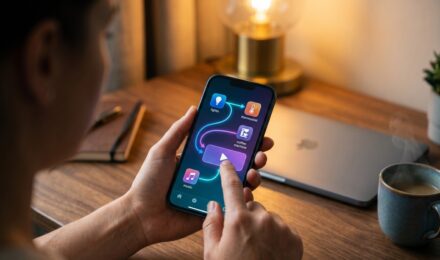
Open Google Home, tap “Automations” at the bottom, then “New automation.” Choose your starter, stack up actions, hit save. A basic routine takes less than five minutes to build, start to finish.
Starters break down into three buckets. There’s voice commands (“Hey Google, good morning”), time and day schedules (say, 7:00 AM on weekdays), and device or home events, like a motion sensor tripping or the first person walking in the door. Actions can adjust lights, set thermostat temperature, start a playlist on Spotify, read out your Google Calendar summary, or push a notification to your phone.
Recommended Morning Routine Configuration
Here’s a solid morning setup: raise Philips Hue lights gradually to 80% brightness, set Nest Thermostat to 70°F, have the Nest Hub announce the weather, then start a news briefing. Four actions, one “Good morning” trigger, and you’ve killed off a stack of repetitive daily commands.
Pair that morning routine with a Pomodoro timer app for deep work sessions and you’ve got a genuinely structured start to the day. Useful if you already lean on productivity systems.
Key Takeaway: Creating a Google Assistant smart home routine takes fewer than 5 minutes in the Google Home app. Combine time-based starters with multi-device actions, lights, thermostat, and media, to replace up to 20 individual commands with a single trigger.
Which Triggers and Actions Are Most Effective for Smart Home Routines?
Time-based and presence-based triggers just work better, day in and day out. No voice input needed, which makes them the obvious choice for recurring stuff like bedtime or heading out the door.
Statista’s 2024 smart home report found that 63% of smart home users name automated scheduling as their most-used feature. IDC data on rising smart home shipments backs this up. Automation isn’t a nice-to-have anymore, it’s the whole point for most users.
| Trigger Type | Best Use Case | Reliability |
|---|---|---|
| Voice Command | On-demand routines (“Good night”) | High, instant response |
| Scheduled Time | Morning alarms, evening wind-down | Very High, no input needed |
| Sunrise / Sunset | Outdoor lights, blinds automation | High, adjusts seasonally |
| Home Presence | Arrival / departure sequences | Medium, depends on GPS accuracy |
| Device Event | Motion sensor, door lock trigger | High, hardware-dependent |
For the tightest setup, pair a scheduled time trigger with a sunrise offset. Set outdoor lights to fire 30 minutes before sunset, for instance, and they’ll stay on time year-round without you ever touching the settings again.
Honestly, the best routines are the ones you forget you built. Once automation matches how you actually move through your day, it fades into the background. That’s the real test of whether a routine was built well or just thrown together.
Key Takeaway: Scheduled time triggers are the most reliable starter for a Google Assistant smart home routine. Statista data shows 63% of smart home users rely on automated scheduling as their primary automation method, making it the best starting point for new setups.
How to Customize and Optimize Your Google Assistant Routines
Three tweaks matter most: personal trigger phrases, media actions, and small delays between steps. Swap out generic starters like “Good morning” for something specific to your household, like “Hey Google, start the day”, and you’ll stop accidental triggers from casual chatter in the room.
Google Assistant handles media natively inside routines, so you can queue specific YouTube Music playlists, podcasts, or TuneIn radio stations without extra setup. Toss in a 5-second delay between actions too, especially once you’re running more than three devices in one routine, since that gap keeps commands from colliding. Small detail, but it makes a real difference in homes juggling TP-Link Kasa plugs or multi-zone Philips Hue lighting next to a Nest Thermostat.
Using Personal Results and Household Members
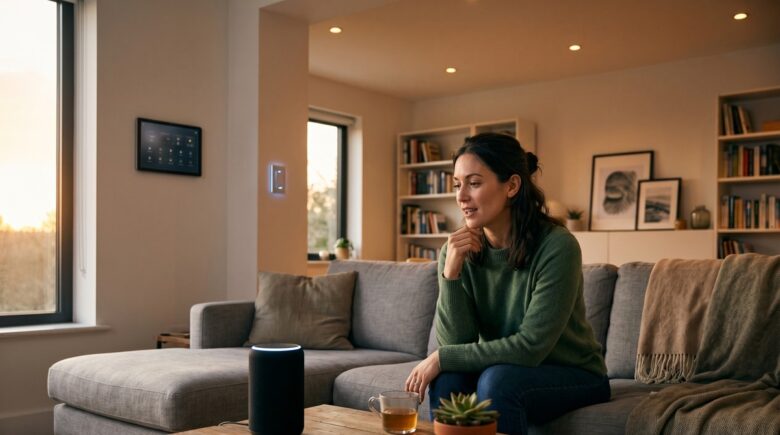
Flip on Voice Match in Google Home settings and the assistant starts recognizing who’s actually talking. That means one shared “Good morning” command can hand each person their own calendar, their own commute time, their own reminders. Google calls this Personal Results.
Deloitte’s 2025 survey also indicates users with multiple connected devices value personalization highly, especially when routines adapt to individual schedules and preferences.
Trying to protect your work hours from constant pings? Our guide on using Focus Modes to stop phone distractions pairs naturally with a scheduled Google Assistant smart home routine that signals the start of deep work time.
AI keeps working its way into these tools too. For a broader look at how intelligence features are shaping connected apps, check how AI is being used inside messaging apps right now. Quite a few of the same personalization ideas carry straight over to smart home assistants.
Key Takeaway: Enabling Voice Match in Google Home allows a single routine to deliver personalized output to each user. Adding 5-second delays between actions and using custom trigger phrases dramatically reduces misfires, according to Google’s Personal Results documentation.
How to Troubleshoot a Google Assistant Smart Home Routine That Isn’t Working
Check connectivity first. Nine times out of ten, a broken routine comes down to a device that dropped offline, a Wi-Fi hiccup, or an out-of-date Google Home app, not some flaw in how you built the routine.
Open the Activity tab in Google Home and you’ll see exactly which actions ran and which didn’t. Google Home app version 3.0 and above has a dedicated automation history that timestamps every action. If that tab’s missing, update through the Google Play Store or Apple App Store first.
Common Fixes for Failed Routines
- Re-link the affected device under Settings in Google Home.
- Confirm the device is on the same Wi-Fi network as your Google speaker.
- Delete and recreate the routine if it was built before a major app update.
- Check manufacturer app permissions, some devices, including certain Yale lock and TP-Link Kasa plug integrations, require their native app to be active in the background.
Struggling specifically with bulbs or switches that won’t respond? Our deep-dive on how to set up smart lighting in your home without an electrician covers device pairing and network troubleshooting in detail.
Key Takeaway: Most Google Assistant smart home routine failures are connectivity issues, not logic errors. Use the Activity tab in Google Home app version 3.0+ to diagnose which specific action failed, then re-link the device or check Google Nest support for firmware update requirements.
What’s the Real Value of Smart Home Automation?
Look at what people are actually spending. US households averaged $896 on connected devices in 2024, up from $764 the year before, a jump of $132. That’s a 17.3% increase in a single year, which tells you smart tech isn’t a side hobby anymore, it’s a real line item. Spread across the average of 6.2 devices per household, that works out to roughly $145 per device annually. Automate even a handful of them, lights that shut off on their own, a thermostat that adjusts when nobody’s home, and the savings start adding up fast.
Take thermostats specifically. The U.S. Department of Energy says scheduling one to lower automatically when the house is empty can cut heating and cooling costs by up to 10% a year. On a $1,200 annual HVAC bill, that’s $120 back in your pocket, more than enough to pay for a smart plug outright. The value here isn’t just convenience. It’s clawing back some of what you’re spending on the ecosystem in the first place.
Who Should Skip This Setup Right Now?
This isn’t for everyone. If your Wi-Fi drops constantly, or devices keep falling off the network, routines will fail more than they succeed. Older homes with weak signal, crowded apartment buildings, cheap internet plans, all of these make automation feel more like a headache than a convenience. Sometimes manual switches are just the better call.
Only got two or three smart devices total? Building out routines might not be worth your time. Once you’re down to one or two gadgets, the setup work outweighs whatever time you’d save. Direct app or voice control tends to be faster in those cases than fiddling with triggers and conditions.
Frequently Asked Questions
Can I run a Google Assistant smart home routine without a Nest speaker?
Yes. Routines can be created and executed directly from the Google Home app on any Android or iOS phone. A Nest speaker or display adds voice-trigger convenience but is not required for time-based or presence-based automations.
How many actions can one Google Assistant routine contain?
Google Home supports up to 20 actions per routine. For most households, a typical morning or evening routine uses between 4 and 8 actions, well within the limit.
Can Google Assistant routines work with Apple HomeKit devices?
Not directly. Google Assistant and Apple HomeKit operate on separate ecosystems. The Matter protocol, backed by the Connectivity Standards Alliance, now allows some Matter-certified devices to work across both platforms simultaneously, depending on the device manufacturer’s implementation.
How do I stop a routine from triggering accidentally?
Replace default starter phrases with unique household-specific commands and enable Voice Match so only recognized voices activate sensitive routines. You can also restrict a routine to specific times of day under the “Add condition” setting in the routine editor.
Do Google Assistant routines work when the internet is down?
No. Google Assistant requires an active internet connection to process voice commands and execute cloud-dependent actions. Some Nest devices retain basic local control (like manual thermostat adjustment) but full routine execution needs connectivity.
Can I share a Google Assistant smart home routine with another household member?
Yes. Routines created in Google Home are visible to all members of the same home in the app. Add household members under Settings > Household in Google Home, and they will have access to view and trigger shared routines.
What’s the average number of smart devices per US household?
US smart-home households own an average of 6.2 connected devices, according to IDC and Statista data cited in 2025 industry analysis. This number reflects increasing integration of smart lighting, security, and audio systems.
How much do US households spend on connected devices annually?
US households spent an average of $896 on connected devices in 2024, up from $764 in 2023, based on Deloitte’s 2025 Connected Consumer survey. This upward trend indicates sustained consumer investment in home automation and IoT technology.
What is the projected global smart home penetration rate for 2026?
Statista projects a 82.1% global smart home household penetration rate by 2026, reflecting widespread adoption across regions with growing access to affordable smart devices and reliable internet infrastructure.
Are there any government or regulatory standards for smart home security?
While no single U.S. federal mandate governs all smart home device security, agencies like the National Institute of Standards and Technology (NIST) provide cybersecurity guidelines for IoT devices. These frameworks help manufacturers and users evaluate device safety and privacy protections.
Can I use Google Assistant routines for energy savings?
Yes. Automating lights, thermostats, and appliance plugs based on occupancy or time of day can reduce energy use. For example, scheduling your thermostat to lower when no one is home can save up to 10% on heating and cooling costs annually, according to the U.S. Department of Energy.
How often should I review my routines?
Review your routines every 3–6 months. Device behavior changes, app updates may alter functionality, and household needs evolve. Regular checks ensure routines remain efficient and secure.
Sources
- Deloitte (2025), Connected Consumer Survey
- IDC (2025), Smart Home Device Shipments & Statista (2025), Global Penetration Forecast
- Connectivity Standards Alliance, Matter Protocol Overview
- National Institute of Standards and Technology (NIST), IoT Cybersecurity Guidelines
- U.S. Department of Energy, Energy Savings from Smart Thermostats