Fact-checked by the SnapMessages editorial team
Anxiety rates in the United States have climbed for three straight years. According to the American Psychiatric Association’s 2024 annual mental health poll, 43% of U.S. adults reported feeling more anxious than the year before, up from 37% in 2023 and 32% in 2022. Against that backdrop, breathwork apps for anxiety have moved from wellness curiosity to a genuine self-regulation tool, with millions of downloads across dedicated platforms and all-in-one wellness apps. The appeal is direct: breathing is always available, costs nothing, and works on the body before it works on the mind.
Access to professional mental health care has not kept pace with demand. The Commonwealth Fund reported in 2023 that more than 160 million Americans live in areas lacking adequate mental health providers, with over 8,000 additional professionals needed to fill the gap. That shortage is one reason self-guided tools occupy such a large share of anxiety management for people who cannot get a timely appointment, cannot afford ongoing therapy, or simply need something they can use at 2 a.m. before a work presentation. Apps that deliver structured breathing protocols fill a real, unmet need, and when used correctly, the evidence suggests they can.
This guide covers the physiology behind breath-based anxiety relief, an honest summary of what the research does and does not support, how to evaluate apps before you download them, and specific recommendations matched to real use cases. It also addresses two things nearly every competitor article ignores: the safety risks of certain techniques for people with anxiety disorders, and what to do when your current approach stops working.
Key Takeaways
- 43% of U.S. adults reported greater anxiety in 2024 than in 2023, the third consecutive annual increase per the American Psychiatric Association.
- A 2023 systematic review of 58 clinical trials found 54 of 72 breathing interventions reduced stress and anxiety, but sessions under 5 minutes and fast-only breath paces were among the least effective formats.
- HRV biofeedback breathing at resonance frequency (20 minutes twice daily for 8–10 weeks) produces the most durable anxiety improvements documented in clinical research.
- Rapid, hyperventilatory techniques including Wim Hof and Holotropic breathwork are clinically documented to increase anxiety and trigger panic attacks in people with panic disorder, a distinction most apps do not surface before recommending them.
- Even 2–5 minutes of slow, controlled breathing daily produces measurable physiological effects; consistency across 30 or more days matters more than session length.
- Over 160 million Americans live in mental health professional shortage areas, making low-cost, app-based tools a meaningful adjunct, not a replacement, for clinical care.
In This Guide
- Why Your Breath Is a Direct Dial Into Your Nervous System
- What the Research Actually Says (and Where It Falls Short)
- The Techniques That Reduce Anxiety and the Ones That Can Make It Worse
- How to Evaluate a Breathwork App Before You Download It
- The Best Breathwork Apps for Anxiety in 2026
- Safety, Side Effects, and Who Should Use Caution
- How to Build a Breathwork Habit That Sticks
- When a Breathwork App Is Not Enough
- Using Breathwork Apps for Anxiety: What to Know Before You Start
Why Your Breath Is a Direct Dial Into Your Nervous System
Most anxiety interventions work top-down: a therapist helps you reframe a thought, a medication adjusts neurotransmitter levels, a journaling practice gives you distance from a worry. Breathwork is different. It works bottom-up, altering physiology directly and producing cognitive calm as a downstream effect rather than a prerequisite. This is not a metaphor; it reflects measurable autonomic nervous system activity.
The autonomic nervous system has two primary modes. The sympathetic branch drives the fight-or-flight response, elevating heart rate and cortisol while narrowing focus. The parasympathetic branch governs rest-and-digest, slowing heart rate and promoting recovery. Anxiety locks people into prolonged sympathetic activation. What makes breath unusual among voluntary behaviors is that it straddles both systems simultaneously: it runs on autopilot, but conscious control of it provides direct access to parasympathetic activation that almost no other voluntary action can match.
The Physiology of Extended Exhales
Extended exhales activate the parasympathetic nervous system more powerfully than inhales do. When you exhale, the diaphragm rises, the thoracic cavity shrinks, and the heart rate briefly slows, a response driven by the vagus nerve. Slow breathing around 5–6 breath cycles per minute reliably increases heart rate variability (HRV) within minutes, and higher HRV is consistently associated with reduced anxiety and better stress resilience. The inhale is not irrelevant, but the exhale is where the physiological leverage sits.
Research published in Scientific Reports (Nature, 2022) and reviewed by the National Center for Complementary and Integrative Health (NCCIH) confirms that slow diaphragmatic breathing is among the best-studied relaxation techniques for stress reduction. The National Institute of Mental Health (NIMH) also lists controlled breathing as a recognized coping strategy for anxiety disorders. Clinical psychologist Regine Muradian, PsyD, summarizes the mechanism simply: deep breathing helps us relax our body naturally, calming both mind and physical state. That description, drawn from her commentary cited by The Healthy, reflects the bottom-up logic that distinguishes breathwork from purely cognitive approaches.
This mechanism also explains why breathwork works for people who find meditation frustrating. Meditation asks you to observe your thoughts without judgment, a cognitive task that anxious minds often struggle with. Breathing at a slow, controlled pace produces physiological change regardless of what you are thinking. Someone who cannot quiet their mind can still slow their exhale, and the body responds.
Breathwork vs. Meditation: A Meaningful Distinction
Dedicated breathwork and mindfulness meditation overlap in app libraries and are frequently bundled together, but they are not the same intervention. Meditation primarily trains attentional regulation; breathwork primarily alters autonomic state. Both have value, and combining them is common in clinical settings. If you are new to both, starting with breathwork gives you a physiological result fast enough to reinforce the behavior, which is why adherence tends to be higher in early stages. If you are already building a mindfulness practice, the best meditation apps for beginners can complement a breathwork routine rather than compete with it.
What the Research Actually Says (and Where It Falls Short)
The science supporting breathwork for anxiety is real. A peer-reviewed systematic review published in Brain Sciences (2023), examining 58 clinical trials, found that 54 of 72 breathing interventions were effective for stress and anxiety reduction. That is a strong directional signal. But the same body of research contains important caveats that app marketing routinely omits.
Effect sizes in breathwork research are generally described as small-to-medium. In practical terms, that means most people experience a noticeable reduction in anxiety symptoms, not a transformation. A person with mild-to-moderate anxiety who practices consistently for several weeks is likely to feel calmer and more capable of managing acute stress. A person with a diagnosed anxiety disorder who uses an app in place of professional treatment is likely to be disappointed. The distinction matters, and it is almost never stated clearly in app store descriptions.
The 2023 Brain Sciences systematic review found that sessions under 5 minutes and fast-only breath paces were among the least effective formats, meaning the ultra-short “calm down in 60 seconds” features common in wellness apps have the weakest evidence behind them.
Where the Evidence Is Strongest
Slow-paced breathing and HRV biofeedback show the most consistent results across studies. Research on resonance frequency breathing, breathing at 5–6 cycles per minute while receiving real-time HRV feedback, found that 20 minutes twice daily for 8–10 weeks produced lasting improvements in both HRV and self-reported anxiety. That is a specific, testable protocol, and it stands apart from the vague “a few minutes a day” framing used by virtually every consumer app. The 2023 systematic review also identified human-guided training and multiple sessions as predictors of effective outcomes, which is a point in favor of app formats that include guided audio and structured progression rather than freeform timers.
The Methodological Gaps
Most breathwork studies are single-session designs without active control groups. This means researchers are often comparing breathwork against doing nothing, not against other relaxation strategies like progressive muscle relaxation or simple rest. Methodological heterogeneity across studies also makes direct comparison difficult. The National Center for Complementary and Integrative Health (NCCIH) explicitly advises that relaxation techniques including deep breathing may help with anxiety associated with health conditions, but should not substitute for conventional care. That is an important boundary that honest coverage of this topic must preserve.
The Techniques That Reduce Anxiety and the Ones That Can Make It Worse
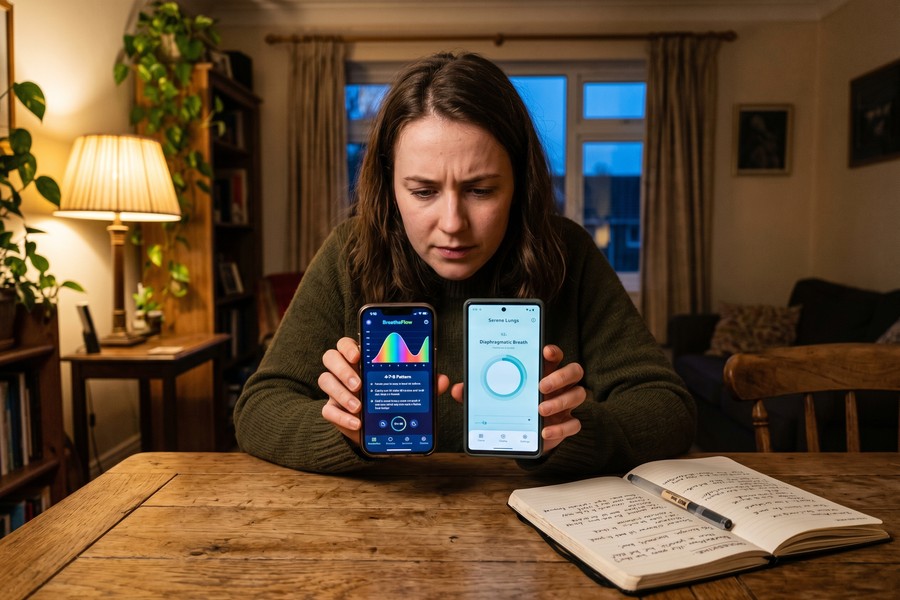
Not all breathwork techniques are equivalent for anxiety, and several are actively contraindicated for certain anxiety profiles. The apps themselves rarely surface this distinction. A person with panic disorder who downloads a highly rated breathwork app and starts with the “energizing” section could experience a panic attack within minutes, not because breathwork is harmful in general, but because they chose a technique matched to the wrong use case.
Techniques Supported for Anxiety Relief
Box breathing (equal counts of inhale, hold, exhale, hold, typically 4 seconds each) produces reliable physiological calming and is used extensively in military and emergency services training for exactly that reason. 4-7-8 breathing (inhale 4, hold 7, exhale 8) emphasizes the extended exhale and activates the parasympathetic response more aggressively, effective for acute anxiety but requires practice to maintain without discomfort. Diaphragmatic breathing, which emphasizes belly expansion over chest expansion, corrects the shallow thoracic breathing pattern that anxiety perpetuates, and is one of the most evidence-supported formats in clinical settings. Extended exhale breathing in any ratio where the exhale is at least twice the length of the inhale is the simplest and most versatile option for daily use.
Vikash Modi, MD, Senior Medical Director of Preventative Medicine at Prenuvo, has described the CO2-restoration logic behind these techniques plainly: deliberate breathwork achieves the same physiological recapture of carbon dioxide that older paper-bag methods attempted, but with greater precision and without the risks of that improvised approach. His commentary, cited by Prenuvo’s clinical blog, reflects why slow-paced techniques have become standard in preventive medicine contexts.
Techniques That Can Worsen Anxiety
Rapid, high-ventilation techniques including Wim Hof Method breathing, Holotropic breathwork, and some styles of Kundalini pranayama involve sustained hyperventilation. Clinically, this drops CO2 levels in the blood (hypocapnia), which triggers vasoconstriction, tingling, and in people predisposed to panic, a full panic attack. The literature is specific: these techniques have been documented to increase anxiety and trigger panic attacks in patients with panic disorder. Yet these same techniques appear in apps positioned for anxiety relief, often labeled as “energizing,” “releasing,” or “activating,” without any screening question about the user’s anxiety profile.
If you have a diagnosis of panic disorder, avoid any technique labeled as rapid, energizing, or based on the Wim Hof or Holotropic methods until you have discussed it with a clinician. These formats are clinically documented to increase anxiety and can precipitate panic attacks in susceptible individuals.
Matching Technique to Anxiety Type
Acute anxiety (a racing heart before a presentation) responds well to box breathing or a simple 4-count inhale, 8-count exhale cycle because the effect is fast and does not require extended practice to feel. Chronic, background anxiety responds better to a sustained daily practice of slow-paced diaphragmatic breathing, ideally with HRV monitoring to track change over weeks. Trauma-adjacent distress requires the most caution: techniques that involve breath retention or body sensation amplification can resurface traumatic material, and in those cases, working with a trained facilitator rather than an app is the appropriate starting point.
How to Evaluate a Breathwork App Before You Download It
The breathwork app market ranges from clinically grounded tools built around specific, labeled protocols to aesthetically polished products where the breathing is secondary to ambient sound design. Distinguishing between them before you download saves time and, for people with certain conditions, reduces risk.
What to Look For
A credible breathwork app names its techniques explicitly (box breathing, 4-7-8, diaphragmatic) rather than labeling them only by mood outcome (“calm,” “focus,” “sleep”). It provides a brief physiological rationale for each technique, not just a marketing description. It lists the credentials of its clinical advisors or the research its protocol design draws on. And ideally, it includes some form of intake question about health history before recommending fast-paced or retention-heavy techniques.
Before committing to a paid subscription, check whether the app names its breathing techniques explicitly and links to clinical sources. If the protocol page reads like wellness copy rather than method description, that is a meaningful signal about how the content was built.
Two App Archetypes
Dedicated breathwork apps (Breathwrk, Prana Breath, iBreathe) focus exclusively on breathing protocols and tend to offer more technique variety, session customization, and data tracking. All-in-one wellness platforms (Calm, Headspace, Breethe) include breathwork as one feature within a larger content library of sleep, meditation, and movement. For someone whose primary goal is anxiety management through breathing specifically, a dedicated app generally provides more depth. For someone who wants a single app to support multiple wellness habits, a platform may be more practical. If you are already using tools to support habits like daily journaling or gratitude tracking, an all-in-one platform may reduce friction by keeping those practices in one place.
The Free vs. Paid Question
Several capable apps offer meaningful free tiers. iBreathe provides a full set of basic protocols at no cost. Prana Breath’s free version includes enough technique variety for months of consistent practice. Paying for a subscription makes sense only if the structured progression, coaching content, or data features are things you will actually use, not because the free alternative is inadequate for basic anxiety management. Subscription prices across major apps range from roughly $30 to $70 per year, a modest cost if the features genuinely fit your use case, but not a prerequisite for benefit.
| App Type | Best For | Typical Price | Technique Depth |
|---|---|---|---|
| Dedicated Breathwork App | Focused anxiety management, technique variety | Free–$70/yr | High |
| All-in-One Wellness Platform | Multiple wellness habits in one place | $50–$100/yr | Moderate |
| HRV Biofeedback App + Hardware | Data-driven users, clinical-grade feedback | $200–$400 device + app | Very High |
| Minimalist Free App | Zero-friction daily use, no account required | Free | Basic |
The Best Breathwork Apps for Anxiety in 2026
Rather than ranking apps by overall quality, which obscures fit, the more useful framing is matching each option to a specific use case. The same app that works well for someone building a morning habit may be frustrating for someone who needs silent, cue-free breathing during a meeting.
By Use Case: A Practical Breakdown
| Use Case | Best App Option | Key Feature | Free Tier? |
|---|---|---|---|
| Acute anxiety in public | iBreathe | Silent visual pacer, no audio required | Yes |
| Building a daily habit | Breathwrk | Streaks, reminders, goal-specific sessions | Limited |
| Data-driven HRV tracking | Moonbird + app | Real-time HRV biofeedback via hardware | No (hardware req.) |
| Emotional release / immersive | Othership | Music-driven guided sessions | Limited |
| Advanced technique depth | Prana Breath | Custom ratios, CO2 tolerance training | Yes (robust) |
| All-in-one wellness | Calm / Headspace | Breathwork + meditation + sleep content | Very limited |
The HRV Biofeedback Case
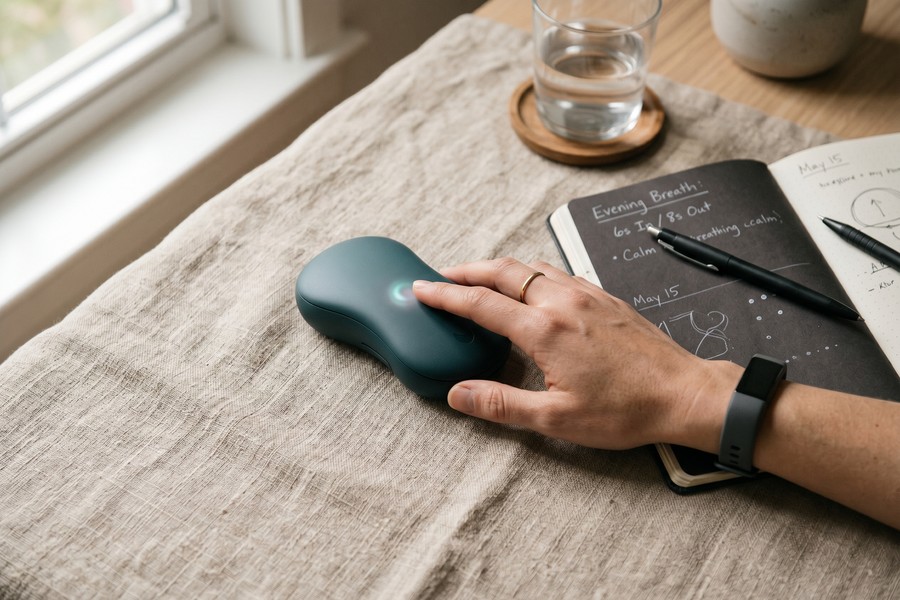
The closest consumer technology gets to clinical-grade breathwork is HRV biofeedback, and it is the most underrepresented category in mainstream app roundups. Moonbird is a handheld device that guides breathing through physical expansion and contraction while its companion app tracks real-time HRV. This format aligns directly with the resonance frequency breathing protocol that produced the most durable outcomes in clinical research. It costs significantly more than a standard app subscription, but for someone dealing with chronic anxiety who wants physiological evidence of progress, the investment reflects a materially different category of tool, not just a premium version of the same thing.
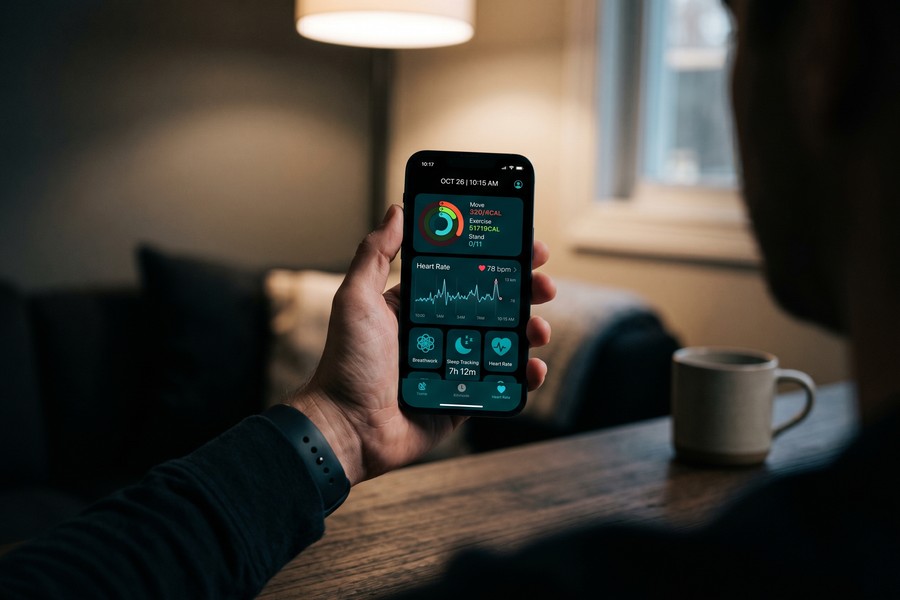
Apps like Calm and Headspace, which together account for a significant share of the wellness app market, include basic breathwork modules alongside their core meditation libraries. Both are distributed through Apple’s App Store and Google Play, and both sync session data with Apple Health or Google Fit. That integration is useful if you are tracking broader wellness indicators, but neither platform offers the protocol depth or HRV measurement that dedicated tools provide. For users who also use Fitbit, Garmin, or Apple Watch for biometric tracking, pairing wearable HRV data with a dedicated breathwork app produces richer longitudinal data than any single platform manages alone.
A 2023 systematic review of 58 clinical trials found that 54 of 72 breathing interventions effectively reduced stress and anxiety, but also identified that human-guided training and multiple sessions were key predictors of success, which favors structured app formats over standalone timers.
Safety, Side Effects, and Who Should Use Caution
Mild side effects from breathwork are common and do not signal a problem. Lightheadedness, tingling in the hands or lips, and brief dizziness during or after a session are all caused by a temporary drop in blood CO2 from controlled over-breathing. These sensations typically resolve within 1–2 minutes of returning to normal breathing. Knowing this in advance prevents the common mistake of interpreting normal physiological responses as something going wrong, which can itself trigger anxiety.
The more serious question is contraindications. People with cardiovascular conditions, a history of seizures, pregnancy, a diagnosis of panic disorder, psychosis, or bipolar disorder should consult a physician before using any breathwork app, and should avoid fast-paced or breath-retention techniques entirely without clinical supervision. The NCCIH clinical guidance for providers frames relaxation techniques as a useful adjunct to other treatments, not as standalone interventions for clinical populations. That framing carries a specific implication: the sicker the anxiety presentation, the more important clinical oversight becomes, not less.
People most likely to download a breathwork app for anxiety, those with diagnosed anxiety disorders, are also the group for whom certain techniques carry the most risk. Most apps do not include any intake screening before presenting fast-paced or hyperventilatory protocols.
How to Build a Breathwork Habit That Sticks
The research on dose and consistency is specific: even 2–5 minutes of slow-paced breathing daily produces measurable physiological effects, and consistency across 30 or more days matters more than session length. The minimum effective dose is low enough that it fits almost any schedule, but low dose only works if the practice actually happens. Consistency is the variable most likely to determine outcomes for app users.
Habit Stacking and Anchoring
The most reliable approach is habit stacking: attaching a breathwork session to an existing behavioral anchor. A 3-minute session before morning coffee, a 5-minute session in the car before entering the office, or a brief extended exhale exercise as part of a pre-sleep wind-down each uses an existing habit as a trigger. This reduces the decision-making load that derails standalone intentions. The same principle applies to other productive tech habits, tools like Pomodoro timer apps for deep work use structured anchoring to maintain focus sessions, and the behavioral logic transfers directly to breathwork.
The Plateau Problem
After 4–8 weeks with a single technique, many users report that it stops producing the same sense of relief. This is normal. The physiological response to a familiar breathing pattern becomes more automatic and less intense as the nervous system adapts. The solution is progression, not abandonment. Lengthening sessions from 5 to 10 minutes, adding HRV tracking to make progress visible, or shifting from box breathing to a slower resonance-frequency pace (5–6 breaths per minute) are concrete next steps. Switching to an entirely different app at this point usually resets the habit without addressing the underlying plateau, a pattern worth recognizing before it happens.
The NHS recommends practicing its calming breathing technique regularly as part of a daily routine for maximum benefit, and clinical research supports this: daily practice over 30 or more days consistently outperforms infrequent, longer sessions in anxiety outcomes.
When a Breathwork App Is Not Enough
Breathwork apps are a legitimate self-regulation tool and an evidence-supported adjunct to other forms of care. They are not a treatment for diagnosed anxiety disorders, and the distinction is not a formality. If anxiety is disrupting sleep, relationships, work performance, or daily functioning on a consistent basis, an app addresses symptoms rather than causes. The NCCIH notes that relaxation techniques are most effective when practiced alongside professional treatment, good nutrition, and exercise, not as substitutes for any of these.
What complementary care actually looks like varies by severity. HRV biofeedback conducted with a trained clinician using clinical-grade equipment produces more durable outcomes than any consumer app. Breathwork-assisted therapy, which integrates structured breathing into psychotherapy sessions, is an active area of clinical investigation. For anyone already working with a therapist or psychiatrist, raising breathwork practice in session allows it to be contextualized within a broader treatment plan. The access problem is real, with over 160 million Americans in provider shortage areas, a clinical pathway is not available to everyone. An app used consistently and correctly is genuinely useful in that context. But it earns that place by being honest about its limits, not by overstating them.
A 2025 randomized controlled trial on Conscious Connected Breathwork delivered online found a large effect size (Cohen’s d = 1.44) in anxiety reduction over six weekly sessions, the largest effect reported in the field to date. However, the sample was 80% women, mean age 41, and 79% white, which limits how broadly the finding applies across diverse populations.
Using Breathwork Apps for Anxiety: What to Know Before You Start
Before choosing an app and committing to a practice, several practical questions come up consistently. The answers below reflect both the clinical evidence and the realities of day-to-day app use.
What makes a breathwork technique actually effective for anxiety?
Effectiveness depends primarily on pace and exhale duration. Slow breathing at 5–6 cycles per minute, with exhales at least as long as or longer than inhales, produces the most consistent parasympathetic activation. Techniques with sessions under 5 minutes and fast-only breath paces show significantly weaker outcomes in the clinical literature. A technique that feels calming immediately is a reasonable signal, but sustained practice over weeks produces the neurological adaptation that translates to durable anxiety reduction.
Can breathwork apps replace therapy for anxiety?
No. Apps are self-regulation tools and appropriate adjuncts to professional care, not replacements for it. For mild-to-moderate anxiety without a clinical diagnosis, consistent breathwork practice can produce meaningful relief. For diagnosed anxiety disorders, generalized anxiety disorder, panic disorder, social anxiety disorder, professional treatment is the primary intervention, and an app can support it but not substitute for it.
How long before I notice a difference?
Many people notice physiological calming within a single session of slow-paced breathing. Sustained reduction in baseline anxiety, measured by things like better sleep, fewer intrusive worry cycles, and improved stress tolerance, typically requires consistent daily practice over 30 or more days. The research on HRV biofeedback breathing specifically points to 8–10 weeks of twice-daily practice for lasting autonomic improvements. Expect the first few days to feel mechanical and the benefit to compound over weeks, not hours.
Are all breathwork techniques safe for anxiety sufferers?
No, and this is one of the most important distinctions the app market obscures. Slow, controlled techniques like box breathing, diaphragmatic breathing, and extended exhale methods are broadly safe for most adults. Rapid, hyperventilatory techniques including Wim Hof Method and Holotropic breathwork are clinically documented to increase anxiety and trigger panic attacks in people with panic disorder. Anyone with a diagnosed anxiety disorder, cardiovascular condition, seizure history, or who is pregnant should consult a physician before using any breathwork app.
Do I need to pay for a breathwork app to get real results?
Not necessarily. iBreathe and the free tier of Prana Breath both provide legitimate, evidence-based breathing protocols at no cost. Paying for a subscription makes sense if you need structured progression, detailed data tracking, HRV integration, or a large guided session library. If the core need is a reliable daily breathing prompt with a few solid techniques, free options are genuinely adequate. Spending $50–$70 per year on a premium app that you use inconsistently will produce worse outcomes than using a free app daily.
What is HRV, and why do some breathwork apps track it?
Heart rate variability (HRV) is the variation in time between successive heartbeats. Higher HRV generally reflects a more adaptive, resilient autonomic nervous system and is inversely correlated with chronic stress and anxiety. Breathwork at resonance frequency (approximately 5–6 breaths per minute) reliably increases HRV, and tracking that change over time gives users objective evidence that their practice is producing physiological effect. Apps and hardware that measure HRV in real time, like Moonbird’s paired device, allow users to pace their breathing to their own resonance frequency rather than a population average, which is closer to how HRV biofeedback is delivered clinically.
How do I know if an app is credible rather than just well-marketed?
Look for explicit technique naming (box breathing, 4-7-8, diaphragmatic), a stated physiological rationale rather than mood-outcome-only labeling, listed clinical advisors or referenced research, and some form of health intake before presenting fast-paced protocols. An app that describes all its techniques as “calming” or “energizing” without naming the method or citing any mechanism should be treated with skepticism. Checking whether the creator has published or collaborated with researchers, or whether the app is referenced in clinical contexts, provides additional signal.
Real-World Example: From Daily Panic to Consistent Calm Over 10 Weeks
Consider an illustrative example: a 34-year-old marketing professional experiencing daily anxiety spikes, heart pounding before client calls, difficulty sleeping before deadlines, who cannot access a therapist for six weeks due to a waitlist. She downloads a dedicated breathwork app after researching slow-paced techniques, specifically choosing one with labeled protocols and a free tier, and commits to a 5-minute box breathing session each morning before her first cup of coffee.
In the first week, the sessions feel mechanical and she notices mild lightheadedness. Knowing this is a normal CO2 response, she continues. By week three, the morning session takes under 4 minutes to produce a noticeable reduction in resting heart rate, a subjective but consistent signal. She adds a second 5-minute session before her most stressful recurring meeting, using a 4-count inhale, 8-count exhale pattern. Total daily investment: roughly 10 minutes.
At the 10-week mark, she has completed 68 of 70 sessions (a 97% adherence rate), her self-reported anxiety scores on a standard GAD-7 assessment have dropped from 12 (moderate anxiety) to 7 (mild anxiety), and she reports notably better sleep on worknight evenings. When she finally begins therapy, her therapist notes that she has already developed a reliable self-regulation tool, which accelerates early session work.
The arithmetic is direct: 10 minutes daily over 70 days is approximately 11.7 hours of total practice time. The free app cost was $0. The outcome was a 42% reduction in GAD-7 score and a functional stress management skill she retained after beginning therapy. The key variable was not which app she used, it was consistency.
Your Action Plan
-
Identify your anxiety profile before choosing a technique
Distinguish between acute situational anxiety (racing heart before specific events), chronic background anxiety (persistent low-grade worry), and trauma-adjacent distress. Acute anxiety responds well to short, fast-acting techniques like box breathing. Chronic anxiety benefits more from a sustained daily slow-paced practice. If anxiety is severe or involves trauma history, start with a clinician’s guidance rather than an app.
-
Evaluate apps against a basic credibility checklist before downloading
Confirm the app names its techniques explicitly, provides physiological rationale, and lists clinical advisors or research references. If you have panic disorder, cardiovascular conditions, or a seizure history, specifically check whether the app includes health screening before recommending rapid or retention-based techniques. Download from a credible app store listing with documented update history; if you are already thinking about device security, the same habits that inform a personal digital security routine apply to vetting app publishers.
-
Start with a single technique and commit to it for 30 days
Choose one slow-paced protocol, box breathing (4-4-4-4) or an extended exhale pattern (4-count inhale, 8-count exhale), and practice it daily for a full month before evaluating. Switching techniques frequently in the early weeks prevents the autonomic adaptation that produces durable benefit. Five minutes daily is enough; 2 minutes is better than zero.
-
Attach your breathwork session to an existing anchor behavior
Pick one existing daily habit, morning coffee, commute, pre-lunch break, or pre-sleep wind-down, and treat breathwork as a fixed attachment to that anchor. Set a single recurring app reminder for the same time each day. Habit stacking reduces reliance on motivation and lowers the friction that causes new routines to drop off after 1–2 weeks.
-
Add HRV tracking at the 30-day mark if you want objective progress data
After one month of consistent practice, consider adding a basic HRV measurement to your routine, either through an app that reads HRV via your phone’s camera (PPG-based, lower accuracy but free) or a dedicated device like Moonbird or a chest strap paired with a HRV app. Track weekly average HRV rather than daily readings, which fluctuate with sleep and activity. An upward trend over 6–8 weeks confirms that your practice is producing measurable autonomic change.
-
Know when to escalate to professional support
If anxiety is consistently disrupting sleep, relationships, work, or daily functioning after 8–10 weeks of regular practice, treat that as a signal to pursue professional evaluation rather than adding more app features. An app is a self-regulation tool. A therapist, psychiatrist, or clinical HRV biofeedback practitioner addresses the underlying condition. These are not competing paths, they work best together.
Frequently Asked Questions
Is 5 minutes of breathwork actually enough to reduce anxiety?
For acute anxiety relief, yes, a single 5-minute session of slow-paced breathing produces measurable parasympathetic activation in most people. For reducing baseline anxiety over time, 5 minutes daily is a clinically supported minimum effective dose, provided it is practiced consistently over 30 or more days. The research is clear that session frequency and duration both matter more than technique sophistication at the beginning of a practice.
Can I use a breathwork app during a panic attack?
Slow-paced breathing techniques can help manage the physiological spiral of a panic attack, but they require enough cognitive bandwidth to initiate and maintain. During a full panic attack, many people find it difficult to follow on-screen prompts. The more reliable approach is to practice the technique daily when calm so it becomes automatic enough to use under acute stress. Rapid or energizing techniques, which some apps present alongside calming ones, must be avoided during or near a panic episode, as they can amplify symptoms.
What is the difference between breathwork and just breathing slowly?
Structured breathwork specifies timing ratios, maintains focus on diaphragmatic engagement, and often targets a specific physiological outcome like HRV increase or CO2 balance. Simply breathing slowly without structure still activates the parasympathetic system somewhat, but the precision of a timed protocol, particularly for reaching the 5–6 cycles per minute associated with resonance frequency, produces more consistent and measurable effects. Apps add value here by providing an external pacer that removes the mental effort of counting.
Do breathwork apps work for children or teenagers with anxiety?
Several apps include content designed for younger users, and slow-paced breathing techniques are generally considered safe for adolescents. The physiological mechanisms are the same. However, apps designed for adults may use pacing, rationale language, and session lengths that do not suit younger users well. For children under 12, guided practice with a parent or school counselor is preferable to independent app use. For teenagers, shorter sessions (3–5 minutes) with visual rather than audio pacers tend to have higher adherence.
How do breathwork apps compare to professional HRV biofeedback therapy?
Consumer apps and paired hardware like Moonbird approximate the format of clinical HRV biofeedback but differ in accuracy, individualization, and clinical oversight. Clinical biofeedback uses medical-grade sensors, identifies each patient’s personal resonance frequency (which varies from the population average), and includes a trained clinician to adjust the protocol based on physiological response. Apps offer a meaningful, lower-cost approximation that produces real benefit, but for people with diagnosed disorders, clinical-grade biofeedback with professional guidance produces more durable outcomes.
Should I tell my doctor or therapist that I am using a breathwork app?
Yes. Breathwork is a physiologically active intervention, not a passive wellness product. A clinician aware of your practice can incorporate it into a broader treatment plan, screen for contraindications relevant to your health history, and help you interpret what you are experiencing. For anyone taking medication that affects heart rate or blood pressure, mentioning a new breathing practice to a prescribing physician is straightforward and appropriate.
Can breathwork apps integrate with other health and wellness tools on my phone?
Several apps sync with Apple Health or Google Fit to log session data alongside sleep, activity, and heart rate metrics, which makes it easier to observe correlations between breathwork consistency and other wellness indicators. Some also integrate with wearables like Fitbit or Garmin devices for HRV data. The degree of integration varies significantly by app. If building a multi-tool wellness routine, combining breathwork with, for example, daily hydration tracking, checking for Health app compatibility before downloading simplifies data consolidation.
Sources
- American Psychiatric Association, Annual Poll: Adults Express Increasing Anxiousness (2024)
- Commonwealth Fund, Understanding the U.S. Behavioral Health Workforce Shortage (2023)
- National Library of Medicine / PMC, Brain Sciences Systematic Review of Breathing Interventions for Stress and Anxiety (2023)
- NCCIH / NIH, Relaxation Techniques: What You Need to Know
- NCCIH / NIH Clinical Digest, Mind and Body Approaches for Stress (Provider Guidance)
- NCCIH / NIH, 5 Things To Know About Relaxation Techniques for Stress
- NHS (National Health Service, UK), Breathing Exercises for Stress
- The Healthy, Breathing Exercises for Anxiety (featuring Regine Muradian, PsyD)
- Prenuvo, 3 Breathwork Exercises to Reduce Stress and Anxiety (featuring Vikash Modi, MD)
- Scientific Reports (Nature), Meta-Analysis of Randomized Controlled Trials on Breathwork for Stress, Anxiety, and Depression (2022)
- National Institute of Mental Health, Anxiety Disorders Overview