Fact-checked by the SnapMessages editorial team
Quick Answer
Five apps come up again and again when students ask which note-taking tool actually works: Notion, Obsidian, GoodNotes, Evernote, and Microsoft OneNote. Each solves a different problem. Notion gives you structure. Obsidian rewards people who think in connections rather than folders. GoodNotes is built around a stylus and a screen that feels like paper. More than 65% of students say they recall material better with digital notes than with pen and paper alone.
Updated July 2026
Key Takeaways
- Students using structured digital note-taking tools scored 23% higher on retention tests than those using unstructured methods, according to a 2021 study in the International Journal of Educational Technology in Higher Education.
- AI-assisted note-taking can boost retention by up to 40% through active recall, per research from the Retrieval Practice Research Network.
- Approximately 11.7% of U.S. children aged 3–17 years have a current ADHD diagnosis, based on 2024 national parent survey data from the CDC.
- Some 7 million U.S. children aged 3–17 years have a current ADHD diagnosis, according to the same 2024 CDC data.
- Students using AI-powered search in apps like Evernote can find notes using natural language queries with high accuracy.
- Microsoft OneNote is completely free with a Microsoft account and has no page limits, making it the top fully free option for most students.
A note-taking app in 2025 has to do more than hold text. A 2021 study in the International Journal of Educational Technology in Higher Education found that structured digital tools improved retention by 23% compared to unstructured methods. Pick the wrong app and you’ve built yourself a filing cabinet nobody opens.
AI tagging, cross-device sync, handwriting recognition, these used to be premium features. Now they’re table stakes. What separates a decent app from one students actually keep using comes down to something simpler: speed. If opening the app takes more than two taps, most students drop it within a week.
What makes a good note-taking app for students?
Four traits define the best apps: fast capture, reliable sync, flexible organization, and low friction on mobile. Flashy features matter less than most marketing suggests. A student juggling five courses needs folders, tags, or a linked-note system that doesn’t require a manual to set up.
Microsoft OneNote uses a notebook-section-page hierarchy that mirrors how students already organize their work. Notion pushes further, letting users build databases, kanban boards, and linked wikis inside one workspace.
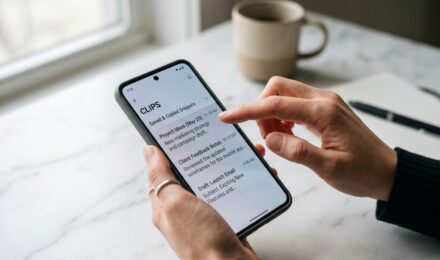
Speed matters just as much as structure. Evernote‘s Web Clipper remains one of the fastest ways to save research without losing focus. GoodNotes 6 converts handwriting to searchable text in under a second on modern iPads, according to GoodNotes’ official documentation.
Key Takeaway: The best note-taking apps for students prioritize fast capture and flexible organization. Microsoft OneNote uses a hierarchical structure that reduces setup time and keeps notes separated by course with little effort.
Which note-taking apps suit different student types?
There’s no single right answer here. The best choice depends on your device, how you actually learn, and how complicated your course load gets.
For iPad and handwriting users
GoodNotes 6 and Notability lead the pack for iPad users. Both support Apple Pencil with pressure sensitivity, which matters if you’d rather write than type. GoodNotes’ AI-powered handwriting search can dig up a formula you scribbled down months ago with surprising accuracy. Notability, meanwhile, syncs audio recording to your handwriting, a real advantage in lectures where writing keeps falling behind what’s being said.
For those who connect ideas across subjects
Obsidian is built for linking research notes together. Its backlink graph shows how ideas relate, which pays off in humanities, law, and research-heavy STEM work. Notes save as plain Markdown files on your own device, so your data stays yours even if the company folds tomorrow.
For students who need one place for notes, tasks, and reading
Notion handles notes, task lists, reading trackers, and project wikis under one roof. Its AI assistant (Notion AI) summarizes long notes, generates study questions, and drafts outlines, cutting review time in ways that add up fast over a semester.
Key Takeaway: GoodNotes 6 wins for iPad handwriting. Obsidian leads for linking research. Notion dominates as an all-in-one workspace. Matching your app to your study style can save hours per semester compared to switching mid-year.
| App | Best For | Free Plan | Paid Plan (Monthly) | AI Features |
|---|---|---|---|---|
| Notion | All-in-one workspace | Yes (unlimited personal) | $10/month | Yes (Notion AI add-on) |
| Obsidian | Linked research notes | Yes (local only) | $8/month | Limited (plugins) |
| GoodNotes 6 | Handwriting + iPad | Yes (5 notebooks) | $9.99/year | Yes (handwriting AI) |
| Evernote | Web clipping + search | Yes (1 notebook) | $14.99/month | Yes (AI search) |
| Microsoft OneNote | Windows/Office users | Yes (full) | Included in Microsoft 365 | Yes (Copilot) |
How do AI features change note-taking for students?
AI inside these apps has moved well past spellcheck. It summarizes lectures, builds flashcards, and surfaces notes you forgot you took, right before an exam, work that used to eat entire afternoons.
Notion AI can turn a 2,000-word lecture note into a bullet-point summary in under 10 seconds. Evernote’s AI search understands plain-language questions, so typing “what did I write about mitosis in March” pulls up the right note even if you never tagged it properly. This mirrors a broader shift in consumer tech, one SnapMessages covers in its breakdown of how AI is being used in messaging apps today.
Key Takeaway: AI summarization in apps like Notion AI and Microsoft Copilot reduces review time. According to the Retrieval Practice Research Network, AI-triggered active recall can boost retention by up to 40% over passive re-reading.
What organizational systems work best inside note-taking apps?
The app itself only gets you halfway there. Without some kind of repeatable system, even the best digital note-taking tools turn into clutter within a few weeks.
Two systems come up constantly among students who’ve actually stuck with digital notes long-term. The **PARA method** (Projects, Areas, Resources, Archives), developed by productivity expert Tiago Forte, works well in Notion and Evernote because both support nested pages and tags. **Cornell Note-Taking** adapts easily to digital tools too, usually built as two-column tables in OneNote or GoodNotes.
Then there’s **Zettelkasten**, a linked-card system that fits Obsidian almost perfectly. Each note holds one idea, connected to others through bidirectional links, and over time that builds a web of knowledge that mirrors how the brain actually forms associations.
If staying focused long enough to set any of this up feels like the real obstacle, pairing your app with SnapMessages’ guide to using Focus Modes to stop phone distractions removes a big chunk of the friction.
Key Takeaway: A system matters as much as the app you pick. PARA, Cornell, and Zettelkasten are the frameworks students return to most. Pairing one with focused work sessions helps the habit stick faster.
Are free note-taking apps good enough for students?
For most students, yes, plain and simple. **Microsoft OneNote** is fully free with a Microsoft account and doesn’t impose any meaningful limits. **Notion’s** free plan supports unlimited pages and blocks for individual users too.
Obsidian is free for local storage with no page limits at all. The only paid feature is cloud sync at $8 per month, and plenty of students skip that entirely by syncing through iCloud or Google Drive instead. **Evernote’s** free tier, by contrast, now caps users at 1 notebook and 50 notes, making it the weakest free option of the five apps covered here.
Students with an iPad and Apple Pencil face one real exception. **GoodNotes 6** limits its free plan to 5 notebooks, fine for one semester, tight if you’re trying to stretch it across a full year. The annual plan runs $9.99, making it one of the cheaper paid upgrades in this comparison.
Real-world example: Say you’re a sophomore juggling three science courses and a part-time job (roughly 15 hours a week), and your note-taking system fell apart the moment midterms hit. Notion paired with the PARA method and Notion AI can pull you out of that. It organizes lectures, tracks assignments, and auto-summarizes dense readings inside one dashboard. Cutting review time this way tends to hand back 3-4 hours a week, hours that would otherwise go to last-minute cramming.
One honest limitation: None of these tools fix poor time management. If you’re missing deadlines even with perfectly organized notes, the app isn’t your problem. Tools like Notion or OneNote work best paired with a habit, specifically reviewing notes within 24 hours of class.
Key Takeaway: Microsoft OneNote is the best fully free option for most students; GoodNotes 6 at $9.99/year offers the best value for iPad users, per GoodNotes’ official pricing.
Frequently Asked Questions
What is the best free note-taking app for college students?
Microsoft OneNote tops the list for most college students. It has no page limits, supports multimedia, and integrates with Microsoft 365, which many schools already provide at no cost. Notion comes in a close second for students who prefer database-style organization over notebooks.
Which note-taking app works best on iPad for students?
GoodNotes 6 and Notability are the two names that keep coming up for iPad users. Both support Apple Pencil with handwriting-to-text conversion, which suits anyone who writes faster than they type. GoodNotes 6 pulls ahead on organization and AI-powered search; Notability wins if you need synced audio during lectures.
Is Notion or Evernote better for note taking?
Notion is the better pick for most students right now. It gives unlimited pages on its free plan, a more flexible structure, and built-in AI. Evernote’s free tier caps users at one notebook, which makes it impractical once you’re juggling more than one course without paying up.
What note-taking app is best for students who struggle with organization?
Notion or Microsoft OneNote work best here. OneNote’s notebook-section-page system mirrors how courses are already structured, so there’s less setup overhead. Notion lets you build a dashboard pulling all your course content into one view, which cuts down on notes going missing entirely.
Can note-taking apps help students with ADHD stay organized?
Yes. Quick-capture features, like Evernote’s inbox or Notion’s Quick Note shortcut, cut down on the friction that leads to missed information in the first place. Color coding, audio recording in Notability, and automated reminders in Notion show up often in occupational therapy recommendations as accessibility features that help. According to the Centers for Disease Control and Prevention (CDC), 11.7% of U.S. children aged 3-17 years have a current ADHD diagnosis, which is exactly why accessible tools matter here.
How many note-taking apps should a student use at once?
One primary app plus one backup capture tool is about as much as makes sense. Go beyond two and your notes end up scattered across systems, which just makes retrieval harder and undercuts the whole point of going digital. Pick one main app and commit to it for a full semester before even considering a switch.
What note-taking app is best for students who use natural language search to find notes?
Evernote’s AI search handles natural language queries best. Type something like “what did I write about mitosis in March” and it returns accurate results even without tags, which suits students who rely on spontaneous recall over rigid categorization.
How does AI summarization improve study efficiency?
AI summarization turns long notes into concise bullet points, cutting review time significantly. According to the Retrieval Practice Research Network, AI-triggered active recall can boost retention by up to 40% compared to passive re-reading, which makes it a genuinely useful tool for long-term learning.
What is the most effective system for linking ideas across subjects?
The Zettelkasten method, native to Obsidian, tends to work best for this. Each note holds one idea, connected to others through bidirectional links, building a web of knowledge that mirrors how the brain forms associations over time.
Why is Microsoft OneNote recommended for all students?
Microsoft OneNote gets recommended constantly because it’s completely free, has no page limits, and integrates with Microsoft 365, which many schools already provide at no cost. Its hierarchical notebook system cuts cognitive load by mirroring course structure, which helps students who struggle with organization in particular.
Is it safe to use secure texting platforms for medical information?
Yes, but only through HIPAA-compliant secure texting platforms (STPs). According to the Centers for Medicare & Medicaid Services (CMS), texting patient information among healthcare teams is allowed if done through a secure platform and in compliance with the Conditions of Participation (CoPs).
How do secure messaging platforms support healthcare interoperability?
Direct Secure Messaging (DSM) gives hospitals a standards-based, scalable way to exchange health information securely. The Office of the National Coordinator for Health Information Technology (ONC) encourages wider adoption to support routine, secure health data exchange.
Sources
- International Journal of Educational Technology in Higher Education, Digital Note-Taking and Student Retention Study
- Retrieval Practice Research Network, Evidence on Active Recall and Retention
- Microsoft OneNote, Official Product Page
- Centers for Disease Control and Prevention (CDC), 2024 National Parent Survey on ADHD Diagnosis
- Centers for Medicare & Medicaid Services (CMS), HIPAA-Compliant Texting in Healthcare
- Office of the National Coordinator for Health Information Technology (ONC), Direct Secure Messaging Adoption
- Kentucky Board of Nursing, Implementation of Patient Care Orders via STPs