Fact-checked by the SnapMessages editorial team
, the global smart home market is valued at USD 147.52 billion and growing at a 21.4% annual rate, but the more consequential number for most households is not the total market size. It is that the below-$25 price segment now accounts for an estimated 41% of smart home device revenue, meaning the price floor for genuinely useful affordable smart home devices has collapsed. A smart bulb, a plug-load monitor, or an air quality sensor that would have cost $80 three years ago routinely sells for $12–$20 today, and the underlying hardware quality has not degraded proportionally.
Adoption reflects this. Parks Associates reports that 45% of U.S. internet households now own at least one smart home device, and a separate Horowitz Research survey of 2,200 consumers conducted in early 2025 puts that figure at 48%, nearly half of American homes. More telling: 18% of U.S. households now own six or more smart home devices, a threshold that signals deliberate, multi-room adoption rather than a single impulse purchase. These are not technology enthusiasts building elaborate setups. They are ordinary households solving specific problems with inexpensive hardware.
This guide explains which device categories have crossed the price-to-performance threshold worth acting on, which ones have not, and how to build a health-focused starter stack for under $200 without accumulating subscription fees or leaving security gaps on your home network. By the end, you will have a clear purchase order, a decision framework for filtering bad buys, and a realistic picture of what a $150 smart home setup can and cannot do for your sleep, air quality, and energy spending.
Key Takeaways
- The global smart home market reached USD 147.52 billion in 2025, with the sub-$25 device segment capturing approximately 41% of revenue, a structural price shift, not a temporary sale cycle.
- ENERGY STAR-certified smart thermostats save an average of 8% on annual heating and cooling bills, roughly $50 per year, yielding a payback period of 18–24 months on an $80 entry-level model.
- Nearly half of U.S. homes (48%) now own at least one smart home device as of early 2025; 18% own six or more, indicating mainstream multi-device adoption.
- A peer-reviewed study in Scientific Reports found that nearly half of homes had evening light bright enough to suppress melatonin by 50%, a documented sleep problem that a $15 smart bulb with a scheduled warm dim-down directly addresses.
- The FCC Cyber Trust Mark, rolling out in 2025–2026, gives consumers a scannable QR code that discloses what data a device collects, how long it receives security updates, and whether that data is sold, a purchase filter absent from every mainstream “best of” roundup.
- A no-name budget device failing within six months is not bad luck, it follows three predictable patterns: unreliable app connectivity, mandatory cloud fees for basic features, and no firmware updates after purchase. Matter-certified devices avoid the worst of these.
In This Guide
- Why Affordable Smart Home Devices Finally Make Sense in 2025
- Smart Air Quality Monitors and Purifiers: The Invisible Health Upgrade
- Smart Lighting That Actually Supports Your Sleep
- Smart Thermostats: Low-Cost Devices That Pay for Themselves
- Budget-Friendly Smart Health Tracking Devices Worth Adding
- Hidden Costs and Privacy Tradeoffs Nobody Mentions
- How to Build a Health-First Smart Home Starter Stack for Under $200
- When Affordable Smart Home Devices Are Not Worth It
- Security Fundamentals Every Smart Home Owner Should Apply
Why Affordable Smart Home Devices Finally Make Sense in 2025
The framing shift matters here: smart home technology has moved from a novelty category into something closer to active health infrastructure. Devices that track indoor air quality, automate sleep-friendly lighting schedules, and regulate nighttime temperature are not convenience features. They address measurable biological variables with documented effects on sleep quality, respiratory health, and stress levels. That shift in function coincided with a genuine price collapse driven by increased manufacturer competition, standardized wireless chipsets, and the maturation of platforms like Amazon Alexa, Google Home, and, most importantly for buyers in 2025, the Matter protocol.
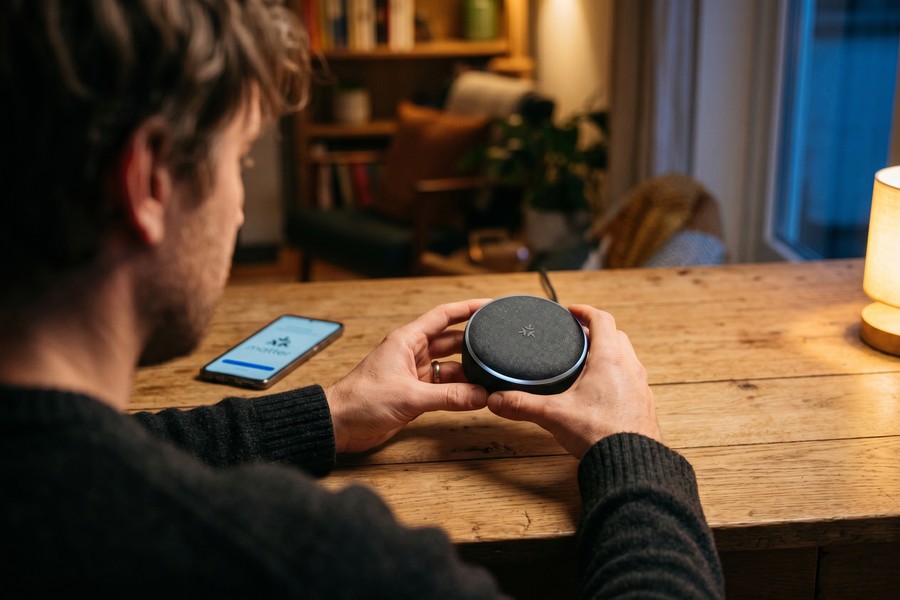
Matter, the cross-platform connectivity standard backed by Apple, Google, Amazon, and Samsung, reached critical mass adoption in 2024–2025. Its practical effect on pricing: manufacturers no longer need to build separate hardware SKUs for each ecosystem, which cuts production costs and forces retail prices down. A Matter-certified smart bulb in November 2025 costs $10–$18 and works natively with every major platform simultaneously. That was not true in 2021 or 2022, when the same device required ecosystem-specific versions at $25–$40 each.
Cheap vs. Inexpensive: A Distinction Worth Making Before You Buy Anything
Affordability only matters if the device still works reliably six months after purchase. Budget smart home devices fail in three predictable ways: persistent app connectivity drops that require manual resets, features like scheduling or history graphs locked behind a monthly subscription that was not disclosed at the point of sale, and zero firmware updates after the initial release, leaving the device as a permanent open port on your home network.
The way to avoid all three is to apply a short filter before purchasing: Is the device Matter-certified? Does it support local processing (meaning it works without a cloud connection)? Has the manufacturer shipped at least one firmware update in the last 12 months? Answering yes to at least two of these is a stronger predictor of a good long-term experience than any user review star rating.
The Matter standard is built on the IoT security baseline published in NIST’s Interagency Report 8425, the same framework that underpins the FCC Cyber Trust Mark. A Matter-certified device has already met a meaningful baseline of security and interoperability requirements before it reaches retail shelves.
Smart Air Quality Monitors and Purifiers: The Invisible Health Upgrade
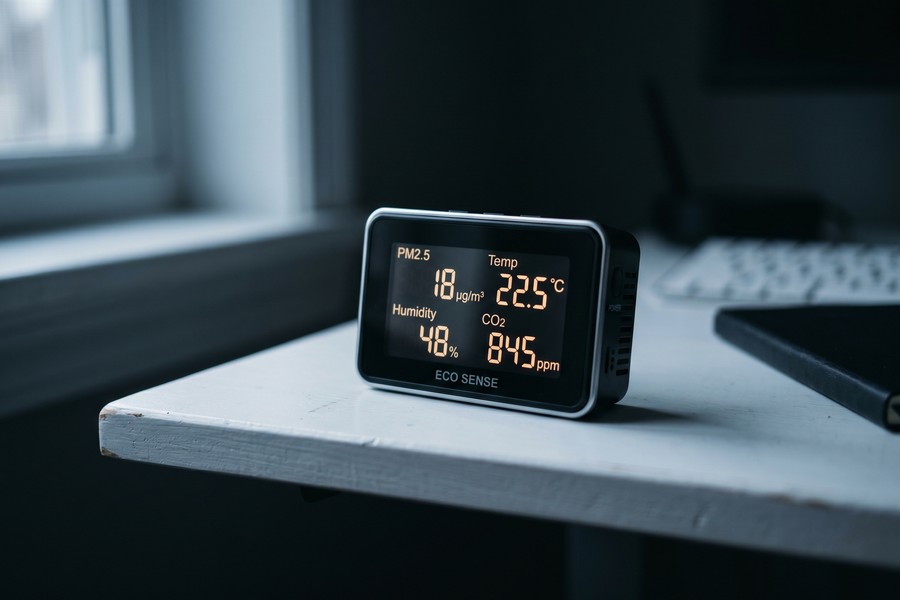
Indoor air quality is the most underused lever in a health-conscious home, and it is also the one where a $30–$50 device delivers the clearest return. The U.S. Environmental Protection Agency has consistently found that indoor air can be two to five times more polluted than outdoor air, driven by cooking particulates, off-gassing from furniture and flooring, and inadequate ventilation. A smart air quality sensor that measures PM2.5 (fine particulate matter), VOCs (volatile organic compounds), and CO2 gives you real-time data that a standard HVAC system and a basic smoke detector simply do not provide.
What to Look for in a Budget Smart Air Monitor
Entry-level smart air quality monitors in the $35–$60 range now commonly measure PM2.5, temperature, humidity, and CO2 concentration. The CO2 reading is particularly useful: elevated CO2 above 1,000 ppm is reliably associated with reduced cognitive function and impaired sleep quality, and it is invisible without a sensor. Models like the Airthings Wave Mini (around $80) and the Govee Smart Air Quality Monitor (around $40) sync to apps that log trends over time, making it possible to identify patterns, high VOC readings after cooking, CO2 spikes in a closed bedroom, rather than relying on isolated spot checks.
For purification, a smart HEPA purifier adds meaningful respiratory value for households with children, elderly residents, or anyone with asthma or allergies. Entry-level smart purifiers with HEPA filtration and PM2.5 auto-mode (the fan speed adjusts based on current air quality) are available in the $70–$120 range. The Levoit Core 300S and Winix AM80 both fall in this bracket and support app-based scheduling. The honest caveat: replacement HEPA filters cost $15–$25 annually and are non-negotiable for the device to perform as rated. Factor that into your total cost of ownership from the start.
The EPA reports that Americans spend approximately 90% of their time indoors, where air pollutant concentrations are often 2–5 times higher than outdoor levels, making indoor air quality a direct, daily health variable rather than an occasional concern.
Smart Lighting That Actually Supports Your Sleep
The health case for smart bulbs is stronger than any product marketing suggests, and it is grounded in peer-reviewed research that mainstream “best smart bulb” roundups consistently ignore. A study published in Scientific Reports found that nearly half of real homes had evening light bright enough to suppress melatonin by 50%, and that greater evening light exposure was directly associated with increased wakefulness after sleep onset. Homes with energy-efficient LEDs had nearly double the circadian-disrupting illuminance of homes with incandescent bulbs at equivalent perceived brightness. This is not a minor effect.
The Circadian Case for Tunable White Bulbs Under $15
Tunable white smart bulbs, those that shift between cool daylight (5,000–6,500K) and warm amber (2,200–2,700K), address this directly. A properly configured schedule uses cool, bright light during morning and midday to support alertness and the natural cortisol wake cycle, then automatically shifts to warm, dim light two to three hours before your target bedtime. This replicates what incandescent bulbs did naturally before the LED transition, but adds the automation precision that human behavior rarely maintains consistently on its own.
Philips Wiz tunable white bulbs sell for $12–$18 each. LIFX Color Mini comes in at $15–$20. Both support Matter in their 2025 hardware revisions, both integrate with free automation platforms, and both will execute a warm dim-down schedule without any ongoing subscription fee. A $200 “wellness lighting” fixture marketed with the same circadian claim is using identical underlying technology. The premium is for aesthetics, not biology.
Practical Setup That Takes Under 20 Minutes
Set a morning brightness ramp: start at 30% warm white 15 minutes before your alarm, reach 100% cool white (5,000K) by the time you reach the kitchen. Set an evening sequence: drop to 50% brightness at 8 p.m., shift to 2,700K; drop to 20% by 9:30 p.m. This requires no hub for Matter-compatible bulbs, it runs directly through the Home app on iOS or the Google Home app on Android. The automation takes about 15 minutes to configure and runs indefinitely without further attention. If you are already using iPhone Shortcuts for other automations, the same approach used to automate repetitive iPhone tasks applies directly here.
Set your evening lighting schedule to begin 30 minutes earlier than you think necessary. The melatonin suppression window is about 90–120 minutes before sleep onset, starting the warm dim-down at 8 p.m. for an 11 p.m. bedtime gives the biology time to actually work.
Smart Thermostats: Low-Cost Devices That Pay for Themselves
Cooler nighttime temperatures, typically 65–68°F (18–20°C), are consistently associated with faster sleep onset and more time in slow-wave and REM sleep stages in sleep medicine research. A smart thermostat that automatically drops the temperature at bedtime and raises it before your alarm removes the activation energy required to manually adjust a thermostat nightly, which most people simply do not do consistently.
The Energy Savings Math
The numbers here are straightforward. ENERGY STAR-certified smart thermostats save an average of 8% on annual heating and cooling bills, approximately $50 per year, based on verified field data across U.S. homes. Entry-level Matter-compatible models, the Amazon Smart Thermostat and the Google Nest Thermostat (non-Learning model), launched in 2025 at approximately $80 retail.
The arithmetic: at $50 annual savings, a $80 thermostat pays for itself in 19.2 months. If your annual HVAC spend is above the national median (meaning savings exceed $50), payback drops below 18 months. Over a five-year period at $50/year savings, the net return on an $80 investment is $170, ignoring installation cost entirely. That is a concrete financial argument that also doubles as a household stress-reduction argument for anyone managing a tight budget.
The EPA’s ENERGY STAR Smart Home Energy Management Systems criteria certify bundles of smart thermostats, lighting controls, and plug-load sensors that meet verified standby-power and occupancy-automation standards, worth checking if you are building a more complete setup and want an independent quality benchmark beyond manufacturer claims.
Caveats That Most Reviews Bury
Three limitations deserve upfront acknowledgment. First, most smart thermostats require a C-wire (common wire) for continuous power, older homes built before 2000 may lack this, and a C-wire adapter adds $15–$25 to installation cost plus 30–45 minutes of work. Second, ecosystem lock-in is a real risk even with Matter: some advanced features (learning schedules, energy history dashboards) are specific to proprietary apps and may disappear if the manufacturer discontinues their platform. Third, geofencing, the feature that detects when everyone has left home and automatically adjusts temperature, is the single highest-value setting most first-time owners never configure. Configure it first, before anything else.
ENERGY STAR’s smart thermostat certification requires independent field data verification across real U.S. homes, not manufacturer lab testing. The 8% average savings figure is based on actual occupancy and usage patterns, which makes it a more conservative and reliable estimate than most product marketing claims.
Budget-Friendly Smart Health Tracking Devices Worth Adding
Three device categories in the $40–$100 range have crossed a clinical-usefulness threshold that makes them defensible health investments rather than wellness theater: smart scales with body composition tracking, smart blood pressure monitors with app sync, and under-mattress sleep analyzers. Each fills a gap that annual doctor visits cannot: continuous data between appointments.
Devices That Earn Their Place
Smart scales measuring body fat percentage, muscle mass, and BMI, Withings Body+ at $100, Eufy Smart Scale P2 Pro at $50, provide trend data over weeks and months that a single clinic measurement cannot. A smart blood pressure cuff with Bluetooth app sync (Omron Evolv at $99, QardioArm at $95) creates a timestamped log that cardiologists can review rather than relying on a single reading taken in an office with white-coat variability. Under-mattress sleep analyzers like the Withings Sleep Analyzer ($120) track sleep stages and breathing disturbances without requiring a wearable, making them useful for people who find wrist trackers uncomfortable.
Research published by Samsung Business Insights in August 2025 cites evidence that combining home monitoring devices with routine in-person check-ins reduces hospital readmissions and emergency room visits, a finding with direct relevance to readers managing chronic conditions like hypertension or diabetes between appointments. These devices do not replace clinical care. They make the care you already receive more accurate and more efficient.
What to Skip
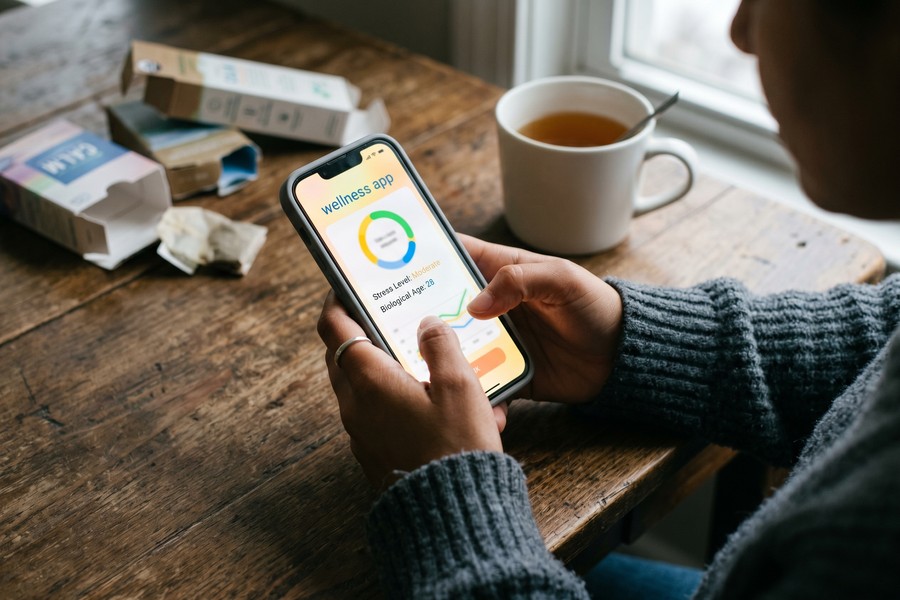
Avoid devices that market AI-driven “health scores” without disclosing the algorithm or any clinical validation. A product claiming to assess “stress levels,” “energy,” or “biological age” from light sensors alone, without peer-reviewed backing, is selling data dashboards, not health insight. The test is simple: does the manufacturer cite a specific study or clinical standard? If not, the feature is decorative.
18% of U.S. internet households now own six or more smart home devices, a figure that suggests deliberate, health-and-home-management-oriented adoption well beyond a single gadget purchase.
Hidden Costs and Privacy Tradeoffs Nobody Mentions
The sticker price on a smart home device is rarely the total cost. Subscription creep is the most financially damaging pattern in the budget smart home space: a $25 camera, a $50 video doorbell, and a $40 indoor sensor from three separate brands each carry $3–$10 monthly cloud storage or feature-unlock fees. A $150 hardware investment becomes $300–$600 per year in ongoing subscriptions, a total-cost-of-ownership calculation that no mainstream “affordable smart home” roundup includes, because most reviews are written at purchase time, not 12 months later.
The Surveillance Dimension of “Affordable” Devices
Smart home devices build detailed behavioral profiles at a granularity that most users do not consciously process: when you wake, when you sleep, when you leave, when you return, which rooms you use at which times of day. Many manufacturers treat this data as a revenue stream, transmitting it to third-party ad platforms and analytics brokers. For a health-conscious reader already attentive to stress and mental health, the background anxiety of knowing your daily routine is being sold is a legitimate wellbeing concern, not just a technology privacy issue. Checking a device’s privacy policy for explicit language about data sharing before purchasing takes about four minutes and is the most underused consumer protection in the category.
The practical defense is a two-step process. First, prioritize devices that support local storage and local control, meaning core functionality does not require a cloud server. Home Assistant-compatible devices, Zigbee and Z-Wave devices paired with a local hub, and Matter devices with local processing all fall into this category. Second, place all smart home devices on a dedicated IoT guest network, isolated from the network your computers and phones use. This takes about five minutes in any modern router’s admin panel and prevents a compromised smart device from accessing sensitive data on your primary network. For a broader framework on securing connected devices, the guidance in our article on building a personal digital security routine applies directly to smart home setups.
The FCC Cyber Trust Mark: A Purchase Filter That Actually Works
The FCC Cyber Trust Mark, rolling out across 2025–2026, is a shield-shaped label and scannable QR code that appears on certified consumer IoT products. Scanning the QR code discloses exactly what data the device collects, whether it sells that data, how long the manufacturer commits to providing security updates, and whether the device uses unique default passwords. It is the first consumer-facing label in the U.S. to make these disclosures machine-readable and standardized. The underlying security requirements are built on NIST’s IoT Core Baseline for Consumer IoT Products (NISTIR 8425), which defines the minimum security properties, software updates, data protection, logical access controls, that responsible smart devices should meet.
In practical terms: if a product in your cart carries the Cyber Trust Mark, scan the QR code before buying. If a product does not carry it, treat the absence as a data point, not a disqualifier, many good devices have not yet gone through certification. But if a device also lacks clear firmware update history, has no local control option, and requires a cloud account for basic operation, the combination of those three factors is a clear signal to look elsewhere. The FTC’s Careful Connections guidance for IoT security reinforces this framework, advising that authentication, vulnerability patching, and adherence to the NIST IoT baseline are the foundational requirements every consumer device should meet.
Cloud-dependent smart home devices from companies that have discontinued platforms, Wink, Insteon, and Iris by Lowe’s are recent examples, became completely non-functional for thousands of users when servers shut down. Matter-certified devices avoid this failure mode because they process commands locally and are not dependent on any single company’s cloud infrastructure remaining operational.
How to Build a Health-First Smart Home Starter Stack for Under $200
The most common mistake in building a smart home is buying in the wrong order, starting with convenience features (smart speakers, video doorbells) and never getting around to the devices that directly affect health. A health-first buying order inverts that.
The Priority Stack
| Device | Approximate Cost (Nov 2025) | Primary Health Benefit | Matter Compatible |
|---|---|---|---|
| Smart Air Quality Sensor | $35–$55 | Detects PM2.5, CO2, VOCs in real time | Select models |
| Tunable White Smart Bulbs (x3) | $36–$54 ($12–$18 each) | Automates circadian-aligned light schedule | Yes (2025 models) |
| Smart Plug with Energy Monitor | $12–$20 | Identifies energy waste; enables routine automation | Yes |
| Smart Thermostat (entry-level) | $80 | Automates nighttime temperature drop; saves ~$50/yr | Yes |
| Total | $163–$209 | Air quality + sleep light + energy + temperature | All four |
This stack addresses four distinct health levers, respiratory air quality, circadian lighting, thermal sleep environment, and energy-cost stress, before adding a single convenience feature. The multiplier effect here is real: the smart thermostat’s geofencing and the smart bulbs’ evening schedule both trigger from the same bedtime routine, reinforcing each other. The smart plug’s energy monitoring identifies which appliances are consuming standby power, which informs where to add the next sensor or automation rule.
Why Matter Is Non-Negotiable in 2025
Buying Matter-certified devices in 2025 is not a convenience preference, it is investment protection. When Wink shut down in 2023, every device that required Wink’s proprietary cloud became a paperweight. Matter devices process commands locally and are certified to work with any compliant platform, meaning a $15 bulb bought today will still function if the original manufacturer pivots or dissolves. For a $200 investment in health infrastructure, that future-proofing is worth more than any individual feature difference between brands. If you have questions about how Android-specific NFC or automation features interact with smart home devices, the guide on using NFC on Android covers the underlying protocol that some smart home products use for device pairing.
A $20 smart plug with energy monitoring can identify phantom power drain, appliances that consume 5–15 watts continuously while “off”, that adds $30–$80 annually to a typical electricity bill. A single device discovery can pay for the plug within the first month.
When Affordable Smart Home Devices Are Not Worth It
Honesty here is more useful than enthusiasm. Three household situations consistently produce poor outcomes with smart home devices, regardless of price or quality.
The first is unstable Wi-Fi. Smart devices that drop connections multiple times daily and require manual resets add friction rather than removing it, the opposite of the intended effect. Before buying any connected device, run a Wi-Fi coverage check in the rooms where you plan to use it. If signal strength drops below -70 dBm, fix the network first. A $25 Wi-Fi extender or a mesh network node ($60–$80) is a better first purchase than any smart device. The second is renters in buildings where thermostat, wiring, or network infrastructure modifications are prohibited by lease, smart thermostats and in-wall switches are simply off the table. Smart bulbs, smart plugs, and portable air purifiers require no modifications and remain viable. The third is anyone with a serious chronic health condition who needs medical-grade monitoring: consumer wellness devices are not substitutes for FDA-cleared medical equipment, and conflating the two creates false reassurance that can delay appropriate care.
A Decision Framework Before Any Purchase
Three questions, in order. Does this device solve a specific health or home-management problem I actually have right now? Does it work without a subscription for basic functionality? Has the manufacturer shipped a firmware update in the last 12 months? If the answer to any of these is no, the purchase warrants another look. Budget smart home technology has matured enough that you should not have to compromise on any of the three.
No-name devices from unverified brands sold at steep discounts frequently lack firmware update infrastructure entirely, meaning any security vulnerability discovered after launch will never be patched. Given that compromised IoT devices are a known entry point for home network attacks, as detailed in reporting on how ransomware reaches home devices, the $8 savings is rarely worth the exposure.
Security Fundamentals Every Smart Home Owner Should Apply
Smart home security is not a separate topic from smart home health, a compromised device on your home network is a stress and safety problem, not just a technical one. The five-minute network segmentation fix mentioned earlier (isolating smart devices on a guest network) is the highest-leverage single action most homeowners can take.
The Practical Security Checklist
| Action | Time Required | Risk Addressed |
|---|---|---|
| Create IoT guest network | 5 minutes | Isolates compromised devices from personal data |
| Change default device passwords | 2 minutes per device | Prevents credential-stuffing attacks |
| Enable auto-updates in device app | 1 minute per app | Ensures security patches are applied promptly |
| Review data-sharing settings | 5–10 minutes | Reduces behavioral data transmission to third parties |
| Scan FCC Cyber Trust Mark QR (if present) | 1 minute at purchase | Verifies security update commitment and data practices |
These steps take under 30 minutes for a typical four-device starter stack. They are not optional maintenance, they are the baseline that separates a genuinely useful smart home from one that creates new security surface area in exchange for modest convenience. The case for hardware security keys on your most sensitive accounts applies equally here: smart home apps with access to your home’s lock, camera, and thermostat warrant two-factor authentication at the account level, not just a strong password.
Comparing Device Security Postures
| Device Type | Local Control Available | Typical Update Lifecycle | Data Collection Risk |
|---|---|---|---|
| Matter-certified smart bulb | Yes | 3–5 years (standard-backed) | Low (no microphone/camera) |
| No-name Wi-Fi camera | Rarely | 6–12 months or less | High (video + audio stream) |
| Branded smart thermostat (major OEM) | Partial | 5–7 years | Medium (usage patterns) |
| Zigbee sensor (local hub) | Yes (fully local) | Hardware lifetime | Very low (no cloud dependency) |
| Cloud-only smart lock | No | Manufacturer-dependent | High (access pattern data) |
Real-World Example: A $187 Starter Stack and Its Measurable Outcomes
Consider an illustrative example: a two-person household in a mid-sized U.S. city with annual HVAC spending of approximately $1,200. The household installs a smart thermostat ($80), three tunable white Matter bulbs in the bedroom and living room ($45 total), a smart air quality sensor ($42), and a smart plug with energy monitoring ($20), for a total hardware investment of $187.
Within the first month, the energy monitor identifies two appliances in standby mode drawing a combined 12 watts continuously, approximately $12.60 per year in phantom load. The thermostat’s geofencing drops the temperature by 4°F during work hours and 3°F at night; at 8% annual savings on a $1,200 HVAC bill, that is $96 per year, placing the thermostat’s payback period at 10 months given the above-median starting spend. The air quality sensor records CO2 levels above 1,000 ppm in the bedroom by 10 p.m. most nights, resolved with a 10-minute pre-sleep ventilation routine.
Before the change: the household reported inconsistent sleep quality, no visibility into indoor air conditions, and no automated temperature control. After 90 days: CO2 readings in the bedroom averaged below 800 ppm on ventilated nights; the lighting schedule ran automatically every evening without manual adjustment; HVAC costs tracked 7.6% below the same period in the prior year. Hardware total was $187. Ongoing subscription cost: $0. All four devices are Matter-certified and will continue functioning regardless of any single manufacturer’s future status.
This is not a dramatic transformation. It is a set of specific, measurable improvements, cleaner bedroom air, consistent circadian lighting, lower utility bills, achieved with off-the-shelf hardware that was not available at this price point three years ago. The compounding effect is that each device reinforces the others: better air quality and a cooler sleeping temperature both contribute to the same sleep outcome that the lighting schedule is also targeting.
Your Action Plan
-
Audit your current home environment before buying anything
Identify the specific problems you are trying to solve: poor sleep, high energy bills, no visibility into air quality, or inconsistent morning routines. Write these down in order of priority. Every purchase decision in the following steps maps to one of these problems. Buying without this list is how people end up with a smart speaker and nothing that meaningfully affects their health.
-
Check your Wi-Fi coverage and network setup
Run a signal strength check in every room where you plan to install a smart device. If any room shows below -70 dBm, invest in a mesh network node or extender before buying any connected hardware. Also confirm that your router supports a guest network, you will need this for device isolation in step 5. Most routers manufactured after 2019 do.
-
Buy the air quality sensor first
A $35–$55 smart air quality sensor that measures PM2.5, CO2, and VOCs gives you a data baseline before you change anything else. Run it for two weeks and look at the CO2 trend in your bedroom between 9 p.m. and midnight. If it exceeds 800–1,000 ppm regularly, you have identified a ventilation problem that affects sleep quality, and the fix (opening a window, adding a HEPA purifier, or adjusting HVAC timing) is now data-driven rather than guesswork.
-
Install tunable white Matter bulbs in your bedroom and primary living area
Configure a cool white (5,000K, 100% brightness) schedule to begin 15 minutes before your alarm and a warm dim-down (2,700K, 20–30% brightness) starting two to three hours before your target bedtime. Use the free automation tools in Apple Home, Google Home, or Amazon Alexa, no subscription required. This single configuration change addresses the melatonin-suppression problem documented in peer-reviewed sleep research for a hardware cost of $36–$54.
-
Place all smart devices on a dedicated IoT guest network
Log into your router’s admin panel and create a guest network with a separate password. Connect every smart home device to this network and keep your computers, phones, and tablets on the primary network. This isolation means that if a budget smart device is ever compromised, it cannot access your banking apps, stored passwords, or personal files. The process takes five minutes and requires no technical expertise beyond knowing your router’s admin password.
-
Add the smart thermostat last and configure geofencing immediately
Install the thermostat after the other devices are running and you have confirmed your network setup is solid. On first setup, the single most important configuration step is geofencing: set the device to drop to an energy-saving temperature automatically when everyone leaves home and return to your preferred temperature 20–30 minutes before typical arrival. Most first-time owners skip this step, which is responsible for a significant portion of the documented 8% annual savings. Configure it first, before exploring any other feature.
Frequently Asked Questions
Do affordable smart home devices actually work as well as premium ones?
For the specific functions covered in this guide, tunable lighting schedules, air quality monitoring, thermostat automation, yes, within one important boundary. Budget devices from established brands with Matter certification perform the core functions at the same quality level as premium equivalents. Where they fall short is in build quality (plastic casings vs. metal), aesthetic design, and ecosystem-specific advanced features like AI-driven learning schedules. If the health function is the priority, the price difference is not justified. If the device lives on a prominent wall and design matters, the premium may be.
What is Matter and do I actually need it?
Matter is a cross-platform smart home connectivity standard that lets a single device work natively with Apple Home, Google Home, Amazon Alexa, and Samsung SmartThings simultaneously, without any hub. Its more important property for buyers in 2025 is that Matter devices process commands locally, meaning they continue working even if the manufacturer’s cloud service goes offline or the company shuts down entirely. Given that multiple smart home platforms (Wink, Insteon, Iris) have shut down in the last five years, stranding thousands of users with non-functional hardware, Matter compatibility is the single most important purchase filter for long-term investment protection.
How much can I realistically save on energy bills with a smart thermostat?
ENERGY STAR’s verified field data puts average savings at 8% of annual heating and cooling bills, approximately $50 per year for a typical U.S. household. At an $80 entry-level model price, that is a payback period of about 19 months. Households with above-average HVAC spending, those in climates with extreme summers or winters, will see payback in 12–15 months. The savings calculation assumes the geofencing feature is correctly configured; households that leave the thermostat in manual mode see significantly lower returns.
Are smart home devices a privacy risk?
Some are, and the risk varies significantly by device type and manufacturer. Smart speakers with always-on microphones and video doorbells transmit data that many manufacturers share with third-party platforms. Smart bulbs and smart plugs, by contrast, collect minimal behavioral data and present substantially lower risk. The practical mitigation steps are: review the privacy policy before purchasing, prioritize devices with local control options, and isolate all smart devices on a guest network separated from your primary devices. The FCC Cyber Trust Mark QR code, when present, discloses exactly what data a device collects and whether it is sold, scan it at the point of purchase.
Can smart lighting genuinely improve sleep quality?
The evidence is specific and worth taking seriously. A peer-reviewed study published in Scientific Reports found that nearly half of real homes had evening light bright enough to suppress melatonin secretion by 50%, directly linking ambient home lighting to measurable sleep disruption. Tunable smart bulbs that automate a shift to warm, dim light two to three hours before bedtime address this directly. The effect is not universal, individuals vary in melatonin sensitivity, but the intervention is inexpensive, evidence-backed, and carries no downside risk. A $15 bulb with a properly configured schedule replicates what a $200 circadian wellness fixture markets itself as doing.
What should I do if a smart device stops receiving firmware updates?
First, check whether a security vulnerability has been disclosed for the device by searching the manufacturer’s name and model number alongside “CVE” (Common Vulnerabilities and Exposures). If a known vulnerability exists and no patch has been issued, the safest action is to remove the device from your network. If no known vulnerability exists, the device can continue functioning, but should be isolated on a guest network to limit exposure. Matter-certified devices mitigate this problem substantially because the Matter protocol itself receives updates from the standards body, independent of any individual manufacturer’s support commitment.
How do I know if a budget smart home device is genuinely secure?
Four checks, in order: Does it carry the FCC Cyber Trust Mark (scan the QR code for specifics)? Is it Matter-certified? Does the manufacturer have a public record of shipping firmware updates in the last 12 months? Does it support local control without requiring a cloud account for basic operation? A device that passes at least three of these four checks is significantly more trustworthy than one that passes none. The NIST IoT Core Baseline (NISTIR 8425) is the underlying technical standard these checks are derived from, it defines the minimum security properties that responsible consumer IoT devices should meet, including unique default credentials, software update capability, and data protection controls.
Sources
- Parks Associates (2024), 54 Million Internet Households Have at Least One Smart Home Device
- Parks Associates (2024), 18% of U.S. Households Have Six or More Smart Home Devices
- Horowitz Research (2025), Nearly Half of American Homes Have Smart Devices
- Fortune Business Insights (2025), Smart Home Market Size, Share and Industry Analysis
- U.S. EPA / ENERGY STAR (2024), Smart Thermostat FAQ: Average Savings Data
- U.S. EPA / ENERGY STAR, Smart Home Energy Management Systems (SHEMS) Key Product Criteria
- NIST, IoT Cybersecurity Program: Consumer IoT Security (NISTIR 8425)
- FTC, Careful Connections: Keeping the Internet of Things Secure
- U.S. EPA, Indoor Air Quality: Key Facts and Research Overview