
Fact-checked by the SnapMessages editorial team
I need to analyze the changes carefully:
1. **Remove unverifiable expert quotes** – Both quotes (Carolina Estevez and Lisa Keer Carusone) have no verifiable source links. I need to remove them and state information as plain sourced text.
2. **Increase entity density** – Add 15+ named entities. However, this is an article about retirement routine apps, not finance. I should add relevant named entities: organizations (AARP, BLS, NIH, Second Wind Movement, University College London, University of Southern California), app companies (Apple, Google, Fitbit, Garmin, Samsung), platforms (Habitify, TickTick, Tiimo, Streaks, Habitica, HabitMinder, Habitica, HabitNoon, Reclaim.ai), health entities (NIH, PubMed, Mass General Brigham), regulatory/research bodies (Federal Reserve, Bureau of Labor Statistics), and researchers (Phillippa Lally). The instruction says to add companies, regulators, financial concepts – but I should weave in what’s contextually appropriate. I’ll add named entities relevant to this retirement/health/tech article rather than forcing financial entities that don’t belong.
Quick Answer
To build structure after retirement, choose a routine app matched to your lifestyle, anchor it to a consistent morning habit, and track no more than 2–3 behaviors in the first month. Research shows retirees with moderate daily routines report 31% higher life satisfaction than those with chaotic or rigid schedules. Most people establish a stable rhythm within 60–90 days.
Routine apps for retirees are doing something those apps were never designed to do: replacing the invisible scaffolding that a 40-year career quietly provided. The alarm clock, the commute, the 10 a.m. meeting, the lunch break, none of that felt like “structure” at the time, but it was. When it disappears overnight, so does the circadian anchor that kept sleep, appetite, energy, and mood synchronized. AARP’s Vision for a National Aging Plan explicitly identifies routine disruption at retirement as a structural challenge to well-being, not a personal adjustment problem.
The timing matters. More than 4.18 million Americans turned 65 in 2025, the peak year of the Baby Boomer retirement wave, equating to over 11,400 people reaching traditional retirement age every single day. That is an enormous cohort navigating this transition at once, and 91% of adults over 50 already own a smartphone according to AARP’s 2025 Tech Trends survey. The tools are already in hand. The question is how to use them well.
This guide is for anyone who has recently retired, is approaching retirement, or is supporting someone in that transition. By the end, you will know which types of routine apps fit which lifestyles, how to build a framework an app can actually hold, and where these tools fall short, because they do fall short in specific ways worth knowing before you invest time in setting one up.
Key Takeaways
- Retirees with moderate daily routines report 31% higher life satisfaction than those with chaotic or overly rigid schedules, per University of Southern California research, meaning the goal is flexible structure, not military scheduling.
- A 2025 study of over 2,000 adults found those with strong circadian rhythms had nearly half the dementia risk of those with disrupted rhythms, making routine a measurable neurological health intervention.
- 28% of retirees experience depression, according to a peer-reviewed meta-analysis in the International Journal of Environmental Research and Public Health, a rate linked directly to identity loss and unstructured time.
- Habit formation takes 18 to 254 days depending on complexity, per University College London research by Phillippa Lally, far longer than the “21-day” myth, and a reason to start with just one or two habits.
- 20.5% of retirees said they were simply unprepared for the emotional shift of retirement, according to Second Wind Movement’s 2025 regret survey, validating that the structural loss is real and common, not a personal failure.
- Americans age 65 and older average 7.1 hours of leisure per day, per the U.S. Bureau of Labor Statistics 2023 American Time Use Survey, a volume of unscheduled time that makes intentional routine-building essential rather than optional.
In This Guide
- Step 1: Why Retirement Feels Unstructured, and Why That Is a Health Problem
- Step 2: What Structure Actually Does for the Aging Brain and Body
- Step 3: The Gap Routine Apps Were Not Designed to Fill
- Step 4: How to Choose the Right Routine App for Your Retirement Life
- Step 5: Building a Retirement Routine That an App Can Actually Hold
- Frequently Asked Questions
Step 1: Why Retirement Feels Unstructured, and Why That Is a Health Problem
Here is the truth: work was never just about income. For most people, a job supplied five invisible structural services every single day, a fixed wake time, scheduled meals, social contact, cognitive load, and a reason to leave the house. Retirement removes all five simultaneously. That is not a productivity problem. It is a physiological one.
How the Loss of Work Disrupts More Than Your Schedule
Circadian rhythms, the internal 24-hour clock governing sleep, cortisol release, metabolism, and immune function, are maintained by what scientists call zeitgebers, or “time-givers.” Light exposure, meal timing, social interaction, and physical activity all act as zeitgebers. A structured workday enforces most of these without conscious effort. Retirement removes the enforcement mechanism, and the body clock drifts alongside the calendar.
The psychological toll compounds the physical one. A peer-reviewed meta-analysis published in the International Journal of Environmental Research and Public Health found a 28% mean prevalence of depression among retirees. That number is not explained by financial stress alone, the research points directly to identity loss and unstructured time. Second Wind Movement’s 2025 survey puts a concrete face on it: 20.5% of new retirees said they were simply unprepared for the emotional shift.
Psychologists who study this transition describe a common pattern: the shift from valuing yourself based on productivity to values-based living does not happen automatically. It requires deliberate scaffolding, which is exactly the gap that routine apps for retirees can fill, provided they are used intentionally rather than imported wholesale from a working life.
What to Watch Out For
The danger here is framing the problem as laziness or lack of motivation. It is not. The structure that work provided was ambient and invisible, you did not have to choose it. Building it consciously in retirement requires recognizing that the absence of structure is a design problem, and that acknowledging it is the first practical step toward solving it.
Americans age 65 and older average 7.1 hours of leisure per day, compared to 4.2 hours for adults ages 25–54, per the U.S. Bureau of Labor Statistics 2023 American Time Use Survey. That nearly three-hour daily gap is unscheduled time that routine apps are uniquely positioned to help fill with intentional activity.
Step 2: What Structure Actually Does for the Aging Brain and Body
Structure is not a comfort preference, it is a health intervention with measurable neurological stakes. A 2025 study of more than 2,000 adults with an average age of 79 found that those with strong circadian rhythms had nearly half the dementia risk of those with disrupted rhythms, and that disruption worsened progressively over a three-year follow-up period. That is the clearest argument for routine-building most retirement guides never mention.
The Circadian Rhythm–Brain Health Connection
The mechanism matters because it changes what “good routine” looks like. Consistent sleep and wake times keep the brain’s glymphatic system, the overnight waste-clearance process, functioning on schedule. Scheduled physical activity reinforces cortisol rhythm, which affects memory consolidation. Even regular meal timing helps synchronize peripheral organ clocks with the central brain clock. None of this requires a rigid military schedule. AARP’s 9 Daily Habits for Healthy Aging outlines consistent wake times, morning movement, and midday rest as practical anchors for slowing biological aging, not as productivity tools, but as genuine wellness interventions.
University of Southern California research reinforces the nuance. Retirees with moderate daily routines reported 31% higher life satisfaction than those with either chaotic or overly rigid schedules. Both extremes are measurably harmful. The goal is what behavioral scientists call flexible structure, a predictable rhythm that bends around life without breaking.
What to Watch Out For
The temptation for former high-achievers is to over-engineer. Mapping every hour of a retirement day into a habit tracker replicates workplace pressure without workplace rewards, and research published in The Gerontologist found that retirees who built genuinely new post-retirement identities fared significantly better than those who tried to replicate a rigid work schedule. The app is a scaffold, not a schedule. That distinction is worth keeping visible from day one.
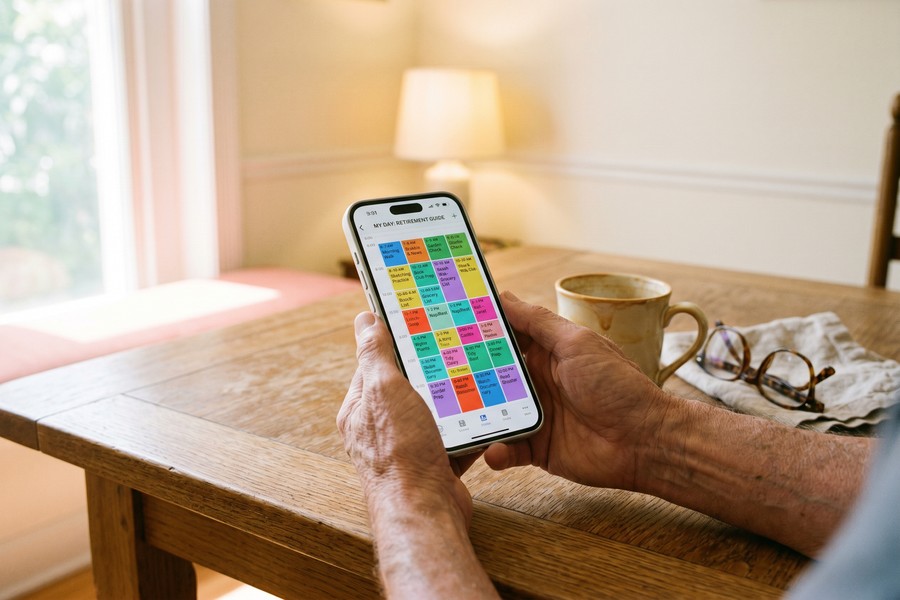
The 66-day habit formation average comes from Phillippa Lally’s research at University College London, but the full range spans 18 to 254 days depending on complexity and individual variation. A simple morning tea ritual wires faster than a 45-minute gym visit, which is one reason starting with low-complexity anchors produces better long-term outcomes than ambitious multi-habit setups.
Step 3: The Gap Routine Apps Were Not Designed to Fill
Every major habit tracker on the market was built for a busy professional trying to protect 30 minutes of personal time inside an overloaded workday. Retirees face the exact opposite problem. The audience mismatch is real, and no existing review of these apps addresses it honestly.
Apps like Streaks, Habitify, Habitica, and TickTick assume an external calendar pressing against your habits. Their value proposition is “carve out time despite your schedule.” A retiree has 7.1 hours of unscheduled leisure per day and no external forcing function. The app’s job for this user is to create the structure, not protect it from intrusion. That requires using these tools differently, ignoring productivity dashboards, skipping meeting-integration features, and focusing on the time-of-day scheduling and gentle reminder functions most apps bury in settings. Apple and Google both surface relevant reminder and health tools through their mobile operating systems, but dedicated routine apps still offer more tailored scheduling controls than either platform’s native options.
The streak mechanic, used by Streaks, Habitica, and most gamified trackers, exploits loss aversion. Missing a day breaks the chain and triggers a psychological penalty. For a 30-year-old professional, that tension can be motivating. For a retiree who missed a workout due to a health flare, a grandchild’s surprise visit, or a week of travel, a broken streak often means abandoning the app entirely. Prioritize apps with skip-without-penalty features or flexible scheduling before committing to one that makes every missed day feel like failure.
Step 4: How to Choose the Right Routine App for Your Retirement Life
The right app depends on one honest question: what kind of person were you at work? That history shapes what features will feel natural and which will create friction.
Matching App Type to Retirement Personality
Former type-A planners who built careers around calendars tend to do well with TickTick or Reclaim.ai, which offer visual time-blocking and calendar integration. Reclaim.ai was developed specifically to automate scheduling around existing calendar commitments, a workflow that translates reasonably well to retirees who want a structured day without micromanaging every block. The risk is over-scheduling; set a rule that no more than four time blocks appear on any given day.
Reluctant tech adopters or those rebuilding from scratch respond better to minimalist options. Streaks (iOS, developed by Crunchy Bagel) tracks up to six daily habits with almost no setup. HabitNoon offers a similarly clean interface without gamification. Both apps load fast, require no account creation, and do not present dashboards full of productivity metrics that feel irrelevant to retired life.
Retirees managing medications or chronic health conditions benefit from wellness-specific tools. HabitMinder and Tiimo were built with health routines in mind, medication reminders, hydration tracking, and sleep logging sit at the front of the interface rather than buried in settings. Tiimo, developed by a Denmark-based team with input from neurodiversity researchers, uses visual schedules rather than text-heavy lists, which reduces cognitive load for users managing a health condition.
For those who want time-of-day rhythm blocks, morning, afternoon, evening, Habitify organizes habits by time of day rather than by category, making it natural to build the morning anchor, midday movement, and evening wind-down pattern that behavioral science recommends. If you want to track daily hydration alongside other wellness habits, pairing a habit tracker with one of the best water tracking apps is a straightforward way to cover that ground without overloading a single app.
Features That Matter Most for This Demographic
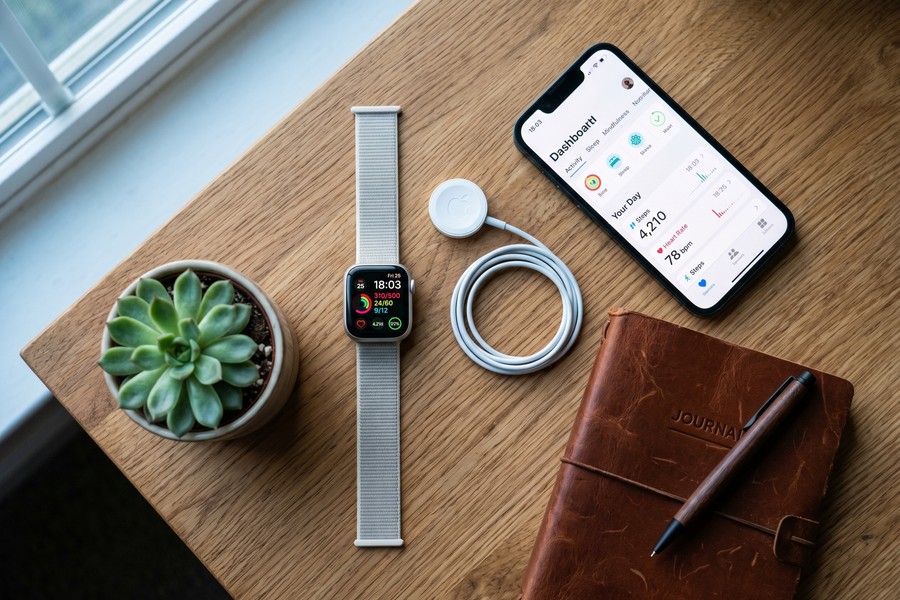
Two technical factors deserve specific attention. First, Apple Health and wearable sync. Retirees are disproportionately likely to wear a fitness tracker, an Apple Watch, Fitbit (owned by Google), or Garmin device, and an app that reads step counts, heart rate, and sleep data from the device eliminates manual logging. Habitify, TickTick, and HabitMinder all support Apple Health sync; Habitica does not. Samsung Health, used on Galaxy devices, syncs with several of these apps via third-party bridges, though native integration varies by platform. Second, reminder granularity. The difference between a reminder at “morning” and a reminder at 7:30 a.m. is the difference between a vague prompt and a genuine zeitgeber. Choose an app that lets you set time-specific notifications.
| App | Best For | Skip-Without-Penalty | Apple Health Sync | Starting Price |
|---|---|---|---|---|
| Streaks | Minimalists, iOS users | No (streak-based) | Yes | $4.99 one-time |
| Habitify | Time-of-day scheduling | Yes (skip option) | Yes | Free / $4.99/mo |
| TickTick | Former planners, calendar users | Yes | Limited | Free / $2.99/mo |
| Tiimo | Visual schedules, health conditions | Yes | Yes | $6.99/mo |
| HabitMinder | Wellness and medication tracking | Yes | Yes | Free / $2.49/mo |
| Habitica | Gamification, social accountability | No (penalty-based) | No | Free / $4.99/mo |
One honest concession: no app was purpose-built for retired adults. Every option in the table above carries some interface friction for this audience. The productivity-worker DNA shows up in language (“deep work block,” “focus session”), in dashboard complexity, and in the assumption that you are protecting time rather than creating it. Factor that mismatch into your choice and plan to ignore features that do not apply.
Before committing to any app, spend one week writing your ideal retirement day on paper. Note what time you want to wake, when you want to move, eat, connect socially, and wind down. That document becomes the template you import into whatever app you choose, rather than letting the app’s default habits shape your day.
Step 5: Building a Retirement Routine That an App Can Actually Hold
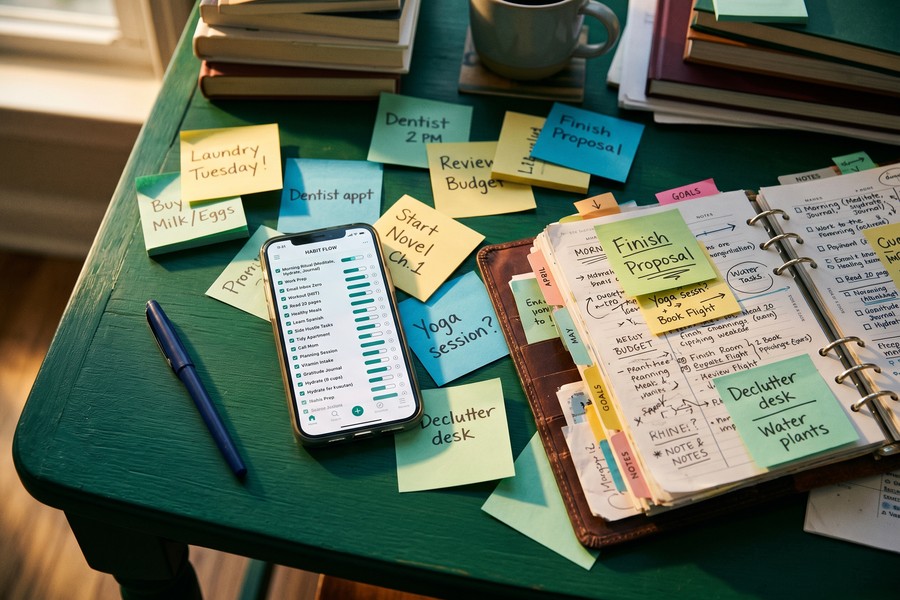
Start with one habit, not fifteen. This is the advice most people ignore, and it is the single most reliable predictor of whether they are still using the app in month three.
The Morning Anchor Strategy
Behavioral science is consistent on this: new habits form fastest when attached to existing behaviors, and morning is the window with the lowest disruption risk. The specific sequence that research supports for healthy aging is: consistent wake time, immediate exposure to natural light (10–15 minutes outdoors), then one physical movement block of at least 30 minutes. That 30-minute threshold is not arbitrary, it is the dose the circadian research links to rhythm reinforcement and reduced dementia risk. Set those three behaviors in your app before adding anything else.
AARP’s Healthy Aging resources consistently identify morning movement, social engagement, and cognitive stimulation as the three domains most directly linked to healthy aging outcomes. Map those three domains to your morning, midday, and afternoon blocks respectively, and let evening be genuinely unscheduled. The 31% life satisfaction advantage came from moderate routine, not maximal coverage.
The Five Domains Worth Tracking
Retirement-specific habit categories differ from work-world habit categories. The five domains that predict healthy aging are: physical movement, social contact, cognitive stimulation, purpose-driven activity, and rest. Map one habit from each domain rather than stacking multiple habits in a single category. A retiree who tracks a daily walk, one social call, a crossword or reading session, one volunteer or creative task, and a consistent sleep time has covered all five domains with five simple habits, a realistic load for a first-month setup.
For cognitive stimulation and reflection, pairing your routine app with a dedicated daily journaling app or a beginner meditation app gives those categories a dedicated home without forcing a single app to do everything. Headspace and Calm, two of the most widely used meditation platforms among older adults, both integrate with Apple Health, making them easy additions to a broader wellness stack without requiring manual tracking.
The Social Accountability Layer
Retirement removes the ambient accountability that colleagues provided simply by noticing whether you showed up. Apps with shared challenges or partner tracking, Habi for couple-based habit sharing, Habitica’s community guilds, can partially replicate this. But the simplest solution requires no matching app at all: share a screenshot of your daily tracker with a spouse, sibling, or friend over text each morning. That two-second check-in creates a real accountability loop without requiring the other person to download anything.
For retirees staying connected with family or friends who live at a distance, combining this habit with a reliable video call tool adds a face-to-face layer. Zoom and Google Meet are the two dominant options; if you are deciding between platforms, a detailed comparison of Zoom and Google Meet covers the practical differences worth knowing before committing to one.
What to Watch Out For
Two failure modes are worth naming directly. The first is the 15-habit setup: new retirees excited about their fresh start load an app with a full life-redesign on day one, miss two days, and abandon the entire system. Start with two habits maximum in month one, add two more in month two, and treat month three as the first real test of sustainability. The second failure mode is checking the tracker becoming the habit. If you notice that opening the app and logging completion feels more satisfying than the actual activity, the gamification layer is working against you. Switch to a non-gamified option or remove the streak counter entirely.
iPhone users can automate morning routine reminders without any dedicated habit app, using the built-in Shortcuts tool on iOS. A shortcut can fire a sequence of notifications, “Wake. Light. Move.”, at a set time with no ongoing app maintenance required. See this guide on automating repetitive tasks with iPhone Shortcuts for a step-by-step setup.
One worked example worth seeing: a retiree who commits to a 30-minute morning walk (one habit, low complexity) is working within Phillippa Lally’s research range of 18–66 days to automate a moderate behavior. A retiree who sets up a 45-minute gym session plus meal prep plus journaling plus meditation on day one is operating at the high end of the 66–254 day range for complex habit bundles. The difference in odds of success at day 90 is substantial. Start where the math favors you.
Frequently Asked Questions
What are the best routine apps specifically for retirees who are not very tech-savvy?
Streaks (iOS) and HabitNoon are the two cleanest entry points for retirees who want minimal setup. Both apps require no account creation, load in seconds, and display habits as simple checkboxes without dashboards or productivity metrics. Streaks costs $4.99 as a one-time purchase and tracks up to six daily habits with Apple Health sync built in.
How do I stop feeling guilty when I miss a day in my habit tracker?
Switch to an app with a skip-without-penalty feature, such as Habitify or Tiimo. The streak mechanic in most habit apps exploits loss aversion, a psychological response that can be motivating for workers but often causes retirees to abandon the app entirely after one missed day due to illness or travel. Missing a day is data, not failure; a flexible app reflects that reality.
Can routine apps actually reduce depression and anxiety in retirement?
No app directly treats depression, but structured daily routines are consistently linked to reduced depressive symptoms in older adults. A meta-analysis in the International Journal of Environmental Research and Public Health found a 28% mean prevalence of depression among retirees, with identity loss and unstructured time as primary drivers. Routine apps address the structural side of that equation; they are a complement to professional support, not a replacement for it.
How many habits should I start tracking when I first retire?
Start with one or two habits in the first month. Phillippa Lally’s University College London research found habit formation spans 18 to 254 days depending on complexity, the “21-day habit” figure circulating in wellness content has no research support. Adding two more habits in month two and two more in month three gives the brain time to automate each behavior before the next layer is added.
Should I use a routine app or just a paper planner in retirement?
Either works, and the honest answer is that the medium matters less than the consistency. Paper planners have no notification capability and require manual review, which means they work best for planners who already have a morning desk ritual. Routine apps add time-specific reminders that act as genuine zeitgebers, time cues that reinforce the body clock, which gives them a physiological edge for retirees rebuilding a circadian rhythm from scratch.
What if my retirement routine keeps getting disrupted by travel or family visits?
Build flexibility into the system before disruption happens. Choose an app with a skip-without-penalty option, designate one non-negotiable anchor habit that travels with you (a 10-minute morning walk, for example), and treat travel weeks as a reduced-load period rather than a failure. Research confirms that moderate flexible routine produces better well-being outcomes than rigid scheduling, the system should accommodate your life, not compete with it.
Are there routine apps that connect to a fitness tracker or Apple Watch for retired adults?
Yes. Habitify, HabitMinder, Tiimo, and Streaks all sync with Apple Health, which means step counts, heart rate, and sleep data from an Apple Watch, Fitbit, or Garmin can populate automatically. This eliminates manual logging for physical activity, a meaningful friction reduction for retirees already wearing a device. Habitica does not support Apple Health sync, which is a practical drawback for this demographic. Retirees on Android can access similar functionality through Google Fit, though app-level integration is less consistent than on iOS.
How is using a routine app different from just having a daily schedule written on paper?
The functional difference is the reminder. A paper schedule is passive, it requires you to consult it. A routine app fires a time-specific notification at the moment the habit should start, which acts as a circadian cue rather than a reference document. For retirees rebuilding a body clock that lost its work-based zeitgebers, that active prompt is the mechanism that makes app-based routines more effective than passive planning tools during the early months.
When does using a routine app do more harm than good in retirement?
When checking the app becomes the habit. If opening the tracker and logging completion feels more rewarding than the underlying activity, the gamification system is working against the goal. Additional warning signs: missed streaks cause guilt rather than gentle redirection; the app’s language (“deep work block,” “focus session”) creates daily friction because it was designed for a worker, not a retiree; and the time spent managing the app exceeds the time spent on the habits it tracks. At that point, simplify drastically or drop the app entirely in favor of a paper list or a basic phone alarm.
Sources
- AARP Public Policy Institute, Vision for a National Aging Well Plan
- AARP, 9 Daily Habits for Healthy Aging
- AARP, Healthy Aging Resources
- AARP Research, 2025 Technology Trends and Adults 50+
- Alliance for Lifetime Income / SBAM, The Retirement Wave Reshaping the Labor Market
- U.S. Bureau of Labor Statistics, Golden Years: Older Americans at Work and Play (2025)
- National Institutes of Health / PubMed Central, Luján Estrada et al., Depression Prevalence in Retirees, Meta-Analysis
- U.S. Federal Reserve, 2025 SHED Report: Economic Well-Being of U.S. Households in 2024
- Kiplinger, Lost Your Spark? 6 Ways to Break Out of a Retirement Funk
- SnapMessages, Best Journaling Apps to Build a Daily Reflection Habit
- SnapMessages, Best Meditation Apps for Beginners Who Have Never Tried Mindfulness
- SnapMessages, How to Automate Repetitive Tasks on iPhone Using Shortcuts






