Fact-checked by the SnapMessages editorial team
The Verdict
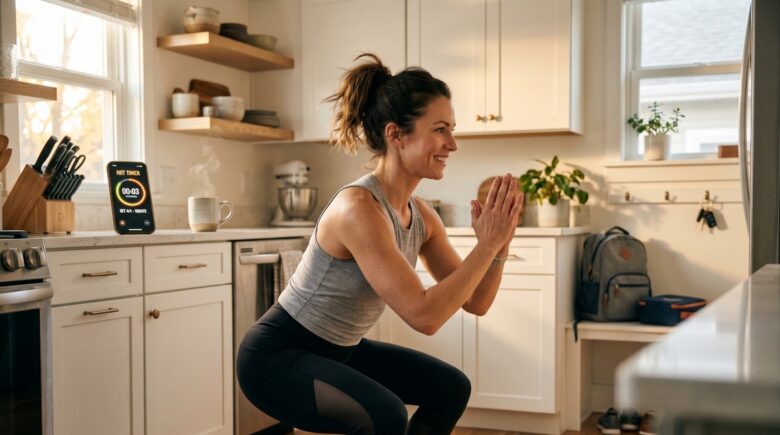
Micro workout apps for parents are worth it if you can realistically carve out 5 to 10 minutes at least three times per week and choose an app that auto-adapts when your schedule collapses. They are not worth it if your fitness goal is serious muscle hypertrophy or endurance sport training, where short sessions cannot substitute for structured longer programs.
The single factor that determines whether micro workout apps for parents actually work is not motivation, it is whether the app adapts to your schedule or demands that you adapt to it. Only 47.2% of U.S. adults met federal aerobic activity guidelines in 2024, meaning more than half of American parents are already falling short, and the gap has almost nothing to do with willpower.
As of September 2025, a new category of app has emerged that treats a five-minute window as a complete session rather than a failure. That shift in design philosophy is what makes this decision matter right now.
| Factor | Reasons to Use Micro-Workout Apps | Reasons Not to Use Micro-Workout Apps |
|---|---|---|
| Time requirement | Sessions run 5–15 minutes; no gym commute needed | Shorter sessions require higher intensity, which is not suitable for everyone |
| Clinical evidence | As little as 11 minutes of moderate-to-vigorous activity daily linked to 23% lower premature death risk | Evidence for muscle hypertrophy in under 15 minutes is weak; not a replacement for resistance training programs |
| Cost | Most apps cost $0–$15/month versus a gym average of $45/month | Subscription creep from stacking multiple wellness apps can exceed gym costs annually |
| Schedule flexibility | Adaptive apps auto-shorten or reschedule missed sessions automatically | Static library apps leave all scheduling to you, replicating the same failure mode as a gym membership |
| Equipment | Most top apps have full zero-equipment modes usable in a living room | Bodyweight-only programs plateau faster for users with strength goals above basic fitness |
| Habit stickiness | AI-personalized programs improve retention by 50% versus static plans | Over 50% of fitness app users quit within the first month; onboarding design matters enormously |
Key Takeaways
- You can realistically complete at least 3 sessions per week of 5–10 minutes each, fitting into nap time, school pickup queue, or post-bedtime windows.
- Your primary fitness goal is cardiovascular health, weight management, or stress reduction rather than building significant muscle mass or training for endurance events.
- You are willing to spend no more than $15/month on an app subscription, or you need a genuinely usable free tier.
- You want an app that auto-adapts when you report less than your planned time window, rather than one that simply offers a large workout library.
- You are not already meeting the CDC recommendation of 150 minutes of moderate-intensity activity per week through other means.
- You are prepared to review the app’s privacy policy before entering biometric or location data, given that some fitness apps sell de-identified health data to advertisers.
- You are willing to check your app subscriptions quarterly to prevent wellness app stack costs from exceeding $540/year, the rough equivalent of a mid-range gym membership.
What Are Micro-Workouts, Really? The Science Behind the Label
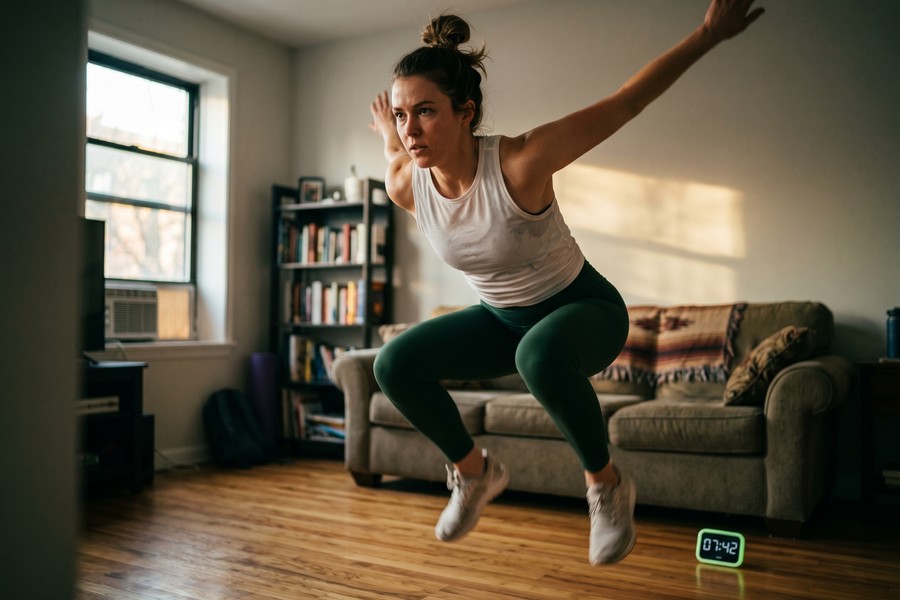
A micro-workout is a deliberate session of 5 to 15 minutes of higher-intensity movement, not a casual walk to the kitchen or light stretching. The clinical literature uses the term VILPA (vigorous intermittent lifestyle physical activity) to describe these structured short bouts, and the research behind VILPA is more substantive than most app marketing suggests.
According to a UPMC HealthBeat review of 2025 British Journal of Sports Medicine data, women averaging just 3.4 minutes of high-intensity exercise per day were 51% less likely to experience a heart attack. Separately, a systematic review published in the British Journal of Sports Medicine by Ekelund et al. found that 11 minutes of moderate-to-vigorous physical activity per day was associated with a 23% lower risk of premature death across a dataset of over 479,000 participants. These are not marginal effects.
The honest concession is equally important: micro-workouts are not adequate for serious muscle hypertrophy or marathon preparation. A parent training for a powerlifting meet or a triathlon needs volume that short sessions cannot provide. But for the parent whose realistic goal is cardiovascular maintenance, energy management, and not gaining weight while sleep-deprived, the evidence is genuinely strong.
The U.S. Department of Health and Human Services Physical Activity Guidelines, 2nd Edition, updated the standard specifically to remove the old requirement that activity must occur in bouts of at least 10 minutes. Any movement duration now counts toward weekly targets. That policy change is what made the micro-workout app category clinically defensible, not just commercially convenient.
What Makes an App Actually Parent-Proof?
The most important feature to evaluate is interruption tolerance, whether a workout can survive a child walking in mid-session without the entire plan collapsing. Most fitness app reviews ignore this entirely and rank apps on exercise library size instead.
There are five criteria that genuinely separate parent-usable apps from everything else. First, can the app deliver a complete, high-quality session in 5, 7, or 10 minutes based on what you report available right now, rather than a fixed-length program? Apps like Sworkit and FitOn allow real-time duration selection before the session starts. Nike Training Club has excellent production quality but its session lengths are largely preset, which means a six-minute school pickup delay can derail the plan entirely.
Second, decision load. A large exercise library sounds like a feature, but it is often where parents abandon the session before the first rep. Decision fatigue is a real phenomenon, and apps that tell you exactly what to do on opening, like 7-Minute Workout and Ray, consistently outperform library-heavy alternatives for parents specifically. Real-world usage data from Ray shows that 26% of all completed workouts on the platform are 20 minutes or less, confirming this is how parents actually exercise in practice.
Third, recovery-friendly design after missed days. Apps that guilt users with broken streaks or require manual rescheduling replicate the same psychology as a gym membership: one missed day feels like failure. The better apps reset softly, Daily Burn and FitOn both send a single gentle re-engagement prompt rather than a streak-loss notification. Fourth, a genuine zero-equipment mode. Fifth, AI-personalized scheduling rather than static calendar programs. According to 2025 industry data, AI-driven personalization improves user retention by 50% compared to static fitness programs, a meaningful gap for a category where over half of users quit within the first month.
“Shorter workouts allow people with busy schedules to focus on what they can perform in small controlled bouts throughout the day without feeling overwhelmed by committing a huge amount of time to work out.”
How Do You Build a Habit That Survives Real Family Life?
The answer is not more motivation; it is identifying your four reliable micro-windows and anchoring the workout to something that already happens. Nap time, the school-run queue, the pre-coffee five minutes before kids wake up, and the 10 minutes after bedtime are the four slots that remain structurally consistent for most parents even when the rest of the day is unpredictable.
Habit stacking, attaching the workout to an existing non-negotiable like making coffee or waiting for school pickup, works better than carving out dedicated new time because it eliminates the decision of “when.” If the habit trigger already exists in your day, the app becomes the execution tool rather than the plan itself. This is where notification strategy inside the app matters: a generic 7 a.m. reminder is useless if your mornings are chaos. Apps like FitOn and Sworkit allow custom reminder windows; use them to match your actual availability rather than your aspirational schedule.
The World Health Organization’s Guidelines on Physical Activity and Sedentary Behaviour note that regular physical activity improves sleep quality and health-related quality of life, outcomes that matter to parents before cardiovascular fitness does. Starting with mental health and energy as the motivating benefit, rather than weight loss, tends to produce more durable early habits because those benefits arrive faster. If you are also trying to build other small daily health habits, pairing a micro-workout routine with something like a water tracking app to hit daily hydration goals creates a lightweight but reinforcing wellness stack without adding decision overhead.
For parents who also struggle with sustained focus during the day, the same phone-based habit architecture used in Pomodoro timer apps for deep focus sessions applies directly to micro-workouts: defined short bursts with clear start and stop points, anchored to existing time blocks.
The Hidden Downsides: App Fatigue, Data Privacy, and Subscription Traps
The abandonment rate for fitness apps is a problem the category almost never discusses honestly. More than 50% of users quit fitness apps within the first month, and only around 25% remain active at the three-month mark. For parents, the failure typically happens not during a hard week but during the return from a hard week, apps that require manual rescheduling or highlight a broken streak make re-entry feel punishing rather than easy. Look specifically for apps that have a “pick up where you left off” flow with no streak penalty visible on the home screen.
Data privacy is a genuine concern that parent-focused fitness content almost never raises. Some fitness apps, including several well-known names in the category, sell de-identified user health and location data to third-party advertisers. Before entering biometric data, weight, heart rate, age, menstrual cycle information, or GPS location, read the privacy policy section on data sharing and third-party partnerships. Nike Training Club and FitOn have relatively transparent data practices documented in their policies; less prominent apps in this space are worth scrutinizing more carefully. If you are already thinking about how apps handle sensitive personal data, the framework in building a personal digital security routine applies here as much as it does to messaging apps.
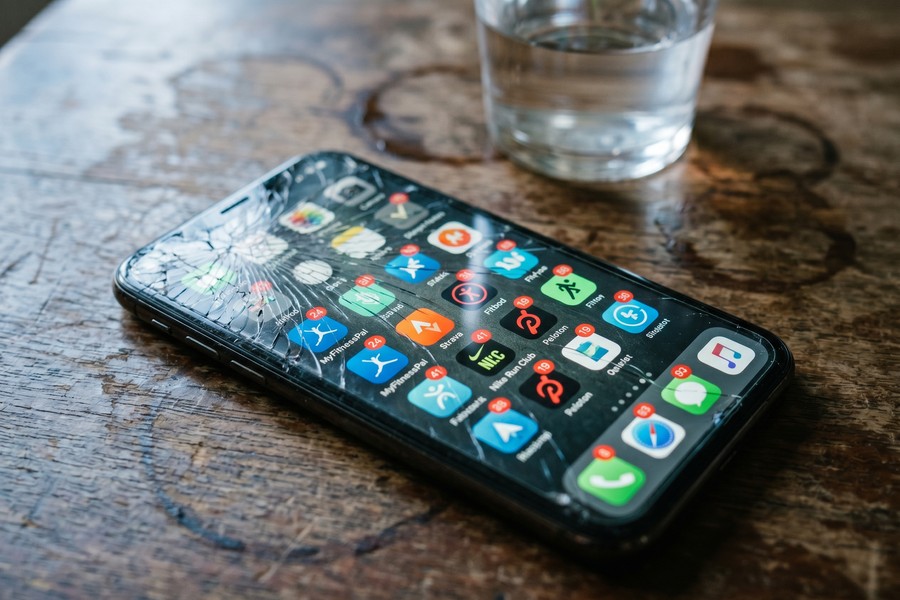
Subscription creep is the third quiet trap. A micro-workout app at $10/month, a meditation app at $13/month, and a nutrition tracker at $9/month collectively cost $384/year, and adding one more wellness subscription pushes that past a mid-range gym membership without anyone noticing. Audit your app spending quarterly. For parents, the best combination is usually one well-chosen micro-workout app on a free or single paid tier, rather than a stack of three. For mindfulness as a complement, there are beginner meditation apps that pair well with a micro-workout habit without adding significant cost.
Who Should and Who Should Not
Good candidates
Parents who can check at least four of the decision criteria above are strong candidates for this approach.
- A parent with a child under five who has unpredictable nap schedules and cannot commit to a fixed 45-minute workout window, a 7-to-10 minute adaptive app session is genuinely the right tool.
- A working parent who currently does zero exercise and wants a low-friction entry point, even three 10-minute sessions per week moves them toward CDC guidelines and delivers measurable cardiovascular benefit.
- A parent whose primary health goal is stress reduction and better sleep rather than body composition change, the mood and energy benefits of short high-intensity bursts arrive faster than physical fitness gains and are a stronger early motivator.
- A parent already comfortable using their phone for habit tracking (journaling, hydration, focus timers) who wants to add fitness without adding a separate device or gym bag.
Who should skip it
Some parents will find this format genuinely unsuitable for their goals.
- A parent actively training for a half-marathon, triathlon, or powerlifting competition, micro-workouts cannot replace the progressive volume those goals require, and treating them as equivalent leads to underperformance and frustration.
- A parent with a current injury or chronic pain condition that requires supervised rehabilitation, a physical therapist-guided program, not a general fitness app, is the appropriate tool.
- A parent who already meets the 150 minutes per week aerobic guideline through structured exercise and is looking to add muscle mass, a dedicated resistance training program with progressive overload will serve them better than a micro-workout app.
- A parent with a history of fitness app abandonment who has not yet identified their reliable micro-windows, purchasing an app subscription before identifying those windows simply restarts the abandonment cycle.
“The benefits of shorter, multiple exercise sessions is that they provide increased flexibility in your daily schedule and allow you to prioritize your health while juggling family, work, and friend obligations.”
Frequently Asked Questions
Do micro-workout apps actually work for weight loss?
They can contribute to weight management when combined with consistent nutrition habits, but they are not optimized for significant fat loss on their own. The caloric expenditure of a 10-minute session is modest; the stronger case for micro-workouts is cardiovascular health and metabolic maintenance rather than weight loss as a primary outcome.
Is 7 minutes of exercise a day enough to see real health benefits?
Yes, within specific parameters. Research published in the British Journal of Sports Medicine found that as little as 11 minutes per day of moderate-to-vigorous activity is associated with a 23% lower risk of premature death. Seven minutes at higher intensity can meet the threshold for cardiovascular benefit, though accumulating more sessions across the week amplifies results.
Which micro-workout app is best for parents with no equipment?
FitOn and Sworkit both have robust zero-equipment modes and allow you to select session duration before starting, making them the most practical for parents working in a living room with no gear. Nike Training Club also has no-equipment programs but with less real-time duration flexibility.
Are fitness apps safe to use, or do they sell your health data?
Some fitness apps do sell de-identified health and location data to third-party advertisers, and this is disclosed, often minimally, in privacy policies. Before entering biometric information, check the app’s privacy policy for language about “third-party data sharing” or “advertising partners.” Apps from major brands like Nike tend to have more transparent and publicly scrutinized data practices than smaller independent apps.
Can I actually get fit doing 10-minute workouts a few times a week?
“Fit” depends on your definition. For cardiovascular health, reduced mortality risk, improved energy, and better sleep, the clinical evidence is clear that short frequent sessions work. For building significant muscle mass or preparing for endurance events, they do not replace longer structured training. Set accurate expectations and micro-workouts will meet them; set the wrong expectations and they will disappoint.
What is VILPA and why does it matter for parents?
VILPA stands for vigorous intermittent lifestyle physical activity, the clinical term used in research to describe brief, intense movement bouts embedded in daily life rather than scheduled exercise. It matters for parents because the research validating VILPA’s health benefits is what gives micro-workout apps their scientific credibility, not the apps’ own marketing. Understanding the term helps you evaluate health claims more critically when choosing between products.
Sources
- CDC / NCHS, Adult Physical Activity Data Brief, National Health Interview Survey 2024
- NIH / PubMed, Ekelund et al., British Journal of Sports Medicine: Dose-Response Meta-Analysis of Physical Activity and Mortality
- UPMC HealthBeat, Micro-Workouts: Benefits and What the Research Shows (2025)
- CDC / Preventing Chronic Disease, HHS Physical Activity Guidelines for Americans, 2nd Edition: Key Changes
- HHS Office of Disease Prevention and Health Promotion, Healthy People 2030: Adults Meeting Aerobic and Muscle-Strengthening Guidelines
- World Health Organization / NIH Bookshelf, WHO Guidelines on Physical Activity and Sedentary Behaviour
- Healthline, Expert Perspectives on Mini Workouts: Christine Ogbonna, DPT and John Gallucci, Jr., DPT






