Fact-checked by the SnapMessages editorial team
Quick Answer
The best fitness apps for home workouts in 2026 include Nike Training Club, Peloton, Apple Fitness+, and Freeletics, with options for every budget including free plans. The ACSM ranked mobile exercise apps the #4 fitness trend for 2026, confirming that structured, equipment-optional training at home is now a mainstream path to meeting health goals.
Fitness apps for home workouts have moved far beyond simple timer apps and YouTube playlists. According to CDC physical activity guidelines, adults need at least 150 minutes of moderate-intensity aerobic activity per week plus two days of muscle-strengthening — requirements that a well-chosen fitness app can help you meet without setting foot in a gym.
For people who dislike the gym environment, whether due to cost, anxiety, time, or plain preference, the app ecosystem in 2026 is genuinely good. This guide cuts through the noise and names the options worth your time.
Why Fitness Apps Actually Work for Gym-Haters
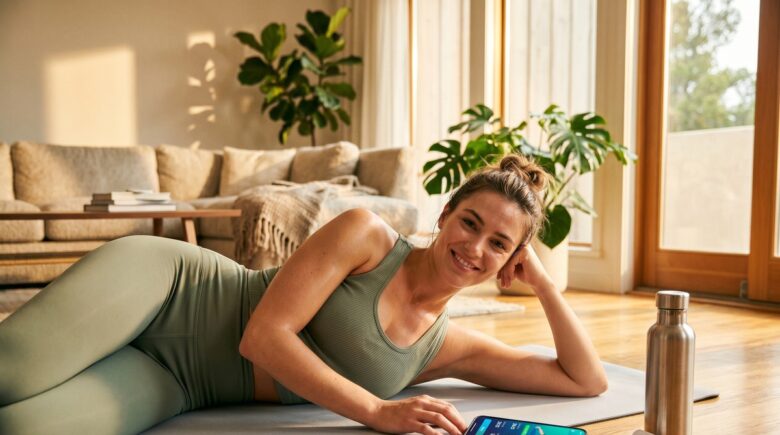
The core reason fitness apps succeed for home training is personalization on demand: you control the time, the noise level, the equipment, and the pace. That removes the friction points that make gyms unappealing for many people.
The American College of Sports Medicine’s 2025 Worldwide Fitness Trends report, based on responses from 2,000 clinicians, researchers, and practitioners, ranked mobile exercise apps as the number-two fitness trend globally. The data reflects a structural shift: people are building sustainable routines around apps, not gyms.
“Before the pandemic, fitness was often seen as something confined to the gym. Apps allow fitness to be accessible in more environments — on vacation, in a time crunch, with or without equipment.”
That accessibility matters more than most people admit. A workout you actually complete in your living room outperforms a gym membership you never use. Apps reduce the activation energy required to start, and that behavioral edge is well-documented in exercise adherence research.
If you already use your phone to track other health habits, pairing a fitness app with the best water tracking apps for hydration logging creates a lightweight wellness stack that runs entirely from one device.
Key Takeaway: The ACSM’s 2026 fitness trends survey ranked mobile exercise apps #4 globally, reflecting their proven ability to deliver structured, equipment-optional training that fits into real schedules without requiring a gym.
Best Free Fitness Apps for Home Workouts
Nike Training Club (NTC) remains the strongest free option for fitness apps home workouts in 2026. It offers over 190 free workouts across strength, endurance, yoga, and mobility, with no equipment required for most programs.
Google’s Fitbit app (free tier) integrates well with Android devices and provides basic guided workouts alongside activity tracking. For pure bodyweight training, Freeletics offers a free foundational plan with AI-generated workout suggestions that adapt based on your feedback after each session.
What Free Plans Typically Cover
Most free tiers include bodyweight circuits, stretching routines, and basic cardio. They generally exclude advanced programming, personalized coaching queues, and progress analytics. For beginners or casual users, the free tier of NTC or Freeletics is often all that is needed for the first three to six months.
The U.S. Department of Health and Human Services Physical Activity Guidelines for Americans confirms that short episodes of physical activity count toward weekly targets, which means a 20-minute free app workout done consistently is genuinely effective.
Key Takeaway: Nike Training Club’s free tier includes over 190 workouts with no equipment required, making it the most complete no-cost option for home training. According to HHS physical activity guidance, short daily sessions accumulate toward the weekly 150-minute target just as effectively as longer ones.
Best Paid Fitness Apps for Serious Home Training
Paid apps justify their cost when they provide coaching quality, program structure, and accountability that free tiers cannot match. Three apps stand out in 2026 for different reasons.
Peloton (approximately $24/month for the app-only membership) now offers full access to its library without owning any Peloton hardware. Its strength, yoga, running, and bootcamp content is production-quality, and the instructor roster is consistently rated among the most motivating in the category. Apple Fitness+ ($9.99/month, or included with Apple One) integrates tightly with Apple Watch to display real-time metrics during workouts, a feature that meaningfully improves effort calibration. Whoop takes a different approach: it is a recovery and readiness platform that tells you how hard to train each day based on sleep and physiological data, complementing any workout app you already use.
AI-Powered Personalization in 2026
Several paid apps now use AI to adjust programming in real time. Freeletics Coach, Fitbod, and the newer Future app (which pairs you with a human coach who communicates via an app interface) all use behavioral and biometric data to modify future sessions. This is the direction the category is moving, as noted by ACSM exercise physiologist A’Naja M. Newsome, PhD: “Mobile exercise apps are enhancing health and fitness by increasing the ability to individualize services on demand at the consumer level.”
If you are building a broader productivity and wellness routine, pairing a structured fitness app with a Pomodoro timer app for focused work blocks helps segment your day so that training slots do not get absorbed by work creep.
Key Takeaway: Peloton’s app-only plan at approximately $24/month delivers gym-quality coached workouts without hardware; Apple Fitness+ at $9.99/month adds real-time biometric feedback via Apple Watch. Both are confirmed by ACSM trend data as part of the fastest-growing fitness category.
| App | Cost (Monthly) | Equipment Needed | Best For | AI Personalization |
|---|---|---|---|---|
| Nike Training Club | Free | None (optional) | Beginners, all-round fitness | Basic |
| Freeletics | Free / $13.99 (Coach) | None | Bodyweight intensity | Strong (Coach tier) |
| Apple Fitness+ | $9.99 | Apple Watch required | Apple ecosystem users | Moderate (metric-based) |
| Peloton App | $24.00 | None required | Motivated, coached training | Moderate |
| Fitbod | $12.99 | Dumbbells (recommended) | Strength training at home | Strong (load adaptation) |
| Future | $199.00 | None required | Accountability, human coaching | Strong (human + AI hybrid) |
How to Choose the Right App for Your Situation
The right fitness app depends on three variables: your available equipment, how much external motivation you need, and your budget. Answering those three questions honestly narrows the field quickly.
If you have no equipment at all, Nike Training Club or Freeletics are the practical starting points. If you own a set of adjustable dumbbells, Fitbod’s strength programming is difficult to beat at its price point because it tracks muscle group recovery and adjusts load recommendations session by session. For people who need accountability above all else, Future’s human-coach model produces higher adherence rates than fully automated apps, though its $199/month price is a significant commitment.
Matching App Features to Your Weekly Schedule
The World Health Organization recommends at least 150 minutes of moderate-intensity activity per week for adults, plus muscle-strengthening on 2 or more days. Most of the apps above offer pre-built weekly schedules that hit exactly those targets in 4 to 5 sessions of 30 minutes each, making compliance straightforward if you block the time.
Mental wellness and physical training increasingly go hand in hand. Many users find that pairing a fitness app with a meditation app for beginners on rest days creates a more complete routine, one that addresses both physical readiness and recovery quality.
One honest trade-off worth naming: apps do not replicate the social accountability of a training partner or a group class. If gym anxiety is your primary barrier, apps solve that problem cleanly. If boredom or isolation is the issue, live instructor-led formats (Peloton, Apple Fitness+) work better than self-paced ones.
Key Takeaway: Match your app to your actual constraints. WHO guidelines require 150 minutes per week, achievable in 5 sessions of 30 minutes. Equipment-free users should start with NTC or Freeletics; strength-focused users with dumbbells get the best programming from Fitbod’s adaptive load system.
Making Fitness App Habits Stick Long-Term
The biggest failure mode with fitness apps is not choosing the wrong one — it is abandoning a good one after two weeks. Habit formation, not app quality, determines long-term outcomes.
Research on exercise adherence consistently shows that attaching a new habit to an existing trigger (called habit stacking) significantly improves consistency. Schedule your app workout immediately after something you already do daily: making coffee, finishing your first work block, or ending a lunch break. The app itself becomes less relevant than the system around it.
Progress tracking matters too. Every app reviewed here logs completed sessions, and several (Freeletics, Fitbod, Apple Fitness+) display weekly and monthly summaries. Reviewing that data takes 30 seconds and reinforces the identity that you are someone who trains regularly. That identity shift, more than any feature, is what produces long-term results.
Keeping a reflection log alongside your training can compound the habit. The best journaling apps for daily reflection pair well with fitness tracking because noting how a workout felt — energy level, mood, sleep the night before — gives you data to adjust future sessions without needing a personal trainer.
“Digital technologies are becoming more critical to the way we design, deliver and evaluate health and fitness services,” noted A’Naja Newsome, PhD, co-author of the 2025 ACSM Worldwide Fitness Trends report. The implication for users is direct: the tools are genuinely capable now. The execution gap is behavioral, not technological.
Key Takeaway: App adherence is primarily a behavioral challenge, not a product selection problem. Habit stacking — linking a workout to an existing daily trigger — is one of the most reliable strategies for maintaining a 4-5 session per week routine, as supported by HHS Physical Activity Guidelines on cumulative activity patterns.
Related reading: Pro Techniques for Detecting Fake Wi.
Frequently Asked Questions
What is the best free fitness app for home workouts with no equipment?
Nike Training Club is the best free option for equipment-free home training in 2026, offering over 190 workouts across strength, cardio, yoga, and mobility. The app requires no purchase, no subscription, and no gear. Freeletics is a strong second for people who prefer high-intensity bodyweight circuits.
Can fitness apps replace the gym completely?
For most people with general fitness goals, yes. The CDC recommends 150 minutes of moderate aerobic activity and 2 days of muscle-strengthening per week — targets fully achievable through structured app-based home workouts. The main limitation is maximal strength development, which eventually requires progressive resistance equipment beyond bodyweight.
Are fitness apps worth paying for?
Paid apps are worth the cost if the additional features (coaching quality, AI personalization, live classes, or human accountability) directly address the reason you have struggled to stay consistent before. Start with a free tier, identify the specific gap causing you to quit, and then choose a paid app that closes that gap. Spending more does not automatically produce better results.
Which fitness app is best for beginners who have never worked out at home?
Nike Training Club or Apple Fitness+ (if you own an Apple Watch) are the most beginner-friendly options. Both provide clear video demonstrations, duration-based workouts starting at 15 minutes, and no assumption of prior training experience. Apple Fitness+ also shows your real-time heart rate on screen, which helps beginners understand effort levels.
How many days per week should I use a fitness app to see results?
The WHO and HHS both recommend activity on most days of the week, with a minimum of 150 minutes of moderate exercise distributed across the week. In practical terms, 4 to 5 sessions of 30 minutes each, using a structured app program, is sufficient for measurable fitness improvement within 6 to 8 weeks for most beginners.
Do fitness apps work for weight loss specifically?
Exercise apps support weight loss when combined with dietary habits, but exercise alone produces modest weight loss without caloric adjustment. Apps like MyFitnessPal (nutrition tracking) and Fitbod (strength programming) are often used together for this reason. Strength training via apps is particularly effective because it increases resting metabolic rate over time, even when daily calorie burn from sessions appears modest.
Sources
- American College of Sports Medicine — ACSM Worldwide Fitness Trends 2025 and 2026
- Centers for Disease Control and Prevention — Physical Activity Guidelines for Adults
- World Health Organization — Physical Activity Recommendations for Adults
- U.S. Department of Health and Human Services — Physical Activity Guidelines for Americans Overview
- HHS — Physical Activity Guidelines for Americans, 2nd Edition (PDF)
- American College of Sports Medicine — Top Fitness Trends 2025 Expert Commentary