Fact-checked by the SnapMessages editorial team
Quick Answer
Choosing between a sleep divorce and couples sleep tracking apps depends on how disruptive your partner’s habits are. For 37% of couples, mismatched bedtimes cause the biggest conflict, while 31% of U.S. adults have already tried sleeping apart. Using a shared tracking app first can reveal whether the issue is solvable, like identifying snoring patterns, before resorting to separate beds. A hybrid approach often works best.
For the 31% of U.S. adults who have tried a “sleep divorce,” the decision to sleep apart usually comes after years of fractured rest. But before moving to a separate room, couples sleep tracking apps offer a middle ground, monitoring snoring, movement, and sleep cycles without losing the shared bed. The question isn’t which one is universally better. It’s which strategy fits your specific sleep incompatibility and how much data you need before making a permanent change.
Sleep disruptions from a partner cost more than just Z’s. The American Academy of Sleep Medicine found that 37% of people go to bed at a different time than desired just to accommodate a partner. That kind of chronic adjustment erodes mood, decision-making, and even relationship satisfaction. With sleep tech evolving rapidly, Sleep Cycle’s dual-bed linking now supports Wi-Fi-connected tracking across two phones, 2025 is the first year where app-based solutions are genuinely feasible for co-sleeping couples. This guide lays out exactly when digital tools can preserve the shared bed, and when separate rooms are the healthier call.
After reading, you’ll know which apps genuinely work for two people, what the privacy trade-offs are, and how to run a low-risk experiment that gives both of you real numbers, not just frustration, to make the choice.
Key Takeaways
- 31% of U.S. adults have opted for a sleep divorce, climbing to 39% among 35-to-44-year-olds, according to the American Academy of Sleep Medicine’s 2025 survey.
- Couples who sleep apart gain an average of 37 extra minutes of sleep per night, based on self-reported data from Sleepopolis.
- Only a handful of apps, including Sleep Cycle’s Wi-Fi linking feature, support true dual-user tracking; most require workarounds.
- Sharing sleep data can inadvertently create scorekeeping and blame unless couples set clear boundaries around how metrics are discussed.
- Privacy risks are real: sleep trackers collect sensitive health data and many lack granular couple-level sharing controls.
- A hybrid model, using couples sleep tracking apps for a trial period before deciding on separate sleeping, resolves more incompatibilities than either extreme alone.
In This Guide
- Step 1: What Exactly Is a Sleep Divorce, and Why Are So Many Couples Choosing It?
- Step 2: Do Any Couples Sleep Tracking Apps Actually Work for Two People Sharing a Bed?
- Step 3: Can Joint Sleep Tracking Strengthen Your Bond or Create New Friction?
- Step 4: When Does Physical Separation Outperform Tech Solutions?
- Step 5: What the Research Actually Says About Sleep Arrangements and Relationship Health
- Step 6: How Do I Decide Between Tracking, Separating, or a Hybrid Approach?
Step 1: What Exactly Is a Sleep Divorce, and Why Are So Many Couples Choosing It?
A sleep divorce means partners intentionally sleep in separate beds or bedrooms to reduce overnight disruptions. It’s not a sign of a failing relationship, it’s a practical response to mismatched sleep schedules, snoring, temperature preferences, or restless movement.
Here’s the truth: the numbers are climbing. The American Academy of Sleep Medicine’s 2025 survey pegs the prevalence at 31% of U.S. adults who have slept in another room occasionally or consistently to accommodate a partner. Among 35-to-44-year-olds, that figure jumps to 39%. And it’s not just a temporary experiment, 45% of men and 43% of millennials report doing it regularly or occasionally, according to the AASM’s 2023 data. The most common trigger? A partner’s snoring, followed closely by mismatched bedtimes and thermostat wars.
The Sleep Foundation notes that while sleep divorce often improves individual rest quality, it can reduce incidental intimacy, the casual touch and conversation that happens before sleep and upon waking. That’s the trade-off couples face. Better sleep on one side of the ledger, less physical proximity on the other.
37% of respondents say they go to sleep at a different time than desired to accommodate a bed partner, per the AASM 2025 survey. That’s a real cost that accumulates night after night.
Before you move to the guest room, map out how often rest is truly compromised. That’s where tracking comes in.
Step 2: Do Any Couples Sleep Tracking Apps Actually Work for Two People Sharing a Bed?
The honest answer: very few apps are built specifically for couples. Most sleep trackers, whether phone-based or wearable, are designed for a single user. But there are workarounds and a couple of standout features that make shared tracking possible.
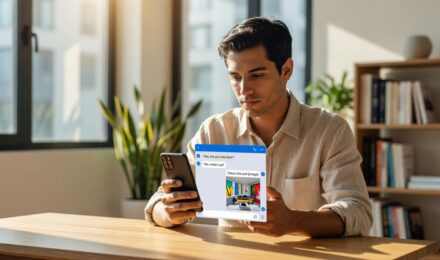
Sleep Cycle remains the most concrete option., its support documentation confirms that two accounts can be linked via Wi-Fi synchronization. Each person places their phone on their nightstand and the app analyzes sound and movement separately, even attributing snoring events to a specific user. That’s the closest thing to true dual-bed tracking without wearables.
BetterSleep offers “Together” relaxation themes, guided meditations and soundscapes designed for two people, but it doesn’t track sleep metrics for both partners simultaneously. It’s a relaxation tool, not a sleep analytics dashboard.
Wearables like Oura Ring and Whoop can monitor individual sleep stages with high accuracy, but neither platform has a native couple-sharing mode. The workaround: both partners own a device, review their data separately, and then compare metrics manually. Not exactly seamless.
Other apps like Pillow or AutoSleep use Apple Watch data and can track one person reliably. For a second person, you’d need a separate device and account. There’s no joint dashboard.
| App/Wearable | Dual-User Tracking? | Snore Attribution | Cost (Monthly) |
|---|---|---|---|
| Sleep Cycle | Wi-Fi linking (2 accounts) | Yes, user-specific | $39.99/yr or free tier |
| BetterSleep | No sleep tracking for 2 | No | $9.99/mo |
| Oura Ring | Separate devices only | No | $5.99/mo after $299+ ring |
| Whoop | Separate devices only | No | $30/mo (hardware included) |
The gap is obvious. True couple-focused analytics, like a joint sleep efficiency score or a timeline showing overlapping restlessness, simply don’t exist yet. What you get is two separate data streams you interpret together.
Even the most accurate phone-based trackers can misattribute movement when two people share a mattress. Sleep Cycle uses microphone data to help separate users, but its accuracy drops if both phones are placed less than an arm’s length apart.
Step 3: Can Joint Sleep Tracking Strengthen Your Bond or Create New Friction?
Joint sleep data can be a revelation, or a relationship landmine. It all depends on how you frame the numbers. When used collaboratively, seeing a partner’s sleep efficiency score or snoring patterns can make an invisible problem visible. One person stops saying “you snore” and starts showing a timestamped audio clip. That turns a complaint into a shared problem to solve.
But there’s a flip side. If one partner consistently scores higher on deep sleep while the other’s metrics tank, it’s easy to slide into scorekeeping. Suddenly, “you ruined my sleep” has a number attached. That’s where the friction starts.
Privacy is another stress point. Most sleep apps collect sensitive health data, heart rate variability, respiratory rate, movement, and store it in the cloud. When you link accounts or simply share screenshots, you’re exposing a layer of biometric information that neither party may be comfortable with outside a doctor’s office. Securing your personal data across health apps should be a prerequisite before linking accounts.
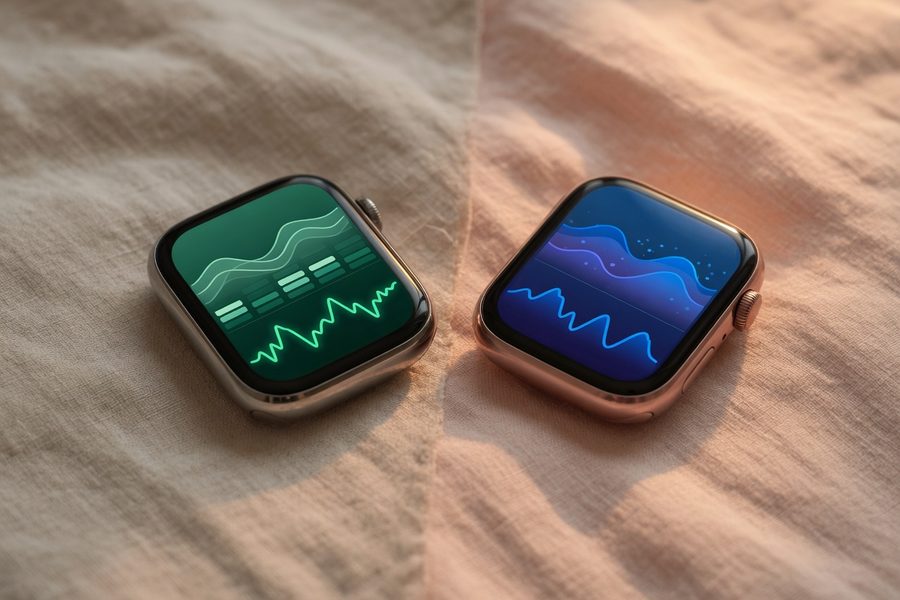
Here’s what works: set a weekly 10-minute “sleep data date” where you review the numbers together, focusing on patterns over three nights or more, never a single bad night. Agree beforehand that no metric will be used as ammunition. The goal is to spot environmental fixes: a different pillow, earplugs, or a white noise machine.
Blame shifts fast when data is involved. If you’re the one bringing up the numbers, frame them as “our sleep environment” problems, not “your snoring.” A simple reframe keeps the conversation productive.
Step 4: When Does Physical Separation Outperform Tech Solutions?
There are incompatibilities that no app can fix. If your partner’s preferred bedtime temperature is 65°F and yours is 72°F, no tracking insight will change biology. Ditto for chronic snoring that persists through positional therapy, apps can identify it, but a solution requires medical intervention or separate rooms.
The Sleepopolis data shows that among couples who tried a sleep divorce, 53% reported better sleep quality, gaining an average of 37 extra minutes per night. That’s not a marginal improvement. It’s the difference between five-and-a-half hours of fragmented rest and nearly seven hours of uninterrupted sleep.
Separation shines when:
- A sleep tracker confirms more than two awakenings per night consistently linked to the partner’s movement.
- One person needs a radically different sleep schedule, shift workers and early risers rarely sync.
- Smart home adjustments (smart lights dimming, separate thermostat zones) still can’t bridge the gap.
But sleeping apart doesn’t mean losing connection. Many couples build a wind-down ritual together in one bed, reading, talking, using a meditation app for relaxation, before one partner moves to the other room. That preserves intimacy without sacrificing rest.
Try a one-week separation trial. Track your sleep individually (both using whatever method you have) and compare how you feel. If both of you show measurable improvement without resentment, you have your answer.
Step 5: What the Research Actually Says About Sleep Arrangements and Relationship Health
The research, honestly, is thin. No long-term randomized controlled trials pit couples sleep tracking apps against intentional sleep divorce and measure relationship satisfaction months later. What exists is mostly self-reported survey data, like the AASM’s and Sleepopolis’s, which tells us correlation, not causation.
What we do know: better individual sleep correlates with higher relationship satisfaction. A well-rested partner is more patient, less reactive, and more emotionally available. But we don’t have evidence that tracking apps, specifically, improve those outcomes more than simply sleeping apart when necessary. The data is suggestive, not definitive.
The American Academy of Sleep Medicine emphasizes that sleep divorce is a personal choice, and many couples find that maintaining separate sleeping spaces improves intimacy during waking hours, contradicting the common fear that it kills romance.
Step 6: How Do I Decide Between Tracking, Separating, or a Hybrid Approach?
Start with a clear-eyed assessment of just how much rest you’re losing, and how much resentment has built up around it. If the main issue is snoring that wakes you twice a night, start with a two-week trial of a tracking app like Sleep Cycle. Collect the audio data. If it shows consistent interruptions, have a conversation backed by evidence, not emotion.
If the disruption is more fundamental, say, a 3-hour bedtime difference, no app will realign your circadian rhythms. In that case, a one-week separation trial often clarifies things faster than months of half-measures. Track your sleep during the separation using individual apps or wearables. If your scores improve by more than 15% and you both feel better, the separate arrangement is likely worth making permanent.
The hybrid model works for many couples: sleep together on weekends or non-work nights, sleep apart on high-stakes weekdays. You can use tracking apps on the shared nights to monitor whether conditions have changed, maybe a new mattress topper or a different pillow setup makes co-sleeping viable again.
Before making any decision permanent, check your app’s privacy settings. If you’re sharing health data, both partners should understand exactly what information is being stored and who can access it, just as you would for any other sensitive digital footprint.
Frequently Asked Questions
What are the best couples sleep tracking apps in 2025?
The most functional option is Sleep Cycle with its dual-account Wi-Fi linking, which can attribute snoring to each user. Beyond that, no app is purpose-built for couples. BetterSleep offers relaxation content for two, while wearable-based tracking (Oura, Whoop) requires separate devices and manual data comparison.
Do Oura or Whoop have features for couples sharing sleep data?
Neither platform provides a built-in couple-sharing feature. Both partners must own their own device and subscription. You can compare metrics side by side manually, but there’s no joint dashboard or couple-level insight. The hardware cost for two Oura rings alone exceeds $600, making it an expensive experiment.
What are the privacy risks of sharing sleep data with my partner?
Sleep data often includes heart rate variability, respiratory patterns, and movement, information that, if exposed, could reveal stress levels or health conditions you haven’t discussed. Many apps lack granular sharing controls, meaning once your partner sees the dashboard, they may have access to more than you intend. Building a digital security routine for health apps helps you manage these permissions deliberately.
How can sleep tracking improve intimacy in a relationship?
When used as a collaborative tool, not a scorecard, shared sleep data can reduce nighttime conflict and create a mutual goal: better rest for both. The act of reviewing data together, problem-solving what disrupts sleep, and celebrating improvements can deepen emotional connection. Some couples find the transparency itself builds trust.
Which is better for a snoring partner: sleep divorce or a tracking app that identifies snoring?
Try the tracking app first. Sleep Cycle’s snore detection shows frequency and duration, and sharing that data can motivate your partner to seek treatment, often eliminating the need for separate rooms. If snoring persists despite positional changes or medical evaluation, a sleep divorce usually provides more consistent relief.
Can sleep apps like Sleep Cycle link two phones to compare sleep quality?
Yes. Sleep Cycle’s Wi-Fi linking feature, active, allows two accounts to sync after an initial setup. Each phone independently tracks ambient sound and movement, and the app attempts to attribute noise events to the correct user, enabling a side-by-side comparison.
Does sleeping apart improve sleep quality more than using white noise or earplugs?
For moderate disturbances, like light snoring or minor movement, white noise or earplugs can be enough. But when disruptions are severe (loud snoring >40 decibels or frequent limb movements), separation consistently yields larger gains. 53% of couples who tried sleeping apart reported better sleep in one self-reported study.
What’s the success rate of sleep divorce for saving a marriage?
There’s no formal success rate because the term refers to improved sleep, not divorce avoidance. Anecdotally, many couples report less nighttime anger and better daytime interaction after separating. The Sleep Foundation notes that the key is maintaining intentional connection rituals to offset the loss of bed-sharing intimacy.
How do I talk to my partner about trying separate bedrooms without hurting feelings?
Lead with “us against the problem,” not “I can’t sleep because of you.” Frame it as a short-term experiment to improve your health, and by extension, the relationship. Suggest a one-week trial with a check-in, and emphasize that you’ll still share wind-down time together before heading to separate beds.
Sources
- American Academy of Sleep Medicine, New Survey Data on Sleep Divorce (2025)
- American Academy of Sleep Medicine, Over A Third of Americans Opt for Sleep Divorce (2023)
- Sleep Foundation, What Is a Sleep Divorce?
- Sleep Cycle, Official Website
- BetterSleep, Official Website
- Oura Ring, Official Website
- Whoop, Official Website