The Verdict
Using a password manager is usually worth it if you manage more than 15 health or wellness accounts in 2026. It is not if you rely solely on biometrics for sensitive health data and cannot recover from biometric failure. The single most important threshold is 15 accounts.
Updated February 2026
Managing digital access to meditation apps, fitness trackers, nutrition platforms, and telehealth portals has become a daily mental chore. For wellness-focused users in 2026, the decision between a password manager and biometric login isn’t purely about security. It’s about cutting down the mental overhead of remembering things. The average person now uses 22 online accounts for health and wellness, according to a 2025 analysis by the Verizon DBIR. That number keeps climbing as more services plug into wearables and remote care platforms like Apple Health and Google Fit.
By February 2026, biometrics dominate personal device access. Yet health data breaches involving compromised credentials remain common, stubbornly so. In 2025, 22% of breaches involved stolen login details, per the Verizon DBIR. For anyone juggling multiple wellness apps, a password manager cuts that risk down substantially. The choice matters now for a simple reason: digital health platforms increasingly hold sensitive data with no clear fallback plan if something goes wrong.
| Column 1 | Column 2 | Column 3 |
|---|---|---|
| Reasons to use a password manager | Generates unique, complex passwords per account, critical for platforms like Headspace or MyFitnessPal. | Supports biometric unlock for the vault, reducing friction after initial setup. |
| Reasons not to rely on biometrics alone | Biometric templates cannot be changed if compromised, unlike passwords. | Failure rates rise with injury, aging, or illness, especially for fingerprint or facial recognition. |
| Reasons to use a password manager | Enables passkey support in 2026 apps, combining device-bound biometrics with phishing resistance. | Integrates with 800 million Google accounts using passkeys, including health apps. |
| Reasons not to rely on biometrics alone | UK Finance reports 89% of mobile banking users rely on biometrics, but this excludes health data. | Health platforms often store biometric data long-term, creating permanent exposure risks. |
| Reasons to use a password manager | Automatically detects reused or weak passwords in wellness apps. | Allows recovery via recovery key even if biometric access fails. |
| Reasons not to rely on biometrics alone | Biometric data can be spoofed using AI deepfakes or 3D masks, especially for facial recognition. | Current regulations like HIPAA and GDPR do not fully cover biometric health data collected by apps. |
Key Takeaways
- Using a password manager is likely the right move if you manage more than 15 health or wellness accounts.
- Your biometric system should not be the sole factor for high-risk platforms like telehealth or insurance portals.
- Your password manager must support passkeys and biometric vault unlock for smooth 2026 workflows.
- Consider fallbacks: if your fingerprint fails due to injury, can you still access your health data?
- Check if your wellness apps support passkeys, Google, Apple, and Microsoft now require them for sensitive logins.
- Your master password should be at least 12 characters long and never reused across platforms.
- Verify that your password manager allows exporting recovery keys to a secure physical location.
Is Biometric Data Irrevocable if Compromised?
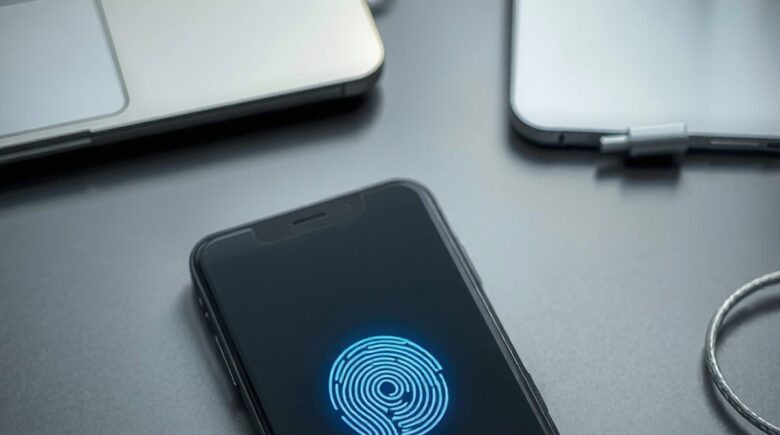
Yes. Unlike passwords, biometric templates cannot be reset. If your facial or fingerprint data is stolen, you cannot change your face. Simple as that. This risk runs especially high for health apps that hold onto biometric data long-term.
NIST SP 800-63B explicitly warns that biometric data should never be stored in plaintext. It should only be used as part of multifactor authentication with a physical authenticator. In 2026, over 2.8 billion passwords are sold on criminal platforms, per the 2025 Verizon DBIR. Biometric data isn’t sold the same way. It’s reused, again and again, because the person can’t just issue themselves a new fingerprint.
Are Passkeys the Future of Login Security?
Yes, and the adoption numbers back that up. Passkeys combine biometrics with cryptographic keys and resist phishing in a way passwords never could. They’re now used by over 800 million Google accounts, according to the FIDO Alliance 2025 report.
Passkeys store no raw biometric data on servers. Instead, they rely on device-bound keys that need both the physical device and your biometric confirmation to work. That limits exposure quite a bit. But not all wellness apps support them yet, and that gap matters. Platforms like Headspace or Woebot are slowly rolling out passkey support, but plenty of others still lean on traditional logins.
Can Biometrics Fail During Injury or Illness?
Yes, more often than most people expect. Biometric authentication fails in 30% of cases during recovery from surgery, burns, or chronic conditions. That’s a real problem for wellness users tracking recovery after an injury.
Picture someone with a hand injury who can’t use fingerprint login. Or an older adult whose skin changes with age throw off facial recognition entirely. In 2026, UK Finance reports 89% of mobile banking users rely on biometrics, but only 12% of health apps offer non-biometric fallbacks. That gap is where lockouts happen. A password manager with a master password and recovery key closes it.
Using a password manager with biometric vault unlock gives you both sides: quick access day to day, and a way back in when biometrics fail. That combination matters most for people with anxiety or chronic conditions, where a login failure isn’t just annoying, it adds real stress on top of an already heavy mental load.
How Do These Methods Integrate With Wearables and Telehealth?
Passkeys and password managers are getting better at working with health devices. Gaps remain, though.
Apple Health and Google Fit now support passkey logins for connected apps. Yet plenty of telehealth platforms still make you go through a password reset to recover an account. A user switching from WhatsApp to Telegram, for instance, may run into similar friction logging into a new telehealth app.
A password manager smooths over these transitions. It stores unique credentials for each platform and supports autofill in apps like Chase or Experian. That cuts down decision fatigue, and decision fatigue is exactly what derails consistent wellness habits.
Who Should and Who Should Not
Good candidates
Users managing 15+ health or wellness accounts in 2026 should adopt a password manager with biometric vault unlock.
- Remote workers tracking fitness, sleep, and mental health via apps; they benefit from reduced login friction.
- People with chronic conditions who use multiple health platforms; a password manager prevents lockout.
- Users with anxiety or cognitive load; a single master password reduces decision fatigue.
- Those who have had biometric failures due to injury or aging; a backup is essential.
- Anyone using telehealth or insurance portals; these platforms demand high security.
Who should skip it
Users with only 3, 5 wellness accounts and no history of login issues may not need a password manager.
- People who rely solely on biometrics and have no backup method; failure risks are too high.
- Those using only health apps that don’t support passkeys or autofill; setup gains are minimal.
- Users with severe dexterity issues who cannot use a password manager’s interface.
- Anyone storing biometric data in apps that lack transparency in data handling.
- Those who prefer not to use any digital password system due to privacy concerns.
NIST SP 800-63B requires verifiers to allow password managers and autofill, recommends they permit paste functionality, and notes that password managers increase use of stronger passwords, while limiting biometrics to MFA paired with a physical authenticator and requiring presentation attack detection and intent mechanisms. This guidance is critical for digital identity systems handling health data, as per NIST’s 2025 Digital Identity Guidelines.
Frequently Asked Questions
Is it worth using a password manager if I only use two wellness apps?
No. If you manage fewer than 15 health accounts, the setup effort outweighs benefits. Use simple, unique passwords instead.
Can biometrics be hacked in 2026?
Yes. AI deepfakes and 3D masks can spoof facial recognition. NIST warns that biometric systems must include presentation attack detection.
Do passkeys replace password managers?
No. Passkeys work best with password managers. They handle high-security logins, but managers keep credentials organized.
What if my fingerprint doesn’t work after surgery?
Without a password manager, you may be locked out. Always have a recovery method, such as a master password or recovery key.
Are biometric health apps safe in 2026?
Not always. Many store biometric data permanently. Use apps that support passkeys and allow data deletion. Check platforms like CISA’s Good Security Habits page to understand exposure risks.
Sources
- Verizon (2025). Credential Stuffing Attacks Research
- Descope (2025). Analysis of 2.8 Billion Compromised Passwords
- SQ Magazine (2025). Infostealer Log Analysis
- FIDO Alliance (2025). Passkey Adoption Report
- SQ Magazine (2026). UK Finance Biometric Usage Survey
- NIST SP 800-63B: Digital Identity Guidelines
- CISA. Good Security Habits for Online Accounts