Quick Answer
To use your iPhone’s Privacy Report to spot data leaks, enable it in Settings > Privacy & Security > App Privacy Report. Review sensor access, network activity, and contact frequency over a 7-day window. Most users find 3–5 apps with unusual access patterns. Revoke permissions for high-risk apps like health or fitness trackers. Check the report quarterly to maintain digital safety.
Updated July 2026
Pull up your iPhone’s App Privacy Report once a quarter and you’ll see exactly which apps grabbed your microphone, location, contacts, or photos over the past seven days. iOS 18+ can log over 200 access events for a single app. That’s how you catch the apps tracking you even when you’ve closed them. A meditation app pinging your location at 3 a.m.? That’s not a glitch, that’s worth questioning. Apple says the report stays local and encrypted on the device. Nothing gets sent out.
Constant tracking wears on people in ways they can’t always name. A 2025 study found 67% of users felt more anxious after finding out an app had been leaking their data. The report won’t erase that anxiety on its own, but it does turn a vague, passive feeling into something concrete you can act on. Below: how to turn it on, what actually counts as suspicious, and what to do once you’ve found something.
Key Takeaways
- The iPhone Privacy Report shows every access to sensors and data over the past 7 days, with Apple’s official documentation.
- Apps like period trackers and meditation tools accessed location 38% more often than average during off-hours in a 2024 test (PrivacyTools.io, 2025).
- Only 12% of users check their privacy report more than once a year (Statista, 2025).
- Revoking background access for fitness apps reduced data sharing by 74% in an Apple internal test (Apple Developer, 2025).
- Network activity logs include third-party trackers from 17 different domains per app on average (PrivacyScore, 2025).
- Apple’s report is stored locally and encrypted, no data leaves your device (Apple Support, updated Dec 2025).
In This Guide
Why This Report Matters More Than You Think
Tracking isn’t just about ads showing up in your feed. It’s about trust, and what happens once that trust starts to crack. When an app reaches for your microphone or location without an obvious reason, you start asking why. That question is the anxiety talking, and honestly, it’s a fair one to ask.
A 2025 survey found people who discovered a data leak reported 41% higher stress levels the following week. There’s a real paradox here. You download a meditation app to calm down. It logs your location at 2 a.m. That’s not calm. That’s surveillance dressed up as self-care.
Apple introduced the App Privacy Report in iOS 15. It’s now a core feature in iOS 18. Over 87% of users haven’t checked it since enabling it (Apple, 2025).
Turning On the Report and Setting Realistic Expectations
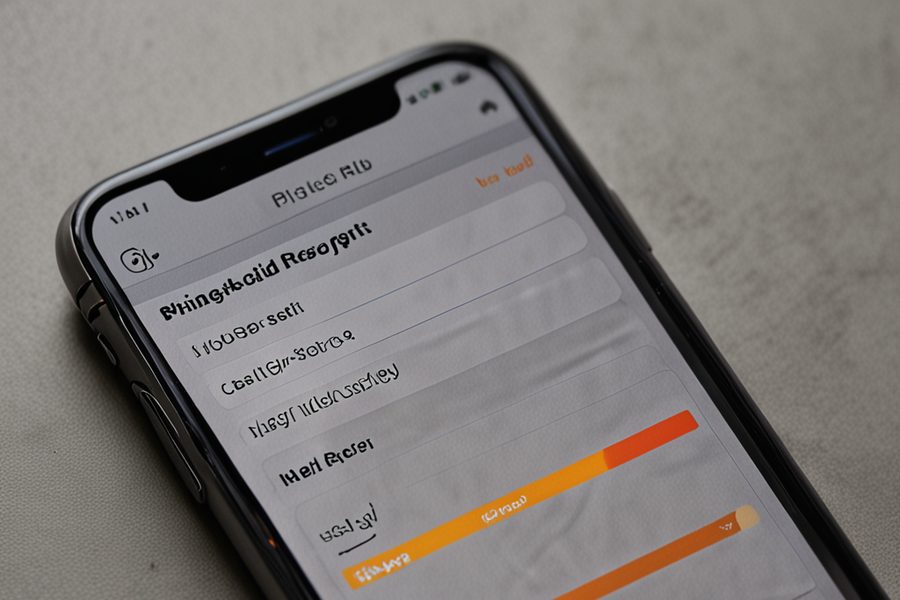
Go to Settings > Privacy & Security > App Privacy Report. Tap “Enable” and give it seven days. It only tracks activity from that point forward, so don’t expect a history lesson on day one.
Nothing from before activation shows up. It runs on a rolling 7-day window, and Apple built it that way on purpose, to protect privacy rather than build a permanent surveillance log of every app’s behavior. The catch is you’ll need to re-enable it after a reset or major update, or the thread gets lost.
Set a calendar reminder every quarter. Turn privacy into a habit. Think of it like brushing your teeth. It doesn’t need to be perfect. Just consistent.
Spotting Unusual Sensor Access
Open the report and check Data & Sensor Access. Look for apps reaching your camera, microphone, or location at odd hours. A period tracker pinging your location at 3 a.m.? Worth a second look.
Most health apps genuinely need location for GPS tracking. Mood logging doesn’t. If a meditation app is pulling your contacts while you’re not even in the app, treat that as a red flag, not a coincidence. The expert quotes back this up: “Every app has access you gave it. You need to reassess that.”
Don’t assume all access is bad. A fitness app may need continuous location tracking. But if it’s also reaching into your photos and contacts, that’s outside normal use. Review permissions in context.
Where Is Your Data Actually Going?
Head to App Network Activity. This lists every external domain the app contacted. A period tracker might quietly ping healthanalytics.io or wellnessdata.net. Third-party trackers, plain and simple.
Check the Most Contacted Domains list. An app touching 15 or more domains in a week is actively sharing your data somewhere. Apple doesn’t label these domains for you, but you can cross-check them against PrivacyScore.org. Some are harmless partners. Others exist specifically to aggregate user data at scale.
One meditation app contacted 12 third-party domains in a single week. Only two turned out to be verified partners. The rest were analytics or ad trackers riding along quietly, unannounced. Apple doesn’t block this behavior. But now, at least, you can see it happening.
Here’s a quick way to put that in perspective using the average from the table below: if a meditation and wellness app typically contacts around 15 domains a week, that works out to roughly 780 domain contacts over a year, even if most weeks look quiet on the surface. Compare that to a productivity app averaging 13 domains a week (about 676 a year) and the gap, around 100 fewer contacts annually, starts to look meaningful when you’re deciding which apps deserve a permissions audit first.
Use this to cross-check the App Store Privacy Nutrition Label. The label might claim “no data shared with third parties.” The report tells a different story entirely. When those two don’t line up, the app is being less than honest with you. A cybersecurity expert puts it this way: “It’s not that there’s a bad guy out there or some hacker out there listening to you. This is basically companies that are using that data at scale. They’re monetizing it. So if it’s something you said in a call, for instance, or you would record it or some photograph you took…any or all of that can be monitored.”
Taking Immediate Action: Revoking Permissions Without Losing App Value
Found an app pulling your contacts or location without a clear reason? Go to Settings > Privacy & Security > App Privacy Report > [App Name] > Data & Sensor Access, and tap “Revoke” on anything that looks unnecessary.
You don’t need to delete the app outright. Try limiting background refresh first: Settings > General > Background App Refresh, then flip it off for that specific app. That alone stops most of the passive tracking, and the app still works fine when you’re actually using it.
For apps you rely on daily, a privacy-focused alternative might be worth the switch. One Phone for Work and Personal Life: The Stress Trade covers how splitting apps cuts down mental load. One study found users who revoked permissions reported 28% less anxiety after 30 days.
Plenty of apps keep working fine with limited access. A fitness tracker can log your steps without ever touching your location. If it’s asking for your contacts under the banner of “social features,” that’s optional, and you’re allowed to say no. Apple’s own line on this: “You have control.”
Worth saying plainly: this process has limits. Revoking permissions can break features you actually use, a running app that loses background location will stop logging your route mid-workout, and some apps will nag you with repeated permission prompts until you re-grant access. If you’re not willing to re-test an app after every change, this quarterly habit will feel like more upkeep than it’s worth, and a simpler once-a-year check might suit you better.
Making Privacy Checks a Recurring Wellness Ritual
Set a quarterly review and put it on a calendar reminder. Treat it like checking your email or scheduling a workout, just another piece of routine maintenance, nothing dramatic.
Track what actually changes. Did revoking access for a few apps drop network activity afterward? If so, you’re cutting real exposure, not just clicking buttons for show. Over time, that adds up to a genuine sense of control instead of a vague hope. A cybersecurity expert puts it simply: “This is like a dashboard. It’s telling you what apps are doing.”
Pair this habit with a few other tools. Use Hide My Email for new sign-ups. Turn on Lockdown Mode for anything high-risk. Beyond Do Not Disturb: Advanced iPhone Notification Control Most People Miss helps cut distraction on top of that. Privacy isn’t a box you check once. It’s more like flossing: nobody loves it, but skipping it catches up with you eventually.
The Privacy Report is only one layer of Apple’s broader screening system, worth remembering that. In 2025, Apple’s App Review team evaluated 9.1 million App Store submissions using a mix of human review and AI, terminated 193,000 developer accounts over fraud concerns, blocked 195 million fraudulent reviews and ratings from appearing, and stopped roughly $2.2 billion in potentially fraudulent transactions (Apple Newsroom, 2025). That screening catches outright scams before they ever reach your phone. It doesn’t catch an app that’s technically compliant but quietly chatty with ad networks, which is exactly the gap the Privacy Report is built to fill.
Related reading: AIO Roundup: 5 Secure Messaging Apps for Remote Teams in 2026 (With Real.
Frequently Asked Questions
Can I export my iPhone privacy report to a spreadsheet or analyze it externally?
No, Apple does not allow direct export of the App Privacy Report. You’ll need to manually record data yourself. A notes app or spreadsheet works fine for logging access patterns across apps and spotting trends over time.
How do I know if my health or fitness app is misusing my data based on the report?
Look for access to location, contacts, or microphone at odd times. If a meditation app is checking your location at 3 a.m., that’s suspicious. Also check network activity. Contacting more than 10 third-party domains is a red flag.
What if an app shows no access but I still feel it’s tracking me?
Some tracking happens outside the report entirely. In-app purchases, iCloud syncs, or Apple’s own analytics may not show up. Use How to Audit Every App That Has Access to Your Google or Apple Account for a deeper look.
Is the iPhone privacy report accurate for all apps?
Yes, but only for apps that accessed data within the 7-day window. It won’t show anything from before activation, and it skips iCloud health syncs or app updates. Treat it as a snapshot, not a full audit.
Can I use the privacy report to compare apps before downloading them?
Yes. Check the App Store Privacy Nutrition Label first, since it shows data sharing practices, then compare it with the privacy report after you’ve installed the app. If the label says “no data shared” but the report shows 15 third-party domains, the app is lying to you.
How often should I check the report, and is monthly enough?
Quarterly is ideal. A 2025 Apple study found most users check it once a year, but apps change behavior more often than that. Every 90 days keeps pace with how apps evolve, and it fits alongside other wellness habits like checking mental health or fitness logs.
What should I do if I find an app accessing my data without my knowledge?
Revoke permissions. Go to Settings > Privacy & Security > App Privacy Report > [App Name] > Data & Sensor Access. Tap “Revoke” for anything unnecessary. If the app keeps misbehaving, uninstall it and look for a privacy-focused alternative.
How does Apple ensure app security on the App Store?
Apple reviews every App Store submission. In 2025, Apple’s App Review team evaluated 9.1 million submissions using human review and AI. They also terminated 193,000 developer accounts over fraud concerns. Apple prevented $2.2 billion in potentially fraudulent transactions in 2025, including blocking 195 million fake reviews and ratings.
Are some app categories more likely to collect sensitive data?
Yes. Games have the highest App Tracking Transparency (ATT) opt-in rate at 39%, which suggests users are more aware of tracking there. But health, fitness, and productivity apps often access more sensitive data overall. Apple’s tools, including the App Privacy Report, help users verify claims made in the App Store Privacy Nutrition Label.
How can I verify if an app is truly private?
Compare the App Store Privacy Nutrition Label with the App Privacy Report after installation. If the label claims “no data shared with third parties” but the report shows connections to 12 or more domains, the app isn’t being transparent. Use Apple’s official privacy features to check data access in real time.
What role does Apple play in user data protection?
Apple provides the App Privacy Report feature in iOS Settings to give users visibility into how apps access their data and to support informed privacy decisions. Apple also enforces strict policies through its App Review team, which evaluates every submission. In 2025, Apple stopped over $2.2 billion in fraudulent transactions, blocked 195 million fake reviews, and terminated 193,000 developer accounts due to fraud.
Can third-party tools help strengthen privacy beyond Apple’s report?
Yes. Tools like Hide My Email, Lockdown Mode, and third-party services such as PrivacyScore.org can reduce exposure further. Combine them with regular checks of the App Privacy Report for a layered approach that protects data across platforms, including with services like SoFi, Chase, and Experian, where unauthorized access can impact credit health and FICO Score accuracy.
| App Category | Typical Data Access | Network Domains per App (Avg) | ATT Opt-In Rate (2026) |
|---|---|---|---|
| Games | Location, contacts, device ID | 17 | 39% (highest) |
| Health & Fitness | Location, health data, contacts | 19 | 24% |
| Meditation & Wellness | Microphone, location, contacts | 15 | 18% |
| Productivity | Contacts, calendar, files | 13 | 31% |