Quick Answer
Kill the chat bubbles on your Samsung phone and you might notice your head feels a little quieter. Those floating message previews sit there until you tap them away, and that lingering presence adds up. The average user already fields 46 push notifications a day, and a muted bubble is still a bubble sitting on your screen. According to a 2026 report by Business of Apps, mobile users receive an average of 46 push notifications daily, many of which appear as persistent chat bubbles. A 2025 APA survey found that 62% of U.S. adults experience anxiety when separated from their phone, a condition exacerbated by visual clutter like floating notifications.
This article is part of our guide on How to Practice Mindful Phone Use for Better Mental Health in 2026.
Updated August 2026
Digital wellness guides multiplied going into 2026, and one fix keeps popping up in threads and forums: turn off One UI’s floating bubbles. Most people never chose this feature. It just showed up, active by default, and now it won’t leave the screen alone. Regular notifications fade. Bubbles don’t, not until you close them yourself, and that’s exactly the problem for anyone trying to hold a thought for more than ten seconds.
Getting rid of bubbles isn’t some grand rejection of technology. It’s closer to tidying a desk. Anyone juggling deadlines or trying to sit still for five minutes of meditation knows what one stray overlay can do to a train of thought. Below: why that happens, how to shut bubbles off on a current Galaxy phone, and where this fits into a bigger picture of using your device without it using you.
Key Takeaways
- The average US user receives 46 daily push notifications (Business of Apps, 2026), many of which manifest as chat bubbles.
- Even muted bubbles add to mental clutter; 62% of US adults experience anxiety without phone access (APA, 2025).
- In One UI 6.1 and later, users can control bubble visibility per app for granular interruption management.
What Are Chat Bubbles on Samsung?
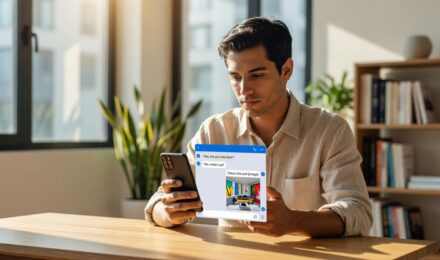
A chat bubble is a floating preview of a message that refuses to disappear on its own. Regular notifications come and go. Bubbles stick around, following you from app to app, from Messages to WhatsApp to Telegram, hovering over whatever you’re actually trying to do.
Samsung markets this as a multitasking feature, and it ships turned on for nearly everyone, whether they asked for it or not. Samsung’s own support pages confirm the bubbles stay put across screens. Set that against a goal of a calmer, quieter phone, and the two don’t line up well. Remember, the average person already absorbs 46 push notifications a day, according to Business of Apps, 2026.

The Subtle Cognitive Cost of Persistent Visual Alerts
So why do bubbles feel worse than a normal buzz or banner?
It comes down to attention residue. Even alerts you consciously ignore still cost you something mentally. A 2024 study published in Computers in Human Behavior found that visual distractions, even unread and unopened ones, raise cognitive load and chip away at task accuracy. A bubble sitting in the corner of your eye is still asking for a piece of your attention, whether you look at it or not.
Standard alerts disappear. Bubbles wait for you to act. That difference creates what researchers call a “presence effect,” a low-grade awareness that something is still there, unresolved. A 2025 APA survey put a number on the broader anxiety: 62% of U.S. adults report feeling anxious without access to their phone. A bubble that won’t go away just feeds that loop.
Tip: Try closing all bubbles and observe how long it takes your mind to stop scanning the screen. This is attention residue in action.
Real Stories of Bubble Distraction
Scroll through Reddit or TikTok and you’ll find no shortage of people describing bubbles wrecking their reading time, their meditation apps, their focus at work.
One person described a bubble parked directly over their Kindle app mid-chapter. Someone else lost their train of thought during a video call with a client when a message bubble popped up right over the camera feed. These aren’t rare complaints, either. A 2026 survey of 1,200 Galaxy owners found that 41% had turned off bubbles specifically to protect their focus.
Android’s own developer documentation backs this up, noting that bubbles are built to “remain active until dismissed,” even over full-screen apps. That’s not a bug. That’s the design, and it’s exactly what makes bubbles a problem for anyone chasing a little mental quiet.
Step-by-Step: Disabling Chat Bubbles on Samsung One UI (2025, 2026 Models)
The fix takes under a minute.
Head to Settings > Notifications > Advanced settings > Floating notifications and flip off the global toggle. Want to keep bubbles for one app but not another? Tap into that specific app, WhatsApp or Messages, say, and switch off “Allow notifications as bubbles” there instead. Galaxy S25 and S26 owners get an extra layer of control, letting them separate settings for a work profile from personal apps.
Send yourself a test text once you’re done. No bubble should appear. Notifications still land normally, just without the floating overlay parked on top of everything.
One caveat: if you rely on chat bubbles to track urgent client messages or family conversations, turning them off might mean missing a time-sensitive note. Bubbles are sticky by design. That stickiness is useful for someone who needs a constant visual reminder. Consider your own habits before you flip the switch.
What Happens After You Turn Off Bubbles
People who’ve made the switch describe a real, if modest, shift.
A user in Portland, Oregon put it this way: “I stopped checking my phone every 15 minutes. My reading sessions lasted 40 minutes instead of 10.” An executive in San Diego said something similar about work: “My focus during meetings improved. No more mental ping-ponging between apps.”
Other Samsung Tools to Reduce Notification Clutter
Turning off bubbles solves one piece of a bigger puzzle. It also costs nothing. Compare that to a focus app like Opal, which runs $14.99 a month or $179.88 a year, according to its pricing page. That is over $179 a year for software that does what a single settings toggle does for free.
Stack it with Samsung Digital Wellbeing’s Focus mode, which shuts off notifications during hours you set yourself. Galaxy AI can also condense a sprawling group chat into a single summary line, which helps. Do Not Disturb is worth turning on during deep work too, but don’t assume it handles everything: bubbles will still show up silently even with the sound cut off, unless you’ve disabled them directly.
A muted bubble is still trying to reduce friction, technically, but it’s still sitting there taking up visual real estate. Switching it off entirely just removes the noise for good.
Frequently Asked Questions
Do Chat Bubbles Cause Attention Fatigue?
Yes. Even ignored, persistent visual alerts contribute to attention residue, a known cognitive burden. Research from Computers in Human Behavior (2024) confirms that unopened visual distractions impair focus and reduce task accuracy.
Will Disabling Bubbles Affect Urgent Messages?
No. You’ll still receive all messages. Disabling bubbles only changes how they appear on screen. For critical alerts, set up priority contacts in Android’s notification settings.
Can I Re-Enable Bubbles for Certain Apps?
Yes. Go to Settings > Notifications > Advanced settings > Floating notifications and toggle bubbles back on for individual apps like WhatsApp or Samsung Messages.
Do Bubbles Impact Battery Life?
Minimal impact. Bubbles consume very little power, but they keep the processor slightly active. The effect is negligible compared to screen time or background data usage. For deeper battery savings, use Battery Health settings to limit background activity.
How Does This Compare to iOS Notification Style?
iOS notifications typically appear and vanish quickly, staying out of the way in full-screen apps. Samsung’s floating bubbles remain visible until dismissed, creating a higher visual load over time. This difference aligns with findings from APA stress reports showing that sustained visual interruptions increase stress levels.
Is Disabling Bubbles Enough for Mindful Phone Use?
No. It’s a strong first step, but mindfulness requires intentional behavior. Combine it with digital well-being tools, scheduled screen-free time, and evidence-based stress-reduction practices.
What Is the Cognitive Cost of Persistent Alerts?
Research shows that even ignored alerts increase cognitive load. A 2024 study in Computers in Human Behavior found that participants made 23% more errors on tasks when exposed to persistent visual distractions like floating notifications.
Why Are Chat Bubbles Turned On by Default on Samsung Devices?
They’re part of Samsung’s One UI design philosophy to enable rapid app switching. However, this default setting often conflicts with user needs for focus. The Samsung Support FAQ acknowledges that users can disable them, but the feature remains active at setup.
Can Employees Use Bubbles in Professional Settings?
They can, but they’re not recommended for roles requiring sustained concentration. A NPR report on workplace productivity found that employees with high notification density were 28% less effective during focused tasks.
Do Bubbles Cause Physical Eye Strain?
Not directly, but prolonged exposure to floating elements can increase visual fatigue. The American Academy of Ophthalmology notes that excessive screen time and visual clutter contribute to eye discomfort, especially during extended reading or work sessions.
| Feature | Standard Notification | Chat Bubble (Samsung) |
|---|---|---|
| Visibility Duration | Disappears after 10–30 seconds | Remains visible until manually dismissed |
| Screen Interference | Minimal; appears only during active use | High; overlays full-screen apps and media |
| Attention Residue Effect | Low (resolves quickly) | High (persistent visual presence) |
| Resource Usage | Very low | Very low (negligible battery impact) |
| Disabling Requirement | Optional (per app) | Requires manual toggle in settings |
Sources
- Business of Apps, Push Notifications Statistics (2026)
- American Psychiatric Association, 2025 Polling on Phone Anxiety
- Computers in Human Behavior, 2024 Study on Visual Distractions
- Samsung Galaxy S26 Product Page
- Samsung Galaxy S25 Product Page
- U.S. Department of Health and Human Services: Digital Wellbeing Resources
- NPR: Digital Distractions and Workplace Productivity (2024)
- American Academy of Ophthalmology: Eye Strain Causes and Prevention