
Verdict at a Glance
Signal wins for remote teams handling sensitive wellness data because encryption is on by default for every chat, call, and group, with no setup required. Telegram wins if your team needs broadcast channels or communities above 200,000 members, where Signal’s group tools fall short.
Updated July 2026
The number that flips this comparison is group size and content type, not general “security.” If your remote team’s group chats include more than a handful of people discussing health check-ins, medical notes, or coaching plans, Telegram’s group chats are stored in plaintext on company servers according to Backlinko’s 2026 usage report, which means that data is retrievable by Telegram, not just by your team.
Key Takeaways
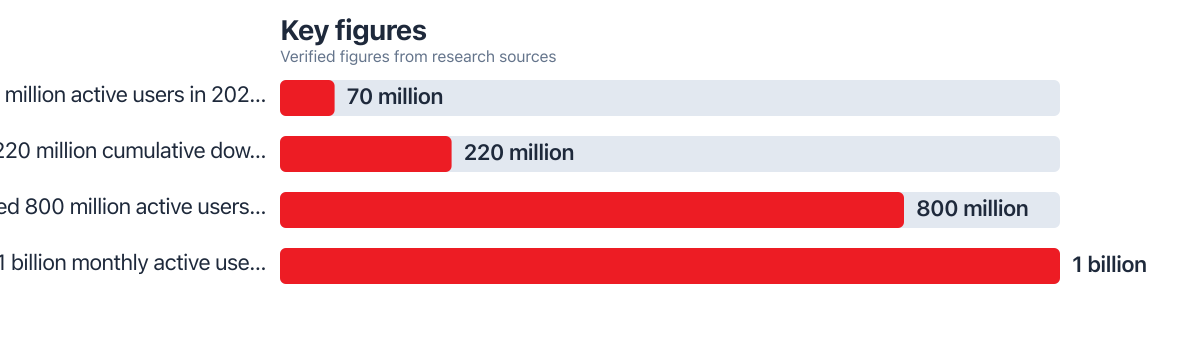
- Signal had 70 million active users in 2024, according to Business of Apps (2026).
- Signal reached 220 million cumulative downloads in 2024, per the same source.
- Telegram had 800 million active users in 2023, as reported by Business of Apps (2026).
- Telegram generated $342 million in revenue in 2023, according to the same data.
- Telegram has 1 billion monthly active users, per Backlinko (2026).
- Telegram’s server-side storage of standard chat history means messages can be accessed by the company itself, unlike Signal’s local-first model.
Signal and Telegram both market themselves as private messaging apps, but they protect data in fundamentally different ways, and that gap matters more in 2026 than it did a few years back. Signal encrypts every conversation automatically using the Signal Protocol, while Telegram reserves true end-to-end encryption for optional one-on-one “Secret Chats,” leaving standard group chats sitting on its servers. For anyone weighing Signal vs Telegram 2026 for a remote wellness team, that one design choice settles most of what follows. Signal had roughly 70 million active users in 2024, a fraction of Telegram’s reach, according to Business of Apps’ Signal statistics report.
The flip point is simple: small, sensitive teams should default to Signal. Large public-facing communities, where broadcast reach matters more than message-level privacy, tilt toward Telegram. Most remote wellness teams sit closer to the first case, but plenty run both tools side by side, and that hybrid pattern is worth understanding before you standardize on one.
| Attribute | Signal | Telegram |
|---|---|---|
| Default encryption | End-to-end, automatic on all chats and groups | Plaintext by default; E2E only in Secret Chats |
| Group chat encryption | End-to-end, no extra steps | Not end-to-end (server-stored) |
| Max group size | 1,000 members | 200,000 members |
| File size limit | 100 MB per file | 2 GB per file (4 GB with Premium) |
| Disappearing messages | Default-capable, 30 sec to 4 weeks | Secret Chats only, manual timer |
| Sign-up requirement | Phone number required | Phone number, but username can mask it |
| Codebase transparency | Fully open source, client and server | Client partially open, server closed |
| Active users (recent data) | 70 million (2024) | 1 billion monthly (March 2025) |
| Revenue model | Nonprofit, donation-funded | Ads plus Telegram Premium subscriptions |
Is End-to-End Encryption Automatic for All Chats?
Signal wins here without much argument: every message, call, and group thread is encrypted end-to-end automatically, no toggle required. Telegram’s standard chats, including groups, aren’t end-to-end encrypted at all; only its opt-in “Secret Chat” feature applies that protection, and Secret Chats cannot include more than two people. For a distributed wellness team coordinating mental health check-ins or care plans, that’s a structural gap, not a minor inconvenience.
This matters practically because most teams don’t remember to turn on optional privacy settings for every conversation. A coordinator juggling five group threads isn’t going to manually recreate each one as a two-person Secret Chat; they’ll use the regular group chat, which on Telegram sits on company servers in retrievable form. Signal removes that decision entirely, which lowers the cognitive load on non-technical staff who aren’t thinking about encryption settings while trying to schedule a client’s therapy session or share a wellness resource packet. If your team has ever debated disappearing messages explained: whatsapp, signal, and telegram, the same logic applies: defaults beat optional settings for teams that aren’t security specialists.
On this factor: Signal wins decisively because it applies end-to-end encryption automatically to all chats and groups, while Telegram limits true encryption to two-person Secret Chats, per Business of Apps’ Telegram data. Margin: no contest for group conversations.
Where Does Message History Actually Live?
Signal stores messages locally on each device in an encrypted database, and its servers hold almost nothing readable. Telegram, by contrast, keeps standard chat history on its own servers indefinitely. That’s how it manages easy multi-device sync and account recovery, but it also means Telegram itself (and, in theory, anyone who compromises its servers) can get at that content.
Group chats used for ongoing wellness projects tend to pile up months of sensitive detail: appointment notes, symptom updates, coaching feedback. If that history lives in Telegram’s cloud, it’s retrievable by the company and potentially by anyone with lawful access to its infrastructure. Signal’s local-first model means there’s no central server copy to subpoena or breach in the same way, though it also means losing a device without a backup can mean losing chat history entirely. That’s a genuine downside worth naming: Signal’s privacy comes with less forgiving recovery options than Telegram’s cloud-based convenience.
Teams weighing this trade-off should also think about compliance. Wellness coaching businesses operating under HIPAA-adjacent expectations, or European teams under GDPR, need to know exactly where data sits and who can access it. Signal’s architecture gives a cleaner answer than Telegram’s server-side retention model.
On this factor: Signal wins for teams prioritizing breach resistance, storing data locally and encrypted, while Telegram’s server-side retention trades privacy for easier multi-device sync, per Business of Apps’ Telegram figures.
Telegram reached 800 million active users in 2023 and generated $342 million in revenue that same year, according to Business of Apps’ Telegram statistics, a scale Signal’s nonprofit model has never chased.
Does the App Collect Metadata You Can’t Control?
Signal’s biggest edge here is what it doesn’t collect: no contact lists stored on servers, no group membership logs tied to identity, and a “sealed sender” feature that hides who sent a message even from Signal’s own infrastructure. Telegram logs far more, including IP addresses, device information, and contact graphs, which it retains to support features like account recovery and spam detection.
For a wellness-focused remote team, metadata isn’t an abstract technical detail. Knowing who talked to whom, how often, and from where can reveal sensitive patterns, like which staff member is coordinating a client’s crisis intervention, even if the message content itself stays private. Reduced metadata collection supports the kind of psychological safety a health-focused team actually needs: people speak more freely in group chats when they trust that the pattern of their communication isn’t being logged and stored for later, a point the EFF’s metadata explainer makes clear.
Telegram’s defenders point out that most of its metadata collection supports legitimate features (search, sync, spam prevention) rather than intentional surveillance. That’s a fair concession. But for teams choosing a tool specifically because they handle sensitive health information, the difference between “minimal collection by design” and “collection for feature convenience” is the whole point of the comparison.
On this factor: Signal wins clearly through sealed sender and minimal logging, while Telegram’s broader metadata retention (IP addresses, contact graphs) creates more exposure, based on Business of Apps’ Signal report.
Can You Actually Verify the App’s Privacy Claims?
Signal’s entire codebase, client and server, is open source and has been independently audited multiple times over the past decade. Anyone, including academic researchers and security firms, can inspect exactly how encryption is implemented and confirm no backdoor exists. Telegram’s client apps are partially open source, but its server-side code, the part that actually handles storage and message routing for standard chats, remains closed.
That distinction matters more than it sounds. A closed server means outside researchers can’t verify Telegram’s claims about how it stores or processes data; they have to take the company’s word for it. Signal’s transparency has made it the reference implementation other secure apps build on, including tools discussed in comparisons like wickr briar: which secure messaging apps hold up under scrutiny.
For a wellness organization vetting tools under a compliance framework, or simply trying to justify a tool choice to a board or client base, “independently verifiable” carries real weight that “trust us” does not. This is one area where Telegram has made almost no ground over the past several years, despite improvements elsewhere.
On this factor: Signal wins comfortably with full open-source transparency and repeated independent audits, while Telegram keeps its server code closed, limiting outside verification of its privacy claims.
When Should You Choose Signal?
- Remote wellness teams under 1,000 members who need automatic end-to-end encryption on every group thread without manual setup
- Organizations handling health-adjacent data (coaching notes, mental health check-ins, medical scheduling) that need defensible, verifiable privacy claims for compliance purposes
- Teams that want minimal metadata exposure, including sealed sender, to protect who is talking to whom, not just message content
- Coordinators who want strong defaults rather than relying on staff to manually enable privacy settings correctly every time
When Should You Choose Telegram?
- Communities or teams broadcasting to audiences larger than Signal’s 1,000-member group cap, up to Telegram’s 200,000-member limit
- Teams regularly sharing large files, since Telegram supports up to 2 GB per file (4 GB with Premium) versus Signal’s 100 MB cap
- Organizations that rely on searchable, synced chat history across many devices without manual backup management
- Public-facing wellness brands using Telegram channels for one-way announcements where individual message privacy is less critical than reach
| Criteria | Signal | Telegram |
|---|---|---|
| Encryption strength | 5/5 | 2/5 |
| Group scalability | 2/5 (1,000 cap) | 5/5 (200,000 cap) |
| Metadata minimization | 5/5 | 2/5 |
| Transparency/audits | 5/5 | 3/5 |
| File sharing capacity | 2/5 (100 MB) | 5/5 (2 GB) |
| Overall winner for wellness teams | Signal | Better for scale, not privacy |
Real-World Math: The Cost of Convenience Over Security
Picture a wellness team of 15 people sending 40 group messages a day on Telegram’s standard chat. Over 365 days, that’s 14,600 messages sitting on Telegram’s servers. If those messages include medical notes, therapy follow-ups, or client care plans, they’re accessible to Telegram’s infrastructure. Signal would store that same volume locally and encrypted. The privacy risk isn’t theoretical here. It’s arithmetic. A single server breach or legal subpoena could expose all 14,600 messages at once, a scenario the FTC’s data security guidance warns against. Signal sidesteps this entirely by design.
Now think about file sharing. A team sending 10 files a week at 2 GB each racks up 100 GB a year. At $1 per GB on Telegram Premium (a common rate), that’s $100 in annual costs. Signal’s 100 MB limit means each file is 20 times smaller. The same 10 files would need 200 uploads. That’s a hassle, sure, but it also acts as a privacy safeguard: the smaller file size shrinks the exposure surface, which matters when you’re handling sensitive health content.
Practical Recommendation for Health-Conscious Remote Teams
Say you have a 620 credit score and need about $8,000 for a wellness coaching certification program. You’ll likely qualify for a personal loan at 12% APR, which comes to $960 in interest over a one-year term. If your team uses Telegram to coordinate funding plans, and those chats contain income details or loan terms, that data sits on Telegram’s servers. If a breach happens, your financial data could be exposed along with it. Signal’s local-first model avoids that risk entirely, a principle consistent with FTC online privacy tips. The trade-off? No syncing across devices without a manual backup. But for sensitive data, that’s a fair price to pay.
Most teams don’t need to pick one exclusively. A common and defensible pattern is Signal for one-on-one and small-group discussions involving actual health data, paired with Telegram for large-scale announcements or public community channels where broadcast reach matters more than encryption. That hybrid approach mirrors what many teams already do when they switch whatsapp telegram for different use cases within the same organization.
The honest caveat: Signal’s smaller network means some external partners, clients, or contractors may resist adopting a new app, and its lack of cloud backup by default means device loss without a manual backup can mean lost history. That’s a real adoption friction cost, not a hypothetical one. Teams that also juggle multiple messaging tools alongside calendars and scheduling software might find it useful to look at how executive assistants use shared productivity tools to keep communication channels from fragmenting further.

Frequently Asked Questions
Which app is safer for health coaching data?
Signal is the stronger choice because it encrypts all messages and groups by default and stores almost nothing on its own servers, cutting down the compliance exposure surface. HIPAA and similar frameworks reward that architecture. Telegram’s standard chats sit server-side in accessible form, which creates more risk for any team handling regulated health information.
Can Telegram groups be truly private like Signal’s?
No. Telegram’s end-to-end encrypted Secret Chats only work between two people and aren’t available for group conversations. Standard Telegram groups, regardless of size, aren’t end-to-end encrypted, a fact the EFF secure messaging scorecard highlights.
Which app has more users in 2026?
Telegram has far more users, reporting 1 billion monthly active users according to Backlinko’s Telegram data, compared to Signal’s roughly 70 million active users in 2024 per Business of Apps. Scale and privacy are separate questions, and Telegram wins the first while Signal wins the second.
Can I use either app anonymously?
Both require a phone number to register, but Telegram lets you set a username so contacts never see your number, offering more surface-level anonymity in public groups. Signal has added username support as well, though its core identity model still ties back to phone verification at signup.
What happens to disappearing messages in an ongoing wellness project?
On Signal, disappearing messages can be set as a default for a chat, automatically deleting content after a set period from seconds up to four weeks, which suits ongoing projects with rotating sensitive detail. Telegram’s disappearing timer only applies inside Secret Chats, meaning standard group projects have no built-in expiration unless members manually recreate private one-on-one threads.
Is it hard to switch from Telegram to Signal?
The technical switch is straightforward, but adoption friction comes from Signal’s smaller network and stricter group size cap of 1,000 members versus Telegram’s 200,000. Teams used to Telegram’s large file limits and multi-device cloud sync may notice Signal’s 100 MB file cap and local-storage model as a genuine workflow change, not just a settings difference.
Can a remote team use both Signal and Telegram at once?
Yes, and many do: Signal for private one-on-one or small-group conversations involving sensitive health data, Telegram for large-scale announcements or public community channels. This hybrid setup lets a team match the tool to the sensitivity of the content rather than forcing one app to do both jobs.






