
Verdict at a Glance
WhatsApp with Meta AI wins for households already living inside that app because setup takes under 10 minutes and family sharing is native; Telegram wins instead if you want a custom bot that remembers dietary rules across weeks without repeating yourself, especially past 3 household members with conflicting diets.
Updated January 2026
The flip point is household complexity, not app popularity. Once you’re coordinating more than 3 people with different allergies or macros, WhatsApp’s single-thread AI starts losing track of who eats what. A Telegram bot with persistent memory becomes the safer bet, a limit consistent with how the CDC’s nutrition research describes the limits of one-size-fits-all personalization tools.
WhatsApp and Telegram have both quietly become meal planning tools in 2026. Neither company set out to build one. Their built-in AI features and bot ecosystems finally got good enough to replace a dedicated app for most people. The real question for anyone trying to automate meal planning this year isn’t which app has better recipes. It’s which one fits how your household actually communicates. Food insecurity data shows the average person struggling with food costs needs an extra $22.37 a week just to cover basic needs, according to Feeding America’s 2025 Map the Meal Gap report. That number makes efficient, waste-reducing meal planning more than a lifestyle nicety.
This comparison isn’t about picking the trendier app. One number actually changes the answer: how many people and how many dietary rules you’re juggling. Below that threshold, WhatsApp’s simplicity wins. Above it, Telegram’s bot infrastructure earns its extra setup time.
Key Takeaways
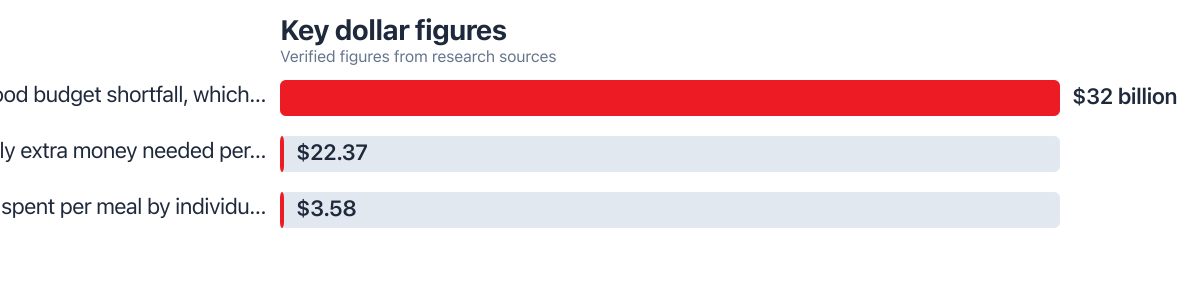
- Food-insecure individuals need an extra $22.37 a week on average to cover food costs, according to Feeding America’s 2025 report
- The national food budget shortfall totals $32 billion a year, per Feeding America
- Food-secure individuals spent an average of $3.58 per meal in 2023, according to Feeding America’s meal cost data
- WhatsApp’s Meta AI setup takes 5-10 minutes; Telegram’s custom bot setup via BotFather takes 20-30 minutes
- WhatsApp caps group chats at 1,024 members; Telegram supports up to 200,000
- WhatsApp encrypts chats end-to-end by default; Telegram only encrypts Secret Chats, which don’t support groups or bots
| Attribute | Telegram | |
|---|---|---|
| Setup time for basic meal bot | 5-10 minutes (built-in Meta AI) | 20-30 minutes (custom bot via BotFather) |
| Group chat size limit | 1,024 members | 200,000 members |
| Memory across sessions | Limited to recent thread context | Persistent via bot database |
| No-code automation support | WhatsApp Business API + Zapier (paid tiers) | Free Zapier/Make integrations |
| End-to-end encryption for chats | Yes, by default | Only in Secret Chats, not groups |
| Voice command support | Native voice-to-text with Meta AI | Requires third-party bot add-on |
| Cost for family use | Free | Free (bot hosting may cost $0-5/month) |
| Recipe/grocery list export | Manual copy or link share | Automated via bot commands |
Why Messaging Apps Beat Dedicated Meal Planners
Messaging apps win on adherence for one simple reason: they eliminate app-switching friction. That friction kills most meal planning habits within a few weeks. You already open WhatsApp or Telegram a dozen times a day. You don’t open a standalone meal planner unless you remember to. That single behavioral fact explains why conversational planning sticks where calendar-based apps don’t.
Getting this wrong has a real cost. Feeding America’s research puts the average food-secure household at $3.58 spent per meal in 2023, according to the organization’s national meal cost data. Waste from forgotten groceries or abandoned plans pushes that number higher fast. A planning system you actually use, even an imperfect one inside a chat app, beats a polished app you open twice and abandon.
Both platforms now support meaningful AI integration. Meta AI is built directly into WhatsApp for over 2 billion users, while Telegram’s open bot API has spawned thousands of third-party nutrition and grocery bots since 2024. Neither requires a developer background to use at the basic level, though Telegram rewards a bit more tinkering. If you’ve ever set up automation shortcuts most people never bother configuring in their productivity apps, the same principle applies here: small upfront effort buys weeks of reduced decision fatigue.
On this factor: WhatsApp and Telegram both beat dedicated meal apps on adherence because they require zero new habit formation; the difference between the two is negligible here, with WhatsApp holding a slight edge for 2 billion existing daily users via its native Meta AI integration.
Picking the Right App and AI Integration
Telegram pulls ahead on customization depth. Its bot ecosystem was built for developers first and casual users second. That tradeoff matters for anyone managing allergies, multiple diets, or a family with conflicting food rules. WhatsApp’s Meta AI is faster to start with but leans on a single conversational thread. That thread can lose nuance once you’re juggling more than two or three people’s preferences at once.
Picture a household of four: one person on a low-sodium diet tracked the way a doctor or a service like CDC nutrition guidance would recommend, one vegetarian, one with a nut allergy, and one just trying to eat more vegetables. On WhatsApp, you’d typically type all four sets of constraints into one thread and hope Meta AI keeps them straight across the week. In practice, it drifts after a few days, forcing you to restate preferences. On Telegram, a custom bot built through BotFather (Telegram’s free bot-creation tool) can store each person’s profile in a simple database and reference it every time. No re-explaining required.
Privacy deserves a real look here, not a footnote. WhatsApp encrypts one-on-one and group chats end-to-end by default, per WhatsApp’s privacy policy, which matters if you’re logging medical dietary restrictions or a child’s allergy information. Telegram’s regular chats and groups are not end-to-end encrypted by default, according to Telegram’s own privacy policy; only its separate Secret Chat feature gets that protection, and Secret Chats don’t support groups or bots. If you’re feeding sensitive health data into either system, treat it the way you’d treat any account holding personal information, similar to the audit habits described in guidance on how to audit every app has access to your accounts, and consistent with the FTC’s health privacy guidance.
The national food budget shortfall for food-insecure households now totals $32 billion a year, according to Feeding America’s 2025 report. That figure underscores why waste-reducing, adherence-friendly meal systems carry real financial weight for millions of families.
On this factor: Telegram wins for multi-person, multi-diet households by a clear margin thanks to persistent bot memory, while WhatsApp’s default end-to-end encryption gives it the edge for privacy-sensitive users handling household food data.
Automating Grocery Lists, Voice Swaps, and Reminders
Telegram handles real-time meal swaps and grocery automation more reliably. Its bot commands are structured rather than freeform. Saying “replace chicken with tofu” to a Telegram bot triggers a specific, testable command that updates a stored list. The same phrase typed into WhatsApp’s Meta AI works most of the time, but as a conversational model without a persistent backend, it occasionally forgets the swap by the next message.
Setting this up on Telegram usually looks like connecting a no-code tool such as Zapier or Make to a bot built through BotFather, then linking that bot to a shared group. Family members type quick replies like “add to this week’s plan” or “we’re out of eggs,” and the bot updates a running grocery list that anyone in the group can see. This kind of no-code chaining wasn’t reliable until late 2024, but by 2026 it’s become a standard pattern among people automating small parts of their lives, similar to how solopreneurs use automation apps run entire businesses without hiring anyone.
WhatsApp’s approach relies more on the WhatsApp Business API, which is technically capable of the same grocery-list automation but usually involves either a paid third-party service or more setup than most households want to handle. Voice commands are actually stronger on WhatsApp, since Meta AI has native voice-to-text baked in; Telegram needs a bot add-on to match that. Neither platform handles offline sync well. If you’re in an area with spotty connectivity, both apps queue messages locally and sync once you’re back online, but bot-triggered automations, like list updates, can lag by several minutes.
On this factor: Telegram wins for structured grocery automation and reliable swap commands by a meaningful margin, while WhatsApp keeps the lead on native voice input, a genuine tradeoff depending on whether you type or talk to your planner more often.
Test any new meal bot with a single sample week before committing your full household to it. Ask it to generate a plan, then try one substitution and one addition to see how well it holds context across three or four messages.
When WhatsApp Is the Better Choice
- Households of 1-2 people who want meal planning without any bot setup or technical configuration
- Families already using WhatsApp daily for group communication, where adding meal planning to an existing group causes zero adoption friction
- Anyone prioritizing default end-to-end encryption for logging health-related dietary information or allergy details
- Users who prefer speaking meal changes aloud rather than typing structured bot commands
- People who tried a dedicated meal app before and abandoned it within a month due to app-switching fatigue
When Telegram Is the Better Choice
- Households managing 3 or more people with distinct dietary restrictions, allergies, or macro targets
- Anyone comfortable spending 20-30 minutes on initial bot setup in exchange for weeks of reduced repetition
- Users who want free, flexible no-code integrations like Zapier or Make connected directly to their grocery list
- Groups larger than WhatsApp’s 1,024-member cap, relevant for community meal-planning groups or extended family coordination
- People who want a bot that remembers preferences across months without needing them restated each week
| Criteria | Telegram | |
|---|---|---|
| Cost | Free | Free (minor bot hosting cost possible) |
| Setup Speed | 5/5 | 3/5 |
| Flexibility for Complex Diets | 2/5 | 5/5 |
| Privacy/Encryption | 5/5 (default E2E) | 2/5 (groups unencrypted) |
| Grocery List Automation | 3/5 | 5/5 |
| Voice Command Support | 5/5 | 2/5 |
| Overall Winner | Best for simple households, privacy first | Best for complex, multi-diet households |
Neither app is a perfect meal planner. That’s worth saying plainly. WhatsApp’s Meta AI can misremember a dietary restriction after a busy week of unrelated chatting in the same thread, and there’s no dedicated “meal mode” to isolate that context. Telegram’s bot ecosystem is stronger technically, but it asks more of you upfront, and a poorly configured bot can silently fail to update a grocery list without any error message. If you don’t check in on the setup every week or two, either system can quietly drift from being useful to being ignored. That’s the same fate that kills most dedicated meal apps in the first place.
Consider a specific case: a single parent managing groceries on a tight budget, tracking spending the way a household on a strict DTI (debt-to-income) budget would watch a credit card statement from Chase or Capital One. If that parent needs to stretch roughly $8,000 a year in food spending across three kids with two allergies between them, the difference between a bot that remembers those allergies automatically and one that forgets by Thursday isn’t a convenience question. It’s a safety question. That’s the exact profile where Telegram’s persistent bot memory earns its extra 20 minutes of setup time.
Tracking progress matters more than most people expect going in. Logging what you actually ate versus what was planned, right in the same chat thread, makes patterns visible in a way a separate tracking app rarely achieves. If energy dips every Wednesday and you notice you skipped lunch prep that day, that’s a pattern you can act on. Sharing that thread history with a nutritionist or an accountability partner is as simple as forwarding messages. Neither Telegram nor WhatsApp treats that as a special feature, but both handle it well by default. This kind of lightweight tracking pairs naturally with broader household coordination habits, not unlike how executive assistants use shared productivity tools to keep multiple people aligned without constant back-and-forth meetings.

Staying Consistent Without Burning Out on Setup
The biggest failure mode for either platform isn’t the technology. It’s letting perfect be the enemy of good. Don’t try to configure every dietary rule and every automation on day one. Start with a single week’s plan, test one swap, and build from there. A bot that handles 80% of your grocery list accurately and gets checked manually once a week beats a fully automated system nobody trusts enough to actually use.
Frequently Asked Questions
Is WhatsApp or Telegram better for meal planning?
WhatsApp is better for individuals or small households wanting a fast, no-setup solution through Meta AI. Telegram is better for households with three or more people managing different diets, since its bots remember preferences across weeks without needing repetition.
Can I automate meal planning without coding experience?
Yes. WhatsApp’s Meta AI requires zero setup beyond typing your preferences directly into a chat. Telegram requires slightly more effort through BotFather, but most no-code tools like Zapier offer templates that don’t require writing any code.
Is it safe to share dietary or health information through a messaging app?
WhatsApp encrypts one-on-one and group chats end-to-end by default, per WhatsApp’s privacy policy, making it a safer choice for sensitive health data. Telegram’s regular chats and groups are not end-to-end encrypted, according to Telegram’s privacy policy, so treat any allergy or medical information shared there with more caution.
How do I plan for multiple family diets in one chat?
Telegram handles this better through custom bots that store each person’s profile separately in a database. WhatsApp works for this too, but expect to restate preferences more often since its AI relies on recent thread context rather than persistent memory.
Do messaging app meal bots work offline?
Neither WhatsApp nor Telegram handles offline automation well. Both apps queue messages locally and sync once connectivity returns, but bot-triggered actions like grocery list updates can lag by several minutes after reconnecting.
Is this cheaper than a dedicated meal app?
Both WhatsApp and Telegram are free to use for basic meal planning automation, unlike many dedicated meal apps that charge monthly subscriptions. The only added cost on Telegram comes from optional bot hosting, typically under $5 a month, which is still cheaper than most paid meal planning apps.
Frequently Asked Questions
Which app reduces food waste more effectively?
Telegram’s structured grocery list bots are more reliable for tracking what’s already in your kitchen and adjusting plans around it, which directly reduces waste. Reducing waste matters financially too. Food-secure individuals spent an average of $3.58 per meal in 2023, according to Feeding America’s meal cost data, and unused groceries push that cost higher fast.