Fact-checked by the SnapMessages editorial team
Quick Answer
Most people assume “encrypted” means fully private, but only 17% of consumers actually use encrypted email and 15% use encrypted messenger apps. The critical mistake is confusing basic encryption (data scrambled in transit) with end-to-end encryption, where only the sender and recipient hold the keys. Even E2EE apps can silently fall back to unencrypted SMS in mixed-device group chats.
The phrase “message encryption settings” sounds like something you set once and forget, a padlock icon you trust without question. But 47% of organizations cite key management complexity as the primary barrier to full email encryption deployment, according to Ponemon Institute research. That same complexity leaks into consumer apps in ways most people never notice until a message they thought was private turns out not to be.
What follows covers what actually happens when you toggle encryption on and off, where the gaps hide, which settings matter for health conversations, and why the lock icon you see on screen is not always telling the full story.
Key Takeaways
- End-to-end encryption strategies are used by 97% of data protection officers, yet consumer adoption lags far behind (Infrascale 2025).
- Only 15% of consumers use encrypted messenger apps, leaving the majority exposed during everyday health and wellness conversations (Usercentrics/Surfshark).
- The average enterprise manages over 54,000 encryption certificates across its messaging infrastructure, complexity that directly causes misconfigurations (Ponemon Institute).
- iMessage E2EE applies only between Apple devices and can fall back to unencrypted SMS without clear user notification in mixed-device group threads (CISA guidance).
- “Encrypted in transit” does not equal “end-to-end encrypted”: server-side decryption still gives platform providers access to your plaintext health data.
In This Guide
- Why Your Phone’s Default Texting App Leaves Health Conversations Exposed
- The Most Common Misconception: “If It Says Encrypted, It’s Safe”
- How Message Encryption Settings Actually Work in Everyday Apps
- HIPAA Compliance vs. Consumer Encryption: Where the Line Actually Is
- Practical Checks: Verifying Encryption Before Sharing Sensitive Info
- When E2EE Indicators Silently Fail
- What Changes When You Switch to Purpose-Built Secure Messaging
Why Your Phone’s Default Texting App Leaves Health Conversations Exposed
Standard SMS has zero encryption. None. Every text you send about a prescription, a test result, or a therapy appointment travels as plaintext through carrier infrastructure that CISA has explicitly flagged as vulnerable following major telecom breaches. If someone gains access to those systems, and attackers have, your message history is readable in full.
RCS improves on SMS with richer features, but the encryption picture is messy. Google Messages applies E2EE to RCS conversations only when both parties are using the app with data or Wi-Fi enabled and the lock icon is visible. In group chats that include even one participant on a different RCS implementation, say, a Samsung Messages user, the encryption can drop without any obvious warning. The default texting environment most people rely on was never built for sensitive health conversations.
Consider what a single unencrypted thread can contain: appointment confirmations with clinic names, prescription numbers, symptom descriptions sent to a partner, billing questions with insurance details. Each piece is individually minor. Together, they form a health profile that would be valuable to data brokers and, in some jurisdictions, accessible to law enforcement without a warrant.
Carriers can store SMS content on their servers for days to weeks depending on delivery retry policies. There is no legal requirement to delete messages immediately after delivery, which means your health-related texts may sit on carrier infrastructure long after you have read them.
The Most Common Misconception: “If It Says Encrypted, It’s Safe”
The word “encrypted” on a settings screen means very little by itself. What you need to know is who holds the keys. Server-side encryption, where the platform encrypts your data in transit and at rest but retains the decryption keys, still allows the provider to read your messages. End-to-end encryption means the keys live only on your device and your recipient’s device. That distinction is everything when sharing health information.
WhatsApp defaults to E2EE for one-on-one and group chats, this is true and well-documented. But WhatsApp business accounts and cloud backups introduce different rules. Messages backed up to iCloud or Google Drive may not retain E2EE protections depending on the backup settings you have chosen. Telegram takes a different approach entirely: only “Secret Chats” use E2EE. Regular chats, group chats, and channels use server-side encryption, meaning Telegram holds the keys. A user who assumes the green lock icon means the same thing across both apps is making a category error with real consequences.
This is where disappearing messages add another layer, but they are not a substitute for encryption. A message that vanishes after 24 hours still travels through the same pipes. If it was not E2EE during transit, the vanishing timer only cleans up one endpoint, not the server logs in between.
How Message Encryption Settings Actually Work in Everyday Apps
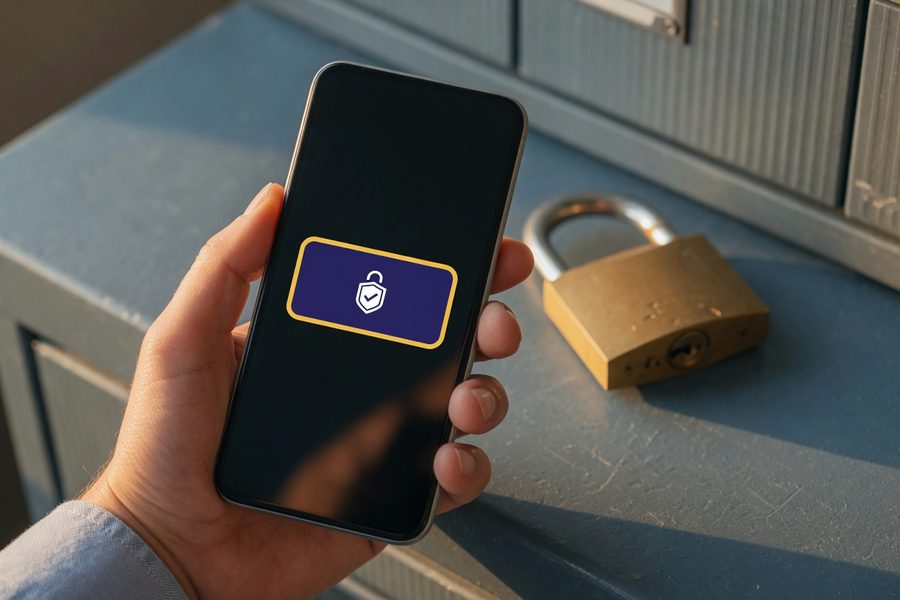
iMessage applies E2EE by default, but only between Apple devices. Add an Android user to a group iMessage thread and the entire conversation, including messages from iPhone users, degrades to SMS or MMS with no encryption at all. The blue bubble turns green. That is the only visual cue most people get, and it says nothing about the security downgrade.
Google Messages shows a lock icon on RCS conversations when E2EE is active. If the lock is missing, the messages are not end-to-end encrypted, even if they are traveling over RCS rather than SMS. This can happen when one participant switches to a device or carrier that does not support Google’s Jibe-based RCS profile, or when messages fall back to SMS due to a data interruption. The setting is not something you configure once. It is a per-conversation state that can change silently.
Before sending a message containing health details, glance at the text input field. On iMessage, it says “iMessage” in gray when encrypted; on Google Messages it shows a lock icon. If either indicator is missing, stop and switch to a verified E2EE app.
WhatsApp’s E2EE holds up well for in-transit messages, but cross-platform messaging introduces edge cases. WhatsApp Web and Desktop relay messages through your phone. If your phone is off, the web session cannot send or receive. The encryption chain remains intact, but the availability model differs from what people expect of a cloud service. Signal handles this more cleanly by allowing independent desktop sessions, each with its own key pair, though that also means you need to verify each linked device’s security separately.
What “End-to-End” Indicators Really Mean
Most apps display a lock, a shield, or a checkmark. Tap that indicator. In Signal, you see a verification code you can compare with your contact in person or over a separate channel. In WhatsApp, you see a 60-digit security code and a QR code for in-person verification. In iMessage, you get nothing actionable, just a visual indicator. The absence of a verification mechanism in iMessage means you are trusting Apple’s key directory to pair you with the right device. If Apple’s directory were compromised, you would not know.
The FBI’s public guidance on this is unambiguous. Federal officials now urge Americans to use end-to-end encrypted messaging to protect communications from surveillance and hacks, a notable shift from the agency’s historical position. The threat landscape changed. So should your settings.
HIPAA Compliance vs. Consumer Encryption: Where the Line Actually Is
Encryption, by itself, does not make a messaging platform HIPAA compliant. This is the single most consequential misunderstanding among health and wellness professionals. HIPAA compliance requires a Business Associate Agreement (BAA), a signed legal document between a healthcare provider and a technology vendor, plus access controls, audit logs, and administrative safeguards. No consumer messaging app offers a BAA for its standard service. iMessage does not. WhatsApp consumer accounts do not. Signal does not.
A therapist texting a client via iMessage about an appointment is technically sending protected health information over a channel with no BAA in place. The encryption is real, but the legal framework is missing. That gap creates liability. If the client’s phone is compromised, or if the message falls back to SMS in a group thread, the provider has no documented compliance measures to point to during an audit.
CISA’s hardening guidance for communications infrastructure reinforces this: encryption is necessary but insufficient. The agency recommends layered controls, including device encryption, network segmentation, and access logging, that go well beyond what any consumer settings screen offers. For a wellness coach or nutritionist who handles client intake forms via messaging, the practical takeaway is straightforward: either use a platform that signs a BAA, or get explicit written consent from clients acknowledging the risks of using unsecured channels.
It is also worth noting that the U.S. Department of Health and Human Services Office for Civil Rights (HHS OCR) enforces HIPAA penalties, and fines for improper disclosure of protected health information have reached into the millions of dollars for covered entities that relied on inadequate messaging tools. The HHS OCR does not accept “the app said encrypted” as a defense.
62% of US data protection officers use a mixed classification approach before encrypting sensitive data, according to Infrascale’s 2025 survey, meaning nearly two-thirds of organizations do not apply uniform encryption rules to all data types.
Practical Checks: Verifying Encryption Before Sharing Sensitive Info
Here is a verification sequence that works across the major platforms. First, confirm the encryption indicator is present and active for the specific conversation, not just for the app in general. On Signal, open the conversation, tap the contact name, and select “Verify safety number.” Compare codes. On WhatsApp, open the contact info screen, tap “Encryption,” and scan the QR code if you are in the same location. On Google Messages, look for the lock icon on the send button; if it is absent, do not assume encryption.
For group chats, the risk multiplies with each participant. A three-person iMessage group with two iPhones and one Android phone is an SMS group, plain and simple. A WhatsApp group with 50 members is E2EE, but any member can forward messages outside the group, and the encrypted envelope does not follow the content. Encryption protects the pipe, not the endpoint behavior. Social engineering attacks exploit this gap routinely: the message was encrypted in transit, but the recipient was tricked into sharing it.
File attachments deserve a separate check. WhatsApp and Signal encrypt attachments with the same E2EE protocol as text. iMessage encrypts attachments within the Apple ecosystem but not when messages fall back to MMS, those attachments travel unencrypted. Telehealth platforms vary widely. Zoom for Healthcare applies E2EE to meetings when enabled in account settings, but this is not the default for all license types. Microsoft Teams, widely used in healthcare organizations that also rely on Microsoft 365 and Azure Active Directory, requires an administrator to explicitly configure end-to-end encrypted calls in the Teams admin center. The E2EE option is there, but it is not on by default. You must check the admin console directly.
| Platform | E2EE Default | Fallback Risk |
|---|---|---|
| Signal | Yes, always | None, no SMS fallback |
| Yes, for chats | Cloud backups may not be E2EE | |
| iMessage | Yes, Apple-to-Apple | Falls to SMS in mixed groups |
| Google Messages | Yes, RCS with lock icon | Drops on carrier mismatch |
| Telegram | No, Secret Chats only | All regular chats are server-side |
When E2EE Indicators Silently Fail
The lock icon lies more often than most users realize. A participant joining a WhatsApp group from a web browser that has not refreshed its session key can cause a brief window where messages are queued server-side before re-encryption. In iMessage, signing into a new Apple device triggers a key change that other participants may never notice unless they have enabled contact key verification, a feature Apple added in late 2024 that remains off by default.
The most overlooked failure mode involves “do not forward” and expiration settings in enterprise tools like Microsoft Teams. An administrator can configure a message to prevent forwarding within the organization, but if encryption is set to server-side only, the default for many Teams deployments, the restriction is a client-side policy flag, not a cryptographic enforcement. A determined recipient with access to the local cache can extract the plaintext. Encryption was on. The settings looked correct. The data still leaked.
These silent failures matter because they create a false sense of security. If your wellness practice uses a platform that advertises encryption, but you have never verified key fingerprints or checked group-member devices, you are operating on trust, not on cryptographic assurance. Building a personal digital security routine means adding a 30-second verification step before sensitive conversations, not just once at setup.
SandboxAQ cryptography standardization researcher Deirdre Connolly has noted publicly that users need to go into the fine print of any messaging app’s encryption claims, because the marketing language rarely distinguishes between transit encryption and true end-to-end protection. That advice applies directly here: read the support documentation for whichever platform you use, not the homepage copy.
What Changes When You Switch to Purpose-Built Secure Messaging
Purpose-built platforms, Signal for personal use, TigerConnect or OhMD for clinical settings, remove the ambiguity. Signal’s protocol has been adopted by WhatsApp and Google Messages precisely because it has been publicly audited and found sound. When you send a message on Signal, there is no setting to misconfigure that would silently drop encryption. The protocol refuses to send without it.
Clinical messaging platforms add the BAA layer that consumer apps lack. OhMD encrypts messages end-to-end and maintains the audit logs, access controls, and signed legal agreements that HIPAA requires. Platforms like TigerConnect are purpose-built for health systems that must also satisfy requirements from the Centers for Medicare and Medicaid Services (CMS) around documentation and care coordination. The encryption settings on these platforms are not user-configurable in a way that can break compliance; they are locked by administrative policy. That is the real difference: not stronger math, but fewer ways to get the configuration wrong.
One honest caveat: purpose-built secure messaging platforms come with friction. Signal requires all parties to install the app and maintain active accounts. TigerConnect and OhMD are subscription products with per-seat costs that smaller practices may find difficult to justify. If a patient simply will not install Signal, or if your organization’s IT department has standardized on Microsoft Teams with only partial E2EE coverage, the theoretically superior option may not be available in practice. Acknowledge that constraint, document it, and at minimum get written patient consent to use whatever channel you do use.
For the individual user who is not bound by HIPAA but still wants to protect health conversations, the calculation is simpler. Switch your defaults. Use Signal for any message containing medical specifics. Enable disappearing messages where appropriate, but only after confirming E2EE is active, because a disappearing message over SMS is just a plaintext message that deletes itself locally. And check your cloud backup settings: an E2EE message backed up to an unencrypted iCloud or Google Drive account is no longer private once it leaves the encrypted channel.
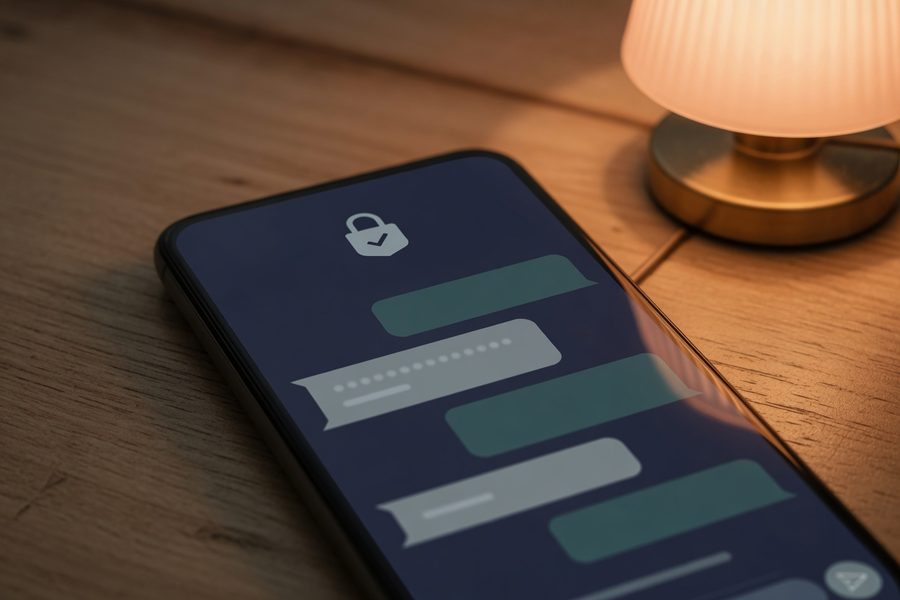
The numbers tell a clear story. 97% of data protection officers have adopted E2EE strategies. Only 15% of consumers use encrypted messenger apps. That 82-percentage-point gap, between what security professionals know is necessary and what everyday people actually do, represents millions of health-related messages sent without real protection every day. Closing that gap does not require new technology. It requires checking settings you already have access to, and understanding what the indicators on your screen actually mean.
Frequently Asked Questions
Are my iPhone messages encrypted by default?
Yes, but only between Apple devices. iMessage applies end-to-end encryption automatically when both sender and recipient use Apple hardware. The moment an Android user joins a group thread, or you text a non-Apple number, the conversation drops to unencrypted SMS or MMS.
Does WhatsApp encrypt group chats?
WhatsApp encrypts group chats end-to-end using the same Signal Protocol as one-on-one conversations. However, any group member can forward messages outside the encrypted envelope, and cloud backups, depending on your settings, may store messages without E2EE protection.
What is the difference between encrypted and end-to-end encrypted?
Standard encryption scrambles data between your device and a server, but the server decrypts it and holds the keys. End-to-end encryption means only the sender and recipient devices hold the keys, no server, platform, or third party can read the content in between.
Can I use iMessage for healthcare communications legally?
No, not without additional steps. iMessage lacks a Business Associate Agreement, which HIPAA requires for handling protected health information. The encryption is strong, but the legal framework is absent, creating liability for any provider using it to discuss patient data.
Why does the lock icon disappear in my Google Messages app?
The lock icon indicates active end-to-end encryption over RCS. It disappears when a conversation falls back to SMS or MMS, due to a data interruption, a participant switching devices, or a carrier that does not support Google’s RCS profile. No lock means no E2EE.
How can I tell if encryption is actually working in an app I already use?
Check the conversation-specific indicator, not the app’s marketing claims. In Signal and WhatsApp, verify safety numbers or scan QR codes with your contact. In iMessage, confirm the text field says “iMessage.” In Google Messages, look for the lock icon before sending.
Sources
- CISA, Enhanced Visibility and Hardening Guidance for Communications Infrastructure
- CNBC, Why the FBI Wants You to Use End-to-End Encrypted Messaging
- Infrascale, Data Privacy Statistics USA (2025)
- Market Research Future, Email Encryption Market Report (Ponemon Institute data, 2024)
- Usercentrics, Data Privacy Statistics (Surfshark survey data, 2025)
{“@context”:”https://schema.org”,”@graph”:[{“@type”:”Organization”,”@id”:”https://snapmessages.com/#organization”,”name”:”SnapMessages”,”url”:”https://snapmessages.com”},{“@type”:”Person”,”@id”:”https://snapmessages.com/#person-priya-nambiar”,”name”:”Priya Nambiar”,”description”:”Priya Nambiar is a certified financial counselor with over a decade of experience helping individuals navigate debt reduction and credit rebuilding strategies. She has contributed to several personal finance publications and hosts workshops focused on empowering first-generation Americans toward financial independence. Her approachable style makes complex credit topics accessible to everyday reade”,”knowsAbout”:[“Health & Wellness”]},{“@type”:”Article”,”headline”:”What Most People Get Wrong About Message Encryption Settings”,”datePublished”:”2026-07-01″,”dateModified”:”2026-07-01″,”publisher”:{“@id”:”https://snapmessages.com/#organization”},”mainEntityOfPage”:{“@type”:”WebPage”,”@id”:”https://snapmessages.com/message-encryption-settings-misconceptions”},”inLanguage”:”en”,”author”:{“@id”:”https://snapmessages.com/#person-priya-nambiar”}},{“@type”:”FAQPage”,”mainEntity”:[{“@type”:”Question”,”name”:”Are my iPhone messages encrypted by default?”,”acceptedAnswer”:{“@type”:”Answer”,”text”:”Yes, but only between Apple devices. iMessage applies end-to-end encryption automatically when both sender and recipient use Apple hardware. The moment an Android user joins a group thread, or you text a non-Apple number, the conversation drops to unencrypted SMS or MMS.”}},{“@type”:”Question”,”name”:”Does WhatsApp encrypt group chats?”,”acceptedAnswer”:{“@type”:”Answer”,”text”:”WhatsApp encrypts group chats end-to-end using the same Signal Protocol as one-on-one conversations. However, any group member can forward messages outside the encrypted envelope, and cloud backups, depending on your settings, may store messages without E2EE protection.”}},{“@type”:”Question”,”name”:”What is the difference between encrypted and end-to-end encrypted?”,”acceptedAnswer”:{“@type”:”Answer”,”text”:”Standard encryption scrambles data between your device and a server, but the server decrypts it and holds the keys. End-to-end encryption means only the sender and recipient devices hold the keys, no server, platform, or third party can read the content in between.”}},{“@type”:”Question”,”name”:”Can I use iMessage for healthcare communications legally?”,”acceptedAnswer”:{“@type”:”Answer”,”text”:”No, not without additional steps. iMessage lacks a Business Associate Agreement, which HIPAA requires for handling protected health information. The encryption is strong, but the legal framework is absent, creating liability for any provider using it to discuss patient data.”}},{“@type”:”Question”,”name”:”Why does the lock icon disappear in my Google Messages app?”,”acceptedAnswer”:{“@type”:”Answer”,”text”:”The lock icon indicates active end-to-end encryption over RCS. It disappears when a conversation falls back to SMS or MMS, due to a data interruption, a participant switching devices, or a carrier that does not support Google’s RCS profile. No lock means no E2EE.”}},{“@type”:”Question”,”name”:”How can I tell if encryption is actually working in an app I already use?”,”acceptedAnswer”:{“@type”:”Answer”,”text”:”Check the conversation-specific indicator, not the app’s marketing claims. In Signal and WhatsApp, verify safety numbers or scan QR codes with your contact. In iMessage, confirm the text field says “iMessage.” In Google Messages, look for the lock icon before sending.”}}]}]}