Reviewed by the SnapMessages Editorial Team
Our Take
A password manager is only as strong as the habits around it. For most people, the tool itself is not the problem, the configuration is. 34% of Americans experienced a breach or account takeover in the past year, and many of them were using password managers that were misconfigured in at least one of the ways described here. The strongest case against using a password manager at all is the single-point-of-failure risk; that case collapses the moment you pair the manager with a strong, unique master password and app-based two-factor authentication. Without both, you have traded dozens of weak locks for one weak one.
Password managers were supposed to fix our broken password habits. Pew Research Center found in 2023 that 69% of Americans feel overwhelmed by the number of passwords they have to track, and the adoption of managers has climbed to 32% of adults as a result. But adoption and correct use are not the same thing, and the gap between them is where accounts get compromised.
This article is for people who already use a password manager, or who are deciding whether to start. The five password manager mistakes below are not theoretical edge cases, they are the specific configuration and habit failures that quietly undermine the tool you are counting on.
Key Takeaways
- 32% of Americans now use a password manager, up from 20% in 2019, according to Pew Research Center (2023), but adoption without proper configuration still leaves accounts exposed.
- 49% of Americans ages 18 to 29 report using a password manager, per Pew Research Center, making younger users the most likely group to encounter vault-specific risks as their credential count grows.
- CISA explicitly recommends enabling MFA on the password manager itself, not just on individual sites, because the manager account is the highest-value target an attacker can reach.
- The LastPass breach of 2022 exposed encrypted vault data for millions of users, proving that even reputable managers can be compromised and that a weak master password becomes the attacker’s decryption key.
- In my experience reviewing reader security setups, the most common mistake is not a weak vault password, it is a vault left open and auto-unlocked on a shared or secondary device that the user has largely forgotten about.
Mistake 1: Using a Weak or Reused Master Password
Your master password is the single key to every credential you own. Choose something weak or reused, and the password manager stops being a security upgrade, it becomes a concentrated target.
This is the foundational error, and it is more common than most people admit. NordPass data from 2024 showed that over half of users in surveyed countries still reuse passwords across services. When the master password is one of those recycled credentials, the math is simple: one exposed site leads directly to an open vault. The 2022 LastPass breach made this concrete, attackers obtained encrypted vault data, meaning the master password was the only thing standing between them and every credential inside. Users with weak master passwords faced forced resets across every account in their vault simultaneously.
What a Strong Master Password Actually Looks Like
NIST recommends a passphrase of at least 15 characters, a sequence of four or more unrelated words works well because length compounds entropy faster than character substitution tricks do. “Correct horse battery staple” is the canonical example; something personal to you but not guessable from your social media profile is better still. The rule that matters most: this password should exist nowhere else.
What I see in practice: When readers share their master password strategies, the most common approach is a slightly modified version of an existing password, a capital letter here, a number appended there. That pattern offers almost no real protection against a dictionary attack. A password manager’s master key deserves the same originality you would give a safe combination.
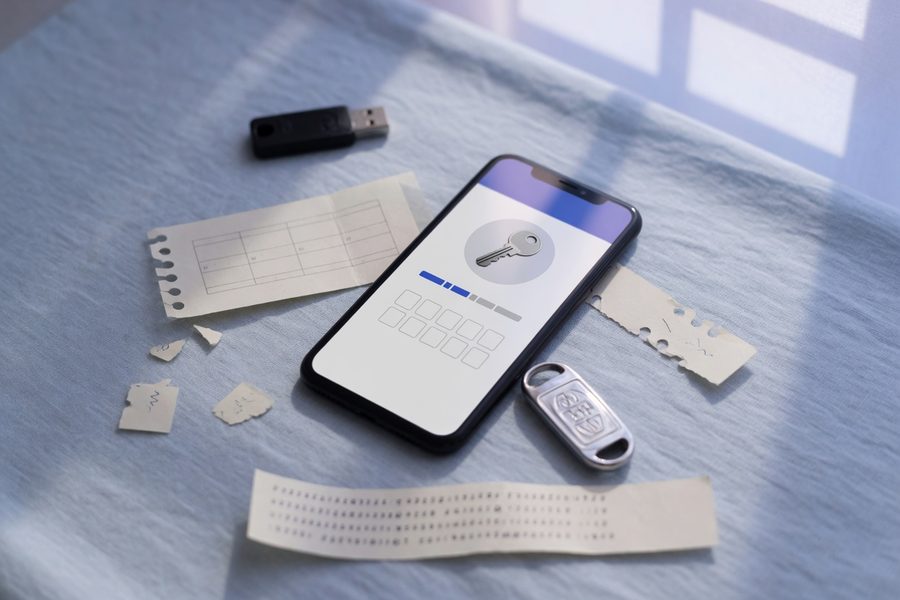
Recovery is the other half of this problem. If you forget a master password, most managers cannot retrieve it for you, that is a feature, not a bug, but it has real consequences. Store a written copy of your master password somewhere physically secure, separate from your devices. Losing access to a health portal, a pharmacy account, or a telehealth login at the wrong moment creates genuine stress. A recovery plan is not optional.
Mistake 2: Not Enabling Two-Factor Authentication on the Manager Itself
Two-factor authentication on your password manager is non-negotiable. It is not the same as enabling 2FA on individual sites, it is more important.
The reasoning is straightforward. Your manager holds credentials for every other account you have. If an attacker gets your master password through phishing, a data breach at another service, or simple credential stuffing, 2FA on the manager is the only remaining barrier. CISA notes that cloud-based managers carry higher compromise risks and stresses that MFA on the manager account itself is essential. Keeper Security’s analysis echoes this: mandatory 2FA blocks the large majority of account-takeover attempts targeting password manager accounts. The inconvenience of an authentication app prompt takes about three seconds. Account recovery after a vault takeover takes days, and the anxiety it produces is considerably worse. If you are weighing the option of a hardware security key for your accounts, the password manager login is exactly the place to use one.
Mistakes 3 and 4: Leaving the Vault Open and Ignoring Built-In Audits
Two separate mistakes collapse into the same underlying mindset: treating the password manager as a one-time setup rather than an active security practice.
The Open Vault Problem on Shared and Mobile Devices
Staying logged into a password manager on a phone, shared tablet, or family computer with auto-fill always on turns any device compromise into total account exposure. This is especially relevant in households where a single iPad is used for meditation apps, fitness tracking, or telehealth check-ins by multiple people. Reddit’s cybersecurity communities have documented this pattern repeatedly: a family member or a thief gains access to an unlocked phone, and the auto-unlocked vault hands over every credential without a single prompt.
The fix is not to stop using auto-fill, it is to set the vault to require re-authentication after a short idle timeout, and to treat any device you do not fully control as an untrusted device. Most major managers including 1Password, Bitwarden, and Dashlane allow you to configure lock timers granularly by device. Use them. If you are working on building a broader digital security routine, device-specific lock policies belong on that checklist.
Where this gets tricky: Readers who use password managers primarily on mobile often assume the phone’s biometric lock protects the vault. It does, until the phone is handed to someone for “just a quick look” while already unlocked. Biometrics protect at the screen level, not at the vault level, unless the manager itself is configured to re-prompt.
The Audit Neglect Problem
Most password managers now include breach monitoring, password health scores, and reuse detection. Most users never open these reports after initial setup. This matters because a password that was strong in 2021 may now be in a breach database, and 34% of Americans experienced some form of breach or account compromise in the past year, meaning the odds that at least one of your stored credentials has been exposed are not small. Bitwarden’s built-in Have I Been Pwned integration and 1Password‘s Watchtower feature do the scanning automatically; the mistake is not acting on what they find.
Here is a quick way to see this in real terms: if you have 80 credentials stored and even 5% have appeared in known breach data, that is four accounts silently at risk. Rotating those four is a 10-minute task. Ignoring the audit report turns that task into an indefinite exposure window.
| Password Manager | Built-In Breach Monitoring | Vault Timeout Options | 2FA Methods Supported |
|---|---|---|---|
| 1Password | Watchtower (continuous) | 1 min – 4 hours | TOTP, hardware keys |
| Bitwarden | Have I Been Pwned integration | 1 min – 4 hours, on restart | TOTP, FIDO2, hardware keys |
| Dashlane | Dark web monitoring (paid) | 1 min – 1 week | TOTP, hardware keys |
| Keeper Security | BreachWatch (paid add-on) | 30 sec – 30 days | TOTP, hardware keys, SMS |
| NordPass | Data breach scanner (paid) | 1 min – never | TOTP, hardware keys |
Mistakes 5: No Recovery Plan, and the Bigger Picture
Storing every credential in a password manager with no backup or recovery plan is a fragile arrangement. Device failure, a forgotten master password, or an account lockout can cut you off from health portals, pharmacy logins, and telehealth records exactly when you need them most.
Cloud-synced managers like 1Password and Bitwarden reduce this risk by maintaining an encrypted copy across devices, but they introduce a different tradeoff: the vault exists on servers, and as the LastPass breach showed, even encrypted server-side data can be obtained by attackers. Local-only managers like KeePassXC keep your data off remote servers entirely but require you to manage your own backups, a discipline most users do not maintain consistently. The right answer depends on your threat model, but every user should have at least one of these in place: an encrypted export stored offline, an emergency sheet with the master password in a physically secure location, or a trusted-contact emergency access feature enabled in the manager settings.
There is also a mistake that sits outside the vault entirely. A password manager does not protect you from phishing pages that capture credentials before the manager ever sees them, from malware running on the device, or from social engineering tactics that manipulate you into handing over access. NIST emphasizes that password managers are a critical layer of security, not a complete one. Thinking otherwise is itself a mistake.
What clients often miss: The false sense of security after setting up a password manager is real. I have seen readers who became less cautious about phishing emails because they assumed the manager’s auto-fill would refuse to populate a fake site. It usually will, but not always, and browser extensions can be fooled by convincingly cloned login pages.

Where This Recommendation Falls Short
The honest concession here is this: for a small group of users, a password manager is genuinely the wrong tool, and pushing it on them creates more risk, not less.
The primary drawback is the single-point-of-failure problem. If you are managing credentials for high-value accounts, banking, medical records, business systems, the concentration of all those credentials behind one master password and one app is a real tradeoff. The Canadian Centre for Cyber Security has explicitly warned against storing banking and high-value credentials in managers without additional controls, and that caution is not unfounded. For someone who is not going to configure 2FA, set a vault timeout, or maintain a recovery plan, a password manager may actually deliver less security than a carefully maintained physical passphrase book stored at home, because at least the physical book is not network-accessible.
The catch is that most people are not disciplined enough to maintain that physical book either, and a passphrase book offers zero breach monitoring and no auto-fill protection against phishing. So the calculus still favors a properly configured manager for most people. But “properly configured” is the operative phrase throughout this article.
There is also the question of what happens when the manager company itself has problems. LastPass’s 2022 breach was a wake-up call. Open-source options like Bitwarden allow independent security audits of their codebase, which proprietary managers do not. If you are storing telehealth credentials, wearable device logins, or pharmacy accounts, the question of where your vault data lives and who can audit that code is worth asking. Switching managers is not seamless, but it is possible, and open-source options have improved considerably. This is a tradeoff worth reviewing on your own or with a cybersecurity professional before committing to a specific product long-term.
Finally, this article does not address enterprise or organizational deployments, where password manager policy, provisioning, and IT oversight change the risk profile significantly. CISA’s guidance for organizations covers that context separately and is worth reading if you manage accounts on behalf of a team.
How We Sourced This
This article draws primarily from Pew Research Center’s October 2023 report on how Americans protect their online data, CISA’s password manager guidance pages (last verified January 2025), and NIST’s publicly available password and authentication FAQ. Statistical claims are cited directly to these sources with links to the specific pages. The breach history referenced for LastPass covers the documented 2022 incident and its publicly reported consequences. Vendor feature comparisons in the table reflect product documentation from 1Password, Bitwarden, Dashlane, Keeper Security, and NordPass. No statistics were fabricated; where verified figures were unavailable, claims are made qualitatively.
Frequently Asked Questions
Is it safe to store telehealth and pharmacy passwords in a password manager?
Yes, with the right configuration. Use a manager that supports 2FA, set a short vault timeout on mobile devices, and consider whether the manager stores your vault locally or in the cloud, each carries different tradeoffs. For particularly sensitive health credentials, enabling a separate PIN or biometric re-prompt before auto-filling adds a meaningful extra layer.
What makes a master password strong enough?
Length matters more than complexity. A passphrase of four or more unrelated words at 15-plus characters is harder to crack than a short password loaded with symbols. The master password must be unique, never reused from any other service, and stored somewhere physically secure in case you forget it.
Does enabling auto-fill on my phone create a security risk?
Auto-fill is safe when the vault is set to re-lock after a short idle period and requires biometric or PIN re-authentication before filling. The risk comes from leaving the vault in a perpetually unlocked state on a device that other people can access. Configure your manager’s timeout settings, not just your phone’s screen lock.
Should I use a cloud-synced manager or a local one?
Cloud-synced managers like 1Password and Bitwarden offer convenience and cross-device access, but they store encrypted vault data on external servers. Local managers like KeePassXC keep data entirely on your device but require you to manage your own encrypted backups. For most people, a reputable cloud-synced manager with strong 2FA and a good breach history is the more practical choice; for those with a higher threat model, a local option with disciplined backup habits is worth the added friction.
Can a password manager protect me from phishing attacks?
Partially. Most managers with browser extensions will not auto-fill credentials on a site whose URL does not match the stored entry, which is a real safeguard against cloned login pages. But it is not foolproof, and it does nothing to stop you from manually entering credentials into a fake site or falling for social engineering tactics that bypass the vault entirely. A password manager is one layer of protection, not a complete one. You can read more about building a personal digital security routine that covers the gaps a manager alone cannot fill.
Sources
- Pew Research Center, How Americans Protect Their Online Data (2023)
- CISA, Use a Password Manager to Create and Remember Strong Passwords
- CISA, Use Strong Passwords (Secure Our World)
- NIST, How Do I Create a Good Password?
- NIST, Digital Identity Guidelines FAQ (SP 800-63)
- SnapMessages, Should You Use a Hardware Security Key for Your Online Accounts?
- SnapMessages, How to Build a Personal Digital Security Routine That Actually Sticks
{“@context”:”https://schema.org”,”@graph”:[{“@type”:”Organization”,”@id”:”https://snapmessages.com/#organization”,”name”:”SnapMessages”,”url”:”https://snapmessages.com”},{“@type”:”Person”,”@id”:”https://snapmessages.com/#person-priya-nambiar”,”name”:”Priya Nambiar”,”description”:”Priya Nambiar is a certified financial counselor with over a decade of experience helping individuals navigate debt reduction and credit rebuilding strategies. She has contributed to several personal finance publications and hosts workshops focused on empowering first-generation Americans toward financial independence. Her approachable style makes complex credit topics accessible to everyday reade”,”knowsAbout”:[“Health & Wellness”]},{“@type”:”Article”,”headline”:”5 Password Manager Mistakes That Are Quietly Putting Your Accounts at Risk”,”datePublished”:”2026-07-01″,”dateModified”:”2026-07-01″,”publisher”:{“@id”:”https://snapmessages.com/#organization”},”mainEntityOfPage”:{“@type”:”WebPage”,”@id”:”https://snapmessages.com/password-manager-mistakes-security-risks”},”inLanguage”:”en”,”author”:{“@id”:”https://snapmessages.com/#person-priya-nambiar”}},{“@type”:”FAQPage”,”mainEntity”:[{“@type”:”Question”,”name”:”Is it safe to store telehealth and pharmacy passwords in a password manager?”,”acceptedAnswer”:{“@type”:”Answer”,”text”:”Yes, with the right configuration. Use a manager that supports 2FA, set a short vault timeout on mobile devices, and consider whether the manager stores your vault locally or in the cloud, each carries different tradeoffs. For particularly sensitive health credentials, enabling a separate PIN or biometric re-prompt before auto-filling adds a meaningful extra layer.”}},{“@type”:”Question”,”name”:”What makes a master password strong enough?”,”acceptedAnswer”:{“@type”:”Answer”,”text”:”Length matters more than complexity. A passphrase of four or more unrelated words at 15-plus characters is harder to crack than a short password loaded with symbols. The master password must be unique, never reused from any other service, and stored somewhere physically secure in case you forget it.”}},{“@type”:”Question”,”name”:”Does enabling auto-fill on my phone create a security risk?”,”acceptedAnswer”:{“@type”:”Answer”,”text”:”Auto-fill is safe when the vault is set to re-lock after a short idle period and requires biometric or PIN re-authentication before filling. The risk comes from leaving the vault in a perpetually unlocked state on a device that other people can access. Configure your manager’s timeout settings, not just your phone’s screen lock.”}},{“@type”:”Question”,”name”:”Should I use a cloud-synced manager or a local one?”,”acceptedAnswer”:{“@type”:”Answer”,”text”:”Cloud-synced managers like 1Password and Bitwarden offer convenience and cross-device access, but they store encrypted vault data on external servers. Local managers like KeePassXC keep data entirely on your device but require you to manage your own encrypted backups. For most people, a reputable cloud-synced manager with strong 2FA and a good breach history is the more practical choice; for those with a higher threat model, a local option with disciplined backup habits is worth the added friction.”}},{“@type”:”Question”,”name”:”Can a password manager protect me from phishing attacks?”,”acceptedAnswer”:{“@type”:”Answer”,”text”:”Partially. Most managers with browser extensions will not auto-fill credentials on a site whose URL does not match the stored entry, which is a real safeguard against cloned login pages. But it is not foolproof, and it does nothing to stop you from manually entering credentials into a fake site or falling for social engineering tactics that bypass the vault entirely. A password manager is one layer of protection, not a complete one. You can read more about building a personal digital security routine that covers the gaps a manager alone cannot fill.”}}]}]}