Fact-checked by the SnapMessages editorial team
A 2025 randomized controlled trial published in the Journal of Medical Internet Research tested a fully digital, modular CBT app for social anxiety disorder across two separate study cohorts totaling 369 participants, and found it significantly more effective than a waitlist control, with the app group showing meaningful reductions in social anxiety symptoms. That is a real clinical finding. But the same paper noted that most existing social anxiety apps on the market lack interactive exercises and personalized feedback, meaning the gap between what research tests and what people actually download is wide. Knowing that gap exists is the first step to making a smarter choice.
Social anxiety disorder affects roughly 12% of adults at some point in their lives, making it one of the most common anxiety conditions worldwide. Despite that prevalence, NICE clinical guidelines identify cognitive behavioural therapy as the primary recommended treatment, a resource most people never access. Long waitlists, cost, and the sheer difficulty of walking into a therapist’s office when social situations feel threatening keep the treatment gap stubbornly large. Apps have stepped into that space, but not all of them are doing the same job. Some teach coping skills. Others attempt to replicate genuine exposure hierarchies. Grouping them together as “CBT apps” obscures a mechanistic difference that determines whether you manage symptoms or actually reduce fear.
This guide separates those two categories clearly, reviews the clinical evidence behind each, names the retention problem that no app roundup discusses, and gives you a concrete decision framework for choosing the right tool for your situation. By the end, you will know which type of app fits your severity level, what privacy risks come with logging your fears, and why adding even minimal therapist contact to any app dramatically changes your outcomes.
Key Takeaways
- A 2025 RCT (N=369) found a fully digital CBT app for social anxiety significantly outperformed a waitlist control, but most commercially available apps lack the interactive exercises tested in that trial.
- Real-world 30-day retention for mental health apps can drop as low as 3%, and naturalistic completion rates range from just 1–28%, compared to 44–99% in clinical trials, a gap that is almost certainly wider for exposure apps, whose exercises are the hardest to complete.
- Adding as few as two therapist check-ins to an app-based intervention for social anxiety has been shown to produce clinically meaningful improvement in randomized controlled trials, making hybrid models the evidence-backed choice over fully self-guided apps.
- NICE conditionally recommends iCT-SAD, a digitally enabled therapy for social anxiety disorder, for use within NHS Talking Therapies, but specifies it must be delivered with high-intensity therapist support, not as a standalone self-help tool.
- Most mental health apps fall outside HIPAA protections. A 2023 investigation found 11 data brokers selling lists of people categorized by anxiety and depression for as little as $0.20 per record, and exposure therapy apps collect the most clinically sensitive behavioral data of any mental health app category.
- For mild-to-moderate social anxiety, self-guided app-based CBT can produce outcomes comparable to traditional therapy. For severe social anxiety disorder, apps alone are not supported by evidence as a standalone treatment and work best as an adjunct to professional care.
In This Guide
- What’s the Actual Difference Between a Social Anxiety App and an Exposure Therapy App?
- What the Clinical Evidence Actually Says, and What It Doesn’t
- The Retention Problem Nobody Talks About in App Roundups
- An Honest Side-by-Side: The Leading Apps and What They’re Really Built to Do
- The Severity Threshold: When Apps Move the Needle and When They Don’t
- The Privacy Trade-Off You’re Making When You Log Your Social Fears
- The Therapist-Contact Factor: Why Two Appointments Change Everything
- How to Actually Choose: A Decision Framework by Situation
What’s the Actual Difference Between a Social Anxiety App and an Exposure Therapy App?
Most apps marketed for social anxiety are coping tools, not treatment tools. That is not a criticism, coping tools have genuine value, but confusing the two leads to misplaced expectations. A coping-focused app gives you techniques to manage distress: breathing exercises, mood tracking, cognitive restructuring worksheets, guided relaxation. A true exposure therapy app is built around a graduated fear hierarchy. The goal is not to feel less anxious in the moment; it is to teach your nervous system that the feared situation is survivable, repeatedly, until the fear response diminishes through a process called inhibitory learning.
These are mechanistically different goals. Coping skills reduce distress without necessarily reducing the underlying fear response. Exposure works through fear extinction: you confront the feared stimulus at increasing intensity, stay in the situation long enough for the anxiety to peak and subside, and build a new learned association over time. An app that teaches you to slow your breathing before a presentation is doing something genuinely useful. An app that walks you through progressively harder social scenarios, scripted phone calls, speaking to strangers, public speaking in front of a camera, is doing something different and more foundational.
The Three Phases of Social Anxiety and Which Apps Target Which
Social anxiety does not operate as a single moment of fear. It runs in three phases: anticipatory dread (the hours or days of worry before a social event), in-the-moment panic (elevated heart rate, self-focused attention, feared evaluation), and post-event rumination (replaying perceived failures after the fact). Coping apps tend to address in-the-moment panic and post-event rumination through relaxation and thought-challenging tools. Exposure apps primarily target anticipatory anxiety and the in-session fear response, they reduce the dread by repeatedly exposing the person to the situation until prediction errors accumulate.
Most apps do not tell you this. They present their feature set without explaining which phase of the anxiety cycle they address. That matters because if post-event rumination is your dominant problem, an exposure ladder will not solve it, but a CBT thought record or a structured daily journaling habit might.
The Blurred-Category Problem
Several prominent apps blur the line between categories. MindShift CBT includes both CBT restructuring tools and a fear ladder builder. Sanvello offers mood tracking alongside an exposure module. This hybrid structure is not inherently bad, it mirrors what a real therapist does, since CBT for social anxiety always combines cognitive work with behavioral experiments. The risk is that users gravitate toward the coping features (easier, lower anxiety) and skip the exposure exercises (harder, higher short-term anxiety), producing a distorted version of the treatment protocol. Knowing the distinction between the two feature types helps you make a deliberate choice rather than defaulting to the easier path.
What the Clinical Evidence Actually Says, and What It Doesn’t
The research base for digital mental health interventions is growing rapidly, but it contains important caveats that most roundup articles skip. A 2025 systematic review and meta-analysis from the University of Bern evaluated the effectiveness of digital mental health interventions for social anxiety disorder specifically in children, adolescents, and young adults, a more targeted evidence base than most cited studies, which lump social anxiety in with general anxiety. The University of Bern meta-analysis found positive effects for digital interventions, but effect sizes varied considerably depending on whether human support was included.
The 2025 JMIR trial testing the Alena app across two RCT cohorts (N=369) found that a fully digital, modular CBT program for social anxiety was safe, acceptable, and significantly more effective than a waitlist control. That is meaningful evidence. The honest caveat: “waitlist control” is a low bar. Outperforming no treatment is not the same as outperforming face-to-face CBT, and the trial authors were transparent about that distinction.
The National Institute for Health and Care Excellence (NICE) has conditionally recommended iCT-SAD, a digitally enabled therapy for social anxiety disorder, for adults in NHS Talking Therapies services, but specifies it must be delivered with high-intensity therapist support while further evidence on clinical and cost-effectiveness is collected.
The Science Media Centre’s expert commentary on NICE’s draft guidance on digital therapies for adult depression and anxiety included reaction from David M. Clark, Professor of Experimental Psychology Emeritus at the University of Oxford and co-developer of iCT-SAD. Clark’s published position is precise: at their best, digital mental health tools can achieve results similar to traditional therapy while requiring less therapist time per patient, which means more patients can receive help. His framing is worth holding onto, the claim is not that apps replace therapy, but that they can extend the reach of therapy by reducing the per-patient therapist time required. That aligns directly with what the NICE early value assessment concluded about digitally enabled therapies for anxiety disorders.
The Retention Problem Nobody Talks About in App Roundups
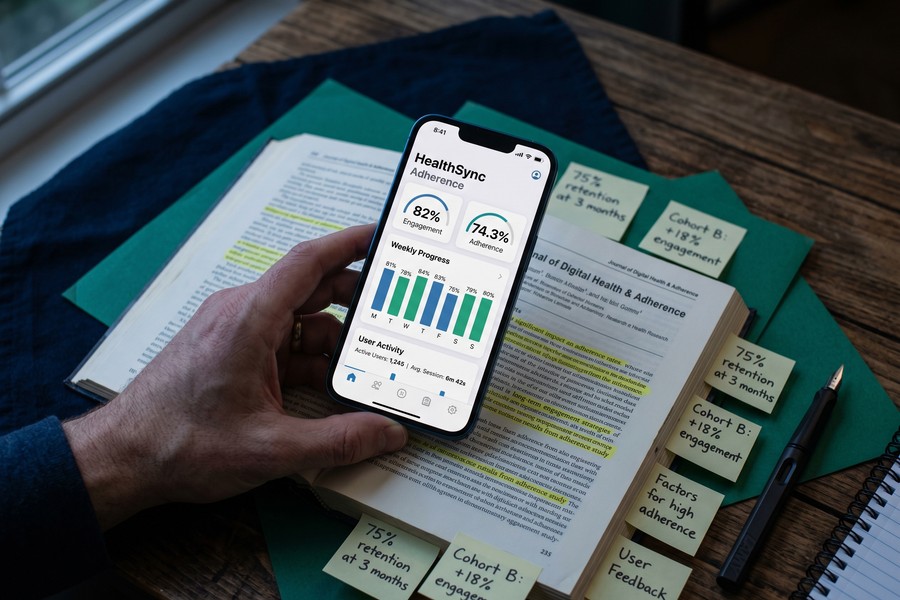
The single most important fact about social anxiety apps is almost never mentioned in the articles that rank for this topic. Clinical trial completion rates for mental health apps range from 44% to 99%, which sounds encouraging. But in naturalistic settings, where real users download apps without researcher follow-up or study incentives, completion rates for the same tools drop to between 1% and 28%. Real-world 30-day retention for popular mental health apps can be as low as 3%.
Clinical trial completion rates for mental health apps range from 44–99%. In real-world naturalistic settings, the same tools show completion rates of just 1–28%, and 30-day retention can drop as low as 3%.
Exposure therapy apps face a specific, structural version of this problem. The exercises that drive the most lasting change are also the most aversive to complete, because avoidance is the defining symptom of social anxiety. A person with severe social anxiety who downloads an exposure app is, by definition, someone whose nervous system is wired to avoid exactly the type of activity the app requires. No amount of good UX design fully solves that. An app cannot enforce the therapeutic relationship that keeps a patient inside a real exposure hierarchy when anxiety peaks and the urge to quit is strongest.
What Research Says About Improving Retention
A meta-analysis of 79 RCTs on digital mental health interventions found that while uptake was high (92% of eligible participants started), adherence and outcome-assessment completion lagged considerably. Critically, gamification did not improve retention. What did help: reminder notifications and human support, both of which add friction-reducing accountability. This finding has a direct practical implication: if you choose an exposure-focused app, pairing it with any form of check-in, a therapist, a support group, a trusted friend who asks how the exercises went, substantially improves your odds of reaching a therapeutic dose.
The retention gap also explains why mindfulness and meditation apps sometimes show better long-term engagement metrics than anxiety treatment apps. Relaxation is rewarding in the short term. Exposure is not. That asymmetry shows up in user behavior data, and it is worth factoring into any honest recommendation.
An Honest Side-by-Side: The Leading Apps and What They’re Really Built to Do
Here is a direct assessment of the apps most commonly recommended for social anxiety, what each one actually does well, and where each one stops.
App Profiles and Feature Comparison
| App | Primary Mechanism | Exposure Features | Therapist Touchpoint | Key Limitation |
|---|---|---|---|---|
| MindShift CBT | CBT thought records, relaxation | Fear ladder builder (self-guided) | None | No live social scenario practice; ownership moved to 247 Labs in 2024 |
| Sanvello | Mood tracking, CBT tools | Guided exposure module | Optional paid coaching | Exposure module is shallow; coaching is not clinical therapy |
| Bloom | Social-specific CBT exercises | Progressive exposure tasks | None | No therapist touchpoint at any tier; no live scenario practice |
| oVRcome | VR-based exposure therapy | 360-degree social scenarios | Limited check-ins | Requires compatible headset or phone VR mode; limited scenario library |
| iCT-SAD | Clark & Wells model CBT | Full disorder-specific hierarchy | High-intensity required | Requires NHS Talking Therapies referral; not available for self-download |
MindShift deserves a specific note. It was originally developed by Anxiety Canada and earned a strong clinical reputation based on that institutional oversight. Management transferred to a company called 247 Labs in 2024. The clinical content has not been removed, but future updates, pricing direction, and the level of ongoing clinical review are now less transparent. For anyone choosing MindShift as a long-term tool, that change in stewardship is worth tracking.
App store ratings are not a reliable proxy for clinical effectiveness. One Mind PsyberGuide evaluates mental health apps on evidence base, user experience, and data transparency, it is a more trustworthy filter than star ratings when choosing a social anxiety tool.
What Each App Does Not Do
MindShift has no live social scenario practice, you build a fear ladder but have no in-app environment to simulate the feared interaction. oVRcome requires a compatible headset or phone VR mode, which creates a hardware barrier that many users do not clear before quitting. Bloom has no therapist touchpoint at any pricing tier, which matters more for severe presentations than for mild anxiety. iCT-SAD is the most clinically rigorous option on this list, but it is not available as a consumer self-download; access requires a referral through NHS Talking Therapies and must be used with high-intensity therapist support.
| App | Free Tier Available | Cost (Paid) | Platform | Evidence Rating (One Mind PsyberGuide) |
|---|---|---|---|---|
| MindShift CBT | Yes (fully free) | Free | iOS, Android | Moderate evidence base |
| Sanvello | Yes (limited) | ~$8.99/month | iOS, Android | Moderate evidence base |
| Bloom | Limited trial | ~$9.99/month | iOS, Android | Limited independent review |
| oVRcome | No | ~$19.99/month | iOS, Android + VR | Emerging evidence base |
| iCT-SAD | N/A (referral only) | Free via NHS | Web + app | Strong (RCT-backed, NICE review) |
The Severity Threshold: When Apps Move the Needle and When They Don’t
For mild to moderate social anxiety, self-guided apps using CBT and graduated exposure can be genuinely effective. The peer-reviewed evidence supports that claim. For severe social anxiety disorder, characterized by significant functional impairment, avoidance of most social situations, or co-occurring depression, apps alone are not supported by evidence as a standalone treatment. That is not a conservative position; it is the honest read of the literature.
The access-gap context matters here. A commonly cited finding from social anxiety research is that financial cost, not knowing where to seek help, and long waitlists are the top barriers preventing people from accessing professional treatment. An app that produces modest improvement in someone who would otherwise receive no treatment is clinically meaningful, even if it would not be the first choice for a clinical trial design.
A 2010 study found that 63.9% of people cited financial cost as the top barrier to professional treatment for anxiety, followed by not knowing where to seek help (63.2%) and long waitlists (52.1%). Apps do not need to replace therapy to be clinically meaningful, they serve people who would otherwise receive nothing.
There is also an avoidance paradox specific to exposure apps that is worth naming plainly. People with severe social anxiety are the ones most likely to download an exposure app, and most likely to abandon it before completing a therapeutic dose. The exercises that produce the most lasting change require tolerating high short-term discomfort, and severe anxiety produces the strongest urge to avoid that discomfort. This means that for severe presentations, a coping-focused app might actually be the better starting point, not because it produces larger long-term effect sizes, but because it is more likely to be completed. A tool you use is more effective than a tool you abandon.
A Practical Self-Triage Guide
| Your Situation | Recommended App Type | Notes |
|---|---|---|
| Mild social anxiety, no functional impairment | Self-guided CBT app (e.g., MindShift) | App-only approach is evidence-supported |
| Moderate social anxiety, some avoidance | CBT + exposure hybrid app | Add therapist check-ins if available |
| Severe SAD, significant impairment | App as adjunct to professional therapy | Apps alone are not sufficient; use between sessions |
| Currently in therapy | Any app that reinforces therapist-assigned exercises | Coordinate app use with your therapist |
| On a waitlist, no current therapist | Hybrid CBT/exposure app with reminders | Prioritize apps with human check-in options |
The Privacy Trade-Off You’re Making When You Log Your Social Fears
This is the part of the conversation that roundup articles reliably skip. The data you generate inside a social anxiety app, your fear hierarchy, your avoidance patterns, your exposure logs, your in-session anxiety ratings, is among the most sensitive behavioral health data that exists. A detailed log of every social situation you fear, how intensely you fear it, and how often you have avoided it is a clinical picture of your psychology. Most apps have no legal obligation to protect it the way a hospital does.
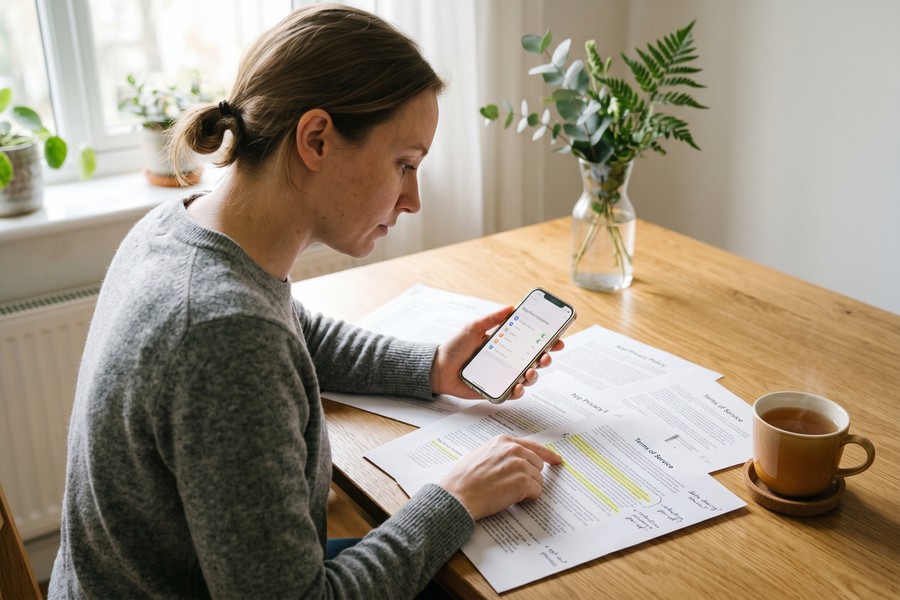
Most mental health apps fall outside HIPAA protections because they are consumer wellness products, not covered healthcare entities. A 2023 investigation found 11 data brokers selling lists of people categorized by anxiety and depression for as little as $0.20 per record. The Federal Trade Commission filed a complaint against BetterHelp in 2023 for sharing user health data with Meta, Snapchat, and Pinterest, a case that clarified how few protections exist for mental health data outside of formal clinical settings. The FTC’s action against BetterHelp was one of the first enforcement moves specifically targeting mental wellness platforms, and it set a precedent that HIPAA alone does not cover consumer app data. A Mozilla “Privacy Not Included” review found that 22 of 32 mental health apps failed basic privacy standards.
A Mozilla review found 22 of 32 mental health apps failed basic privacy standards. A 2023 investigation identified 11 data brokers selling lists of people categorized by anxiety and depression for as little as $0.20 per record.
The privacy-severity mismatch is the specific angle worth naming: exposure therapy apps collect the most granular clinical data of any anxiety app category, yet they operate with the fewest data protections. If you are using an exposure app to work through a detailed fear hierarchy, logging anxiety ratings for specific social scenarios, tracking avoidance behavior, noting physical symptoms, that data is extraordinarily sensitive. Before you log it, it is worth knowing where it goes.
The data ecosystem around mental wellness apps has also attracted attention from consumer finance regulators. The Consumer Financial Protection Bureau (CFPB) has issued guidance on how sensitive personal data, including health and behavioral information, can feed into financial profiling. While the CFPB’s primary jurisdiction covers financial products, its public guidance on data broker activity is directly relevant to anyone whose mental health data could appear in a commercial data set, because that kind of categorized personal data has known downstream uses in credit risk modeling and insurance underwriting. Experian, one of the three major credit bureaus alongside Equifax and TransUnion, has publicly disclosed that it sources behavioral and psychographic data from third-party data brokers, though it has not specified mental health categories explicitly. The point is not that your anxiety app data will directly affect your credit score, it is that data sold by brokers does not stay siloed, and the CFPB’s ongoing scrutiny of data broker markets is a reason to treat app privacy disclosures as a financial hygiene issue, not just a clinical one.
Questions to Ask Before Downloading Any Mental Health App
- Does the app explicitly name its third-party data-sharing partners, including AI model providers?
- Can you use the core features without creating an account or providing an email address?
- Has the app undergone an independent privacy review (Mozilla “Privacy Not Included,” or equivalent)?
- Does the privacy policy state clearly whether your data is sold, shared, or used for model training?
- Is there a data deletion option, and does it actually remove your records from third-party systems?
Given that mental health apps are essentially messaging platforms for your psychological state, the same digital hygiene principles that apply to building a personal digital security routine apply here: verify before you trust, check what leaves your device, and know who has access to what you share.
The FTC filed a complaint against BetterHelp in 2023 for sharing user mental health data with Meta, Snapchat, and Pinterest. Most mental health apps are not covered by HIPAA and have no legal requirement to keep your therapy-style data confidential. Read the privacy policy before entering any sensitive clinical information.
The Therapist-Contact Factor: Why Two Appointments Change Everything
Here is a finding that almost no app roundup mentions, yet it is among the most actionable in the entire research literature. Across multiple reviews of digital and app-based interventions for anxiety, the strongest predictor of positive outcomes is not the specific app used, the quality of the CBT content, or the presence of gamification. It is the amount of contact with a psychotherapist.
Even minimal contact makes a substantial difference. A randomized controlled trial found that an app-based intervention using 15 disorder-specific VR exposure scenarios for social anxiety disorder, combined with just two therapist appointments, produced clinically meaningful improvement. Two appointments, not weekly therapy for six months. That finding shifts the cost-benefit calculation considerably. Access to even brief professional contact, whether through a community mental health service, a university counseling center, or a session with a therapist willing to set up a self-guided program, changes what an app can deliver.
This is why iCT-SAD’s NICE recommendation specifies high-intensity therapist support as a requirement, not an optional add-on. The clinical content of the app alone is not sufficient; the accountability structure that therapist contact provides is part of the treatment mechanism. iCT-SAD was developed at the University of Oxford using the Clark and Wells cognitive model of social phobia, and its clinical trial results, which informed the NICE early value assessment, were produced under conditions that included structured therapist involvement throughout.
How to Actually Choose: A Decision Framework by Situation
The decision between a coping-focused app and an exposure-focused app is not primarily about features. It comes down to where you are in the anxiety severity spectrum, what outcome you are working toward, and whether you have any professional support in place.
The Core Decision Tree
Start with severity. If your social anxiety is mild to moderate, you experience discomfort and some avoidance in specific situations, but it is not preventing you from working, maintaining relationships, or engaging in most daily activities, a self-guided app using CBT and graduated exposure is appropriate as a primary tool. If your anxiety is severe, you avoid most social situations, have experienced job loss or relationship breakdown due to avoidance, or score in the clinical range on a validated measure like the Liebowitz Social Anxiety Scale, apps are best used as a supplement to professional therapy, not a replacement.
Second, identify your goal. Managing distress in the moment (before a presentation, during a difficult conversation) calls for a different tool than building long-term tolerance to social situations. The former is served by coping apps. The latter requires an exposure hierarchy, ideally one you are working through consistently over weeks or months. Most people need both, but they need to know which one they are doing and why.
Adding a smartphone app to an existing internet-based self-help program for social anxiety has produced large decreases in symptoms in randomized controlled trials. Apps work best not in isolation but layered onto other interventions, even structured self-help workbooks or guided online programs count.
Realistic Timelines and What Consistency Actually Means
Apps are not a fast fix. The research signal across every study is consistent: daily or near-daily practice over a minimum of four to eight weeks is required to reach a therapeutic dose. Given real-world retention rates of 1–28%, most users quit before reaching that threshold. Setting a concrete completion target, finishing the first three rungs of a fear hierarchy within two weeks, logging mood daily for 30 days, rather than using the app passively is the behavioral difference between users who see results and users who do not.
If you are interested in tracking complementary wellness habits alongside your anxiety work, pairing an anxiety-focused app with tools for daily reflection, such as the best gratitude apps for building a positive daily mindset, can reinforce the cognitive restructuring work that CBT apps require. These are not substitutes for exposure, but they support the broader habit of attending to your mental state deliberately.
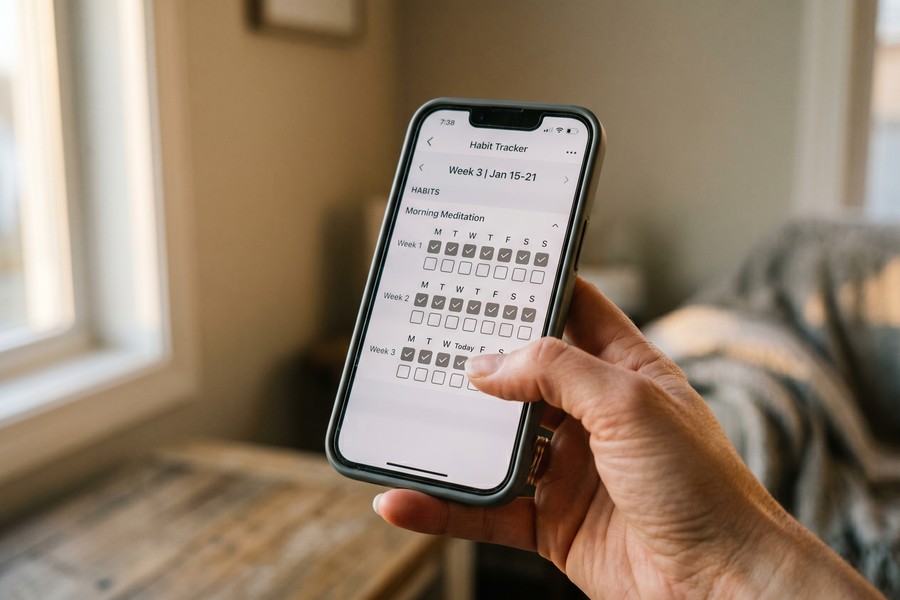
A randomized controlled trial found that adding a smartphone app to internet-based self-help for social anxiety produced large decreases in social anxiety, suggesting that apps work best as a layer within a broader intervention strategy, not as standalone tools used in isolation.
Real-World Example: Choosing the Right App at the Right Severity Level
Consider an illustrative example: a 31-year-old professional manages moderate social anxiety that centers on work meetings and networking events. She avoids speaking up in team calls and has declined two conference invitations in the past year. She downloads MindShift CBT, builds a fear hierarchy with 10 items ranging from “speaking once in a small team meeting” to “presenting to 20 people,” and commits to one exposure-adjacent exercise per week. After eight weeks of consistent use, approximately 4 to 5 app sessions per week, averaging 15 minutes each, she reports completing the bottom four rungs of her hierarchy and describes her anticipatory dread before team calls as noticeably reduced.
Before starting the app: she had declined participation in most optional work meetings, avoided eye contact during mandatory calls, and spent 30 to 60 minutes ruminating after each meeting about perceived mistakes. After eight weeks: she had voluntarily contributed to 6 out of the last 8 team meetings, accepted one low-stakes networking invitation, and reported post-event rumination lasting under 10 minutes on average. She had not completed the top six rungs of her hierarchy, the higher-anxiety items remained untouched, but her functional improvement was measurable.
The important caveats in this scenario: she had mild-to-moderate severity (not severe SAD), she used the app consistently rather than sporadically, and she had told a trusted colleague about her anxiety management goals, providing informal accountability. Without that consistency and accountability, her profile matches the typical user who downloads the app, completes two or three exercises, and disengages within the first two weeks.
Had her symptoms been severe, significant functional impairment, multiple years of avoidance, co-occurring depression, a self-guided app as a sole intervention would not have been appropriate. The right recommendation in that scenario would be professional therapy as the primary treatment, with the app used to practice between sessions and reinforce therapist-assigned exercises.
Your Action Plan
-
Assess your severity level honestly before choosing an app type
Use a validated tool like the Liebowitz Social Anxiety Scale (available free online) to get a baseline score before downloading anything. If your score falls in the moderate range, self-guided apps are a reasonable first step. If it falls in the severe range, contact a mental health professional first and use apps as an adjunct, not a primary treatment. This single step prevents the most common mistake: choosing an exposure app you are not ready to use and abandoning it after two sessions.
-
Identify which phase of social anxiety you want to address first
Anticipatory dread, in-the-moment panic, and post-event rumination respond to different tools. If you spend two days dreading a conversation that lasts 10 minutes, an exposure hierarchy is your priority. If you crash after social events and replay perceived failures for hours, CBT thought records and structured journaling address that phase more directly. Name your primary target before you evaluate any app’s feature set.
-
Check any app’s privacy policy before entering clinical-grade personal data
Run any candidate app through the five-question checklist in the Privacy Trade-Off section of this article. Specifically verify whether the app names its third-party data partners, whether you can use core features without an account, and whether an independent privacy review exists. If none of those conditions are met, treat the app as a public data entry form, because functionally, that is what it may be.
-
Set a concrete completion target, not a vague usage intention
Decide on a specific milestone before you open the app for the first time: “I will complete the first four steps of my fear hierarchy within three weeks” or “I will log my mood every day for 30 days.” Vague intentions to “use the app regularly” are not sufficient. Real-world retention data makes clear that users without a defined target are out by day 30 at rates as high as 97%. A concrete goal with a date is the single most effective behavioral counter to that trend.
-
Add at least one human accountability touchpoint to any app-based plan
This does not need to be a therapist, though that is the strongest option. A trusted friend who checks in weekly on your exposure progress, a peer support group for social anxiety, or a community mental health service that offers even brief phone consultations all provide the accountability that dramatically improves completion rates. The research on minimal therapist contact is unambiguous: two structured check-ins change outcomes. Do not use an app entirely alone if you can avoid it.
-
Choose an app that targets your mechanism, not just your mood
Coping apps reduce distress. Exposure apps build tolerance. Both have legitimate roles, but they produce different outcomes over time. If your goal is to eventually feel genuinely comfortable in a specific type of social situation, not just calmer before it, you need an exposure hierarchy, and you need to actually complete the higher rungs, which most users do not. If your goal is better day-to-day function and reduced acute distress, a coping-focused app used consistently is a legitimate and achievable outcome.
-
Revisit your app choice after eight weeks with objective criteria
Set a calendar reminder for eight weeks from your start date. At that point, assess three things: Have you completed at least 80% of your planned sessions? Have you advanced to higher-anxiety items on your hierarchy (if using an exposure app)? Has your functioning in the specific situations you targeted improved in a way you can describe concretely? If any of these three are clearly negative, the right response is not to switch apps, it is to consider adding professional support, changing the intensity of your current approach, or re-evaluating whether your severity level calls for a different intervention entirely.
Frequently Asked Questions
Are social anxiety apps a replacement for therapy?
For mild to moderate social anxiety, self-guided app-based CBT can produce outcomes comparable to traditional therapy, based on the available evidence. For severe social anxiety disorder, apps are not supported by evidence as a standalone treatment. They work best as an adjunct to professional care, something to practice between sessions, not a substitute for the therapeutic relationship that drives exposure completion.
What is the difference between a CBT app and an exposure therapy app for social anxiety?
CBT apps teach cognitive restructuring, mood awareness, and relaxation techniques, they manage symptoms and reduce distress. Exposure therapy apps are built around graduated fear hierarchies and in-session habituation; they work through fear extinction to build long-term tolerance. Both categories are sometimes labeled “CBT apps,” but the mechanisms and expected outcomes are fundamentally different. Many apps include both feature types, which blurs the distinction but does not erase it.
How long does it take for a social anxiety app to work?
The consistent signal across research is that daily or near-daily practice over a minimum of four to eight weeks is required to reach a therapeutic dose. Most users in real-world settings quit well before that point. Setting a concrete completion target at the outset, specific milestones, not vague intentions, is the most reliable way to reach the threshold where benefits become measurable.
Do free social anxiety apps work as well as paid ones?
Price is not a reliable predictor of clinical effectiveness. MindShift CBT is entirely free and has a stronger institutional clinical heritage than many paid alternatives. iCT-SAD, the most rigorously evidence-backed option currently available, costs nothing to users in the NHS system. The more relevant filter is whether an independent clinical organization has reviewed the app’s evidence base, One Mind PsyberGuide evaluates this more reliably than app store ratings or subscription price.
Is my data safe in a mental health app?
Most mental health apps fall outside HIPAA protections because they are consumer wellness products rather than covered healthcare entities. A Mozilla review found 22 of 32 mental health apps failed basic privacy standards, and a 2023 investigation documented data brokers selling categorized mental health consumer lists for as little as $0.20 per record. Exposure therapy apps, which collect the most granular clinical behavioral data, carry the highest privacy risk. Review any app’s privacy policy explicitly before entering detailed personal information.
Does MindShift CBT still have Anxiety Canada’s clinical oversight?
Management of MindShift CBT transferred from Anxiety Canada to a company called 247 Labs in 2024. The existing clinical content has not been removed, but the level of ongoing clinical review, future update direction, and pricing model are now less transparent than they were under Anxiety Canada’s institutional oversight. For users choosing a long-term tool, this is worth monitoring, check the app’s current documentation and update notes before committing.
Can VR exposure apps for social anxiety actually work?
The evidence is emerging but reasonably promising. Research on VR-based exposure therapy for social anxiety shows comparable or superior effect sizes to imaginary exposure, and effect sizes similar to in vivo exposure in some trials. A randomized controlled trial using an app with 15 disorder-specific VR social scenarios found clinically meaningful improvement in social anxiety disorder participants. The practical barriers, cost, headset requirements, limited scenario libraries, remain real limitations that the clinical data does not resolve.
What does NICE say about digital therapies for social anxiety?
NICE conditionally recommends iCT-SAD as a digitally enabled therapy for social anxiety disorder in adults, for use within NHS Talking Therapies services while further evidence on clinical and cost-effectiveness is generated. NICE specifies that iCT-SAD must be delivered with high-intensity therapist support, it is not approved as a standalone self-help tool. For context, NICE’s clinical guideline CG159 identifies cognitive behavioural therapy as the primary recommended treatment for social anxiety disorder across all severity levels.
Sources
- Journal of Medical Internet Research, Garvert et al., 2025: Randomized Controlled Trials of Digital CBT App (Alena) for Social Anxiety Disorder
- PubMed Central, University of Bern Systematic Review and Meta-Analysis: Digital Interventions for Social Anxiety in Young People, 2025
- NICE, Early Value Assessment: Digitally Enabled Therapies for Adults with Anxiety Disorders (HTG676)
- NICE, Clinical Guideline CG159: Social Anxiety Disorder, Recognition, Assessment and Treatment
- NHS England, NHS Talking Therapies: Digitally Enabled Therapies Assessment Criteria
- Science Media Centre, Expert Reaction to NICE Draft Guidance on Digital Therapies for Adult Depression and Anxiety (David M Clark, University of Oxford)
- One Mind PsyberGuide, Mental Health App Evaluation Framework (Evidence Base, User Experience, Data Transparency)
- Mozilla Foundation, Privacy Not Included: Mental Health Apps Review
- Anxiety Canada, MindShift CBT App Overview and Clinical Background
- PubMed, Barriers to Mental Health Treatment: Results from the WHO World Mental Health Survey Consortium (2015 update)
- PubMed Central, Engagement and Retention in Mental Health App Research: Systematic Review (Baumel et al.)