Fact-checked by the SnapMessages editorial team
Quick Answer
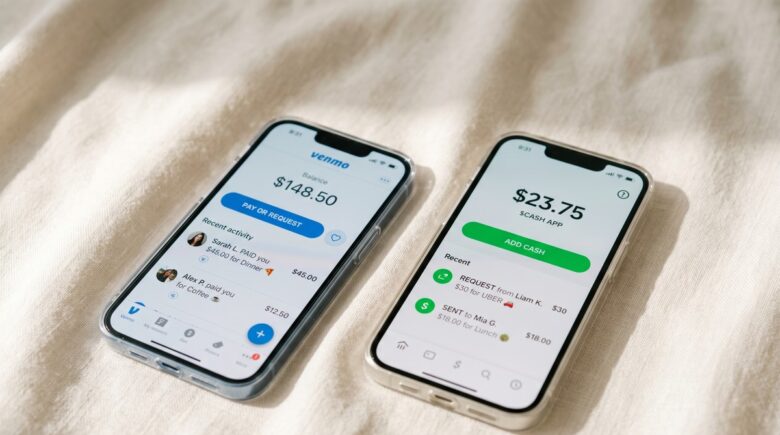
Most people choosing between Venmo and Cash App for splitting bills focus on the wrong things. The real differences are in fee structures (Venmo caps instant transfers at $25; Cash App charges up to 1.75% with no ceiling), sending limits, privacy defaults, and network fit. Choosing correctly means fewer surprise charges and less financial friction in daily life.
Deciding between Venmo vs Cash App bills comes down to more than a coin flip between two apps that look nearly identical. Both handle peer-to-peer payments, both are free for standard bank transfers, and both sit on tens of millions of phones across the country. Yet the differences between them are specific enough that picking the wrong one for your situation can cost you real money, expose private spending behavior, or leave you stuck when a payment matters most. According to the FDIC’s 2023 National Survey of Unbanked and Underbanked Households, 49.7% of U.S. households now use nonbank online payment services like PayPal, Venmo, or Cash App, up from 46.4% in 2021. That growth means more people are trusting these apps with rent, utilities, shared medical costs, and everyday bills.
What makes this choice timely is that regulatory oversight is finally catching up. The Consumer Financial Protection Bureau finalized a rule in late 2024 bringing large payment app providers, including both Venmo and Cash App, under federal supervisory oversight for the first time. Consumer protections are improving, but they are not yet equivalent to a bank account. The stakes of choosing thoughtfully are higher than most users realize.
This guide is for anyone who regularly splits recurring costs with roommates, friends, or family and wants to pick the app that creates the least friction, the fewest surprise fees, and the most peace of mind. After reading, you will know exactly which app fits your situation and why.
Key Takeaways
- Venmo’s instant transfer fee is capped at $25, making it cheaper than Cash App for any single transfer above roughly $1,430, according to PayPal’s own business resource data.
- 57% of U.S. adults aged 18–29 use Venmo, while 59% of Black Americans use Cash App, per a 2022 Pew Research Center survey of 6,034 adults, meaning the “right” app is often the one your actual network already uses.
- Venmo’s transaction feed is public by default, and a USC Viterbi analysis of 389 million public Venmo messages found millions of unintentional privacy disclosures, a documented risk most comparison guides treat as a simple settings toggle.
- Unverified Cash App accounts are capped at $250/week in sends; unverified Venmo accounts at $299.99/week, limits that can block time-sensitive payments like rent or shared medical bills before verification is complete.
- Both apps charge a flat 3% fee on credit card payments, which on a $500 group expense adds up to $15 in fees that most users never see coming, according to each platform’s published fee schedules.
- The CFPB has warned that funds held in payment apps are often not protected by federal deposit insurance, a risk that applies to the average $211 monthly Venmo balance that active users keep in-app.
In This Guide
- Mistake #1: Treating Both Apps as Free Because Basic Transfers Cost Nothing
- Mistake #2: Ignoring What Venmo’s Public Feed Does to Your Privacy and Peace of Mind
- Mistake #3: Assuming the App Your Friend Group Uses Is Automatically Right for You
- Mistake #4: Overlooking Sending Limits Until a Large Bill Blocks the Payment
- Mistake #5: Paying Your Share With a Credit Card and Absorbing a Silent 3% Fee
- Mistake #6: Choosing an App Without Understanding What Happens When Something Goes Wrong
- Frequently Asked Questions
Mistake #1: Treating Both Apps as Free Because Basic Transfers Cost Nothing
Both Venmo and Cash App are free for standard bank-funded or debit-card transfers, but that is where the symmetry ends. The real cost surfaces the moment you deviate from a slow, standard transfer, and most people discover these fees only after paying them.
How the Fee Structures Actually Differ
Instant transfers are where the gap becomes concrete. Cash App charges 0.5% to 1.75% of the transfer amount with no upper limit. Venmo charges a flat 1.75%, but caps that fee at $25. That cap is the detail most comparison articles skip entirely. For any single instant transfer above approximately $1,430, Venmo is the mathematically cheaper option. Splitting a month’s rent of $2,000 four ways? The person initiating an instant transfer of $2,000 on Venmo pays $25 maximum; on Cash App, they pay up to $35.
Credit card payments cost 3% on both platforms, with no exceptions. A $500 shared trip expense paid via credit card quietly absorbs $15 before anyone notices. Business payments, relevant if you’re paying a freelance trainer, a shared wellness coach, or any seller, cost 2.75% on Cash App versus 1.9% plus $0.10 per transaction on Venmo. For smaller, frequent business-style payments, Venmo is cheaper. For large single business payments, the difference narrows.
One genuine limitation worth naming: neither app is well-suited for people who want to stay completely fee-free while also moving money instantly. If same-day transfers are a regular need, you will pay for that convenience on either platform. The fee structures just determine how much.
What to Watch Out For
The most common mistake is defaulting to instant transfers out of habit. Standard transfers on both apps typically arrive within one to three business days, and for most bill-splitting situations, where the payer is not in an emergency, that lag is entirely manageable. Reserve instant transfers for situations where timing genuinely matters, and the fee structure becomes largely irrelevant for everyday use.
If you regularly split large shared costs (rent, group travel, medical bills), do the math before each transfer: on Cash App, multiply your transfer amount by 1.75% and compare it to Venmo’s $25 cap. Above roughly $1,430, Venmo’s instant transfer is cheaper every time.

Mistake #2: Ignoring What Venmo’s Public Feed Does to Your Privacy and Peace of Mind
Venmo’s social feed is public by default. Unless you manually change each transaction’s setting to “Friends” or “Private,” the transaction note, not the amount, but the description, is visible to anyone on the internet. Most users change this setting once and forget that each new transaction resets to the default. Cash App, by contrast, defaults to private transactions entirely.
Why This Is More Than a Settings Toggle
A 2022 USC Viterbi study analyzed 389 million public Venmo messages and found millions of unintentional privacy disclosures. When users write notes like “therapy co-pay,” “rent for March,” or even casual references to shared experiences, those strings become publicly searchable. This is not hypothetical risk. It is documented behavior at scale.
The psychological dimension of this is worth taking seriously. The American Psychological Association consistently ranks money as one of the top sources of stress for Americans. Broadcasting spending behavior, even innocuously, creates a layer of social visibility that can compound money shame or financial self-consciousness. For anyone splitting bills tied to health care, mental health services, or personal circumstances they would rather keep quiet, this default setting is a meaningful difference between the two apps. Venmo was designed as a social platform; that design decision has real privacy consequences that go beyond what any settings menu fully resolves.
If you are already thinking about broader privacy habits on your devices, the guide on building a personal digital security routine covers how to audit app permissions and defaults across your entire phone, not just payment apps.
What to Watch Out For
Changing Venmo’s global privacy setting to “Private” or “Friends” in your account settings will apply to future transactions by default, but double-check that the setting held after any app update. Venmo has a documented history of reverting privacy settings after platform changes, which is precisely how many users end up publicly broadcasting notes they intended to keep quiet.
Even with your Venmo global privacy set to “Private,” each individual transaction has its own visibility toggle at the time of sending. It is easy to accidentally leave a single payment public. Check each transaction before confirming, especially for sensitive expense categories.
Mistake #3: Assuming the App Your Friend Group Uses Is Automatically Right for You
The “everyone uses Venmo” assumption reflects a specific demographic bubble, not a universal truth. Understanding where each app actually dominates changes the calculation entirely.
What the Data Actually Shows
A 2022 Pew Research Center survey of 6,034 U.S. adults found that 38% of Americans have used Venmo and 26% have used Cash App overall. But the demographic breakdown tells the more useful story. 57% of adults aged 18–29 use Venmo. Cash App is used by 59% of Black Americans compared to only 17% of White Americans, and it has significantly higher adoption among lower-income households. These are not niche differences. They describe two apps with distinct community footprints.
The practical consequence is this: if your social network is predominantly younger, higher-income, or majority White, Venmo will create less friction because more people in your orbit already have it. If your network skews differently, pushing Venmo on a group that predominantly uses Cash App creates exactly the kind of payment friction that makes splitting bills stressful, chasing people to create accounts, converting balances between platforms, being the odd one out in a group chat.
Cash App is used by 59% of Black Americans versus 17% of White Americans, and by 36% of lower-income adults, compared to Venmo’s stronger foothold among adults aged 18–29 (57%). Source: Pew Research Center, 2022.
What to Watch Out For
Before settling on an app for a recurring shared expense, rent with roommates, a group fitness membership, a shared household account, ask everyone in the group which app they already use actively. The answer will save you weeks of friction. One person insisting on a minority-adoption app creates ongoing administrative burden that compounds over time.
| Feature / Scenario | Venmo | Cash App |
|---|---|---|
| Instant Transfer Fee | 1.75%, capped at $25 | 0.5%–1.75%, no cap |
| Credit Card Payment Fee | 3% | 3% |
| Business Payment Fee | 1.9% + $0.10/transaction | 2.75% |
| Unverified Sending Limit | $299.99/week | $250/week, $1,000/month |
| Verified Sending Limit (P2P) | Up to $60,000/week | Up to $7,500/week |
| Default Transaction Privacy | Public | Private |
| Social Feed | Yes (opt-out required) | No |
| Primary User Base | Adults 18–29, higher-income | Black Americans, lower-income |
| FDIC Pass-Through Insurance Option | No (standard balance) | Yes (Cash App savings) |
| Trustpilot Rating (Oct 2024) | 1.2/5 | 1.2/5 |
Mistake #4: Overlooking Sending Limits Until a Large Bill Blocks the Payment
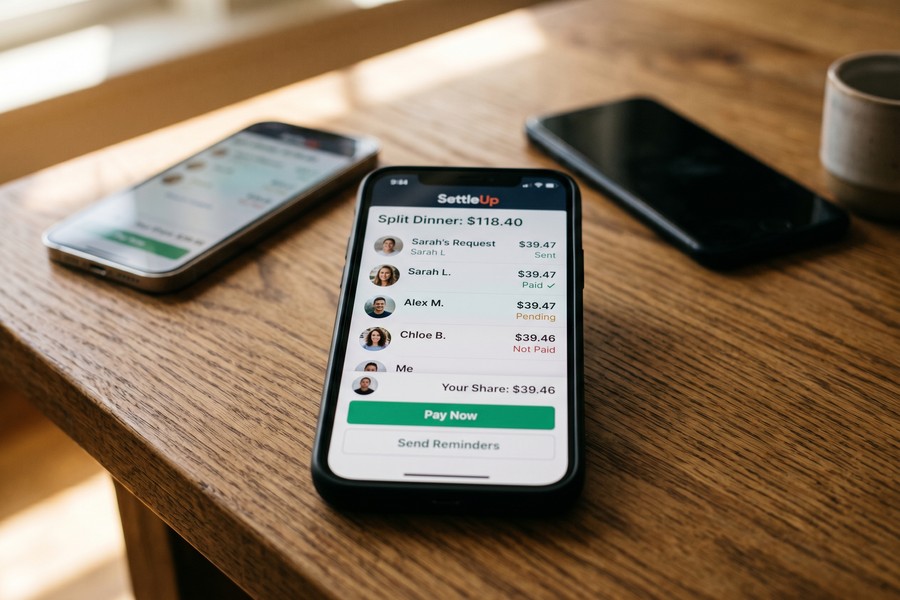
Sending limits are invisible until they stop a payment you need to make urgently. Unverified Venmo accounts cap weekly sends at $299.99; unverified Cash App accounts cap sends at $250 per week and $1,000 per month.
Once verified, the gap widens considerably. Verified Venmo accounts can send up to $60,000 per week in P2P payments. Verified Cash App accounts are capped at $7,500 per week. For splitting rent on a shared apartment, covering a group medical bill, or contributing to a shared travel fund, that difference matters. Hitting a sending limit mid-transaction on a time-sensitive payment, rent due on the first, a medical co-pay that must clear by end of day, does more than inconvenience. It puts a person in the uncomfortable position of explaining a payment failure to a landlord or a roommate, which is a predictable source of relationship stress. Verifying your account on either platform before you need a high limit is straightforward and takes about five minutes.
The CFPB has warned that funds stored in payment apps are often not protected by federal deposit insurance. The average active Venmo user holds $211 in-app, per PayPal data, money that sits outside FDIC coverage unless transferred to a linked bank account.
Mistake #5: Paying Your Share With a Credit Card and Absorbing a Silent 3% Fee
Paying via credit card on either app costs exactly 3%, with no exceptions on either platform. This fee is applied to the sender’s payment, not the recipient’s withdrawal, which is why it often goes unnoticed, the recipient gets the full amount while the sender quietly overpays.
The Real Cost at Scale
Consider a worked example. A group of four splits a $500 weekend wellness retreat: each person owes $125. The two who pay via credit card each absorb a $3.75 fee ($125 x 3%). Over twelve months of similar group expenses, gym memberships, shared subscriptions, group dinners, the compounding is real. If a person pays $125 via credit card once a month, the annual fee load is $45 ($3.75 x 12). That sum almost certainly exceeds any cashback or rewards benefit earned on those transactions, given that most cashback cards return 1% to 2% on general purchases.
Behavioral finance research consistently shows that unclear or unexpected costs erode a sense of financial control, and that loss of control is directly linked to increased financial anxiety. The fix here is simple: fund both Venmo and Cash App payments from a bank account or debit card. No fee, no ambiguity, no compounding surprise.
What to Watch Out For
Some users fund payments from a linked credit card as a default because they set it up first during onboarding. Check your payment source settings on both apps now, before your next transaction. Both platforms make debit or bank the default only if you add that account first; otherwise, they bill to whatever funding source was linked at signup.
In both Venmo and Cash App, you can set a preferred payment source. Go into your account settings and confirm a debit card or bank account is set as default. This one change eliminates the 3% credit card fee permanently for all future transactions.
Mistake #6: Choosing an App Without Understanding What Happens When Something Goes Wrong
Both Venmo and Cash App treat peer-to-peer payments as irreversible by design. Send money to the wrong person, a mistyped username, an autocomplete error, a shared name, and your only recourse is to ask that person to voluntarily return it. Neither platform guarantees recovery.
The Support Problem Neither App Has Solved
Both Cash App and Venmo hold 1.2/5 ratings on Trustpilot, with recurring complaints about frozen accounts, delayed payments, and slow or inaccessible customer support. This is not unusual for large-scale payment platforms, but it is directly relevant when time-sensitive bills are involved. A blocked account during rent week or a frozen transfer when a shared medical payment is due creates the kind of financial-relationship conflict that research links to anxiety and depression.
The CFPB finalized a rule in late 2024 bringing large payment app providers under federal supervisory oversight, specifically to address fraud, privacy, and consumer protection. That is a meaningful step forward. The practical reality remains: neither app has a fast, reliable path to a human support agent when something goes wrong with a payment. Consumer Reports has noted that consumers “shouldn’t have to choose between the convenience of digital payment apps and the safety and security of their money and privacy,” per the organization’s published advocacy position on the CFPB rule. That gap between what users expect and what platforms currently deliver is real.
The FTC now lists “payment app or service” as the second most common payment fraud method reported to the agency, trailing only credit cards. That context matters when you are deciding whether to send a single large payment or split it into smaller, verifiable transfers.
Understanding how scammers exploit payment platforms is part of using them safely. The piece on how hackers use social engineering tactics is worth reading before you dismiss fraud risk as something that only happens to careless users.
What to Watch Out For
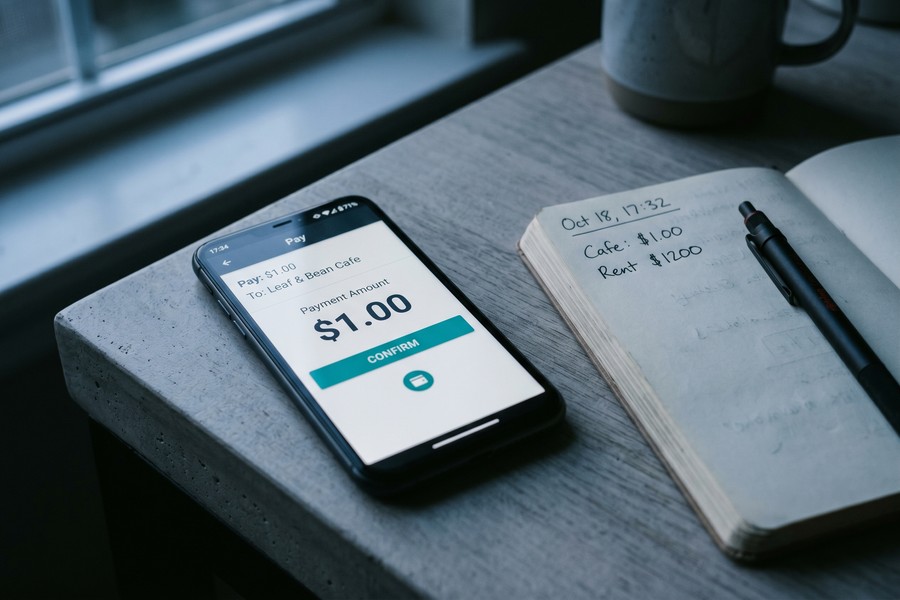
For any high-stakes or large-amount payment, use small test transactions first. Send $1 to a new recipient, confirm they received it, then send the balance. This adds sixty seconds to the process and eliminates the most common irreversible-payment error. It also applies equally to both apps, neither has a meaningful advantage in dispute resolution.
Scammers frequently use fake QR codes or spoofed payment requests to divert transfers on both platforms. Before scanning any QR code to send a payment, verify the recipient independently. For a deeper look at this risk, see the guide on how cybercriminals use fake QR codes to steal your information.
Which App Actually Fits Your Situation? A Clear, Honest Take
The honest answer is that neither app is universally better. Each has a clear use case, and the right choice is the one that removes friction from your specific financial life.
Venmo is the better choice if your social group is predominantly aged 18–35, you regularly split large costs where the $25 instant-transfer cap saves meaningful money, and you are willing to manage privacy settings carefully. Its group-request tools are genuinely useful for shared expenses among close contacts, and the higher verified sending limit ($60,000/week versus Cash App’s $7,500/week) matters when splitting rent, group medical bills, or large travel costs. If you are managing your finances across multiple apps and want a broader view, the article on how a digital wallet app can replace your physical wallet covers how these tools fit into a cohesive money management approach.
For users whose priority is privacy, or whose community has higher Cash App adoption, that platform is the lower-friction option. It was not designed as a social platform, and that restraint shows in how it handles user data by default. The FDIC-eligible pass-through insurance on Cash App savings balances is also a genuine differentiator for anyone who tends to leave money sitting in-app rather than transferring it out promptly.
The honest concession: both apps share identical Trustpilot ratings of 1.2/5, both make P2P payments irreversible, and neither is appropriate as a primary payment channel for large or high-stakes transactions where an error would be costly. Neither app is a good fit for anyone who needs guaranteed, time-sensitive payment delivery with a real dispute process behind it, for those situations, a direct bank transfer remains the safer option. Picking the right payment app is one of the more practical things you can do for your financial peace of mind, not because the stakes are enormous, but because small, recurring friction compounds quietly over time into real stress.
Frequently Asked Questions
Is Venmo or Cash App better for splitting rent with roommates?
Venmo is generally better for splitting rent if all roommates are already on the platform, because verified Venmo accounts can send up to $60,000 per week compared to Cash App’s $7,500 per week verified limit. For a $2,000 monthly rent split four ways, Venmo’s $25 instant-transfer cap also makes same-day transfers cheaper than Cash App’s uncapped 1.75% fee. If your roommates primarily use Cash App, the network fit advantage outweighs the fee difference, chasing payments across platforms adds more friction than any fee savings justify.
Does Venmo charge a fee to send money to a friend?
Standard transfers funded by a bank account or debit card are free on Venmo. Fees apply in three situations: instant transfers (1.75%, capped at $25), credit card payments (3%), and payments to business accounts (1.9% + $0.10). For the vast majority of friend-to-friend bill splitting using a linked bank account, there is no charge.
Can I get my money back if I send a Venmo or Cash App payment to the wrong person?
Neither platform can force a refund on a peer-to-peer payment. Both Venmo and Cash App treat P2P transfers as final, and your only recourse is to request the money back from the recipient voluntarily. This is why using a small test payment before sending large amounts is worth the extra step, particularly with new recipients.
Is Cash App safer than Venmo for private transactions?
Cash App defaults to private transactions, while Venmo defaults to a public social feed. For users who prioritize keeping spending behavior invisible, Cash App is the lower-friction option. Venmo can be made equally private by changing the global privacy setting to “Private,” but that requires deliberate action and must be verified after app updates, which have historically reset the setting.
Should I use my credit card to pay friends on Venmo or Cash App?
No, both platforms charge a flat 3% fee on credit card payments, which almost always exceeds the rewards value of a standard cashback card. On a $125 payment, that is $3.75 in fees, or $45 over twelve similar transactions annually. Linking a debit card or bank account eliminates this fee entirely on both apps.
Are funds in Venmo or Cash App covered by FDIC insurance?
Standard Venmo balances are not covered by FDIC insurance, which is why the CFPB has advised consumers to transfer balances to federally insured bank accounts rather than holding funds in-app. Cash App’s savings feature offers FDIC-eligible pass-through insurance through its banking partner, but the standard Cash App balance carries the same risk as Venmo’s. The average active Venmo user holds $211 in-app, money that sits outside deposit protection unless moved.
Which app is better if I want to split costs in a group with mixed iPhone and Android users?
Both Venmo and Cash App work across iOS and Android without restriction, so neither has a technical edge for mixed-device groups. The deciding factor is still network adoption within your specific group. For a broader look at how payment and messaging apps handle cross-platform compatibility, the guide on how cross-platform messaging works between iPhone and Android covers the underlying mechanics that affect app reliability across devices.
Sources
- FDIC, 2023 National Survey of Unbanked and Underbanked Households
- Consumer Financial Protection Bureau, Issue Spotlight: Deposit Insurance Coverage on Funds Stored Through Payment Apps
- Consumer Financial Protection Bureau, CFPB Finalizes Rule on Federal Oversight of Popular Digital Payment Apps
- Pew Research Center, Payment Apps Like Venmo and Cash App: Convenience and Security Concerns
- Consumer Reports, CFPB Issues New Rule to Supervise Digital Payment Apps
- National Consumer Law Center, CFPB Big Tech Payment App Oversight Rule Protects Personal Data and Reduces Fraud
- PayPal Business Resource Center, Reach Digitally Active Consumers with Venmo
- PayPal Holdings, Inc., Annual Report on Form 10-K, Fiscal Year Ended December 31, 2024 (SEC Filing)
- FXC Intel, PayPal Q4 2024 Earnings Analysis
- FDIC, Survey Finds 96 Percent of U.S. Households Were Banked in 2023 (Press Release)
- American Psychological Association, Stress in America 2022: Money and Financial Concerns