Fact-checked by the SnapMessages editorial team
The Verdict
Going through Meta’s official recovery pipeline yourself is almost always worth it, and it is free. Pursue it immediately if your linked email is still under your control, because that single condition determines your odds. It is not worth attempting if you have already clicked a recovery scam link or handed over backup codes, in that case, your surrounding accounts need securing first, or you will be re-locked within hours.
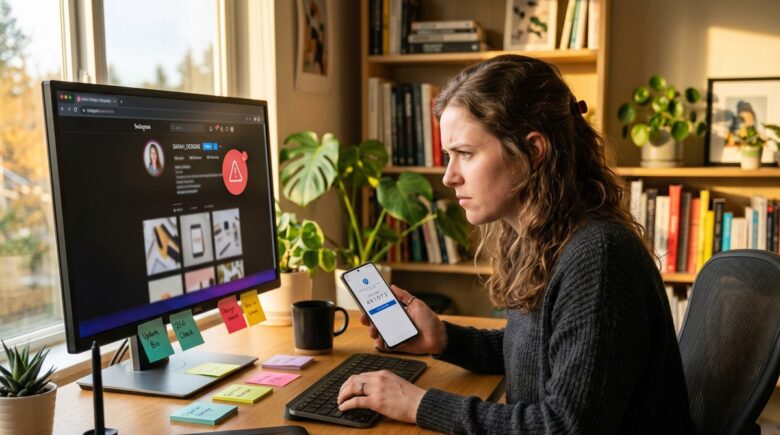
The decision to try recovering a stolen social account yourself versus paying a third party is less about platform complexity and more about one variable: whether the attacker still controls the email address tied to your Instagram account. If they do, every recovery email Meta sends goes straight to them, and you will cycle through the process repeatedly without gaining access. According to the Federal Trade Commission’s hacked account recovery guidance, the first step is always to secure surrounding accounts before touching the compromised platform itself. For a freelance designer whose entire client pipeline runs through Instagram, getting this sequence wrong can cost far more than the account itself: the Identity Theft Resource Center found that 27% of individual consumers reported losing sales revenue after losing control of a social media account.
This matters acutely in November 2025 because the recovery scam industry around hacked Instagram accounts has grown faster than awareness of the official process. Most freelancers in the health and wellness space face a second risk specific to their niche: followers who trusted them as a personal wellbeing guide are precisely the people most likely to click a fraudulent health-product link sent from the compromised account. The reputational damage that follows is qualitatively different from a typical brand hack, and client communication during the recovery window matters as much as the technical steps themselves.
| Factor | Reasons to Pursue Official Recovery Yourself | Reasons to Pause or Reassess |
|---|---|---|
| Cost | Meta’s pipeline is entirely free, zero fees at any stage | Third-party “specialists” charge $300–$2,000 upfront with no guarantee |
| Success rate | Straightforward cases with controlled email resolve in 24–48 hours | If attacker controls your inbox, unguided attempts usually fail |
| Client communication | You can notify clients via email or WhatsApp within the first hour | Waiting silently lets the hacker send fraudulent DMs to your audience for days |
| Business account | Meta Business Suite connection unlocks faster escalation paths | Personal-only accounts have no escalation shortcut |
| Security posture | Recovery forces a full credential audit that strengthens all accounts | Recovering without changing surrounding passwords leaves you exposed again |
| Scam risk | Following the official flow eliminates exposure to recovery fraud | BBB recorded a 39% year-over-year rise in social media recovery scams in 2024, median loss $310 |
Key Takeaways
- Your linked email inbox is still under your control, if it is not, secure it before filing any Meta recovery request or you will be re-locked out.
- You have not yet clicked any link from a “recovery specialist” and have not shared 2FA codes or backup codes with anyone outside Meta’s official forms.
- You can open Meta’s recovery flow from a desktop device the attacker has never logged into, device fingerprinting affects how Meta weights your identity signals.
- Your account is connected to Meta Business Suite, giving you access to an escalation path that personal accounts do not have.
- You have an alternate channel to reach clients, email list, WhatsApp group, LinkedIn, or a backup account, so you can notify them within the first hour rather than leaving them exposed to hacker DMs.
- You are prepared to rotate credentials on every platform that shared a password with Instagram, not just Instagram itself, within 24 hours of regaining access.
- Your account has been compromised for fewer than 72 hours, the longer an attacker holds an account, the more phone numbers and emails they layer in, which complicates Meta’s identity verification process.
Why Securing Your Email Inbox Comes Before Anything Else
Locking down the email account tied to Instagram before filing a single Meta recovery form is the single most important sequencing rule, and almost no guide mentions it. The reason is structural: Meta sends all recovery communications to the email on record, and if the attacker changed that address, every verification link goes to them. According to CISA’s MFA guidance, 99.9% of compromised accounts lacked multi-factor authentication at the time of breach. That statistic applies equally to the email account as to Instagram itself.
If Meta sent an unsolicited “you changed your email” notification to your original address, open it immediately. Instagram’s security system includes a 24-hour revert link in that email that cancels the attacker’s change without requiring identity documents. This single action resolves the majority of takeovers, yet most articles bury it in step four of a ten-step list. Check your spam folder aggressively; these emails from security@mail.instagram.com are frequently filtered.
A statistic worth anchoring to here: StationX’s 2025 research on account takeovers found that 73% of victims saw the attacker spread to their other connected platforms. That means a hacker who has your Instagram may already be attempting to access the Gmail or Outlook account attached to it. Secure the email with a new password and authenticator-app 2FA before doing anything else. Understanding broader social engineering tactics hackers use to gain initial access can also help you identify exactly how the breach happened in the first place.
How Meta’s Official Recovery Pipeline Actually Works
Meta’s five-stage recovery flow is deterministic, free, and takes 24–48 hours for uncomplicated cases when filed correctly. Start at instagram.com/hacked, select “My account was hacked,” and follow the identity-verification prompts. Do this from a desktop device the attacker has never used. This is not paranoia: Meta uses device-fingerprint signals as one factor in weighing identity claims, and filing from a contaminated browser actively undermines your case.
The pipeline may ask for a government-issued ID or, increasingly in 2025, a short video selfie. That video uses on-device facial geometry matched against profile photos, it is processed on Meta’s servers, not stored permanently. If your contact information has been fully replaced, the Meta Help Center’s supplemental hacked-account page walks through the escalated flow for exactly this scenario. Instagram’s official guidance is also explicit on one point worth repeating: Instagram will never contact you about account security through a Direct Message. Any DM claiming to be Instagram support is a scam, full stop.
The business-account escalation advantage is real and almost universally ignored by recovery guides. If you connected your Instagram profile to a Meta Business Suite account before the hack, Meta’s support channels can escalate your case through a business verification path that personal accounts simply do not have access to. A freelance designer who made this switch proactively recovers measurably faster than one who did not. This is a concrete, actionable reason to connect your profile to Meta Business Suite today, before any crisis occurs.

Communicating With Clients in the First Hour Without Losing Their Trust
For a freelance designer in the health and wellness space, the first hour of client communication matters as much as the first hour of technical recovery. The specific risk here is qualitative: an audience that trusted you as a wellness authority is far more likely to click a fraudulent supplement link or fake coaching offer sent from your account than a general consumer audience would be. The damage is not just reputational, you may have clients who received and acted on health misinformation from your compromised account.
Send a direct, clear message to active clients via your backup channel, email, a WhatsApp group, or LinkedIn, within the first 60 minutes. Something like: “My Instagram account was compromised earlier today. Please do not click any links, respond to any DMs, or follow any payment requests sent from my account until I confirm recovery. I am working through Meta’s official process now. I will update you within 24 hours.” That framing positions the breach as a security incident rather than negligence, which is accurate and protects the professional relationship.
Follow this with a public statement on a secondary platform within 24 hours. Do not wait for full account recovery to post publicly. Your clients and followers will hear something from the hacker before they hear from you if you stay silent, and what they hear will be whatever fraudulent pitch the attacker is running. The FTC explicitly recommends alerting contacts so they know not to act on messages sent by the hacker. Post to LinkedIn, your email newsletter, or a backup Instagram account immediately. The identity theft data is sobering context: 87% of businesses reported losing revenue as a direct result of a social media account takeover, per ITRC’s consumer research, and reputational damage alone accounts for an average 23% revenue decline.
The Recovery Scam Economy: What to Avoid and Why
The single clearest sign that a “recovery specialist” is running a scam: they ask for your password, your 2FA codes, or your backup codes. A legitimate consultant coaches you through filing Meta’s forms yourself and never needs your credentials. Anyone who asks for them is, by definition, unsafe. This rule has no exceptions.
The scam patterns flooding the recover-stolen-social-account space in 2025 are specific and well-documented. Google ads for fake Instagram support phone numbers appear above organic results. Telegram and WhatsApp channels advertise “recovery specialists” with fabricated testimonials. A particularly harmful subset claims insider access to Meta’s internal tools, sometimes using the terminology of real Meta systems to sound credible. These are sometimes called “Meta brokers” in wellness-creator communities, and they target exactly the audience that is most desperate and least technical. The Better Business Bureau’s 2024 Scam Tracker logged a 39% year-over-year increase in social media account recovery fraud, with a median victim loss of $310, and that figure reflects only reported cases.
Wellness freelancers are a particular target for this scam economy for a reason that goes beyond desperation. Hackers understand that health and wellness professionals are accustomed to saying yes to collaboration requests and building trust quickly with strangers. That openness is a professional asset in the wellness space; it becomes a vulnerability in a recovery crisis. Understanding how fake QR codes and credential-harvesting attacks work is useful background for recognizing the same manipulation techniques when they appear in a recovery scam pitch. For broader prevention, a personal digital security routine that includes periodic audits of third-party app permissions is the most reliable long-term protection.
Who Should and Who Should Not
Good candidates
These freelancers have the conditions that make self-guided official recovery a high-probability, zero-cost path.
- A designer whose linked email account is still under their control and who received Meta’s unsolicited “email change” notification, the 24-hour revert link alone may restore access within minutes.
- A freelancer who connected their Instagram to Meta Business Suite before the hack, giving them access to the business-account escalation path that resolves cases measurably faster.
- A wellness creator with an active email list or backup social account, who can notify clients within the first hour and prevent reputational damage from spreading before recovery is complete.
- Someone whose account has been compromised for fewer than 48 hours and who has not yet clicked any third-party recovery link or shared credentials with anyone outside Meta’s official forms.
Who should skip it
These are the situations where self-guided recovery is likely to stall or make things worse without additional steps.
- A freelancer who already shared 2FA backup codes with a “recovery specialist”, the surrounding accounts need a full credential rotation first, or the attacker will re-lock Instagram during the recovery process.
- Someone who has no alternate communication channel and no email list, they have no way to alert clients independently of Instagram, which means the hacker controls the narrative by default.
- A designer whose account is a personal profile with no Meta Business Suite connection and no prior government ID uploaded to Meta, identity verification without either of these signals takes longer and has a higher failure rate for edge cases.
- Anyone whose account has been held for more than a week and has had multiple phone numbers and emails layered in by the attacker, this is genuinely a difficult case that may require Meta’s Trust and Safety escalation rather than the standard hacked-account flow.
Frequently Asked Questions
How long does it take to recover a hacked Instagram account through Meta’s official process?
Straightforward cases where the linked email is still accessible typically resolve in 24–48 hours through Meta’s official pipeline. Cases requiring government ID upload or video selfie verification can take three to five days. Accounts that have had all contact information replaced by an attacker sometimes take longer and may require the Meta Business Suite escalation path.
Can you recover a stolen Instagram account if the hacker changed your email and phone number?
Yes, but the process is more involved. Meta’s supplemental recovery flow at the Meta Help Center hacked-account page specifically addresses this scenario and walks through identity verification via government ID or facial recognition. File from a device the attacker has never used, and do not attempt recovery while the attacker still controls your email inbox.
Is paying a social media recovery specialist worth it?
No, with one narrow exception. The BBB recorded a median victim loss of $310 in social media recovery scams in 2024, and the majority of paid “specialists” either take payment and disappear or walk you through Meta’s free official process while charging for it. The only scenario where a paid consultant adds value is if they are a verified cybersecurity professional helping you document a case for law enforcement, not someone promising insider Meta access.
What should I tell clients when my Instagram account gets hacked?
Contact them directly via an alternate channel within the first hour and tell them plainly that your account was compromised, that they should not click any links or respond to any DMs from it, and that you will update them within 24 hours. For wellness clients specifically, acknowledge that any health-related content sent from the account during the compromise period should be disregarded. Proactively posting this on LinkedIn or via an email newsletter prevents the hacker’s narrative from filling the vacuum.
Does two-factor authentication prevent Instagram account theft?
Authenticator-app 2FA is the most effective single prevention measure available. CISA’s MFA resource page states that users who enable MFA are significantly less likely to be hacked because even a stolen password cannot satisfy the second authentication requirement. SMS-based 2FA is better than nothing but is vulnerable to SIM-swapping, which accounted for 14% of account takeovers in 2025. Use an authenticator app. For an additional layer of protection, consider reviewing whether a hardware security key makes sense for your accounts.
What is the biggest mistake people make when trying to recover a hacked Instagram account?
Filing Meta’s recovery request before securing the email account tied to Instagram. If the attacker still controls that inbox, every verification link Meta sends goes directly to them, and the account is re-locked before you can act. The email must be secured first. The second most common mistake is using a device or browser the attacker has previously logged into, which contaminates the device-fingerprint signals Meta uses to weight identity claims.
Sources
- Meta / Instagram Help Center, Hacked Account Recovery (instagram.com/hacked)
- Meta Help Center, If You Think Your Instagram Account Has Been Hacked
- Federal Trade Commission, How to Recover Your Hacked Email or Social Media Account
- CISA, Capacity Enhancement Guide for Social Media Account Protection
- CISA, More Than a Password: MFA Guidance
- Identity Theft Resource Center, Identity Fraud and Social Media Account Takeover Research (2022)
- StationX, Social Media Hacking Statistics (2025)