Fact-checked by the SnapMessages editorial team
The Verdict
A burner email address is worth using whenever you’re signing up for a service you don’t fully trust and don’t need ongoing access to. It is not worth using for telehealth portals, insurance platforms, or any service that may send appointment reminders or lab results. The clearest threshold: if losing inbox access within 24 hours would cause a real problem, use an alias or your real address instead.
The decision to use a burner email address comes down to one factor above all others: whether you need that inbox to stay alive. Spam already accounts for more than 46.8% of all global email traffic as of December 2024, which makes protecting your real address genuinely worthwhile. But the protection a burner offers has a hard ceiling, and crossing it in the wrong context can cost you access to health records, prescription notifications, or account recovery options.
This matters more in October 2025 than it did two years ago because breached email data has exploded in scale. When signing up for a wellness app, a fitness tracker, or a mental health platform, your email doesn’t just expose an inbox. It tags your real identity to sensitive behavioral data that can be sold, subpoenaed, or stolen.
| Factor | Reasons to Use a Burner Email | Reasons Not to Use a Burner Email |
|---|---|---|
| Spam reduction | Keeps your real inbox clean from marketing lists and cold outreach | Does not help if the service you need sends important transactional emails |
| Breach exposure | Real address stays out of breach databases tied to low-trust services | Burner inbox itself may be publicly readable (e.g., Yopmail shows all messages to anyone who types the address) |
| Account recovery | No recovery needed for throwaway accounts | If the burner expires, you permanently lose password reset access to any account tied to it |
| Health data privacy | Protects against linking your real identity to sensitive wellness signups | Unsuitable for telehealth, therapy apps, or any service that may contact you about lab results or prescription refills |
| Platform compatibility | Works for one-off downloads, discount codes, giveaway entries, free trials | Many wellness platforms and supplement brands now use real-time API blocklists that reject known disposable domains |
| Cost | Most quality burner services are free | Free tiers offer no encryption, no password protection, and unpredictable inbox lifespans |
Key Takeaways
- Use a burner if the inbox expiring within 24 hours would cause zero problems for that signup.
- Use an email alias (not a burner) for any wellness subscription you plan to keep for more than 30 days.
- Never use a burner for telehealth portals, prescription platforms, or insurance-linked accounts where delayed delivery costs you health access.
- Services like Yopmail have fully public inboxes: anyone who types your burner address can read it, making them unsafe for any medically sensitive signup.
- The Gmail ‘+’ trick is not a real solution: most websites strip the modifier, exposing your actual address to the sender anyway.
- If you’re managing a stigmatized condition or using a mental health platform, an alias from a privacy-first provider in a favorable legal jurisdiction (such as Proton in Switzerland) is more appropriate than a free disposable inbox.
- 12% of all online form submissions now use disposable email addresses, which means blocklists are getting more aggressive. Test whether your chosen burner domain is accepted before committing to a service.
Why Your Real Email Address Is a Wellness Privacy Risk
Your email address is not just a contact point. Attach it to a mental health app, a fertility tracker, or a chronic-condition support forum, and you’ve linked your real identity to behavioral data that reveals a sensitive aspect of your life. That data can be sold to data brokers, exposed in a breach, or in some jurisdictions, accessed by third parties through legal requests.
The breach problem is no longer theoretical. Surfshark’s 2024 data breach recap documented that the number of breached online accounts surged from approximately 730 million in 2023 to over 5.5 billion in 2024, nearly 180 accounts compromised every second, with email addresses central to the exposed data in most incidents. NordStellar, NordVPN’s threat intelligence platform, separately reported that 501 million unique email addresses appeared in dark-web breach databases in 2025. When the breached platform knows your health interests, the downstream harm is not just spam. It’s targeted phishing that exploits the fact that you use a diabetes management app or a therapy service.
“Reusing your primary email address across services increases exposure when data breaches occur.”
For wellness readers specifically, this is a stronger argument than most privacy guides acknowledge. Signing up for a supplement discount or a free meal plan PDF with your real address is a low-stakes data point. Signing up for an eating disorder support forum, a fertility app, or an addiction recovery platform with your real address is a different calculation entirely.
What a Burner Email Address Actually Is (and What It Isn’t)
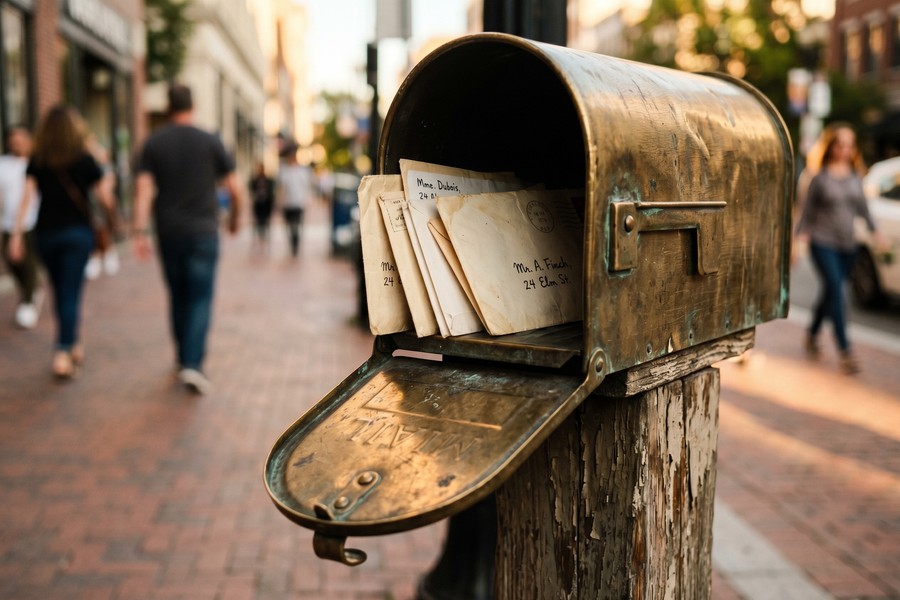
A burner email is a short-term, disposable address created for one-time or limited interactions, with no real name, no account history, and no long-term commitment. The term covers three meaningfully different tools, and conflating them leads to poor decisions.
The three types
Short-lived inboxes (10 Minute Mail, Temp Mail) auto-delete after a set period, ranging from 10 minutes to a few hours. They are ideal for one-time verification codes but useless for anything that requires follow-up. Session-linked inboxes (Guerrilla Mail) tie the inbox to your browser tab and persist until you close it or manually delete it. Forwarding aliases (Firefox Relay, Apple Hide My Email, SimpleLogin) are technically not burners at all. They generate a masked address that routes mail to your real inbox, letting you read messages without exposing your actual address. Aliases are the right tool for most ongoing wellness signups.
The public inbox problem
This is the detail almost no guide explains clearly: on services like Yopmail, the inbox is not private. Anyone who types your burner address into the site can read every message in it. If you chose a username even loosely tied to your health situation, say, something referencing a condition or a clinic name, that “private” inbox is anything but. For a wellness signup, this matters far more than it does for claiming a retail coupon.
Burner emails also carry no encryption and typically no password protection. They are an inbox hygiene tool, not a security tool. That distinction is consensus across guidance from NordVPN, ExpressVPN, and Surfshark, and it shapes every recommendation below. Understanding how cybercriminals exploit exposed personal data is useful context here; a solid overview of those methods appears in our guide on what social engineering is and how hackers exploit it.
When Does a Burner Email Make Sense for Health and Wellness?
A burner earns its keep in low-stakes, high-exposure scenarios where you want access to something specific and have no intention of maintaining a relationship with the sender. In a health and wellness context, that maps to a clear set of situations.
Downloading a free meal plan PDF, entering a wellness giveaway, claiming a supplement discount code, or accessing gated content on a nutrition blog are all appropriate uses. So is signing up for a fitness app you want to test before deciding whether to commit. Using a burner to try a new meditation app protects you from spam if the service disappoints, and from a breach if it gets hacked before you’ve built any real dependency on it.
Public Wi-Fi at gyms, yoga studios, and health clinics frequently requires an email address to connect. A burner satisfies the requirement without handing your real address to a network whose data practices you have no reason to trust. The Federal Trade Commission’s CAN-SPAM Act guidance establishes that commercial email senders must honor opt-out requests within 10 business days, but opting out still confirms your address is active. A burner sidesteps that confirmation entirely.
When You Should Never Use a Burner Email for Health Matters
The hard stops are specific: telehealth portals, prescription management platforms, insurance-linked wellness accounts, and any service that sends appointment reminders, lab results, or refill notifications. If the inbox expires before your follow-up arrives, you lose access to critical health information, and there is often no recovery path.
The account-recovery trap is underappreciated. Register a therapy app or a chronic-condition tracker with a burner that self-destructs, and you permanently lose password reset access. You are not just locked out of an inbox. You are locked out of your own health data, including any symptom logs, mood tracking, or care history stored on the platform.
Mental health forums and peer support groups sit in a middle-ground. A burner protects your identity from public exposure, which is a legitimate concern. But an alias, which forwards to your real inbox, is the safer choice because you retain access and can reply without revealing who you are. Building a layered personal digital security routine covers this kind of tiered thinking in more detail.
Mozilla’s official guidance for Firefox Relay makes the same point directly: Relay email masks are appropriate for marketing and informational signups, and the service explicitly advises against using masks when identity verification is required or for important communications with banks, doctors, or lawyers.
Which Services Actually Work in October 2025?
Not all burner services perform equally, and the blocklist arms race has made this a more complicated question than it was two years ago. Here is an honest breakdown focused on what matters for wellness users.
Short-lived inboxes
10 Minute Mail is the simplest option. It auto-deletes after 10 minutes, though you can extend the timer, and the interface requires no account. It is the right pick for single-use verification codes on low-trust signups. Guerrilla Mail lasts 60 minutes by default, supports sending and receiving, and has a scriptable API, which makes it useful if you need to reply to a confirmation email. Both are frequently blocklisted by major wellness and fitness platforms.
Alias-tier services (better for ongoing wellness use)
SimpleLogin offers unlimited standard aliases on a free plan, is open-source, and forwards to your real inbox. At $12 per year for the paid tier with custom domain support, the cost is less than one month of most wellness app subscriptions. Firefox Relay, operated by Mozilla, provides up to five email masks on the free tier and is designed specifically for marketing and newsletter signups where you want future control without exposing your real address. Apple Hide My Email is built into iCloud and generates unique forwarding addresses with one tap, a strong default for anyone already in the Apple ecosystem.
The blocklist reality
Wellness brands, supplement companies, and fitness apps are increasingly using real-time API validation and domain blacklists to reject known disposable email domains. Temp Mail sees the highest traffic volume but is routinely blocklisted by major platforms as a result. The disposable email ecosystem now spans over 160,000 active domains, with services operating 50 to 100 rotating domains specifically to evade detection. Any specific burner domain’s effectiveness degrades over time. If a signup rejects your burner address, that is usually the blocklist working as intended, and an alias from a less-blacklisted provider is the practical workaround.
“Many disposable email service providers prioritize convenience over long-term protection, which means these services should be used thoughtfully and with caution.”
Does the Gmail Plus Trick Actually Work?
No. The Gmail ‘+’ alias workaround is widely repeated as a privacy tip in wellness blogging, but it does not protect your real address. Adding a modifier such as yourname+fitness@gmail.com does not create a separate inbox. Many websites strip everything after the ‘+’ character before storing your address, which means the sender receives and records your real Gmail address. You get the spam without the protection. This is a concrete misconception worth correcting, because a meaningful portion of wellness readers believe this technique is sufficient.
A true forwarding alias from SimpleLogin, Firefox Relay, or Apple Hide My Email generates a structurally different address that has no visible connection to your real inbox. That is the meaningful distinction. The Gmail trick offers the feeling of compartmentalization without any of the substance.
For readers interested in how identity exposure compounds across digital tools, our coverage of how cybercriminals use fake QR codes to steal information shows how multiple data points are combined to build a targeting profile.
Who Should and Who Should Not
Good candidates
These reader profiles have a clear, defensible reason to use a burner or alias for their wellness signups.
- Someone downloading a free nutrition guide or claiming a supplement coupon from a brand they’ve never bought from before, where zero ongoing communication is expected.
- A fitness enthusiast testing a new workout app during a free trial period, before deciding whether to provide their real address for a paid account.
- Anyone signing up for a gym’s Wi-Fi network or a wellness event newsletter where they expect immediate marketing emails and nothing else.
- A reader managing a stigmatized health condition who wants to join an online support community without linking their real identity to that membership.
- Anyone entering a wellness giveaway where the only expected communication is a one-time winner notification.
Who should skip it
These reader profiles would create real problems for themselves by using a disposable inbox.
- Anyone registering with a telehealth provider, prescription delivery service, or insurance-linked wellness portal where account access and email delivery are required for care continuity.
- Users of therapy or mental health apps who log mood data, session notes, or care history, since a self-destructing inbox locks them out of their own records permanently.
- People using a chronic-condition tracker that sends medication reminders or monitors adherence, where missing a notification has clinical consequences.
- Anyone who needs to verify identity for a health service, such as a HIPAA-regulated platform, where the signup process requires confirmed access to the registered inbox.
What a Burner Email Cannot Protect You From
A burner address stops your email from appearing in a specific breach database. It does not hide your IP address, your device fingerprint, or your payment details. Many disposable email providers log IP addresses in their terms of service, which means you are not anonymous in any meaningful technical sense, even with a burner. If anonymity is the goal, a burner alone is not the tool.
For most everyday wellness readers, that does not matter much. The realistic threat model for someone downloading a free recipe PDF is inbox hygiene and reduced data broker exposure, not government surveillance or adversarial tracking. A burner email handles that well.
For readers in higher-sensitivity situations, managing a stigmatized condition, accessing mental health services, or navigating a sensitive diagnosis, the jurisdictional question matters. SimpleLogin is operated from the UK, which falls under Five Eyes intelligence-sharing agreements. Proton Mail, based in Switzerland, operates under Swiss privacy law and is outside Five Eyes jurisdiction. For most wellness signups, this distinction is irrelevant. For a small subset of readers, it is the most important factor in the decision. Understanding the broader digital privacy picture is worth the effort; our guide on hardware security keys and passkeys replacing passwords both address adjacent layers of account protection that complement email privacy habits.
The global disposable email tool market was valued at $375.1 million in 2024 and is on track to reach $425.3 million in 2025, reflecting genuine mainstream demand. And 12% of all online form submissions now use disposable addresses. The tools are established and the use case is real. The honest limit is that no single tool handles every privacy scenario, and treating a burner inbox as a catch-all security measure creates a false sense of protection in exactly the situations where real protection matters most.
Frequently Asked Questions
Is it safe to use a burner email address for a wellness app?
It depends entirely on whether the app needs to reach you after sign-up. For a free trial or a one-time download, a burner is safe and appropriate. For any app that stores health data, sends reminders, or requires account recovery, use a permanent alias or your real address instead.
What is the best free burner email service in 2025?
For single-use verification, 10 Minute Mail is the simplest and most reliable option. For signups where you need to reply to a confirmation email, Guerrilla Mail’s 60-minute inbox handles send and receive. For ongoing wellness use, SimpleLogin’s free alias tier is more appropriate than either.
Can websites detect and block burner email addresses?
Yes, and increasingly so. Major wellness platforms and supplement brands use real-time API validation and domain blacklists to reject known disposable domains. Temp Mail is the most commonly blocklisted service. Alias services like SimpleLogin and Firefox Relay have lower rejection rates because their domains rotate and are less widely flagged.
Is the Gmail plus sign trick a real privacy protection?
No. Adding a modifier like yourname+newsletter@gmail.com does not generate a separate address. Many websites strip the plus suffix before storing your email, which means they record your real Gmail address. A forwarding alias from SimpleLogin, Firefox Relay, or Apple Hide My Email provides genuine separation.
Can a burner email address make me anonymous online?
Not on its own. Most disposable email providers log IP addresses, and your device fingerprint and payment details remain traceable regardless of which inbox you use. A burner reduces inbox exposure and data broker linking, but it is not an anonymity tool. For higher-sensitivity use cases, combine it with a VPN and a privacy-first provider in a favorable legal jurisdiction.
Should I use a burner email for a mental health or therapy app?
Use an alias, not a true burner. A forwarding alias like those from Firefox Relay or Apple Hide My Email protects your real address while keeping the inbox active for as long as you need it. A self-destructing burner will lock you out of account recovery and could cut off communications from your care provider.
Sources
- Mailmodo, Email Spam Statistics (citing Securelist/Kaspersky 2024 data)
- Surfshark, Global Data Breach Statistics: A 2024 Recap
- MyEmailVerifier, Disposable Email Providers (citing BulkEmailChecker 2025 data)
- Verified.email, Disposable Email Statistics 2026
- CrowdFund Insider, Use a Burner Email Address for Fraud Protection (NordStellar / NordVPN data)
- Federal Trade Commission, CAN-SPAM Act: A Compliance Guide for Business
- Mozilla Support, Create an Email Mask Through Firefox Relay
- Firefox Relay, Frequently Asked Questions