Fact-checked by the Snapmessages editorial team
Quick Answer
End-to-end encryption is a security method that scrambles messages so only the sender and recipient can read them — not even the service provider. As of July 2025, over 2 billion people use end-to-end encrypted messaging daily, and apps using it block 100% of server-level interception attempts by design.
End-to-end encryption is the most powerful privacy protection built into modern messaging apps — and as of July 2025, it has become the default standard for platforms serving billions of users worldwide. Unlike basic encryption that protects data only in transit, end-to-end encryption ensures that messages are decrypted exclusively on the recipient’s device, making intercepted data completely unreadable to anyone else, including the platform itself.
The stakes are enormous. According to Verizon’s 2024 Data Breach Investigations Report, over 68% of data breaches involve a human element such as phishing or credential theft — attacks that end-to-end encryption is specifically designed to neutralize at the message content level. The Federal Trade Commission (FTC) consistently identifies strong encryption as a foundational requirement for any organization handling sensitive consumer data.
This guide breaks down exactly how end-to-end encryption works, which apps use it correctly, what its real limitations are, and how you can verify that your own communications are protected. You will leave with a clear, actionable understanding of the technology — no cryptography degree required.
Key Takeaways
- End-to-end encryption protects messages so that only sender and recipient can read them — not the service provider, not governments, and not hackers intercepting network traffic (Electronic Frontier Foundation, 2024).
- WhatsApp, the world’s most-used messaging app, enabled end-to-end encryption by default for all 2 billion+ users in 2016, making it the largest single deployment of the technology in history (Meta Transparency Report, 2024).
- The Signal Protocol, developed by Open Whisper Systems, underpins end-to-end encryption in Signal, WhatsApp, and Google Messages — three platforms with a combined user base exceeding 3 billion (Signal Foundation, 2024).
- End-to-end encrypted messages are protected by 256-bit AES encryption, a standard so strong that brute-force cracking it would require more time than the estimated age of the universe (National Institute of Standards and Technology, 2023).
- A 2024 survey by the Pew Research Center found that 37% of U.S. adults say they use an encrypted messaging app regularly, up from 25% in 2021 — reflecting rapid mainstream adoption (Pew Research Center, 2024).
- The European Union’s General Data Protection Regulation (GDPR) explicitly recommends encryption as a technical safeguard under Article 32, making end-to-end encryption relevant to legal compliance for any organization handling EU citizen data (European Commission, 2023).
In This Guide
- What Is End-to-End Encryption, Exactly?
- How Does End-to-End Encryption Actually Work?
- Which Messaging Apps Use End-to-End Encryption?
- Why Does End-to-End Encryption Matter for Everyday Users?
- What Are the Limitations of End-to-End Encryption?
- How Does End-to-End Encryption Compare to Other Types of Encryption?
- How Do Governments and Regulators View End-to-End Encryption?
- Should Businesses Use End-to-End Encryption?
- How Can You Verify Your Messages Are End-to-End Encrypted?
What Is End-to-End Encryption, Exactly?
End-to-end encryption (E2EE) is a communication security method in which data is encrypted on the sender’s device and can only be decrypted on the recipient’s device — with no readable version accessible at any point in between. The “ends” in the name refer to the two communicating devices: the message never exists in a readable form on any server or network node in the middle.
The critical distinction is control. With standard encryption, the platform provider encrypts your messages but holds the decryption keys — meaning they can read your content if compelled by law enforcement or if breached by hackers. With end-to-end encryption, the provider simply does not have the keys. The Electronic Frontier Foundation (EFF) describes this as the gold standard of messaging privacy precisely because it removes the server as a potential weak point.
The Lock-and-Key Analogy
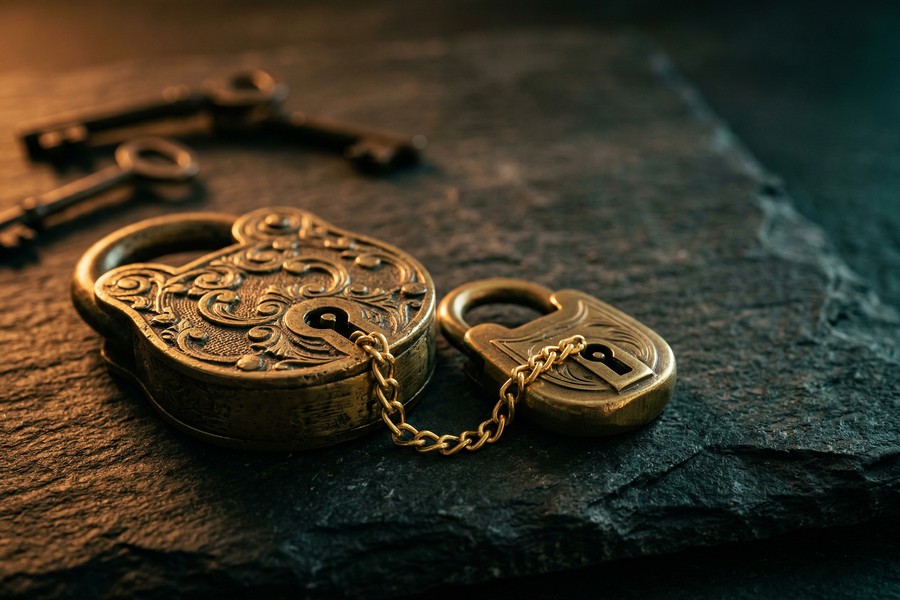
Think of end-to-end encryption as a physical lockbox. You place your message inside, lock it with a padlock, and send it. Only the recipient has the key that opens that specific lock. The postal carrier — in this case, the app’s servers — handles the box but cannot open it. This analogy captures the essential guarantee: possession of the message is worthless without the private key.
The keys themselves are mathematically linked pairs: a public key (shared openly, used to encrypt) and a private key (never shared, used to decrypt). This system is called asymmetric cryptography, and it is the mathematical foundation that makes end-to-end encryption possible at scale.
The concept of public-key cryptography — the mathematical backbone of end-to-end encryption — was publicly introduced by Whitfield Diffie and Martin Hellman in their landmark 1976 paper, New Directions in Cryptography. It took nearly four decades for the technology to reach consumer messaging apps at scale.
How Does End-to-End Encryption Actually Work?
End-to-end encryption works through a sequence of cryptographic steps that happen automatically and invisibly within a messaging app. When you send a message, the app encrypts it using the recipient’s public key. Only the recipient’s private key — stored only on their device — can reverse the process and display the message in readable form.
Modern implementations use the Signal Protocol, developed by cryptographer Moxie Marlinspike and the team at Open Whisper Systems (now the Signal Foundation). This protocol adds a layer called the Double Ratchet Algorithm, which generates new encryption keys for every single message. This means that even if an attacker somehow obtained one message’s key, they could not decrypt any past or future messages — a property called forward secrecy.
The Step-by-Step Encryption Process
Here is what happens when you send an end-to-end encrypted message in a modern app like Signal or WhatsApp:
- Your app generates a unique public-private key pair for your account on your device.
- Your public key is uploaded to the app’s server (this is safe — it can only encrypt, not decrypt).
- When you message someone, your app retrieves their public key from the server.
- Your message is encrypted using their public key before it leaves your device.
- The encrypted data travels through the server and arrives on the recipient’s device.
- Their device uses their private key to decrypt and display the message.
The app’s server only ever sees encrypted ciphertext. According to the Signal Foundation’s technical documentation, this design ensures that Signal itself cannot read any message that passes through its infrastructure — a claim that has been verified by independent security audits.
The Signal Protocol generates a new encryption key for every single message sent, meaning a conversation of 1,000 messages produces 1,000 separate cryptographic keys. Compromising one key exposes exactly one message — a property formally called forward secrecy (Signal Foundation, 2024).
Symmetric vs. Asymmetric Encryption in Practice
While key exchange uses asymmetric cryptography, the actual message encryption typically uses a faster method called AES-256 (Advanced Encryption Standard with a 256-bit key). AES-256 is the same standard used by the U.S. National Security Agency (NSA) to protect classified information at the Top Secret level, as confirmed by the NSA’s Commercial National Security Algorithm Suite. The combination of asymmetric key exchange and symmetric message encryption gives end-to-end encryption both security and speed.
Which Messaging Apps Use End-to-End Encryption?
Not all messaging apps offer end-to-end encryption, and among those that do, not all enable it by default for every conversation. The distinction between “available” and “on by default” is critical — a feature that requires manual activation protects far fewer users in practice.
The table below compares the major messaging platforms on their end-to-end encryption implementation as of July 2025:
| App | E2EE By Default? | Protocol Used | Open Source? | Monthly Active Users |
|---|---|---|---|---|
| Signal | Yes — all messages | Signal Protocol | Yes | ~40 million |
| Yes — all messages | Signal Protocol | No | 2+ billion | |
| Apple iMessage | Yes — between Apple devices | IDS (proprietary) | No | 1+ billion |
| Telegram | No — only in “Secret Chats” | MTProto 2.0 | Partial | 900 million |
| Google Messages | Yes — via RCS | Signal Protocol | No | 1+ billion |
| Facebook Messenger | Yes (enabled by default in 2023) | Signal Protocol | No | 1+ billion |
| Standard SMS/MMS | No | None | N/A | Billions |
Telegram’s approach deserves special attention because it is widely — and incorrectly — assumed to be end-to-end encrypted by default. Standard Telegram group chats and cloud chats are encrypted in transit but stored on Telegram’s servers in a form the company can access. Only manually activated “Secret Chats” use full end-to-end encryption, as the Telegram MTProto documentation confirms.
Using Telegram’s standard group chats for sensitive communications is a common privacy mistake. Because default Telegram chats are not end-to-end encrypted, Telegram’s servers hold decryptable copies of your messages. Law enforcement agencies have successfully obtained Telegram message records through legal requests — a risk that does not exist with Signal or WhatsApp for message content.
Why Does End-to-End Encryption Matter for Everyday Users?
End-to-end encryption matters because your private communications are a high-value target for multiple threat actors simultaneously — and the stakes extend far beyond keeping a conversation secret. Unencrypted messages can be intercepted by hackers, read by the platform provider, accessed by employers on corporate networks, and handed over to governments through legal demands.
The practical consequences are real. According to IBM’s 2024 Cost of a Data Breach Report, the average cost of a data breach reached $4.88 million in 2024 — the highest figure ever recorded. Personal data exposed in those breaches frequently includes message content from unencrypted platforms.
Who Specifically Benefits?
End-to-end encryption protects a wide range of users whose needs vary enormously:
- Journalists and sources communicating sensitive information in repressive environments
- Healthcare providers sharing patient information in compliance with HIPAA regulations
- Lawyers and clients maintaining attorney-client privilege in digital communications
- Domestic abuse survivors communicating safely away from monitoring by abusers
- Business executives protecting trade secrets and merger negotiations
- Ordinary individuals protecting financial data, passwords, and personal information shared over messaging
The Pew Research Center’s 2024 survey on privacy found that 79% of U.S. adults report being concerned about how companies use their data — a concern that end-to-end encryption directly addresses at the communication layer.
“End-to-end encryption is not just a technical feature — it is a civil liberties issue. When communications can be surveilled at scale, people self-censor, sources dry up, and the free flow of information that democracies depend on is fundamentally undermined.”
The Financial Privacy Angle
For many users, the most immediate risk is financial. People routinely share banking details, account numbers, and passwords over messaging apps. Just as understanding where your money actually goes requires visibility into your financial life, protecting that financial data requires encryption at the communication layer. A single intercepted message containing login credentials can result in account takeover within minutes.
The FBI’s Internet Crime Complaint Center (IC3) received 880,418 cybercrime complaints in 2023, with reported losses exceeding $12.5 billion — a 22% increase from 2022. Many of these crimes began with intercepted or compromised communications (FBI IC3, 2024).
What Are the Limitations of End-to-End Encryption?
End-to-end encryption is not a complete security solution — it has specific, well-defined limitations that every user should understand. The encryption protects message content in transit and at rest on servers, but it does not protect against every possible attack vector.
What E2EE Does NOT Protect
Here are the primary gaps in end-to-end encryption’s protection:
- Compromised endpoint devices: If your phone is infected with malware or spyware (such as NSO Group’s Pegasus software), the attacker can read messages after they are decrypted on your device — before they ever reach the secure storage layer.
- Metadata: End-to-end encryption hides message content but not metadata — who you talk to, how often, and for how long. This metadata can be legally compelling and personally revealing.
- Backup files: WhatsApp’s cloud backups to Google Drive or iCloud are not end-to-end encrypted by default (though the option exists). Many users unknowingly store decryptable backup copies of their encrypted conversations.
- Screenshot and forwarding: Once a message is decrypted on the recipient’s device, they can screenshot, copy, or forward it. Encryption controls the channel, not the recipient’s behavior.
- Key verification failures: If a user does not verify the safety numbers or security codes in their app, they may be vulnerable to a man-in-the-middle attack where a third party intercepts the key exchange.
Security researchers at the University of Toronto’s Citizen Lab have documented real-world cases where end-to-end encrypted communications were compromised through endpoint attacks rather than encryption breaking — emphasizing that device security and app security must be maintained together.
WhatsApp’s end-to-end encryption protects message content so completely that even Meta cannot read it. However, WhatsApp does collect metadata — including contact lists, usage frequency, and device identifiers — which Meta uses for advertising targeting. Signal, by contrast, collects only the phone number used to register and the date of last login.
How Does End-to-End Encryption Compare to Other Types of Encryption?
End-to-end encryption offers the strongest privacy protection of all common encryption models, but it is one of several approaches used in digital communication. Understanding the differences helps you make informed choices about which tools to trust for which types of information.
| Encryption Type | What It Protects | Who Can Decrypt | Server Access to Content | Common Use Case |
|---|---|---|---|---|
| End-to-End Encryption | Message content, sender to receiver | Only sender and recipient | Never | Signal, WhatsApp, iMessage |
| Transport Layer Security (TLS) | Data in transit only | Sender, recipient, and server | Yes | HTTPS websites, email delivery |
| At-Rest Encryption | Stored files on a server or device | Varies — often the service provider | Usually yes | Cloud storage, database encryption |
| Zero-Knowledge Encryption | Files or data stored in the cloud | Only the user (provider has no key) | Never | ProtonMail, Tresorit, Bitwarden |
The most important comparison for everyday messaging users is between end-to-end encryption and TLS (Transport Layer Security). Most standard email providers like Gmail use TLS, which encrypts messages while they travel over the internet — but Google’s servers receive a fully decryptable copy of every message. This is why Gmail can search your email content and why law enforcement can subpoena Gmail records.
Why TLS Alone Is Not Enough for Private Messaging
TLS protects your message the way an armored truck protects a delivery: the package is secure in transit, but the driver can open it at the warehouse. End-to-end encryption is the equivalent of delivering a locked safe where the driver never has the combination. For sensitive communications — legal matters, healthcare, financial decisions — the distinction determines whether your privacy is genuine or illusory.
Just as understanding money skills school never covered requires learning which protections are real versus cosmetic, understanding encryption types requires cutting through marketing language to the technical reality underneath.

How Do Governments and Regulators View End-to-End Encryption?
Governments around the world have conflicting and often hostile relationships with end-to-end encryption. Law enforcement agencies argue that strong encryption impedes criminal investigations, while civil liberties organizations and security experts warn that weakening encryption creates vulnerabilities that harm all users.
The “Going Dark” Problem
The FBI has used the phrase “going dark” to describe the challenge of conducting lawful surveillance when communications are end-to-end encrypted. Former FBI Director Christopher Wray testified before the U.S. Senate in 2023 that encrypted devices and apps represent the bureau’s most significant investigative challenge, citing cases involving child exploitation and terrorism.
However, leading cryptographers — including Bruce Schneier of Harvard Kennedy School’s Belfer Center — argue that any mandated “backdoor” into encryption would inevitably be exploited by malicious actors, not just authorized law enforcement. This position is supported by a landmark National Institute of Standards and Technology (NIST) analysis concluding that mathematically secure encryption cannot be selectively weakened for one party without compromising security for all parties.
“There is no such thing as a backdoor that only good guys can walk through. The moment you build a flaw into encryption for law enforcement access, you have built a flaw that every foreign intelligence service, every criminal organization, and every rogue employee will eventually find and exploit.”
Regulatory Frameworks That Support Encryption
On the regulatory side, several frameworks explicitly support or mandate strong encryption:
- The European Union’s GDPR (General Data Protection Regulation) lists encryption as a recommended technical safeguard under Article 32 for protecting personal data.
- The U.S. Health Insurance Portability and Accountability Act (HIPAA) requires “reasonable safeguards” for protected health information, which the Department of Health and Human Services (HHS) guidance identifies as including strong encryption.
- The Payment Card Industry Data Security Standard (PCI DSS) mandates encryption of cardholder data — a requirement that extends to communications containing payment details.
Navigating these regulatory requirements — much like understanding government assistance programs — requires knowing which rules apply to your specific situation and what compliance actually demands in practice.
In 2022, the United Kingdom proposed the Online Safety Bill with provisions that critics argued would require messaging platforms to scan end-to-end encrypted messages for illegal content — effectively breaking E2EE. Signal and WhatsApp both threatened to withdraw from the UK market if the provisions passed as written. The most contentious clauses were ultimately not implemented as originally drafted.
Should Businesses Use End-to-End Encryption?
Businesses should use end-to-end encryption for any communication involving sensitive client data, proprietary information, or regulated personal data — and the regulatory pressure to do so is increasing. The question for most organizations is not whether to adopt end-to-end encryption but which tools to use and how to implement them correctly.
Business-Grade E2EE Solutions
Consumer apps like Signal are appropriate for small teams prioritizing privacy. Larger organizations have purpose-built options:
- ProtonMail / Proton for Business: End-to-end encrypted email hosted in Switzerland, outside U.S. and EU jurisdiction in many respects
- Wickr Enterprise (acquired by AWS): A compliance-focused encrypted messaging platform used by defense contractors and financial institutions
- Microsoft Teams with E2EE: Microsoft added end-to-end encryption for one-to-one Teams calls in 2022, with continued expansion to other message types
- Zoom with E2EE: Zoom launched end-to-end encrypted meetings in 2020, though it requires all participants to enable the feature
The financial consequences of inadequate encryption for businesses are severe. According to IBM’s 2024 Cost of a Data Breach Report, organizations that used encryption extensively saw breach costs that were $360,000 lower on average than those without comprehensive encryption programs. This kind of financial risk mirrors the way that life decisions shape long-term finances — small choices about security infrastructure compound into massive financial outcomes over time.
Compliance Requirements by Industry
Different industries face different mandatory encryption standards:
- Healthcare (HIPAA): End-to-end encrypted messaging recommended for any electronic protected health information (ePHI)
- Finance (PCI DSS, GLBA): Encrypted transmission of all payment card data and customer financial records
- Legal: Bar associations increasingly recognize that attorneys must use “reasonable measures” to protect client communications — a standard that E2EE meets definitively
- Government contractors: NIST’s Cybersecurity Framework and CMMC (Cybersecurity Maturity Model Certification) requirements include encryption mandates for sensitive unclassified information
How Can You Verify Your Messages Are End-to-End Encrypted?
You can verify end-to-end encryption in your messaging app by checking for platform-specific indicators — most apps provide explicit confirmation within the chat interface or settings. Knowing how to check this is essential because some platforms offer E2EE only in certain conversation types, and assumptions can leave sensitive conversations unprotected.
Verification Steps by Platform
Signal: Open any conversation, tap the contact’s name, and select “View Safety Number.” Compare this number with your contact in person or via a separate channel. A matching number confirms an uncompromised E2EE connection. Signal’s entire interface is E2EE by default — there is no opt-in required.
WhatsApp: Open a chat, tap the contact or group name, and select “Encryption.” A QR code and 60-digit number appear. Scanning your contact’s matching code confirms the connection is secure. Look for the padlock icon next to the timestamp on messages.
iMessage: Blue message bubbles indicate iMessage (end-to-end encrypted between Apple devices). Green bubbles indicate SMS — not encrypted. In Settings, confirm “Send as SMS” behavior and check that iMessage is toggled on for the contact.
Telegram Secret Chats: Start a new “Secret Chat” from the contact’s profile (not a regular chat). Secret Chats display a lock icon and a unique encryption key image at the top of the conversation. Regular chats do not have this indicator and are not end-to-end encrypted.
For the highest level of verified security, use Signal and perform an in-person or video-call safety number verification with contacts you communicate with most sensitively. This 60-second step closes the last theoretical vulnerability — a man-in-the-middle attack during the initial key exchange — and confirms your E2EE connection is mathematically authenticated.

Real-World Example: A Healthcare Startup That Got Encryption Right
In 2023, a 12-person telehealth startup based in Austin, Texas discovered that their clinical team had been sharing patient appointment notes and medication details over a standard group SMS thread — completely unencrypted. A HIPAA compliance audit flagged the practice, exposing the company to potential fines of up to $50,000 per violation per day under the HHS Office for Civil Rights enforcement guidelines.
The company migrated all clinical communications to a HIPAA-compliant encrypted messaging platform (Wickr Enterprise) within 6 weeks. Implementation cost: approximately $4,200 per year for the team license. The compliance audit was resolved with no fine issued because the company demonstrated proactive remediation. The medical director estimated that the same breach, if left unaddressed and discovered through a patient complaint, could have resulted in fines between $100,000 and $1.9 million depending on the number of affected records — figures consistent with HHS enforcement actions documented in the HHS Resolution Agreements database. The $4,200 annual cost was, by any measure, the most consequential security investment the company made that year.
Your Action Plan
-
Audit which messaging apps you currently use and whether they offer E2EE by default
Open each app you use and check its privacy settings. Consult the comparison table above. If you are using standard SMS for sensitive conversations, that is your first priority to change — SMS has no encryption at all.
-
Install Signal for your most sensitive conversations
Download Signal from the official Signal Foundation website. Signal is free, open-source, and independently audited. It is consistently ranked by security researchers as the most private mainstream messaging option available. Ask your most important contacts to install it as well.
-
Enable end-to-end encrypted backups in WhatsApp if you use it
Go to WhatsApp Settings — Chats — Chat Backup — End-to-End Encrypted Backup. Create a strong password or 64-digit encryption key and store it securely. Without this step, your WhatsApp backups on Google Drive or iCloud are not protected by E2EE — even though the messages themselves are.
-
Verify safety numbers with your most important contacts
In Signal, open a conversation, tap the contact name, and select “View Safety Number.” Compare the number with your contact via a video call or in person. This one step eliminates the risk of a man-in-the-middle attack on your key exchange.
-
Secure your device — encryption is only as strong as the device it runs on
Enable full-disk encryption on your phone (this is on by default on modern iPhones and most Android devices with Android 6.0+). Use a strong PIN (6+ digits, not a pattern) rather than biometrics alone. Install updates promptly — the Citizen Lab has documented cases where spyware exploited unpatched device vulnerabilities to read E2EE messages after decryption.
-
If you share sensitive financial or personal data over messaging, review what you have sent historically
Many people have sent passwords, social security numbers, or banking credentials over unencrypted SMS or email. Review your message history and, where necessary, change the credentials shared. Consider using a password manager like Bitwarden (open-source) or 1Password to generate and store credentials instead of transmitting them.
-
For business communications, assess your compliance obligations
Consult the HIPAA, PCI DSS, or GDPR requirements relevant to your industry. Review the HHS encryption guidance at HHS.gov/HIPAA if you work in healthcare. Engage a compliance-focused messaging solution (Wickr, ProtonMail for Business, or Microsoft Teams with E2EE enabled) if your current tools do not meet the standard.
-
Stay informed as encryption policies evolve
Follow the Electronic Frontier Foundation and the Signal Foundation for updates on legislative threats to encryption. Government policies on this issue are actively contested — what is available today may face regulatory challenges tomorrow, and knowing which direction policies are moving is part of protecting your privacy long-term.
Frequently Asked Questions
Is end-to-end encryption legal in the United States?
Yes, end-to-end encryption is fully legal for private citizens and businesses to use in the United States. There is no law mandating encryption backdoors for consumer apps, although this is periodically debated in Congress. The use of strong encryption is protected under existing law, and federal agencies including NIST actively recommend it as a security best practice.
Can the government break end-to-end encryption?
No government has publicly demonstrated the ability to break AES-256 or the Signal Protocol cryptographically. Law enforcement typically gains access to message content through other means — seizing the unlocked device, using malware to access messages post-decryption, or compelling the recipient to provide access. The encryption itself remains mathematically secure against known attacks.
Does WhatsApp really have end-to-end encryption?
Yes — WhatsApp uses the Signal Protocol for end-to-end encryption on all personal messages, calls, and media, which means Meta cannot read message content. However, WhatsApp collects substantial metadata (who you contact, how often, your device identifiers) and cloud backups may not be E2EE unless manually enabled. Message content is genuinely protected; metadata is not.
Is iMessage end-to-end encrypted?
iMessage is end-to-end encrypted when communicating between Apple devices with iMessage enabled (blue bubbles). When an iPhone sends a message to an Android device using SMS/MMS (green bubbles), there is no encryption. Apple’s iCloud Backup may store iMessage copies in a way that Apple can access, depending on your backup settings and whether Advanced Data Protection is enabled.
What is the most secure encrypted messaging app?
Signal is consistently ranked by independent security researchers as the most secure mainstream encrypted messaging app. It is open-source (auditable by anyone), collects minimal metadata, uses the Signal Protocol with forward secrecy, and is operated by a nonprofit foundation with no advertising revenue model. The EFF, cryptographers, and the ACLU all recommend Signal for high-sensitivity communications.
Can my employer read my messages if I use an encrypted app on a work phone?
If your employer has installed Mobile Device Management (MDM) software on your work phone, they may be able to capture messages before or after encryption — depending on the MDM’s capabilities and your app’s design. Signal’s screen security feature can block screenshots, but MDM tools with deep access can potentially log content at the OS level. For sensitive personal communications, use a personal device with personal accounts.
Does end-to-end encryption protect video calls?
Yes — Signal, FaceTime (between Apple devices), and WhatsApp all apply end-to-end encryption to video and voice calls using the same underlying protocol as text messages. Zoom offers E2EE for meetings, but it must be explicitly enabled by the meeting host and requires all participants to use the Zoom app (not browser). Standard phone calls and most video conferencing tools do not use E2EE.
What happens to my encrypted messages if I lose my phone?
If you lose your device, your end-to-end encrypted messages are protected because the private decryption key existed only on that device. A new device will generate a new key pair, and you will not be able to access old messages unless you had an encrypted backup. This is a feature, not a bug — it means a thief who finds your phone also cannot access your encrypted message history without your device PIN.
Is email end-to-end encrypted?
Standard email (Gmail, Outlook, Yahoo Mail) uses TLS encryption in transit but is not end-to-end encrypted — the provider can read your messages. Truly end-to-end encrypted email is available through ProtonMail and Tutanota, but only when both sender and recipient use the same service. PGP (Pretty Good Privacy) can add E2EE to standard email but requires technical setup that most users find prohibitive.
How does end-to-end encryption relate to my financial privacy?
End-to-end encryption is directly relevant to financial privacy because people routinely share account numbers, passwords, tax documents, and banking details over messaging apps. Understanding the relationship between secure communication and financial security is part of a broader financial literacy picture — similar to understanding how financial vulnerabilities start small and compound over time. A single intercepted message containing credentials can trigger account takeover and significant financial loss within hours.
Sources
- Electronic Frontier Foundation — Understanding End-to-End Encryption
- Signal Foundation — Signal Protocol Technical Documentation
- Verizon — 2024 Data Breach Investigations Report
- IBM Security — Cost of a Data Breach Report 2024
- Pew Research Center — How Americans Think About Privacy and Surveillance
- National Institute of Standards and Technology — Cryptography Standards and Guidelines
- National Security Agency — Commercial National Security Algorithm Suite 2.0
- Telegram — MTProto Mobile Protocol Documentation
- U.S. Department of Health and Human Services — HIPAA Security Guidance
- HHS Office for Civil Rights — HIPAA Resolution Agreements Database
- Federal Trade Commission — Protecting Personal Information: A Guide for Business
- University of Toronto Citizen Lab — Targeted Threats Research
- FBI Internet Crime Complaint Center — 2023 Internet Crime Report
- European Commission — GDPR Technical Safeguards Under Article 32
- Electronic Frontier Foundation — Digital Rights and Security Resources