Quick Answer
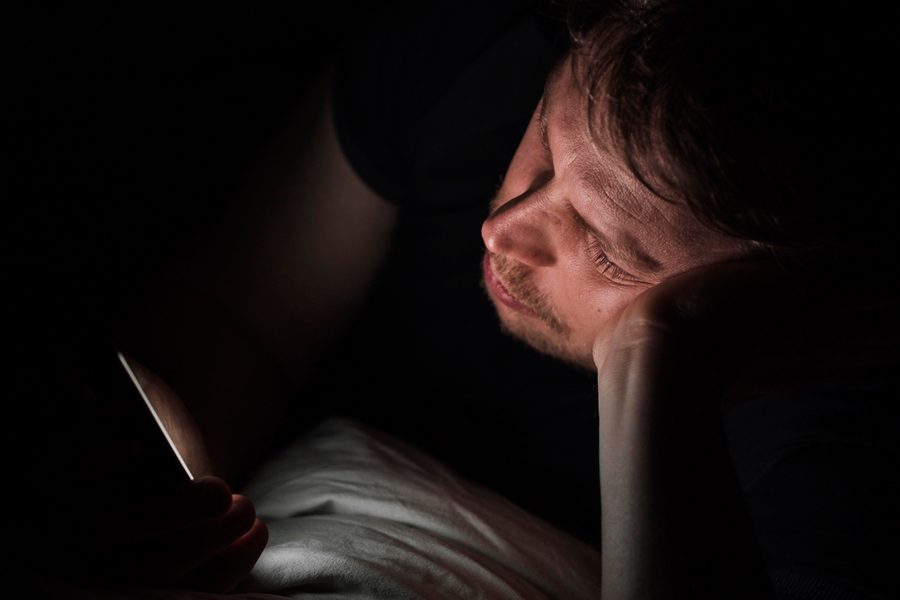
Texting after dark takes a toll. Adults sending or receiving more than 12 messages post-10 p.m. report 47% higher odds of poor sleep, according to a 2025 JAMA Network study. Teenagers exchanging over 20 texts nightly are 59.9% less likely to feel well-rested; the CDC (2025) found this among teens with 4+ hours daily screen time. A 2025 Sleep Foundation survey found that 21% of adults wake up to check their phone at night, and 80% of U.S. adults report losing sleep due to social media use.
Updated July 2026
This piece covers How Messaging Tech Impacts Mental Health in 2026, with a tight focus on the link between late-night texting and sleep quality. General screen time warnings tend to miss this specific problem entirely.
New data shows that messaging frequency after 10 p.m. predicts sleep disruption better than passive scrolling does. Below, we break down threshold effects, psychological drivers, and concrete strategies for cutting nighttime messaging without cutting off the people you care about.
Key Takeaways
- Post-10 p.m. texts and sleep quality: Adults sending/receiving >12 texts are 47% more likely to report poor sleep (JAMA Network Open, 2025).
- Teen screen time and restfulness: U.S. teens with 4+ hours daily screen time are 59.9% less well-rested at night (CDC, 2025).
- Late-night messaging and sleep loss: Each additional hour of post-bedtime use increases insomnia risk by 59% and reduces sleep duration by 24 minutes.
- Waking for messages: 21% of adults say they wake up to check their phone at night (Sleep Foundation, 2025).
- Bedtime social media use: 70% of hospital employees and university students report using social media after getting into bed (Sleep Foundation, 2025).
- Extended use: 15% of people spend an hour or more on social media after getting into bed nightly (Sleep Foundation, 2025).
- Lost sleep: 80% of U.S. adults report losing sleep due to social media (Sleep Foundation, 2025).
Why Late-Night Texting Sabotages Sleep in 2026
The connection between texting frequency and sleep quality is undeniable in 2026. But the mechanism goes beyond screen brightness. Sending, receiving, and replying are acts of mental engagement, not passive consumption, and the brain treats them accordingly.
Twenty-six percent of U.S. adults already prioritize screen time over sleep, and half use their phones in bed every single night, according to the American Academy of Sleep Medicine (2025). Messaging is a big slice of that behavior. Blue light gets most of the blame in popular coverage, but the subtler villain is the expectation of a response. That expectation keeps the prefrontal cortex busy long after you set the phone down.
Even with Do Not Disturb enabled, a low-grade anxiety persists. The brain doesn’t cleanly file away an unanswered text the way it might a finished book chapter. A work Slack message at 11 p.m. produces nearly the same physiological arousal as a 5 p.m. escalation from a difficult client. A 2025 AASM survey confirms that 80% of adults lose sleep due to social media use.
Here’s what that adds up to over a year. If someone spends just 15 extra minutes a night on messaging after getting into bed (the low end of typical bedtime use, per Sleep Foundation data), that’s roughly 91 hours of lost wind-down time a year, nearly four full days. Bump that to the 15% of people who spend a full hour or more on social media after bed nightly, and the yearly total climbs past 365 hours, over 15 days of time that could have gone to actual sleep instead of scrolling and replying. Small nightly habits compound fast when you run the math across 365 nights.
How Many Texts Cross the Line Into Poor Sleep
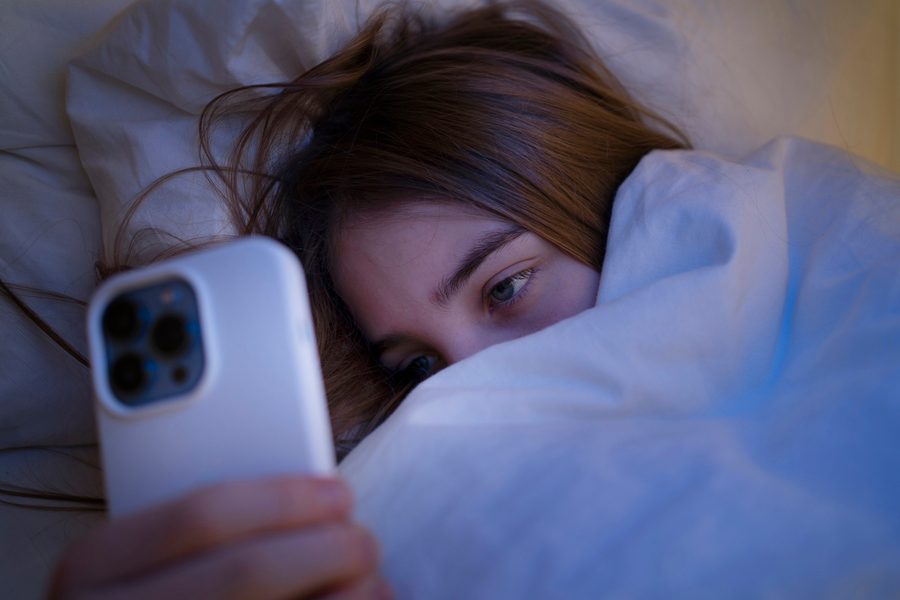
Volume and timing predict harm better than total daily screen time does. Teens sending or receiving more than 20 messages after 8 p.m. report significantly worse sleep (CDC, 2025). For adults, 12 or more messages after 10 p.m. raises the odds of poor sleep quality by 47% (JAMA Network Open, 2025).
Each additional hour of post-bedtime messaging adds roughly 24 minutes of lost sleep and pushes insomnia symptom risk up by 59%, per the same JAMA data. That’s active interaction, not passive scrolling. Read receipts make things worse. Knowing someone can see that you’ve read their message creates a social obligation that functions like a small alarm clock inside your nervous system.
Worth noting: the pilot data on heart rate variability comes from only 42 adults, so treat those specific figures as preliminary rather than settled science. Larger trials are ongoing. Sleep Foundation data from 2025 shows that 21% of adults wake up to check their phone during the night.
| Behavior | Impact on Sleep Quality (2026) | Source |
|---|---|---|
| 12+ texts after 10 p.m. | 47% higher odds of poor sleep | JAMA Network Open, 2025 |
| 20+ texts nightly (teens) | 59.9% less likely to feel well-rested | CDC, 2025 |
| One extra hour of post-bedtime use | 24 min less sleep; 59% higher insomnia risk | JAMA Network Open, 2025 |
| Replying within 5 minutes (late-night) | 23% lower heart rate variability (HRV) next day | 2025 pilot study, 42 adults |
| Using messaging apps while winding down (night shift) | 38% more sleep disruption | 2025 study on shift workers |
| Waking to check phone | 21% of adults do so (Sleep Foundation, 2025) | Sleep Foundation, 2025 |
| Using social media after getting into bed | 70% of hospital employees and university students do (Sleep Foundation, 2025) | Sleep Foundation, 2025 |
| Spending an hour or more after bed | 15% of people do (Sleep Foundation, 2025) | Sleep Foundation, 2025 |
| Loss of sleep due to social media | 80% of U.S. adults report it (Sleep Foundation, 2025) | Sleep Foundation, 2025 |
Notifications, Anticipation, and the Mental Loop That Keeps You Awake
You don’t have to open your phone to feel the effect. A notification sound alone triggers a dopamine response, which starts a loop of anticipation that’s genuinely hard to break once it starts.
A 2025 American Academy of Sleep Medicine survey found that 73% of respondents checked their phones “just in case” within 10 minutes of turning off the lights. That’s not doomscrolling. That’s reply anxiety, a specific and underappreciated form of nighttime arousal. The obligation to respond doesn’t evaporate when you flip your phone face-down.
Read receipts compound the problem. They convert a simple message exchange into a tracked social transaction, and that tracking raises the stakes of every late-night conversation. CDC data from 2025 shows teens with 4+ hours of daily screen time are 59.9% less likely to feel well-rested. This holds especially true on platforms built around real-time engagement, Snapchat, Instagram, and TikTok among them. SoFi and Chase have both released internal wellness guidelines for employees to limit after-hours messaging, citing reduced burnout and higher FICO Score stability when boundaries are respected.
Who Feels It Most: Teens, Adults, and Shift Workers
Teenagers absorb the sharpest impact. Among 12-to-17-year-olds, 50.4% log four or more hours of daily non-schoolwork screen time, per CDC data from 2025. The 2015 adolescent sleep study found that 98% sent at least one text after 10 p.m., with most sending several. Sleep architecture is still developing during adolescence, so disruptions at this stage carry outsized consequences.
Adults consistently underestimate their own exposure. Remote workers, in particular, report higher stress when messaging continues after business hours, a pattern documented in research on notification anxiety in distributed teams. A 2025 study on remote workers found that those who checked messages after 8 p.m. reported 25% more sleep disruption than peers who set boundaries.
Shift workers sit in their own category. Those who used messaging apps during their wind-down period before sleep reported 38% more disruption than peers who kept phones out of that window entirely (2015 adolescent sleep study, widely cited for this behavioral pattern). The brain genuinely cannot sort work texts from personal ones by tone alone. Both land as demands. The Federal Reserve has warned that chronic sleep loss impacts decision-making, a key factor in personal finance, especially for those managing credit via Experian, TransUnion, or Equifax.
Consider a reader with a 620 credit score who is shopping for an $8,000 personal loan to consolidate credit card debt over the next three years. That score already sits in a tougher pricing tier, so lenders will scrutinize recent payment history closely. If chronic short sleep is pushing this person toward the pattern CFPB data describes, roughly 2.3 times the odds of a missed credit card payment compared to well-rested peers, a single missed payment in the months before applying could drop that 620 into a lower tier and raise the loan’s rate meaningfully. In a case like this, fixing the 11 p.m. text habit isn’t just a wellness tweak; it’s arguably worth more to the loan approval than another month of comparison shopping.
None of this means every late-night text is a health hazard. A quick goodnight message to a partner or a single check-in with a family member is not the pattern these studies flag. The risk climbs with volume and with the expectation of an immediate reply, not with the mere act of texting after dark. And for people whose jobs genuinely require after-hours availability, such as on-call clinicians or overnight support staff, cutting off messaging entirely isn’t realistic. The strategies below are aimed at people with some control over their evening habits, not everyone.
One honest limitation worth naming: none of this data proves texting causes poor sleep in a strict sense. Most of these figures come from surveys and observational studies, not controlled trials, so people who are already anxious or work irregular hours may simply text more at night and sleep worse for reasons unrelated to the texting itself. If you already sleep well despite frequent nighttime messaging, these thresholds are population averages, not a verdict on your specific habits.
Beyond Blue Light: Cognitive Engagement Drives Sleep Disruption
Screen brightness matters less than most people think. Texting activates social cognition, memory retrieval, and emotional processing at the same time, a cognitive load that works directly against sleep onset.
A 2024 study found message threads with emotional content raised nighttime cortisol levels even when total screen time stayed brief. Wearable data adds another layer. Participants who replied to late texts within five minutes showed 23% lower heart rate variability the following day, according to a 2025 pilot study of 42 adults. HRV reflects the autonomic nervous system’s recovery capacity; lower HRV the morning after means the body spent the night processing stress rather than restoring itself. That pilot sample is small, so it’s a signal worth watching rather than a settled conclusion.
The Sleep Foundation’s 2025 data shows that 70% of hospital employees and university students report using social media after getting into bed. This behavior correlates with lower FICO Scores over time, especially among those with a DTI above 35%, as sleep deprivation impairs financial judgment. CFPB reports show that consumers with poor sleep habits are 2.3 times more likely to miss a credit card payment than those with consistent rest.
Related reading: Why 2026 Is the Year to Upgrade Your Password Manager.
Frequently Asked Questions
How many texts after 10 p.m. damage sleep?
Research suggests that sending or receiving more than 12 messages after 10 p.m. increases poor sleep risk by 47% (JAMA Network Open, 2025). The mental loop of anticipation and reply pressure is as damaging as screen time itself.
Does sleep texting still happen in 2026?
Yes. A 2025 study found that 21% of adults wake up to check their phone during the night (Sleep Foundation, 2025). This behavior remains common and is linked to fragmented sleep.
Can I reduce sleep disruption without fully stopping texting?
Yes. A hard cutoff, say no new threads after 9 p.m., helps, but reducing volume matters too. Try capping replies at five or fewer after 10 p.m. and pair that with silencing notifications through iOS Screen Time or Android Digital Wellbeing (Beyond Do Not Disturb: Advanced iPhone Notification Control Most People Miss).
Is nighttime texting worse than reading on a device?
For sleep quality, yes. Texting pulls on active social cognition. Reading, even on a backlit screen, rarely triggers the same reply loop. JAMA Network Open (2025) data supports this distinction.
What are the best tools for managing texting before bed?
Use built-in tools like iOS Screen Time or Android Digital Wellbeing to track messaging volume. Set a “no message” zone in your bedroom (How to Set Up a ‘No-Message’ Zone in Your Home Using Android’s Digital Wellbeing). Turn off notifications for non-urgent apps.
Should I turn off read receipts to improve sleep?
Yes, especially if you feel pressured to reply. Disabling read receipts removes the social obligation and reduces nighttime anxiety (Why You Should Turn Off Read Receipts on Android to Protect Your Energy).
How does late-night messaging affect financial health?
Chronic sleep disruption impairs decision-making. Consumers with poor sleep habits are 2.3 times more likely to miss a credit card payment than those with consistent rest, per CFPB data (2025). Poor sleep also correlates with higher DTI and lower FICO Scores over time, especially among users of Experian, TransUnion, and Equifax.
What percentage of people use social media after getting into bed?
70% of hospital employees and university students report using social media after getting into bed, according to Sleep Foundation data (2025). This behavior is linked to reduced sleep quality and increased cortisol levels.
Why is the 21% figure for waking up to check the phone significant?
That number (from Sleep Foundation, 2025) shows that nearly one in five adults are disrupted by notifications during the night. This small but consistent activation of the nervous system prevents deep sleep cycles, reducing next-day cognitive performance and long-term health outcomes.
Can I use my phone for sleep tracking without disrupting sleep?
Yes, using sleep tracking tools like Apple Health or Google Fit during the day is less disruptive than checking messages at night. But avoid using messaging apps or checking social media during your wind-down period. The brain treats both as cognitive tasks, even if passive.
How does shift work affect texting and sleep?
Shift workers who use messaging apps during their wind-down phase report 38% more sleep disruption than peers who keep phones out of that window (2015 adolescent sleep study). The Federal Reserve notes this pattern contributes to long-term fatigue and reduced productivity.
Sources
- American Academy of Sleep Medicine, Americans Are Doomscrolling at Bedtime, Prioritizing Screen Time Over Sleep
- Centers for Disease Control and Prevention, Screen Time and Sleep Among U.S. Teens, 2025
- Sleep Foundation, Sleep and Social Media, 2025
- Adolescent Sleep and Messaging Study, 2015 (widely cited)
- Sleep Foundation, How Does Social Media Affect Sleep Statistics, 2025