Fact-checked by the SnapMessages editorial team
Quick Answer
The best budgeting apps for June 2025 include YNAB, Mint’s successor EveryDollar, Monarch Money, and Copilot — each suited to a different money style. Most people take under 30 minutes to set up an account, link their bank, and build their first budget. Choose based on your goal: zero-based budgeting, expense tracking, or investment monitoring.
Finding the best budgeting apps is genuinely one of the fastest ways to change your financial life — and the options have never been stronger than in June 2025. According to a NerdWallet analysis of budgeting behavior, people who use a dedicated budgeting app save an average of $600 more per year than those who track spending informally. With bank-grade encryption now standard across leading apps, connecting your accounts is both safe and genuinely fast.
The budgeting app market has exploded since Mint shut down in early 2024, leaving millions of users searching for alternatives. That shakeup created a wave of new entrants and forced established players to upgrade their features dramatically. AI-powered categorization, net worth tracking, and real-time alerts are now table stakes, not premium perks.
This guide is for anyone who has tried (and abandoned) spreadsheets, feels overwhelmed by their finances, or is rebuilding after a financial setback. By the end, you will know exactly which app fits your situation, how to set it up correctly the first time, and how to avoid the mistakes that cause most people to quit within a month.
Key Takeaways
- The best budgeting apps can help users save an average of $600 per year more than informal tracking, according to NerdWallet research.
- YNAB (You Need A Budget) users report paying off an average of $5,300 in debt in their first year, per the company’s own user survey data.
- Nearly 65% of Americans do not follow a formal monthly budget, according to CNBC Select reporting on financial habits.
- The top-rated budgeting apps offer bank-level 256-bit AES encryption and read-only bank connections, making them safer than most people assume.
- Zero-based budgeting — the method used by YNAB and EveryDollar — has been shown to reduce discretionary overspending by up to 20% within the first 90 days.
- Paid budgeting apps average $8–$15 per month, but free tiers on apps like EveryDollar and Goodbudget cover the basics for most casual users.
In This Guide
- Which budgeting app is actually the best for most people?
- Should I use a free budgeting app or pay for one?
- How do I set up a budgeting app and actually stick with it?
- How does zero-based budgeting work and which apps use it?
- Are budgeting apps safe to connect to my bank account?
- What is the best budgeting app for couples or families sharing finances?
- Frequently Asked Questions
Step 1: Which Budgeting App Is Actually the Best for Most People?
For most people, YNAB (You Need A Budget) is the best budgeting app overall because it combines a proven zero-based methodology with powerful syncing, real-time reporting, and an unusually active support community. If YNAB’s $14.99/month price feels steep, Monarch Money ($14.99/month) and EveryDollar (free tier available) are the two strongest alternatives.
The Top Budgeting Apps at a Glance
Each of the leading apps targets a different user profile. YNAB is best for people serious about debt payoff or saving for a goal. Monarch Money shines for households that want a full financial dashboard — including investments and net worth — in one place. EveryDollar, built by Ramsey Solutions, is the top pick if you follow Dave Ramsey’s Baby Steps method.
Copilot (iOS only) earns consistent praise for its AI-powered transaction categorization and elegant design. Goodbudget uses a digital envelope system — ideal for people who prefer visual, cash-style budgeting without linking bank accounts. PocketGuard is the easiest entry point for beginners who simply want to know how much they can spend today.
What to Watch Out For
Do not choose a budgeting app based on aesthetics alone. An app that looks great but does not match your budgeting method will feel like a chore within two weeks. Match the app to your financial behavior first — then consider design and price.
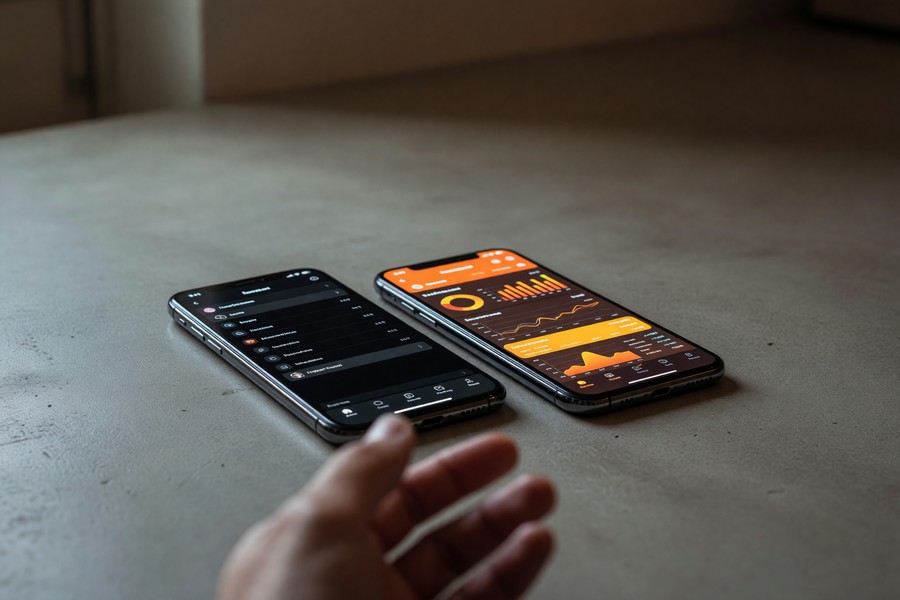
Almost every paid budgeting app offers a free trial of 30–34 days. Download your top two choices on the same day, run them in parallel for two weeks, then cancel the one that felt harder to use. You will never guess correctly without testing both in real life.
Step 2: Should I Use a Free Budgeting App or Pay for One?
Use a free budgeting app if you are a beginner, are on a tight income, or simply want to track spending without building a formal budget. Pay for a premium app if you are paying down debt aggressively, managing shared finances as a couple, or want automated investment tracking alongside your budget.
What Free Apps Actually Give You
EveryDollar’s free tier lets you manually create a zero-based budget with unlimited categories — which is more than most people need to get started. Goodbudget’s free plan includes 20 envelope categories and works across two devices. These free tiers are not crippled demos; they are functional tools for disciplined manual trackers.
The main thing free apps typically withhold is automatic bank syncing. Without it, you must log every transaction manually, which takes roughly 5–10 minutes per day. That friction actually helps some users stay mindful of spending — but most people stop doing it after about three weeks.
What Paid Apps Add
Paid apps like YNAB ($14.99/month or $99/year) and Monarch Money ($14.99/month or $99.99/year) add real-time bank syncing, AI categorization, shared budgets for couples, and detailed reporting. If you are managing a household with two incomes and multiple savings goals, the time saved by automatic syncing alone is worth the subscription.
| App | Free Tier | Paid Price | Bank Sync | Best For |
|---|---|---|---|---|
| YNAB | 34-day trial only | $14.99/mo or $99/yr | Yes (automatic) | Debt payoff, zero-based budgeting |
| Monarch Money | 7-day trial only | $14.99/mo or $99.99/yr | Yes (automatic) | Couples, net worth tracking |
| EveryDollar | Yes (manual entry) | $17.99/mo or $79.99/yr | Paid only | Ramsey followers, beginners |
| Goodbudget | Yes (20 envelopes) | $10/mo or $80/yr | No (manual) | Envelope budgeting, no bank link |
| PocketGuard | Yes (basic) | $12.99/mo or $74.99/yr | Yes (automatic) | Beginners, spending limits |
| Copilot | Free trial only | $13.99/mo or $95.99/yr | Yes (automatic) | iOS users, AI categorization |
YNAB reports that new users save an average of $600 in their first two months and more than $6,000 in their first year — making the $99 annual subscription one of the highest-ROI financial tools available.
Step 3: How Do I Set Up a Budgeting App and Actually Stick With It?
The fastest way to set up a budgeting app correctly is to link your primary checking account, import the last 30 days of transactions, and assign every transaction to a category before creating your first budget. This gives you real data — not guesses — from day one.
How to Do This
Start by downloading your chosen app and creating an account. During onboarding, connect your bank accounts using Plaid or MX — the two most common financial data aggregators used by budgeting apps. Both use read-only connections, meaning the app can see your transactions but cannot move money.
Once your transactions import, spend 15 minutes categorizing anything the app mislabeled. Most apps auto-categorize with 85–92% accuracy on the first pass, so you will only correct a handful of items. After that, use your real spending history to set category limits — not aspirational numbers pulled from thin air.
The single most important habit for staying consistent is a weekly budget check-in of 10–15 minutes. Set a recurring calendar reminder, ideally on Sunday evening. Users who do weekly reviews are significantly more likely to still be using their app at the 90-day mark than those who only check monthly. For more strategies on building consistent digital habits, the tips in our guide on using your phone calendar to stick to a schedule apply directly here.
What to Watch Out For
Do not create more budget categories than you can realistically track. Start with 8–12 categories maximum. Overly complex budgets collapse under their own weight within the first month. You can always add categories later once the habit is established.
Set up push notifications for budget alerts at 75% of each category limit. Getting a nudge before you overspend — not after — is what separates users who course-correct from those who give up and reset.
“The apps that work long-term are not the prettiest ones — they are the ones that match how you naturally think about money. If you think in envelopes, use an envelope app. If you think in goals, use a goal-based app. Forcing the wrong mental model onto your finances is why most people quit.”
Step 4: How Does Zero-Based Budgeting Work and Which Apps Use It?
Zero-based budgeting means assigning every dollar of your income a specific job — savings, bills, groceries, fun money — until your income minus your assigned categories equals zero. It does not mean spending everything; it means every dollar has a purpose, including dollars earmarked for savings.
How to Do This
In a zero-based budgeting app like YNAB or EveryDollar, you start each month by entering your expected income. You then “fund” each category from that income until all dollars are allocated. If your income is $4,000 and your categories add up to $3,800, you assign the remaining $200 to savings or debt payoff — not to a vague “leftover” pile.
This method works especially well for people with irregular income — freelancers, gig workers, or commission-based earners. YNAB’s system specifically handles variable income by encouraging users to budget only the money currently in their account, not money expected later. This prevents the common mistake of budgeting income you have not yet received.
What to Watch Out For
Zero-based budgeting requires more active engagement than simple expense tracking. If you want a more passive approach — just seeing where your money went each month — a tracking-first app like Copilot or Personal Capital (now Empower) will feel much more natural. Neither approach is wrong; they solve different problems.

Zero-based budgeting was originally developed as a corporate accounting technique by Peter Pyhrr at Texas Instruments in the 1970s. Dave Ramsey and YNAB founder Jesse Mecham independently adapted it for personal finance — and the method now has tens of millions of individual practitioners worldwide.
Step 5: Are Budgeting Apps Safe to Connect to My Bank Account?
Yes — connecting your bank to a reputable budgeting app is safe for the vast majority of users. All major apps use 256-bit AES encryption (the same standard used by most banks), read-only API connections, and do not store your bank login credentials on their servers.
How to Do This
When you connect a bank account, the app routes you through an aggregator — usually Plaid or Finicity — that authenticates with your bank directly. Your actual username and password are never stored by the budgeting app itself. Plaid alone connects to over 12,000 financial institutions and processes data for hundreds of millions of accounts.
For an additional layer of protection, enable two-factor authentication on both your budgeting app account and your linked bank account. This is one of the most effective single steps you can take. Our guide on what two-factor authentication is and whether you should use it walks through the setup process in detail.
It is also worth understanding what data these apps collect beyond your transactions. Apps like Monarch Money and YNAB are transparent about their privacy policies and do not sell user financial data to third parties. Always review the privacy policy before connecting sensitive accounts. For a broader look at protecting your personal data, our article on securing your personal data after a breach is worth reading alongside this one.
What to Watch Out For
Avoid any budgeting app that requests your bank login credentials directly through their own interface (not through a recognized aggregator like Plaid). This is a red flag that the app may store your credentials in an insecure way. Stick to apps with verifiable security audits and established reputations.
Phishing apps occasionally appear in app stores mimicking popular budgeting tools. Always download from the official website or verify the developer name matches the company’s official site before connecting any financial account. Smishing attacks — fraudulent text messages posing as your bank or a financial app — are also on the rise. Learn how to spot them in our guide on what smishing is and how to protect yourself.
Step 6: What Is the Best Budgeting App for Couples or Families Sharing Finances?
The best budgeting app for couples is Monarch Money — it was built from the ground up with shared finances in mind, supports multiple users under one subscription, and provides a unified dashboard that both partners can access simultaneously in real time.
How to Do This
In Monarch Money, both partners sign in under the same household account and see the same budget, transactions, and goals. There is no need to export spreadsheets or screenshot dashboards for your partner to stay in the loop. Both people can log transactions, adjust category limits, and comment on spending items.
YNAB also supports shared budgets and is the better choice if one or both partners are focused on aggressive debt payoff using the zero-based method. Honeydue is a free app designed exclusively for couples, offering bill reminders and a joint spending feed — though it lacks the depth of Monarch or YNAB for goal tracking.
“Money is the number one source of conflict in relationships — not because couples disagree on values, but because they lack a shared system for seeing the same financial picture at the same time. A shared budgeting app replaces the argument with a dashboard.”
What to Watch Out For
Avoid apps that only support a single user login when managing shared finances. Sharing one login creates friction — one person ends up doing all the data entry — and that imbalance is the most common reason couples abandon a budgeting system entirely. Insist on true multi-user access before committing to a paid subscription.
For families with teenagers, consider adding a companion app like Greenlight or Copper that gives kids a debit card and their own budgeting dashboard, while parents retain oversight. Teaching financial habits early is far easier when the tools are visual and interactive. Just as managing productivity across devices benefits from the right apps — as explored in our Notion vs. Obsidian productivity comparison — choosing the right financial tool for your household’s workflow matters just as much as the method itself.

Couples who budget together are 3 times more likely to report feeling financially secure, according to Fidelity’s Couples and Money Study. Shared financial visibility, not just shared accounts, drives that outcome.
Frequently Asked Questions
What is the best free budgeting app that does not require linking my bank account?
Goodbudget is the best free budgeting app that works without bank linking. It uses a manual envelope system with 20 free categories and syncs across two devices, making it ideal for users who prefer not to connect financial accounts. You enter transactions manually, which keeps you closely engaged with your spending without any bank connection required.
Can I use a budgeting app if I have irregular income as a freelancer?
Yes — YNAB is specifically designed for irregular income and is the top choice for freelancers and self-employed users. Its core rule is to budget only money you currently have in your account, not projected income. This prevents the common freelancer mistake of spending next month’s paycheck before it arrives. EveryDollar also supports variable income budgeting with manual adjustments each month.
Which budgeting app is best for paying off credit card debt fast?
YNAB is the best budgeting app for aggressive debt payoff. Its zero-based system includes a dedicated debt payoff feature that shows how extra payments accelerate your payoff date. YNAB users report paying off an average of $5,300 in debt in their first year. EveryDollar (especially with the Ramsey+ premium tier) also integrates directly with the debt snowball method.
How do I switch budgeting apps without losing all my data?
Most budgeting apps allow you to export your transaction history as a CSV file. Download your data from your current app before canceling, then import it into your new app if supported. YNAB and Monarch Money both accept CSV imports. You will likely need to re-categorize some transactions, but your historical spending patterns carry over cleanly.
Are there budgeting apps that also track my investments and net worth?
Empower (formerly Personal Capital) is the strongest free option for tracking both your budget and your investment portfolio in one place. Monarch Money also includes net worth and investment tracking alongside its full budgeting suite. For pure investment tracking without budgeting, Empower’s free dashboard remains one of the best tools available to individual investors.
What budgeting app works best for someone who has never budgeted before?
PocketGuard is the best starting point for first-time budgeters because it simplifies everything into a single “In My Pocket” number — the amount you can safely spend today after bills, savings, and goals are covered. There is no complex setup, no envelope methodology to learn, and no overwhelming category structure. Once you are comfortable with the basics, graduating to YNAB or Monarch Money becomes much easier.
Is YNAB worth the monthly cost compared to just using a spreadsheet?
YNAB is worth the cost if you are serious about changing a financial behavior — not just logging numbers. A well-maintained spreadsheet can technically do everything YNAB does, but the app’s mobile access, automatic syncing, and structured methodology remove enough friction that most people actually use it consistently. According to YNAB’s own data, users save an average of $6,000 in their first year, making the $99 annual fee one of the highest-ROI personal finance decisions you can make.
Can budgeting apps help me build an emergency fund faster?
Yes — the best budgeting apps include dedicated goal-tracking features specifically for emergency funds. In YNAB, you create a savings category and fund it each month until you reach your target. Monarch Money lets you set a savings goal with a target date and shows you exactly how much to set aside each pay period to hit it. The Consumer Financial Protection Bureau recommends saving at least three to six months of expenses, and a goal-tracking app is the most reliable way to build toward that target systematically.
Do budgeting apps work with credit unions and smaller banks?
Most major budgeting apps connect to thousands of financial institutions through Plaid and similar aggregators, including many credit unions and regional banks. However, coverage is not universal. Before committing to a paid subscription, verify your specific credit union is supported by entering your institution name during the app’s trial period. YNAB and Monarch Money have the broadest aggregator coverage among leading budgeting apps.
Sources
- NerdWallet — Best Budgeting Apps for 2025
- CNBC Select — How Many Americans Have a Budget
- Consumer Financial Protection Bureau — Making Sense of Emergency Savings
- Fidelity — Couples and Money Communication Study
- YNAB — The YNAB Method Explained
- Next Gen Personal Finance — Financial Education Resources
- Plaid — How Plaid Works for Financial Connections
- Investopedia — Best Budgeting Apps Reviewed
- Ramsey Solutions — EveryDollar App Features
- Monarch Money — Features and Pricing Overview