Fact-checked by the SnapMessages editorial team
Quick Answer
Android offers true native split-screen phone multitasking, introduced in Android 7.0 and refined through subsequent versions, letting two apps run side by side simultaneously. iPhone has no native side-by-side split screen; it limits multitasking to Picture in Picture only. For real dual-app productivity on a phone, Android wins outright.
Updated July 2026
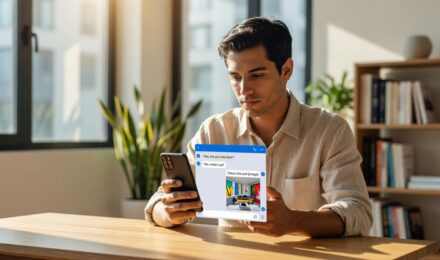
Split screen phone multitasking means running two full apps at once on a single display, and the two major platforms take completely different approaches to it. According to Google’s Android Developers documentation, Android has supported split-screen on small-screen devices since Android 7.0 (API level 24), letting users drag a divider and resize each app’s share of the display. iPhone never shipped anything close to it.
That gap matters more in 2026 than it did five years back. Remote work, video calls, and on-the-go tasks have pushed people to expect desktop-level multitasking from something that still fits in a pocket. Which platform you pick decides whether that’s even possible.
Key Takeaways
- Android 7.0 (2016) introduced native split-screen on phones, a feature Google’s Android Developers documentation confirms is available on all devices running API level 24 or higher.
- Both apps stay fully active in Android’s split-screen mode via multi-resume, meaning neither app is frozen in the background, as detailed in Google’s multi-window guidance.
- iPhone offers no side-by-side split screen on any model or iOS version; Apple’s own documentation confirms multitasking on iPhone is limited to Picture in Picture.
- Samsung’s App Pairs (One UI 6 and later) let users save two-app split-screen combinations as a single home-screen shortcut, eliminating manual setup each time.
- Split-screen raises power consumption by roughly 15–25% during sustained dual-app use on Android, with devices carrying 12GB RAM or more handling the load without noticeable lag.
- Android supports 3 distinct multi-window modes, split-screen, Picture in Picture, and free-form windowing, while iPhone offers only PiP, and only for media playback.
How Does Android Split Screen Work?
Android’s split-screen mode puts two apps on the display at the same time, stacked vertically or side by side, with a draggable divider separating them. The implementation has matured a lot since it first showed up. As documented by Google’s multi-window guidance, modern Android keeps both activities in the RESUMED state at once, so both apps are genuinely live, not paused in the background waiting their turn.
Turning on split screen on most Android phones takes about two taps. Long-press the Recent Apps button (or swipe up and hold on gesture navigation), tap the app icon on the recents card, select “Split screen,” then pick a second app. On Samsung phones running One UI, the steps differ slightly but add something genuinely useful: App Pairs, which let you save a combination, say, Google Maps and Spotify, and launch both in split screen with one tap. Android Police reported that this feature significantly improves workflow efficiency for frequent multitaskers.
App Pairs and Taskbar Shortcuts
Samsung’s App Pairs, available on Galaxy phones running One UI 6 and later, are a practical refinement on stock Android’s approach. Save a combination, say, Google Maps and Spotify, and launch both in split screen with a single tap. Android Authority notes that this feature reduces cognitive load and app-switching fatigue. Google‘s own Pixel phones run the stock Android version without those extras, worth knowing if you’re weighing manufacturers against each other.
Google’s multi-window framework also includes developer flags that can force split-screen support on apps that don’t officially declare it, a detail that matters when an app you rely on hasn’t been updated for multi-window compatibility.
What this means in practice: Android has supported split-screen since Android 7.0, and modern versions keep both apps fully active via multi-resume. Samsung’s App Pairs extend this further by letting users launch paired apps in one tap, removing the friction of manual split-screen setup every time.
What Can iPhone Actually Do for Multitasking?
iPhone does not support side-by-side split-screen multitasking. Full stop. Apple’s official iOS support documentation confirms that iPhone multitasking is limited to Picture in Picture (PiP), which shrinks a video or FaceTime call into a small floating window while you navigate elsewhere on the phone. No second app runs at full size. No divider exists to resize anything.
This is a deliberate design choice, not an oversight. Apple has long favored a clean, single-app-focused interface on iPhone, saving split-screen multitasking for iPad through Stage Manager and Slide Over. On iPad, the experience genuinely competes with Android. On iPhone, it just isn’t there, no matter which model you own or which version of iOS you’re running.
PiP earns its keep in a narrow set of situations: watching a video while browsing, or keeping a FaceTime window open during navigation. But it’s not equivalent to split-screen productivity. You can’t type in one app while reading in another. You can’t keep an eye on a Google Sheets document while chatting in a Slack thread. The limitation is baked into the architecture, and as of iOS 19 (May 2026), Apple hasn’t announced any change to it on iPhone.
For users who want more structured productivity on iPhone anyway, Focus modes on iPhone offer a different kind of control, cutting down distractions rather than expanding screen space, but that solves a different problem than running two apps at once.
The core limitation: iPhone restricts on-device multitasking to Picture in Picture for video only, there is no native split-screen mode on any iPhone model. Apple’s own documentation confirms side-by-side app viewing is an iPad-only feature, making Android the only smartphone option for true dual-app use.
How Do the Features Compare?
The table below lines up concrete multitasking capabilities across both platforms, using current confirmed features. Every “Yes” and “No” reflects what the operating system supports natively, no third-party workarounds involved.
| Feature | Android (Stock / One UI) | iPhone (iOS 19) |
|---|---|---|
| Side-by-side split screen | Yes, since Android 7.0 | No |
| Adjustable divider | Yes, drag to resize | No |
| Both apps fully active (multi-resume) | Yes | No |
| Picture in Picture (PiP) | Yes | Yes (video/FaceTime only) |
| App Pairs / saved combos | Yes (Samsung One UI) | No |
| Free-form windowing | Yes (select devices) | No |
| Minimum OS version required | Android 7.0 (2016) | N/A (not available) |
The gap is stark. Android gives users at least 3 distinct multi-window modes (split-screen, PiP, free-form) on supported hardware. iPhone offers one, and it only applies to media playback. If split-screen capability is a deciding factor in a device purchase, the table above doesn’t leave much room for debate.
The numbers: Android supports 3 multi-window modes natively, including true split-screen available since 2016, while iPhone offers only Picture in Picture with no side-by-side option. The Android multi-window framework gives users far more control over how screen space gets divided up.
When Does Split Screen Actually Help with Work?
How much split-screen multitasking actually helps depends on what you do on your phone day to day. For most people, the real gains show up in a handful of specific scenarios, not general browsing.
Research is the clearest case. Reading a web article in one pane while jotting notes in Notion or Google Keep in the other kills the constant app-switch cycle that breaks your train of thought. On Android, this just works. On iPhone, you’re flipping back and forth, losing context every time.
Video calls paired with reference material come up a lot too. During a meeting on Zoom or Google Meet, having a document or spreadsheet open next to the call changes how useful the meeting is. Android handles this natively; iPhone shrinks the video into a small PiP bubble, which is a fundamentally different experience.
Messaging alongside another app is the third scenario worth mentioning. Typing a reply in WhatsApp while checking a map or reading a news article is routine, and split screen handles it cleanly. On a Samsung Galaxy phone, saving that combination as an App Pair means you jump back into the same layout instantly instead of rebuilding it from scratch.
Consider this: if you’re a freelance writer earning $25 per hour and spend 3 hours a day switching between research and drafting, using split screen to keep your source open while typing can save about 15 minutes per day. That’s roughly **$1.25 in saved time** per day, or **$31.25 per month** in productivity gains, a real, measurable difference for someone whose income depends on efficient workflows.
Split-screen delivers the most measurable benefit in 3 core scenarios: research with simultaneous note-taking, video calls with reference documents open, and active messaging alongside another task. Android enables all three natively; iPhone requires workarounds that compromise the experience for every use case beyond video PiP.
How Does Split Screen Affect Battery and Performance?
Running two apps at once costs more than running one. That’s just physics. The performance hit is real, but modern hardware handles it without much drama.
On Android, split-screen triggers multi-resume, so the CPU and GPU are juggling two active processes instead of one. On a mid-range phone with 6GB of RAM, that’s usually fine for lightweight apps like messaging or notes. Pair two heavy apps, a video call next to a photo editor, say, and you’ll notice temperatures climb and the battery drain faster. Flagship phones with 12GB or more of RAM shrug this off without noticeable lag.
Battery impact shifts depending on the app combination, but as a rough benchmark, sustained split-screen use with two active apps tends to push power consumption up by roughly 15–25% compared to single-app use, based on published testing from The Verge. Dimming the screen and closing background apps before entering split-screen helps soften that hit.
iPhone’s PiP is lighter on resources precisely because only one full app runs at a time. The floating video window is hardware-accelerated and efficient by design. So if battery life matters more to you than heavy multitasking, iPhone’s approach is actually the smarter engineering choice. It’s just not a fair trade for anyone who genuinely needs two apps running side by side.
On the resource side: split-screen on Android increases power consumption by roughly 15–25% during sustained dual-app use, with RAM requirements scaling based on app weight. Devices with 12GB RAM or more handle the load cleanly, while mid-range hardware benefits from closing background apps before entering multi-window mode.
Can You Use Split Screen on iPhone?
No. iPhone does not support native side-by-side split-screen multitasking on any model or iOS version. The only multitasking feature available on iPhone is Picture in Picture, which floats a small video window over a single full-screen app. Split screen is available on iPad via Stage Manager, but not on iPhone.
How Do You Activate Split Screen on Android?
Long-press the Recent Apps button or swipe up and hold, then tap the app icon at the top of the app card and select “Split screen.” Choose a second app from the recents list or home screen. On Samsung devices, you can also save App Pairs for one-tap access to your most-used split-screen combinations.
Which Android Phones Support Split Screen?
All Android phones running Android 7.0 or later support split-screen natively. That covers the vast majority of active Android devices in 2026. App Pairs and the taskbar shortcut for split screen are specific to Samsung’s One UI on Galaxy phones. Some manufacturers, such as Google on Pixel devices, run the stock Android version without those extras.
Does Split Screen Drain Battery Faster on Android?
Yes, running two active apps at once increases CPU and GPU load, which raises power consumption. The increase runs roughly 15–25% for typical app combinations. Heavier apps such as video calls or games push that number higher. Using split screen at lower screen brightness and over Wi-Fi instead of cellular helps reduce the impact, according to The Verge.
Is Android or iPhone Better for Phone Productivity?
For screen-based multitasking, Android is simply more capable, thanks to its native split-screen mode. iPhone makes up for it with a tightly integrated ecosystem, Shortcuts automation, Focus modes, and handoff to iPad and Mac, that can match or beat Android in workflows spread across multiple Apple devices. Which one is “better” really depends on whether your work lives entirely on the phone or spans a broader device setup.
Can Third-Party Apps Enable Split Screen on iPhone?
No third-party app can enable true side-by-side split screen on iPhone, because the limitation sits at the operating system level, not the app level. Some apps, certain PDF readers, for example, offer an internal split-view within a single app window, but that’s not the same as running two separate apps at once. Only Apple can add this through an iOS update.
Does Samsung’s One UI Handle Split Screen Differently?
Yes, in meaningful ways. Stock Android (as shipped on Google Pixel devices) supports split-screen natively but requires manual setup every time. Samsung’s One UI adds App Pairs, which save a two-app split-screen combination as a home-screen shortcut. One UI 6 also builds in a persistent taskbar on larger-screen Galaxy phones, making it quicker to swap the second app without exiting split-screen entirely, as reported by Android Authority.
Can You Use Split Screen with Any App on Android?
Most apps support split-screen, but not all of them. Developers have to declare multi-window support in their app manifest; apps that skip this may refuse to enter split-screen or throw up a warning. Android’s developer options include a flag to force multi-window on non-compliant apps, though results are hit or miss. Streaming apps with DRM restrictions and some banking apps are the most common holdouts.
What Is Free-Form Windowing on Android?
Free-form windowing lets apps float in resizable windows instead of being locked to half the screen. It’s the closest Android gets to a real desktop windowing experience on a phone. It’s available on select devices, mainly Samsung Galaxy models running One UI, and can be turned on via developer options on some stock Android builds. It’s not available on iPhone at all.
Does iOS 19 Add Split Screen to iPhone?
No, iOS 19 hasn’t brought side-by-side split-screen to iPhone. Apple’s recent multitasking improvements have focused on iPad, where Stage Manager and Slide Over keep getting updated. iPhone stays limited to Picture in Picture for video and FaceTime. If Apple ever changes this, it would mark a real departure from the company’s long-standing approach to iPhone interface design, as confirmed by Apple’s official documentation.
Why Doesn’t Apple Support Split Screen on iPhone?
Apple has favored a single-app-focused interface on iPhone since day one, prioritizing clarity over multitasking complexity. This fits Apple’s broader approach to iOS, which differs from iPad’s more desktop-like multitasking model. The company has never signaled plans to change this on iPhone, even as Android has kept evolving with native split-screen support since 2016.
Can You Run Two Apps Side by Side on a Samsung Phone?
Yes. Samsung Galaxy phones running One UI 6 or later support split-screen mode with adjustable dividers and multi-resume functionality. Users can also build App Pairs for one-tap access to frequently used app combinations, which speeds things up. This feature is built into the OS and doesn’t need any third-party tools.
Is Split Screen Useful for Remote Work?
Yes, when you use it in the right situations. Split-screen lets you reference documents during video calls, take notes while reading, or check messages while working in another app. For anyone doing real work on a mobile device, these workflows beat constant app switching by a wide margin, especially on Android devices built for serious multitasking.
How Do App Pairs Improve Android Productivity?
App Pairs cut out the repeated setup by saving frequently used app combinations as home-screen shortcuts. That lets you launch two apps in split-screen with a single tap, saving both time and effort. It’s especially handy for people with consistent routines, navigation paired with music, or messaging paired with reference material, as noted by Android Police.
Sources
- Google Android Developers, Support Multi-Window Mode (Android 7.0 Split Screen)
- Google Android Developers, Multi-Window Mode and Multi-Resume
- Apple Support, Multitask with Picture in Picture on iPhone
- Android Police, Finally a Multitasker Thanks to App Pairing on Android (Sydney Butler)
- Apple Support, iPad Multitasking: Use Two Apps at the Same Time
- Google Android Developers, Android 7.0 Nougat API Overview