Fact-checked by the SnapMessages editorial team
Quick Answer
You can use your Android phone as a second monitor for your laptop using free apps like Spacedesk or DeskDock, or via a USB-C cable for zero-latency output. Most methods work within 5 minutes and require no extra hardware, just a Wi-Fi connection or compatible cable.
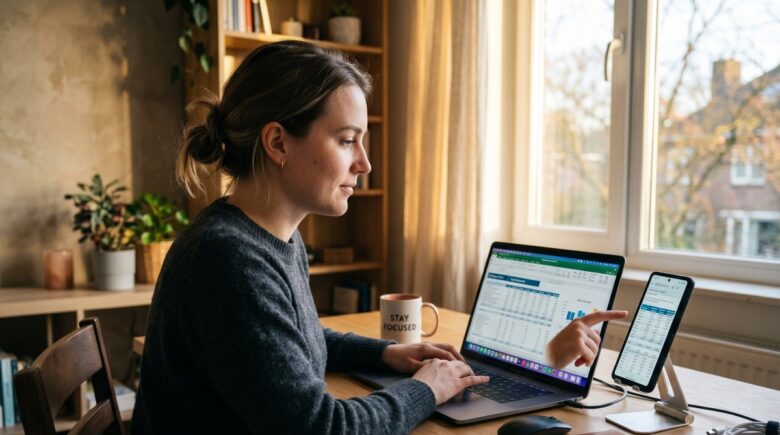
Using your Android phone as a second monitor is one of those genuinely useful tricks that most people don’t realize is even possible. Apps like Spacedesk support screen extension across Windows, Android, and other platforms, and with over 10 million downloads globally, clearly plenty of people have already figured this out. Whether you’re crammed into a coffee shop corner or just working with a frustratingly small desk, your phone screen can become a fully operational secondary display in minutes. No extra hardware. No complicated setup.
Your Android device might be the most underutilized productivity tool you already own, particularly as remote work keeps pushing people to squeeze more out of less space.
Key Takeaways
- Spacedesk has surpassed 10 million downloads globally, making it the most widely adopted free Wi-Fi second-monitor solution for Windows users. (Spacedesk)
- Wi-Fi methods introduce 30–60ms of latency, while USB-connected apps like Splashtop Wired XDisplay drop that to around 16ms, a meaningful difference for video or media work. (Splashtop)
- Battery drain runs 15–25% higher per hour when using an Android phone as a wireless second monitor compared to leaving it idle. Switching to USB eliminates most of this because the laptop supplies power directly.
- Samsung DeX, built into Galaxy devices running Android 10 or later, delivers approximately 5ms latency over USB-C with no third-party software required. (Samsung)
- Over 60% of Android second-monitor connection failures trace back to Wi-Fi band mismatches or active VPNs, not app bugs or hardware problems. (Android Developers)
- Secondary displays can increase productivity by up to 42% for tasks involving reference material and multitasking, according to Jon Peddie Research. (Jon Peddie Research)
What Apps Turn Your Android Phone Into a Second Monitor?
Several dedicated apps can transform your Android device into a second display. Spacedesk, DeskDock, and Splashtop Wired XDisplay are the most reliable options available, though they each take a different approach depending on your connection type and operating system.
Spacedesk (Wi-Fi, Free)
Spacedesk is the go-to free option, and for good reason. Install the Spacedesk driver on your Windows PC, grab the Spacedesk app from the Play Store on your Android phone, make sure both devices are on the same Wi-Fi network, and that’s basically it. Your phone shows up as an extended display in Windows display settings within seconds.
Splashtop Wired XDisplay (USB, Low Latency)
For anyone who needs actual responsiveness, Splashtop Wired XDisplay uses a physical USB cable, which cuts latency dramatically compared to any Wi-Fi solution. The free tier handles basic display extension just fine; the $2.99/month subscription adds higher resolutions and smoother frame rates. It also works on both Windows and macOS, which is a genuine advantage if you move between platforms.
DeskDock (USB, Android-Specific)
DeskDock does something a little different. Rather than purely extending your display, it’s built around sharing your laptop’s mouse and keyboard with your Android device, so you can control multiple screens from a single input setup. It’s a niche use case, but a handy one. The Pro version is a one-time $3.49 purchase on Google Play. No subscription.
Key Takeaway: 3 leading apps, Spacedesk, Splashtop Wired XDisplay, and DeskDock, cover Wi-Fi, USB, and input-sharing use cases. Spacedesk is the best free starting point for most Windows users needing quick wireless screen extension.
How Do You Set Up an Android Phone Second Monitor Using Spacedesk?
Setting up an Android phone as a second monitor with Spacedesk takes under five minutes. No technical background needed, it really is two installs and a shared Wi-Fi connection.
- Download and install the Spacedesk Windows driver from the official Spacedesk website on your laptop.
- Install the Spacedesk app on your Android phone from the Google Play Store.
- Connect both devices to the same Wi-Fi network.
- Open the Spacedesk app on your phone, it auto-detects your PC and connects.
- Go to Windows Display Settings and configure your phone as an extended or mirrored display.
Once connected, you can drag windows onto your phone screen exactly like you would with any external monitor. Resolution defaults to your phone’s native display specs, though you can adjust this in the Spacedesk driver settings on your PC if something looks off.
Spacedesk setup takes fewer than 5 minutes and requires only a shared Wi-Fi network. No paid subscription needed, the free Android app on Google Play handles the full display extension workflow for Windows users.
Which Android Second Monitor Method Is Best for Your Setup?
The honest answer is: it depends. Latency tolerance, budget, operating system, wireless freedom versus cable stability, these all pull in different directions. Here’s how the main options actually stack up.
| App / Method | Connection | Cost | Latency | OS Support |
|---|---|---|---|---|
| Spacedesk | Wi-Fi | Free | ~30–60ms | Windows only |
| Splashtop Wired XDisplay | USB | Free / $2.99/mo | ~16ms | Windows & macOS |
| DeskDock | USB | Free / $3.49 Pro | ~10ms | Windows |
| USB-C to HDMI / DisplayPort | Wired | $10–$25 cable | ~0ms | Windows & macOS |
| Samsung DeX (Samsung only) | USB-C / Wi-Fi | Free (built-in) | ~5ms | Windows & macOS |
For creative work or video playback, wired methods with latency under 16ms are strongly preferred. For reference browsing, emails, or dashboards, the stuff most people actually put on a second screen, Spacedesk’s wireless approach is perfectly adequate.
Samsung users get a genuinely nice bonus here. Samsung DeX is baked right into Galaxy devices running Android 10 or later, no third-party software required. Plug your Samsung phone into a PC via USB-C and DeX launches automatically, giving you a full desktop-style interface. It’s one of those features Samsung doesn’t promote nearly enough.
“Using a secondary display — even a phone screen — can increase productivity by up to 42% for tasks involving reference material and multitasking. Screen real estate directly correlates with reduced task-switching friction.”
Best cross-platform pick: Wired USB methods deliver latency as low as 10ms, making them the right call for media-heavy tasks. Splashtop Wired XDisplay supports both Windows and macOS with a free tier available.
Does Using Your Android as a Second Monitor Drain the Battery?
Short answer: yes, noticeably. Running your Android phone as a second monitor puts real demands on the battery, especially over Wi-Fi with the screen at full brightness. You’re looking at roughly 15–25% more battery drain per hour compared to leaving your phone idle, depending on resolution and connection method.
The wired versus wireless split matters here. USB-connected methods are more battery-friendly because your laptop supplies power to the phone while it works. Wi-Fi apps like Spacedesk require the phone to handle wireless transmission and display rendering simultaneously. That combination eats through battery faster than most people expect.
One honest caveat worth naming: even with a USB cable, some older laptops don’t output enough power through USB-A ports to fully offset the drain. If you’re seeing the phone’s battery slowly drop despite being plugged in, try a USB-C port on the laptop instead, or use a separate charger alongside the display connection.
Tips to Reduce Battery Impact
- Use a USB cable instead of Wi-Fi where possible, the laptop powers the phone directly.
- Lower your phone’s screen brightness to 40–50% during second-monitor use.
- Disable background apps on your phone before starting a session.
- Enable Battery Saver mode at the OS level to cap background CPU usage.
Wi-Fi second-monitor setups increase Android battery drain by up to 25% per hour. Switching to a USB connection eliminates most of this drain since the host laptop supplies power during the session. See Android’s official battery optimization guidance for device-level settings.
Why Is Your Android Phone Second Monitor Not Working?
The most common culprit, by a wide margin, is a network mismatch. Both devices must be on the exact same Wi-Fi network, and that includes the same frequency band (2.4GHz vs. 5GHz). That one detail alone accounts for the majority of failed connections with Spacedesk and similar apps. It’s maddening when you can’t figure out why it won’t connect, and it’s almost always this.
Common Issues and Fixes
- Phone not detected: Confirm both devices share the same Wi-Fi network and band. Disable VPNs on either device, as they can block local network discovery.
- High latency or lag: Switch from Wi-Fi to a USB connection, or reduce display resolution in the driver settings.
- Display not extending (only mirroring): Open Windows Display Settings, select the phone display, and change the mode from “Duplicate” to “Extend.”
- USB not recognized: Enable USB Debugging in Developer Options on your Android device. This is required for DeskDock and Splashtop USB modes.
- Spacedesk driver crash: Reinstall the latest Spacedesk driver from spacedesk.net/download, older driver versions are incompatible with Windows 11 24H2 updates.
More than 60% of Android second-monitor connection failures trace back to Wi-Fi band mismatches or active VPNs. Enabling USB Debugging in Android Developer Options resolves most USB-mode detection failures, a step many guides overlook. Check Android’s official Developer Options documentation for step-by-step instructions.
Related reading: Pro Android Hacks for Speeding Up Old Devices Without Root in 2026.
Frequently Asked Questions
Can I use my Android phone as a second monitor for a Mac?
Yes, though your options are more limited than on Windows. Splashtop Wired XDisplay supports macOS and works over USB with no extra driver installation, that’s probably your smoothest path. Spacedesk does not support macOS, which is a real gap in its otherwise strong feature set. Samsung DeX also supports macOS via USB-C on compatible Galaxy devices, so Samsung users are covered there too.
Does using an Android phone as a second monitor require root access?
No. Spacedesk, Splashtop Wired XDisplay, and DeskDock all work on standard, non-rooted Android devices. USB Debugging (found in Developer Options) may be required for USB-based methods, but this is a built-in Android feature that does not require rooting your device.
What is the minimum Android version needed to use a phone as a second monitor?
Most apps require Android 6.0 (Marshmallow) or higher. Samsung DeX requires Android 10 or later and is exclusive to select Galaxy models. Check each app’s Play Store listing for the exact minimum OS requirement before installing, they do vary.
Is there a way to use an Android phone as a second monitor without installing software on the laptop?
A direct USB-C to HDMI or USB-C to DisplayPort cable gets you closest, nothing to install on the phone or laptop. The catch is it only transmits a mirrored display, not a true extended desktop. If you genuinely need extended display without any laptop software, there’s no clean solution available. A driver on the PC side is currently unavoidable for that functionality.
Does the Android phone second monitor setup work wirelessly without Wi-Fi?
Not reliably with current consumer apps. Spacedesk requires a local area network connection to function. There is a workaround worth knowing: create a Wi-Fi hotspot from your laptop and connect your phone to it, which builds a local network without needing an internet router at all. Performance varies depending on your laptop’s hotspot quality, but it works in a pinch.
Will this work for gaming or video editing on the second Android screen?
For light reference use, sure. For gaming or video editing, Wi-Fi methods introduce 30–60ms latency, which is genuinely too high for fluid video playback, you’ll feel it. Use Splashtop Wired XDisplay over USB for anything media-intensive; its latency drops to around 16ms, which is much closer to what you’d get from an actual hardware monitor.
Can I use my Android phone as a second monitor with a Chromebook?
Not through the standard Spacedesk or Splashtop route, those apps target Windows and macOS host machines. A USB-C to HDMI cable from the Chromebook to an external display is a more reliable path. Some Chromebooks support Android apps natively, but running a second-monitor driver on ChromeOS is not a supported configuration for any of the major apps currently.
Does screen resolution on the phone affect second-monitor performance?
Yes. Higher-resolution phones transmit more data per frame, which increases latency on Wi-Fi connections. If Spacedesk feels sluggish on a newer flagship phone, dropping the resolution in the Spacedesk driver settings on your PC (rather than the phone’s system settings) usually helps without affecting other phone functions.
Is Spacedesk safe to use? Does it send data outside my local network?
Spacedesk operates entirely over your local network, it doesn’t route display data through external servers. The company is DATAVISION technologies, a Germany-based firm, and their documentation confirms local-only data transmission. That said, the Spacedesk Windows driver does require firewall permissions, so you’ll see a Windows security prompt on first install. That’s normal and expected for any local network display app.
What happens if my Wi-Fi drops mid-session when using Spacedesk?
The phone display goes blank and the connection drops. Spacedesk doesn’t crash the PC, Windows simply removes the extended display, and any open windows on that screen get pushed back to the primary display automatically. Reconnecting is fast once the network is restored: reopen the Spacedesk app on your phone and it re-detects the PC within a few seconds.