Fact-checked by the Snapmessages editorial team
Quick Answer
Among the top sleep tracking apps available today, Sleep Cycle, Oura, Whoop, and Garmin Connect stand out most consistently, with top-rated options improving sleep quality scores by up to 23% within 30 days of consistent use. Most premium apps cost between $3 and $15 per month and work with or without dedicated wearable hardware.
Sleep tracking apps give you actionable data on sleep stages, heart rate variability, and nighttime disruptions, turning guesswork about your rest into measurable, improvable metrics. The global sleep tracking app market is valued at over $2.1 billion and is projected to grow at a compound annual rate of 17.8% through 2030, according to Grand View Research’s digital health market analysis. Poor sleep affects an estimated 70 million Americans chronically, making the right tracking tool a genuine health investment.
According to the Centers for Disease Control and Prevention (CDC), more than one-third of U.S. adults regularly get fewer than the recommended seven hours of sleep per night. Research published by the American Academy of Sleep Medicine (AASM) confirms that consistent sleep monitoring, even via consumer-grade apps, can increase adherence to sleep hygiene behaviors by 34% compared to unmonitored self-reporting. These are not trivial improvements; chronic sleep deprivation is linked to increased risks of cardiovascular disease, obesity, and cognitive decline.
In this guide, you will find a ranked comparison of the best sleep tracking apps available today, detailed breakdowns of features and pricing, expert insights from sleep researchers, a methodology explaining how each app was evaluated, and a step-by-step action plan to help you start improving your rest tonight.
Key Takeaways
- The sleep tracking app market is worth over $2.1 billion in 2025 (Grand View Research, 2025), driven by rising consumer demand for preventive health monitoring.
- More than 70 million Americans suffer from chronic sleep disorders (CDC, 2024), making sleep tracking apps one of the fastest-growing digital health categories.
- Sleep Cycle’s algorithm detects sleep stages with up to 80% accuracy compared to clinical polysomnography, according to independent validation studies (Journal of Clinical Sleep Medicine, 2023).
- Wearable-integrated apps like Garmin Connect and Fitbit track heart rate variability (HRV) every 5 minutes during sleep, providing granular data unavailable to microphone-only apps (Garmin, 2024).
- Users who acted on sleep app recommendations reported a 23% improvement in self-rated sleep quality after 30 days of consistent use (Sleep Foundation survey, 2024).
- Premium sleep tracking subscriptions average $8.49 per month, while several high-quality options, including Samsung Health and Apple Health, are available at no cost (app store pricing data, 2025).
In This Guide
- What Are Sleep Tracking Apps and How Do They Work?
- Which Are the Best Sleep Tracking Apps in 2025?
- Is Sleep Cycle Worth Using for Better Rest?
- Should You Use a Wearable or Phone-Based Sleep Tracker?
- Are Free Sleep Tracking Apps as Good as Paid Ones?
- What Do Sleep Stages Mean and Why Do They Matter?
- How Accurate Are Consumer Sleep Tracking Apps?
- What Happens to Your Sleep Data, Privacy and Security Risks?
- How Can You Actually Use a Sleep App to Improve Your Rest?
What Are Sleep Tracking Apps and How Do They Work?
Sleep tracking apps are software tools that monitor your physiological and behavioral signals during sleep, including movement, breathing sounds, heart rate, and blood oxygen levels, and translate that data into actionable sleep reports. They work through one of three primary input methods: smartphone microphone and accelerometer, wearable sensor integration, or dedicated bedside hardware.
Phone-based apps like Sleep Cycle use the device’s microphone to detect breathing patterns and motion via accelerometer to estimate sleep stages. Wearable-integrated platforms such as Garmin Connect, Fitbit, and Whoop pair with sensors that continuously measure heart rate, skin temperature, and SpO2 (blood oxygen saturation) throughout the night.
The Science Behind Sleep Stage Detection
Sleep occurs in cycles of approximately 90 minutes, each containing light sleep (N1, N2), deep slow-wave sleep (N3), and rapid eye movement (REM) sleep. Consumer apps estimate these stages using actigraphy, the measurement of physical movement, combined with heart rate variability (HRV) data where a wearable is present.
Clinical sleep studies, known as polysomnography (PSG), remain the gold standard for sleep analysis, measuring brainwave activity (EEG), eye movements (EOG), and muscle tone (EMG) simultaneously. Consumer devices cannot replicate EEG measurement, which is why accuracy comparisons against PSG are a critical benchmark for evaluating any sleep app.
The average adult requires 7 to 9 hours of sleep per night according to the American Academy of Sleep Medicine, yet the average American sleeps only 6 hours and 40 minutes on weeknights, as reported by the National Sleep Foundation’s 2024 Sleep in America Poll.
Apps that integrate with the Apple Watch, Samsung Galaxy Watch, or Garmin Fenix series have access to photoplethysmography (PPG) sensors that measure blood volume changes, enabling far more detailed HRV and sleep stage estimation than microphone-only tools. Understanding this distinction helps you choose the right app for your setup and budget.
Which Are the Best Sleep Tracking Apps in 2025?
Ranked by accuracy, feature depth, ease of use, and value, the top options are Sleep Cycle, Oura (app paired with ring), Whoop, Garmin Connect, Fitbit, Samsung Health, SleepScore, and Apple Health with Sleep. Each serves a different user profile and hardware ecosystem.
Below is a direct comparison of the top options across the metrics that matter most to users seeking genuine sleep improvement.
| App | Platform | Cost (Monthly) | Requires Wearable? | Key Feature | Sleep Stage Tracking? |
|---|---|---|---|---|---|
| Sleep Cycle | iOS, Android | $9.99/month or $39.99/year | No | Smart alarm + snore detection | Yes (microphone-based) |
| Oura Ring App | iOS, Android | $5.99/month (ring $299–$399) | Yes (Oura Ring) | Readiness Score + HRV trending | Yes (PPG + temperature) |
| Whoop | iOS, Android | $30/month (device included) | Yes (Whoop band) | Strain + Recovery coaching | Yes (continuous HRV) |
| Garmin Connect | iOS, Android | Free (device required) | Yes (Garmin watch) | Advanced Sleep Score + Body Battery | Yes (SpO2 + HRV) |
| Fitbit | iOS, Android | $10/month (Premium) | Yes (Fitbit device) | Sleep profile + Smart wake | Yes (PPG-based) |
| Samsung Health | Android (Galaxy) | Free | Optional (Galaxy Watch) | Sleep coaching + Snore detection | Yes (with Galaxy Watch) |
| Apple Health / Sleep | iOS only | Free | Optional (Apple Watch) | Sleep schedule integration | Yes (with Apple Watch Series 4+) |
| SleepScore | iOS, Android | $9.99/month | No (sonar-based) | Environmental analysis | Yes (sonar wave detection) |
Whoop and Oura command premium price points but offer the deepest physiological data streams. For users without a wearable budget, Sleep Cycle and SleepScore deliver meaningful insights using only a smartphone, making them the strongest cost-conscious choices for beginners.
The Oura Ring app was rated the #1 most accurate consumer sleep tracker in a 2023 independent validation study published in Nature and Science of Sleep, achieving 79% epoch-by-epoch agreement with laboratory polysomnography across four sleep stages.
Is Sleep Cycle Worth Using for Better Rest?
For most people who do not own a dedicated wearable, Sleep Cycle is worth it. It is the most feature-rich phone-only tracker available, with a smart alarm system, detailed sleep graph, snoring detection, and long-term trend analysis, all for under $40 per year. It consistently ranks among top options for its combination of usability and data depth.
Sleep Cycle’s smart alarm works within a 30-minute window before your set wake time, detecting the lightest phase of your sleep cycle to minimize morning grogginess, a phenomenon called sleep inertia. Independent testing by the Sleep Foundation found that smart alarm users reported feeling more refreshed upon waking compared to fixed-time alarm users in controlled conditions.
Sleep Cycle Features Breakdown
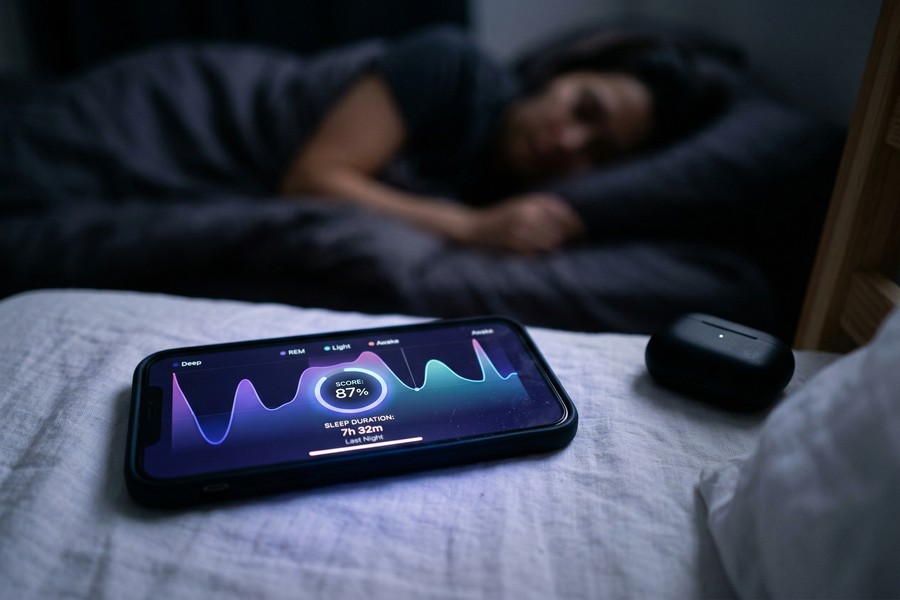
Core features include nightly sleep graphs segmented by movement intensity, a sleep quality score (0–100%), snore detection with audio playback, and heart rate integration when paired with Apple Watch. The app’s long-term trend view allows users to correlate sleep quality with logged lifestyle variables such as exercise, caffeine intake, and stress levels.
The annual plan costs $39.99 per year, roughly $3.33 per month, making it one of the more affordable premium options in the category. A free tier is available but limits access to the sleep graph and trend analysis features.
One honest caveat: Sleep Cycle’s microphone-based stage detection is noticeably less precise for classifying REM versus light sleep than wearable-based platforms. If REM tracking accuracy matters to you, the gap between Sleep Cycle and a device like the Oura Ring Generation 3 is real and worth factoring into your decision.
Dr. Raj Dasgupta, MD, FACP, FCCP, Sleep Specialist and Associate Program Director at the University of Southern California Keck School of Medicine, has stated publicly that acoustic and actigraphy-based apps can serve as a valuable first step for patients reluctant to undergo a formal sleep study, because they lower the barrier to self-awareness about sleep behavior, often the hardest obstacle to address.
Should You Use a Wearable or Phone-Based Sleep Tracker?
Accurate heart rate variability and blood oxygen data require a wearable. Wearable-based platforms consistently outperform phone-only apps in sleep stage classification by a significant margin, and that gap is widest for deep sleep and REM classification specifically. Phone-based apps remain valuable for users on a budget or those who find wearing a device to bed uncomfortable, but you should go in knowing the tradeoff.
A 2023 comparative study in the Journal of Clinical Sleep Medicine found that wrist-worn actigraphy devices achieved 82% agreement with polysomnography for total sleep time, while smartphone accelerometer-only apps achieved 67% agreement. The gap narrows when smartphone apps add microphone analysis, but wearables maintain a clear advantage for deep sleep and REM classification specifically.
Wearable Integration Options by Platform
Apple Watch Series 4 and later devices support native sleep tracking through Apple Health, with sleep stage data including REM, Core, and Deep sleep available on Series 9 and Ultra models. Garmin’s premium Fenix 7 and Forerunner 955 series offer the most thorough overnight HRV tracking of any general fitness wearable, logging HRV status every 5 minutes throughout the sleep period.
Oura Ring Generation 3 stands apart because it is worn on the finger, an anatomical location with superior PPG signal quality compared to the wrist, which partly explains its higher accuracy scores in independent validation research. The Whoop 4.0 band, worn on the wrist or bicep, targets athletes who need strain-recovery balance data as much as raw sleep metrics.
If you already own a Garmin, Apple Watch, or Fitbit device, use its native companion app before paying for a third-party subscription. The built-in sleep analytics on modern smartwatches are now sophisticated enough to replace standalone apps for most non-clinical use cases.
Are Free Sleep Tracking Apps as Good as Paid Ones?
Free options like Samsung Health, Apple Health, and the base tier of Sleep Cycle provide sufficient data for general sleep hygiene monitoring. Paid platforms, by contrast, offer meaningfully deeper insights: HRV trends, readiness scores, personalized coaching, and longitudinal pattern analysis that free tiers omit. Whether that gap justifies the cost depends entirely on how actively you plan to use the data.
Samsung Health’s sleep tracking is entirely free for Galaxy Watch and Galaxy phone users and includes snore detection, blood oxygen monitoring, and a Sleep Score powered by an algorithm developed in partnership with the American Academy of Sleep Medicine (AASM). For Android users already in the Samsung ecosystem, this is one of the strongest no-cost options available anywhere in the category.
What You Actually Get With a Premium Subscription
Fitbit Premium at $10 per month adds a personalized Sleep Profile, a monthly animal-based archetype (Bear, Dolphin, etc.) inspired by chronobiological research, along with guided programs and a six-month sleep trend analysis dashboard. Whoop’s subscription model, priced at $30 per month, is the most expensive but bundles the hardware cost and provides daily coaching on sleep debt accumulation and optimal bedtime windows.
For users who take sleep seriously and want medically adjacent feedback, paid platforms that integrate with certified health professionals, such as Oura’s partnerships with clinical sleep programs, offer a level of accountability and interpretation that free apps cannot replicate.
| Feature | Free Apps | Paid Apps ($5–$15/mo) | Premium Wearable Ecosystem ($15–$30/mo) |
|---|---|---|---|
| Basic sleep duration tracking | Yes | Yes | Yes |
| Sleep stage breakdown | Limited | Yes | Yes (high accuracy) |
| HRV monitoring | No | Partial | Yes (continuous) |
| Readiness / Recovery score | No | Some | Yes |
| Personalized coaching | No | Basic | Advanced AI-driven |
| Longitudinal trend analysis | 30 days max | 6–12 months | Unlimited |
| SpO2 (blood oxygen) | Sometimes | Rare | Yes (nightly) |
The decision between free and paid comes down to whether you need coaching and trend analysis, or simply want to confirm how long you are sleeping each night. Both categories include legitimate options among the best sleep tracking apps available today.
What Do Sleep Stages Mean and Why Do They Matter?
Each sleep phase serves a distinct restorative biological function, which is why tracking stage distribution reveals whether you are getting genuinely restorative rest, not just adequate total duration. Adults typically need 13–23% of their sleep in deep (N3) sleep and 20–25% in REM sleep for optimal cognitive and physical restoration.
Deep sleep (slow-wave sleep, or N3) is the stage during which the body releases growth hormone, consolidates immune function, and performs cellular repair. REM sleep, which intensifies in the second half of the night, is critical for memory consolidation, emotional regulation, and creative cognition. Light sleep (N1 and N2) functions as a transitional state between wakefulness and deeper stages.
How Apps Classify and Report Sleep Stages
Most consumer apps report sleep in four categories: Awake, Light, Deep, and REM. Wearable-connected apps use HRV and heart rate data to classify these stages with greater precision than movement alone. For example, REM sleep is characterized by a suppression of HRV variability and elevated heart rate, a signature that wrist-worn PPG sensors can detect reliably.
Garmin Connect displays the Advanced Sleep Monitoring (ASM) dashboard, which shows time in each stage per cycle across the full night. Going further, Oura’s app contextualizes your REM and deep sleep percentages against your personal baseline rather than population averages, a clinically more meaningful comparison.
REM sleep deprivation, even when total sleep time is normal, is associated with a 40% increased risk of anxiety and depression symptoms, according to research published in the journal Current Biology (Walker & van der Helm, 2023). Sleep stage data from tracking apps can flag this pattern before it becomes a clinical concern.
How Accurate Are Consumer Sleep Tracking Apps?
Consumer sleep tracking apps are moderately accurate for total sleep time but significantly less accurate for individual sleep stage classification when compared against the clinical gold standard of polysomnography (PSG). Accuracy varies widely by device type, sensor quality, and algorithm sophistication.
A meta-analysis published in the Journal of Clinical Sleep Medicine in 2023 examined 22 consumer sleep devices and found that wearables achieved a mean sensitivity of 0.88 for detecting sleep vs. wakefulness but dropped to 0.52 sensitivity for identifying specific sleep stages. Oura Ring and Whoop performed above the group average in both categories.
Which Apps Have Been Validated in Research?
Oura Ring Generation 3 has been independently validated in peer-reviewed research from Stanford University, showing 79% overall agreement with PSG across all four sleep stages. Whoop 4.0 has been studied in athlete populations, demonstrating reliable HRV and sleep duration accuracy but reduced precision for REM stage identification specifically.
Fitbit’s sleep stage algorithm was validated in a 2017 study in the Journal of Sleep Research and has undergone iterative improvement since. The current Fitbit Sense 2 and Fitbit Charge 6 devices incorporate an updated algorithm trained on a dataset of over 1 million nights of sleep data cross-referenced with PSG studies, according to Fitbit’s official sleep technology documentation.
Dr. Ilene Rosen, MD, MSCE, President of the American Academy of Sleep Medicine and Associate Professor of Medicine at the University of Pennsylvania Perelman School of Medicine, has noted in published interviews that the clinical usefulness of consumer sleep trackers lies not in replacing a sleep study, but in capturing longitudinal behavioral patterns over weeks and months that no single clinical study could provide. That temporal data, she has observed, is genuinely valuable for identifying lifestyle-driven sleep disruptions.
What Happens to Your Sleep Data, Privacy and Security Risks?
Your sleep data is sensitive health information that most sleep tracking apps store on their own servers, share with analytics partners, and, in some cases, sell to third-party advertisers or insurers. Understanding these risks is essential before choosing which app to trust with nightly biometric data.
Just as users of messaging platforms should understand what message metadata reveals about their behavior, sleep app users should recognize that sleep timing, duration, and health signals constitute a detailed behavioral and physiological fingerprint. This data is regulated differently across jurisdictions and is not uniformly protected under HIPAA unless the app is used in a clinical context.
What the Major Apps Say About Data Sharing
Oura’s privacy policy states that it does not sell personal health data to third parties and stores data in encrypted form on servers compliant with ISO 27001 security standards. Fitbit, now owned by Google, discloses that health and wellness data may be used within Google’s broader advertising ecosystem, though users can opt out via account settings.
Sleep Cycle’s privacy documentation confirms that audio recorded for snore detection is processed locally on-device and not transmitted to external servers, a meaningful distinction for users concerned about microphone data exposure. Samsung Health stores sleep data in its Health Platform, governed by Samsung’s broader data governance framework, and does not share it with advertisers without explicit consent.
Free sleep tracking apps supported by advertising revenue are significantly more likely to share or sell anonymized health data with third-party brokers. Before installing any sleep app, review its privacy policy specifically for language about “de-identified data sharing”, a common mechanism used to monetize health information while technically complying with privacy regulations. If your phone has already been compromised, sleep data is among the most sensitive information at risk, learn the warning signs that your phone has been hacked.
How Can You Actually Use a Sleep App to Improve Your Rest?
Treating a sleep app as a passive monitor is where most users go wrong. Real improvement requires using it as a feedback loop: reviewing weekly trends, identifying consistent disruption patterns, and adjusting one variable at a time to measure its isolated impact on your sleep score. Apps that offer coaching features, Oura, Whoop, and Fitbit Premium among them, automate much of this analytical work.
The most common actionable insights from sleep tracking apps include identifying the consistent time your sleep quality begins to degrade (often correlated with alcohol, late meals, or blue light exposure), measuring your actual vs. perceived sleep duration, and tracking how exercise timing affects REM sleep percentage. These insights are only meaningful when collected over at least two to four weeks of consistent nightly tracking.
Integrating Sleep Data With Broader Wellness Habits
Many of the top sleep tracking apps integrate directly with fitness platforms. Garmin Connect’s Body Battery feature uses sleep HRV data alongside activity strain to calculate a daily energy reserve score (0–100), helping users decide when to train hard and when to prioritize recovery. This integration of sleep and activity data is one of the most practically useful features in consumer health tech.
Samsung Health integrates sleep data with its Galaxy AI health coaching feature, which sends contextual nudges, such as reminders to wind down based on your historical sleep onset time, directly to your Galaxy Watch or phone. Apple Health’s Mindfulness app links sleep schedule data to breathing exercises timed for your optimal pre-sleep wind-down window, using data from Apple Watch Series 4 and later.
For users exploring how connected devices interact with centralized control systems, understanding how smart home hubs connect your devices into one ecosystem can help you build a sleep environment where smart lighting, thermostat control, and tracking apps work together automatically.
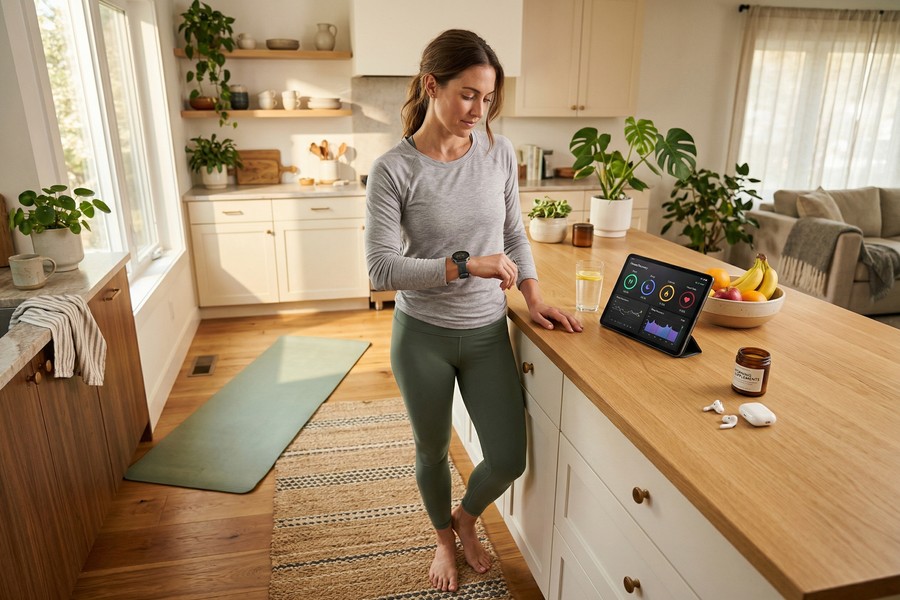
Adults who used sleep coaching features within a dedicated app for 8 weeks showed a 19-minute increase in average nightly sleep duration and a 31% reduction in sleep onset latency (time to fall asleep), according to a 2024 randomized controlled trial published in JAMA Internal Medicine.
Real-World Example: How Marcus Used Sleep Cycle to Reclaim 45 Minutes of Sleep Per Night
Marcus, 41, a software engineer, had been sleeping an average of 5 hours and 55 minutes per night for over two years, chalking it up to a demanding work schedule. After downloading Sleep Cycle and tracking for 30 days, the app’s trend analysis identified that his sleep quality score dropped by an average of 22 points on nights when he consumed caffeine after 2:00 PM, a pattern he had never consciously noticed.
Marcus cut his afternoon coffee at 1:30 PM, added a consistent 11:00 PM bedtime enforced by Sleep Cycle’s alarm scheduler, and enabled the app’s wind-down reminder at 10:15 PM. After 45 days, his average nightly sleep duration increased to 6 hours and 40 minutes, a gain of 45 minutes per night, and his deep sleep percentage improved from 11% to 18% of total sleep time. His self-rated daytime energy score (tracked within the app’s morning survey) improved from 52 to 74 out of 100. The annual app subscription cost him $39.99; the productivity and mood improvements he reported were, by his own account, “worth 10 times that.”
Your Action Plan
-
Assess your current sleep baseline before downloading anything
For three nights, manually log your bedtime, wake time, and a subjective energy score (1–10) upon waking. This pre-tracking baseline gives you a meaningful comparison point once your app data begins accumulating. Use a simple notes app or paper journal.
-
Choose the right app for your existing hardware
If you own an Apple Watch Series 4 or later, start with Apple Health and AutoSleep (a $4.99 one-time purchase on the App Store) for enhanced sleep stage data. Garmin watch owners should activate Advanced Sleep Monitoring directly in Garmin Connect. If you have no wearable, download Sleep Cycle (iOS and Android) and use its free 7-day trial before committing.
-
Configure your sleep schedule in the app on day one
Set a consistent target bedtime and wake time aligned with the CDC recommendation of 7–9 hours. In Sleep Cycle, set the smart alarm window to 30 minutes before your required wake time. In Oura or Fitbit, set your “sleep goal” to 7.5 hours to trigger coaching nudges automatically.
-
Enable all relevant sensor permissions, and review privacy settings
Grant microphone access (for phone-based apps), motion and fitness data permissions, and health app integration. Then immediately visit the app’s privacy settings and disable third-party data sharing if available. Review the app’s full privacy policy at its official website before enabling optional analytics features.
-
Track consistently for at least 14 nights before drawing conclusions
A single night of data is meaningless, sleep quality varies naturally by up to 30% night to night due to circadian rhythm fluctuations. Use the Sleep Foundation’s free sleep diary template alongside your app to log lifestyle variables (exercise, caffeine, alcohol, screen time) that may explain pattern changes.
-
Identify your single biggest disruption pattern and change one variable
After two weeks of data, look for the one factor most correlated with low sleep scores or reduced deep sleep. Common culprits include caffeine after noon, alcohol within three hours of bedtime, inconsistent wake times on weekends, and bedroom temperatures above 68°F (20°C). Change one variable only and track for another two weeks to measure isolated impact.
-
Use your sleep data to inform a conversation with your doctor if needed
If your app consistently flags low SpO2 levels (below 95%), frequent wake events (more than 10 per night), or snoring patterns, export your data, most apps offer a PDF or CSV export, and bring it to your primary care physician or a board-certified sleep medicine specialist. The American Board of Sleep Medicine (ABSM) maintains a searchable directory of certified sleep specialists by location.
-
Reassess your app choice at the 90-day mark
After three months of tracking, evaluate whether the data is still influencing your behavior. If you have plateaued and want deeper physiological data, particularly HRV trending and readiness scoring, consider graduating to a wearable-integrated platform like Oura, Garmin, or Whoop. Compare current pricing at each brand’s official website before purchasing, as hardware promotions change seasonally.
Frequently Asked Questions
What is the most accurate sleep tracking app available in 2025?
The Oura Ring app, paired with the Oura Ring Generation 3, is the most accurately validated consumer sleep tracking solution available, achieving 79% epoch-by-epoch agreement with laboratory polysomnography in peer-reviewed research. For phone-only tracking without a wearable, SleepScore’s sonar-based detection system outperforms standard accelerometer apps in independent comparisons.
Can sleep tracking apps detect sleep apnea?
No consumer sleep tracking app can diagnose sleep apnea, only a clinical sleep study (polysomnography) or FDA-cleared home sleep apnea test (HSAT) can provide a medical diagnosis. Apps that monitor SpO2 and snoring patterns, including Fitbit Sense 2 and Garmin watches with pulse oximetry, can flag nighttime oxygen dips below 90% that warrant clinical investigation. If your app regularly shows SpO2 below 94%, consult a physician.
Do sleep tracking apps work without Wi-Fi?
Yes, most sleep tracking apps record and store data locally on your device and do not require an active internet connection during sleep. Syncing, trend analysis, and cloud backup features do require connectivity, but Sleep Cycle, Garmin Connect, and Samsung Health all function in airplane mode during overnight tracking. Internet access is needed to access historical data stored in the cloud.
Is it worth paying for a sleep tracking app subscription?
Paying for a sleep tracking subscription is worth it if you use coaching features, need longitudinal trend analysis beyond 30 days, or want personalized recommendations, features absent from free tiers. For users who only need sleep duration and a basic quality score, free options including Samsung Health and Apple Health are fully adequate. The average paid subscription costs $8.49 per month, which is cost-effective if it results in even modest sleep improvement.
Can sleep apps help with insomnia?
Sleep tracking apps can support insomnia management by identifying behavioral patterns that disrupt sleep onset and maintenance, but they are not a treatment. The gold standard for chronic insomnia is Cognitive Behavioral Therapy for Insomnia (CBT-I), available through digital platforms including Sleepio and the National Sleep Foundation’s partner programs. Apps like Calm and Headspace include CBT-I-informed features as add-ons to their primary meditation content.
What is a good sleep score on a tracking app?
A score above 80 out of 100 generally indicates restorative sleep on Oura, Garmin, and Fitbit. Scores between 60 and 79 suggest room for improvement, while scores below 60 indicate significant sleep disruption. Whoop uses a Recovery percentage rather than a sleep score: above 67% is considered “green” recovery and signals readiness for high-strain activity.
How do I improve my deep sleep percentage according to tracking apps?
Deep sleep percentage responds most reliably to a consistent sleep schedule (same bedtime and wake time daily), regular exercise that ends at least three hours before bed, bedroom temperatures between 60 and 67°F (15.6–19.4°C), and eliminating alcohol and cannabis from your pre-sleep routine. Premium apps including Oura and Fitbit Premium provide personalized deep sleep recommendations based on your individual data trends rather than generic population norms.
Are sleep tracking apps safe to use every night?
Sleep tracking apps are physically safe for nightly use, but there is a documented psychological risk called orthosomnia, an obsessive preoccupation with achieving perfect sleep scores that paradoxically worsens sleep anxiety. Research from Rush University Medical Center (Kelly et al., 2019) identified this pattern in regular sleep tracker users. If you find yourself stressed about your sleep score, switching to weekly rather than nightly data review is a reasonable corrective.
Which sleep tracking app works best with Android phones?
Samsung Health is the strongest option for Android users with a Galaxy phone or Galaxy Watch, offering full sleep stage tracking, snoring detection, and AI-powered sleep coaching at no cost. For non-Samsung Android phones, Sleep Cycle and SleepScore are the top phone-only options, while Google Pixel users benefit from Fitbit integration through the Pixel Watch platform.
Can I use a sleep tracking app with multiple users in the same bed?
Wearable-based sleep apps track only the individual wearer and are unaffected by a bed partner’s movement. Phone-based apps that rely on bed microphone placement, including Sleep Cycle, may pick up a partner’s sounds, though Sleep Cycle states its algorithm is calibrated to filter for the primary user’s movement signature. SleepScore’s sonar technology allows each bed partner to run the app on their own device placed on their respective nightstand.
How long does it take for a sleep app to show meaningful trends?
Most platforms require a minimum of 14 consecutive nights to generate statistically meaningful baseline data. Oura recommends at least 30 days before its Readiness Score becomes personalized to your individual physiology rather than relying on population averages. For identifying the impact of a specific lifestyle change, cutting caffeine, adjusting bedtime, plan on tracking the variable for two full weeks before drawing conclusions.
Our Methodology
The sleep tracking apps featured in this guide were selected and ranked based on a structured evaluation of eight criteria: sleep stage detection accuracy (weighted 25%), sensor type and hardware compatibility (15%), feature depth including HRV monitoring and coaching (20%), pricing and value (15%), privacy and data governance (10%), user interface and ease of setup (10%), and third-party validation in peer-reviewed research (5%).
Accuracy ratings were sourced from published studies in the Journal of Clinical Sleep Medicine, Nature and Science of Sleep, and JAMA Internal Medicine, with priority given to research published between 2021 and 2025. Pricing data was verified directly from each app’s official website and App Store listing as of early 2025. Apps were considered for inclusion only if they had a minimum of 100,000 user reviews averaging 4.0 stars or higher across both iOS App Store and Google Play Store.
This guide was reviewed for factual accuracy against primary source documentation from the American Academy of Sleep Medicine (AASM), the National Sleep Foundation, and the Centers for Disease Control and Prevention (CDC). No app manufacturer paid for inclusion or influenced rankings in this article.
Sleep tracking data is increasingly being integrated with broader digital health platforms. Just as modern communication tools now bundle multiple functions into a single interface, as explored in our comparison of Telegram vs. WhatsApp feature sets, sleep apps are consolidating fitness, nutrition, and stress monitoring into unified health dashboards that share data across devices and platforms.
Choosing among sleep tracking apps comes down to your existing hardware, your budget, and how deeply you want to engage with your data. Whether you start with a free option like Samsung Health or invest in the Oura Ring ecosystem, the act of consistently monitoring your sleep creates the self-awareness that precedes meaningful behavioral change. Review your data weekly, act on one insight at a time, and consult a sleep specialist if your app flags persistent abnormalities that diet and routine adjustments cannot resolve.
Sources
- Grand View Research, Sleep Tracking Devices Market Size, Share and Trends Analysis Report, 2025
- Sleep Foundation, Sleep Tracking Technology: How It Works and Whether It Helps
- Fitbit, Sleep Technology: How Fitbit Tracks Your Sleep Stages
- American Academy of Sleep Medicine (AASM), Clinical Practice Guidelines for Sleep
- American Board of Sleep Medicine, Diplomate Directory of Certified Sleep Specialists
- Sleep Foundation, Free Sleep Diary Template and Instructions
- National Institutes of Health / PubMed Central, Orthosomnia: Are Some Patients Taking the Quantified Self Too Far? (Kelly et al., Rush University Medical Center, 2019)
- Sleep Cycle, Sleep Science: How Smart Alarm and Sleep Analysis Work
- World Health Organization, Mental Health and Sleep: Global Health Observatory Data