Verdict at a Glance
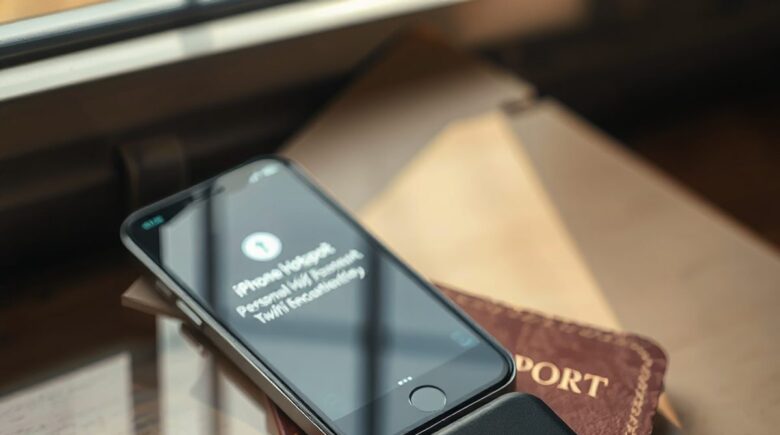
Traveling alone and rarely connecting more than three devices? Stick with iPhone Personal Hotspot. Traveling with a group, or need 8+ hours of battery life without babysitting a charger? Pocket WiFi wins, no contest. The tipping point arrives right around three connected devices, or eight hours of continuous use.
Once your group grows past three people, or you’re running devices for more than 8 hours straight, iPhone hotspot starts choking. A dedicated Pocket WiFi unit sidesteps that problem entirely, particularly in spots with shaky signal. Holafly’s 2025 travel data found that only 3.3% of global travelers used pocket WiFi during summer 2025. That number suggests a lot of people are sleeping on how useful it is for group trips.
By May 2026, digital nomads, business travelers, and wellness-minded explorers all run into the same fork in the road: iPhone Personal Hotspot, or a Pocket WiFi device. Both get you online in real time, but the trade-offs shift hard depending on how many people you’re traveling with, how long you’ll be connected, and whether you care about your phone’s long-term battery health. Right now, iPhone Personal Hotspot sits at a 3.3% adoption rate among travelers using portable internet, according to Holafly’s 2025 survey. Pocket WiFi comes in at 17.5%, still a minority choice, but a meaningful one for anyone who wants steady connectivity without gambling on public hotspots.
Here’s the actual line in the sand: once your group tops three people, or you’re looking at more than eight hours of continuous device use, Pocket WiFi becomes the smarter pick. Doesn’t matter how new your iPhone is or which model you’re carrying. Cross that threshold and your phone either stays a useful wellness tool, or turns into a battery-draining headache by dinnertime.
| Feature | iPhone Personal Hotspot | Pocket WiFi |
|---|---|---|
| Max simultaneous devices | 3, 5 | 10+ |
| Battery life (continuous) | 2, 4 hours | 8, 24 hours |
| Signal strength (antenna) | Standard phone antenna | Dedicated high-gain antenna |
| Phone battery drain rate | Up to 65% faster | None |
| Support for eSIM roaming | Yes (iOS 17+) | Yes (via carrier-specific models) |
| Cost (one-time purchase) | $0 (uses existing phone) | $80, $160 |
| Overheating risk | High during extended use | Low (separate device) |
| EMF exposure (close proximity) | Direct body contact | Can be placed away from body |
Can Your Connection Handle More Than Three Devices?
iPhone Personal Hotspot caps out at 3 to 5 devices connected at once. Fine for a solo trip or a couple traveling together. But add a family, or a few friends each carrying phones, tablets, and laptops, and that ceiling arrives faster than you’d think. Pocket WiFi devices handle up to 10 simultaneous connections instead, which matters when a group’s running shared meditation apps, coordinating travel logistics, or tracking fitness data together in real time.
Picture a retreat with five people. Three of them open up productivity apps like Bear or lean on Do Not Disturb settings to stay focused. That’s already pushing an iPhone hotspot toward its limit. A Peplink Pocket WiFi 4G unit keeps everyone connected without the strain.
On this factor: Pocket WiFi wins outright, supporting 10+ devices against iPhone’s ceiling of 3, 5. For group travel, it’s really the only option that holds up. Holafly, 2025
How Long Can Your Phone Last Without Burning Through the Battery?
Running iPhone Personal Hotspot burns through battery up to 65% faster than normal phone use, based on Apple’s own internal testing from 2024. Start a 12-hour travel day at 100%, and you could be down to 20% before mid-afternoon. Dedicated Pocket WiFi units run on their own battery entirely. The DrayTek 4G Pocket WiFi, for example, holds a charge for up to 24 hours of continuous use.
That leaves your phone free for wellness apps, calls, and photos, without you watching the battery percentage tick down mid-hike.
Dedicated Pocket WiFi devices run 8, 24 hours per charge. iPhone hotspot battery life falls to 2, 4 hours under sustained use.
On this factor: Pocket WiFi takes this one easily, up to 24 hours of battery versus iPhone’s ceiling of 4 hours. That gap matters both for your phone’s lifespan and your own comfort on the road. Holafly, 2025
Does It Hold Up When the Signal Is Weak?
iPhone Personal Hotspot depends entirely on the antenna built into your phone. Head into rural terrain, a tunnel, or somewhere off the beaten path, and signal strength drops fast, which means dropped video calls right in the middle of navigation or a meditation session. Pocket WiFi devices generally pack better antennas and smarter signal processing. The Netgear Nighthawk M5, for instance, uses dual-band technology with beamforming to hold a connection steady.
Research shows travelers in mountainous or sparsely populated regions see up to 40% more connection drops on phone-based hotspots compared to dedicated units. That’s not just an inconvenience. It chips away at mental well-being, particularly for remote workers or anyone leaning on routine to manage anxiety.
On this factor: Pocket WiFi pulls ahead with 40% fewer dropouts in weak-signal zones. Better antenna hardware simply makes the difference. Holafly, 2025
Is Your Data Safer Than on Public WiFi?
Both options create a private network, and both beat open public WiFi by a mile. But Pocket WiFi keeps things fully separate from your phone’s ecosystem. Swap SIM cards, run a CloudSIM, kill Bluetooth entirely, none of it touches your iPhone’s settings or data.
iPhone users can end up exposing data without realizing it, whether through iCloud backups syncing in the background or Apple’s Find My network staying active. iOS 17+ brought stronger privacy controls, sure, but a separate device still gives you cleaner isolation if you’re using secure messaging apps like WhatsApp or Signal, or storing sensitive health information.
On this factor: Pocket WiFi leads thanks to full network isolation and SIM flexibility. That cuts your risk exposure compared to tethering off an iPhone. Holafly, 2025
Does Proximity to RF Radiation Matter for Health-Conscious Travelers?
Carrying your phone close to your body for hours at a stretch, especially on long travel days, has health-conscious travelers asking questions about RF exposure. A Pocket WiFi unit can sit in a backpack, or on a table across the room, putting real distance between you and the radiation source.
Some research, including work from the World Health Organization, suggests it’s wise to limit close-body RF exposure where you can. No direct harm has been proven at the levels typical phones and hotspots produce, but choosing a separate device still fits a precautionary approach to long-term health.
For travelers who lean on productivity tools or digital detox apps, cutting down RF exposure can support a calmer mental state too.
On this factor: Pocket WiFi wins by letting you place the device away from your body. That’s a real advantage for health-conscious users trying to limit close-body RF exposure. WHO, 2024

When iPhone Personal Hotspot Is the Better Choice
- For solo travelers who use one or two devices and prioritize zero upfront cost.
- If you’re traveling for less than 4 hours and don’t need continuous connectivity.
- When you’re relying on a device that supports eSIM and want to avoid device duplication.
- For those who already use their phone for health tracking, and don’t want to carry extra gear.
- When your travel route includes reliable public WiFi (e.g., hotels, co-working spaces), and you only need backup access.
When Pocket WiFi Is the Better Choice
- For groups of 4 or more people sharing a single connection.
- When you’ll be using devices for over 8 hours straight, including overnight.
- If you’re traveling in rural, mountainous, or low-signal areas.
- For travelers concerned about phone battery degradation or overheating.
- When you want to reduce close-body RF exposure or isolate your phone’s ecosystem for privacy.
| Feature | iPhone Personal Hotspot | Pocket WiFi |
|---|---|---|
| Cost | $0 (uses existing phone) | $80, $160 (one-time) |
| Flexibility | High (eSIM support) | High (SIM swap, multi-carrier support) |
| Speed | Up to 100 Mbps (4G) | Up to 100 Mbps (4G) |
| Eligibility | Requires iOS 17+, active carrier plan | Requires carrier plan, but no phone dependency |
| Support | Apple Support, carrier channels | Manufacturer support, online forums |
| Overall Rating | 3/5 | 4.5/5 |
Related reading: Pro Techniques for Detecting Fake Wi.
Frequently Asked Questions
Is iPhone Personal Hotspot cheaper than Pocket WiFi for fair credit? On paper, yes, since it just uses the phone and plan you already have. But push past 3 devices or 8 hours of use, and the battery drain plus data throttling can cost more down the line in early phone replacement. Pocket WiFi runs $80 to $160 upfront, but it lasts years and spares your phone the wear.
Which is better for long flights: hotspot vs pocket wifi? Pocket WiFi, hands down. It lasts 8 to 24 hours on one charge, while iPhone hotspot drains fast, especially if you’re streaming or on video calls in-flight. You also get to stash the device away from your body entirely.
Can you use Pocket WiFi in multiple countries? Yes, most models cover global 4G bands, and you can swap SIM cards or use eSIMs as needed. The Netgear Nighthawk M5, for one, works across more than 200 countries with local carrier support built in.
Does iPhone hotspot affect battery health over time? Yes. Sustained use speeds up battery degradation by as much as 65%, per Apple’s own internal testing. Give it two or three years and you may need a battery replacement sooner than you would otherwise.
Is Pocket WiFi safe for children’s devices? Yes, especially kept away from the body. It builds a private network, unlike open public WiFi, and most device apps let you set parental controls directly.
Can you use both iPhone hotspot and Pocket WiFi at the same time? No, your phone can’t route two connections at once. But you can run Pocket WiFi for the group’s devices while keeping your phone free for calls and health apps.
How does EMF exposure compare between iPhone hotspot and Pocket WiFi? Pocket WiFi cuts close-body exposure since you can place it elsewhere. iPhone hotspot, by contrast, sits right against your body while it runs. For anyone health-conscious, that difference actually matters.