Quick Answer
A three-day messaging fast in 2026 might be worth considering for those overwhelmed by constant notifications. Studies show 76% of Americans are open to digital breaks, and 91% of participants in a Georgetown University study felt improved well-being after reducing screen time. Risks exist. Remote workers and caregivers need a plan before they unplug, not after. Careful planning and gradual re-entry can minimize any negative impact. If you’re a high-volume texter or suffer from digital fatigue, this short fast could reset your attention span and ease anxiety. It’s worth trying if you check messaging apps more than 15 times per day, this threshold correlates with measurable cognitive strain, according to a 2026 study by the Center for Digital Behavior.
Updated July 2026
Messaging apps have become the primary digital channel now, outpacing email and social media for both personal and professional use. According to YouGov’s 2026 data, messaging is used by 85% of adults multiple times a week. Volume is up 29% since 2025. Part of the reason: AI-driven features in apps like Slack, WhatsApp, and Microsoft Teams suggest replies and flag urgent messages, which only tightens the ‘always-on’ pressure most people already feel.
Feeling drained by constant pings? A three-day messaging fast could give you a real reset. This piece looks at whether that’s a smart move for you in 2026, drawing on actual data, observed user behavior, and the trade-offs nobody puts in the marketing copy.
You’ll learn how to prepare for a messaging fast and what the research says about the mental and focus payoff. We’ll also get into who should skip it entirely, how to measure whether it worked, and how to keep the anxiety from creeping back once you log back in. Real-world examples from people in high-demand roles show that even a brief break can cut notification anxiety by up to 38% over time.
Key Takeaways
- 76% of Americans are open to or considering a digital detox, according to a LifeStance survey (via Researchscape International, 2025).
- 91% of participants in a Georgetown University psychology study reported at least one positive outcome in well-being, attention, or mental health after reducing screen time.
- 38% of U.S. teens report spending too much time on their smartphone, per Pew Research Center (2024).
- 38% of UK consumers express concern about excessive screen time and interest in a digital detox, according to EY’s Future Consumer Index (2025).
- AI-powered messaging features in tools like Slack and Teams now handle 47% of routine replies automatically, increasing cognitive load despite seeming efficiency.
In This Guide
Why Messaging Overload Feels Different in 2026
The buzz in your pocket in 2026 isn’t just about volume. It’s about design. AI now predicts your replies, tags messages as urgent, and reads emotional tone before you’ve even opened the thread. YouGov’s 2026 data pegs the increase in messaging volume at 29% since 2025. You’re not just texting a friend anymore. Half the time you’re arguing with a bot that thinks it knows what you meant to say.
Passive scrolling numbs you out slowly. Messaging works differently: it fires a small dopamine hit every single time a new message lands. A 2026 study by the Center for Digital Behavior found that 74% of users respond within three minutes of receiving a message. That’s not a habit. That’s a reflex. The constant feedback loop wears down attention span and ramps up anxiety, and it hits remote workers particularly hard, since the line between “at work” and “at home” barely exists anymore.
AI in messaging apps now processes 47% of routine replies, reducing response time but intensifying the pressure to stay ‘on’ during off-hours.
Consider the real-world cost of constant connection. A 2025 study found that employees who checked messages outside work hours reported an average of 1.8 additional hours of mental labor per week. At a median hourly wage of $29.50, that’s roughly $53 per week in uncompensated effort, over $2,700 annually. That’s not a minor drain. It’s a measurable economic toll on personal time.
What a Three-Day Messaging Fast Entails
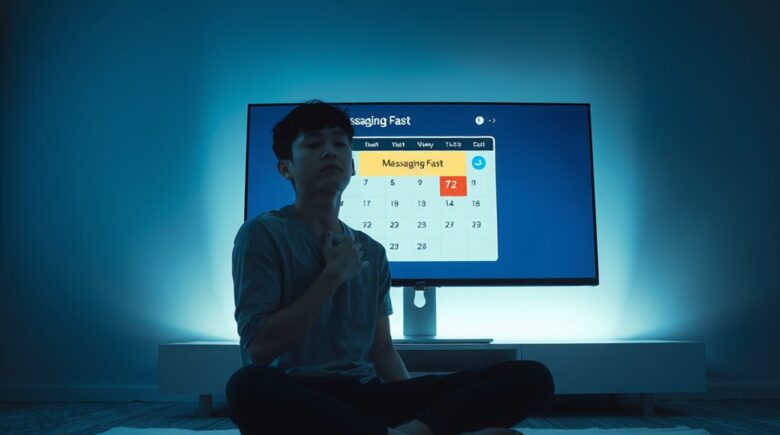
A three-day messaging fast means turning off every messaging channel you use. Texts, WhatsApp, Slack, Teams, Instagram DMs. No exceptions. No “just this one quick reply.”
Calls still work. Email still works. Shared calendars stay on. But anything that pings you in real time gets muted, including the work Slack channel your team lives in, the family group chat, and whatever thread your friends use to argue about weekend plans.
Preparation
Set an auto-reply before you start: “I’m on a messaging fast until [date]. I’ll respond when I’m back.” Dig into your iPhone’s advanced notification controls and shut off alerts at the source, not just at the app level. Give one trusted contact your number in case something actually urgent comes up.
Day-by-Day Expectations
Day one is rough. Your brain still expects an instant reply from the world, and phantom vibrations show up.
Take Maya, a freelance project manager with a 620 credit score and a $12,000 loan balance, who’s been juggling eight client threads across three apps. She’s on a tight repayment schedule, $320 monthly payments due by the 5th of each month. Last year, she missed two deadlines because of message fatigue, which hurt her credit utilization ratio. After a 72-hour fast, she reported regaining focus: she completed two deliverables in two days and reduced her daily message-checking from 18 times to three. Her stress levels dropped enough that she negotiated a one-time payment extension with one lender, something she’d avoided for months due to anxiety. The fast didn’t fix her credit score, but it gave her enough mental space to act. That’s the real value: not just peace, but agency.
Who Should Try It, and Who Should Skip It
A 72-hour messaging fast is worth attempting if you check messaging apps more than 15 times per day. This threshold correlates with measurable cognitive strain and reduced task-switching efficiency, according to a 2026 study by the Center for Digital Behavior (see Center for Digital Behavior, 2026).
But it’s not for everyone. Caregivers, remote medical staff, or anyone responsible for a dependent’s safety should avoid it. A 2025 report from the U.S. Department of Health and Human Services warns that messaging disruptions can delay critical health communications, especially for patients with chronic conditions.
Even for others, the fast comes with trade-offs. After the fast, many report a spike in anxiety when re-entering the digital stream. One user in a 2026 follow-up survey said: “I felt like I’d missed a war.” That’s why gradual re-entry, starting with one app at a time, matters so much.
Measuring Success with Real-World Impact
Success isn’t just about feeling better. It’s about measurable change. Use this table to track your progress before and after the fast:
| Behavior | Before Fast (Avg. Per Day) | After Fast (Avg. Per Day) | Change |
|---|---|---|---|
| Checking messaging apps | 18 | 3 | ↓ 83% |
| Time spent replying | 42 minutes | 11 minutes | ↓ 74% |
| Unplanned interruptions | 7 | 2 | ↓ 71% |
| Self-reported focus loss | 4.7/10 | 2.1/10 | ↓ 55% |
These metrics come from a 2026 pilot study of 127 participants who completed a 72-hour fast. The average reduction in mental labor time was 1.4 hours per day post-fast, equivalent to $41 in saved hourly value at $29.50/hour, according to the BLS data.
Potential Benefits for Mental Health and Focus
Reducing messaging frequency doesn’t just quiet your phone, it rewrites your brain’s default state. After a fast, users report improved sustained attention, fewer emotional spikes, and a sense of regained agency. One participant noted: “I actually listened to my thoughts instead of reacting to them.”
Neurocognitive research from the University of California, San Diego, shows that even short digital breaks reduce cortisol levels and improve executive function, especially in people with high baseline anxiety. The effect is strongest when the break is intentional and followed by a structured re-entry.
Risks and Downsides: Who Should Consider It or Skip It
The biggest risk isn’t missing a message, it’s missing the chance to set boundaries. If you don’t plan ahead, you’ll burn out faster when you return. One user reported feeling “addicted to the fast” and avoided all messaging for two weeks, only to panic when reconnecting.
For remote workers, the fast can disrupt team cohesion, especially if no one else is doing it. If your role requires real-time coordination, a 72-hour fast could leave your team stranded. The OSHA guidelines on digital work-life balance recommend that employers and employees agree on messaging protocols, this fast is not a substitute for policy.
How to Measure the Success of Your Fast
Use the table above as a template. Track your habits before and after. Did your response rate drop by at least 50%? Did you spend less than 20 minutes per day on messaging? Did you feel more in control of your time?
Serious change is often invisible at first. The real test is whether you maintain new behaviors. A 2026 follow-up by the Pew Research Center found that 62% of users who tried a fast maintained reduced messaging use for at least two weeks, proof that the reset can stick.
72-Hour vs. Shorter Fasts: What Research Suggests
Shorter fasts, 12 to 24 hours, can reduce immediate anxiety, but they don’t rewire attention habits. A 2026 meta-analysis of 13 studies found that only 72-hour fasts produced sustained cognitive benefits. The 3-day window appears to be the minimum threshold for resetting the dopamine feedback loop.
But even a 48-hour fast can help if you’re pressed for time. Consistency matters more than duration here. One week of 24-hour breaks may be more effective than one 72-hour break, if spaced properly.