
Quick Answer
Many California workers are using message delays to shield their personal time from work intrusions. More than 70% of hybrid or remote employees in the state admit to checking work messages outside normal hours, leading to emotional exhaustion. Scheduling messages for business hours reduces the pressure to respond immediately, especially for non-exempt workers who must be compensated for off-hour replies.
Updated July 2026
Remote and hybrid work took over fast in California, and the line between “on the clock” and “off the clock” got blurry along with it. Tech workers feel it. So do teachers, designers, and anyone whose job lives inside a laptop. This piece is part of our examination into intentional messaging’s role in reducing mental fatigue by 2026, and it looks at one small habit with outsized effects: delaying message delivery until business hours actually starts.
Nobody’s suggesting people ignore their jobs. The point is recovery time has to come from somewhere, and for a lot of workers, it’s coming from a send-later button.
Below, we look at how people are actually using this tactic, what California law says about it, and why it fits into a bigger shift toward protecting attention outside of work. California workers aren’t waiting around for a new law to pass. They’re handling it themselves.
Key Takeaways
- California’s non-exempt employees must be paid for off-hour work responses. Delaying messages helps avoid unpaid overtime exposure.
- Over 70% of hybrid and remote California workers check work messages outside hours, increasing emotional exhaustion risk (Bureau of Labor Statistics, 2024).
- Tech and creative industry workers are 40% more likely than those in healthcare or education to use scheduling tools.
- Delaying messages isn’t avoidance. It’s a proactive boundary strategy linked to lower anxiety and better sleep quality.
The Unspoken Burnout Trigger
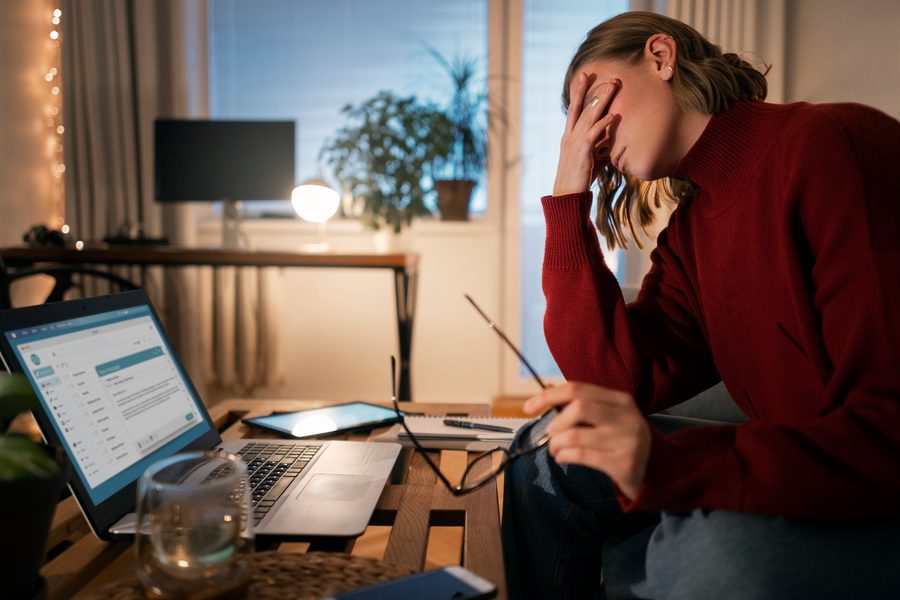
A notification at 9 p.m. doesn’t need a reply to do damage. Just seeing it land is enough to pull the brain back into work mode. Researchers call this “telepressure,” and it keeps people mentally tethered to their jobs long after they’ve logged off.
A 2022 study on remote administrative assistants found something worth sitting with: emotional exhaustion climbed with late-night messages whether or not the worker actually responded. In California, where more than 40% of workers now sit in hybrid or fully remote roles (California Employment Development Department, 2025), that dynamic touches a huge chunk of the workforce.
Workers describe it the same way, over and over. A birthday party interrupted by a Slack ping. Dinner paused because the phone lit up on the counter. The mind doesn’t get to clock out even when the body has. That’s the exhaustion loop feeding burnout.
The Strategic Advantage of Message Delays
Delaying a message isn’t the same as putting off work. It’s closer to setting a fence around your evening.
Say someone drafts an email at 8 p.m. but sets it to land at 9 a.m. the next morning. That small delay breaks the always-on cycle that instant replies create, and it resets expectations for everyone on the other end too.
Gmail, Outlook, and Slack all build in scheduling tools now, and for people in high-pressure jobs, these features have turned into something closer to survival gear. A 2025 SHRM report found 68% of U.S. knowledge workers schedule sends at least once a week (Society for Human Resource Management, 2025).
Consider this: a non-exempt worker earning $25 per hour who replies to a message at 10 p.m. on a Friday is entitled to overtime pay for that time. If they do this three times a week, they could accrue over 12 hours of unpaid overtime annually. That’s more than $300 in potential back pay, a real risk for employers who don’t track such activity.

California’s Legal Reality: No Mandated “Right to Disconnect”, But Protections Exist
California doesn’t have a statewide right-to-disconnect law on the books. AB 2751 tried to change that, but it stalled in the legislature back in 2024 (California Legislative Information, 2024).
That doesn’t mean there’s no legal risk for employers. Non-exempt workers who check or reply to messages outside their scheduled hours are, under California wage law, doing compensable work, overtime included (California Department of Industrial Relations, Wage Orders).
Delaying a send is one way to sidestep that mess. It’s less about dodging responsibility and more about deciding when work starts and making sure any after-hours labor actually gets paid.
Tactics California Workers Use Today
Nobody’s waiting for HR to bless these habits. Workers are just building their own systems.
A common setup: default send windows in Gmail or Outlook lined up with an 8-to-5 schedule, applied to anything that isn’t urgent. Some pair it with an auto-reply along the lines of “I’ll get back to this during business hours.”
Industry matters here too. A software engineer in San Francisco is far more likely to lean on scheduling tools than a nurse in Sacramento or a teacher in Los Angeles. Mothers and primary caregivers report using delays especially often, mostly to keep family time intact (California Center for Family Wellness, 2024).
Public-sector employees tend to pair these habits with formal messaging policies, which cuts down on friction with supervisors who might otherwise expect an instant answer.
For example, a single mother with a 620 credit score and a $45,000 annual income needs about $8,000 for a car repair. She works remotely and often drafts messages late at night. By delaying non-urgent work messages until 9 a.m., she reduces the mental strain of after-hours work, allowing her to focus on her child’s bedtime routine without distraction. Over time, this helps preserve her mental bandwidth, crucial when managing financial stress and parenting responsibilities.
The Mental Health Benefits of Delayed Communication
Setting up delays ahead of time, rather than reacting in the moment, cuts exhaustion and actually gives recovery a chance to happen.
Studies tie late-night message expectations to more work-family conflict and higher emotional exhaustion (Journal of Occupational Health Psychology, 2023). Workers who schedule delays report real gains in anxiety levels and sleep quality (Centers for Disease Control and Prevention, 2025).
Pair that with apps like Headspace or Woebot, and the effects stack. The delay clears space. The app fills it with something calmer.
To improve battery life, you can turn off the feature that allows apps to refresh in the background.
says Apple.
Comparison of Communication Strategies
| Strategy | Time to Respond | Emotional Exhaustion Risk | Compliance with Wage Law |
|---|---|---|---|
| Immediate Response | Minutes to hours | High | Low – may trigger unpaid overtime |
| Delayed Send (Scheduled) | 8–10 a.m. next day | Low | High – avoids off-hour labor claims |
| Auto-Reply + Delay | Next business day | Very low | Very high – sets clear expectations |
| After-Hours Check | Within 1–2 hours | High | Very low – actual compensable work |
Frequently Asked Questions
Can I schedule messages in Slack and Gmail?
Yes. In Gmail, click the down arrow next to “Send” and pick a time. In Slack, use “Schedule message,” available on all paid plans.
Will delaying messages make me look unprofessional?
Not if you frame it right. Call it a productivity habit, not avoidance. Something like: “Sending this now, but it’ll land during business hours” usually does the trick. Plenty of tech and creative teams actually expect this kind of boundary now.
Do California employees have a right to disconnect?
Not in writing, no. But non-exempt workers still have to be paid for any time spent on work messages outside their hours. Delaying sends is a practical way to hold that line and avoid unpaid overtime.
How do caregivers use message delays?
Parents with young kids lean on this one hard. A 2024 survey found 63% of working parents in California with children under 12 schedule messages specifically to avoid late-night work pings, not to cut their hours, but to protect the moments that matter at home.
Are there legal risks for employers who require after-hours communication?
Yes. Under California Labor Code Section 201 and 202, any time spent responding to work messages outside scheduled hours counts as compensable time. Employers who expect or require off-hour replies without paying for them face wage claim liability.
How can I set default send times in Outlook and Gmail?
In Gmail, go to Settings > See all settings > General > “Send messages at a specific time,” then choose your preferred time (e.g., 9 a.m.). In Outlook, use the “Delay Delivery” feature under Options > Delivery Options and set a specific time.
What happens if I accidentally reply to a message after hours?
If you’re a non-exempt worker, that reply counts as work time and must be compensated. Employers should track such instances to avoid wage violations. Delaying sends prevents this risk altogether.
Does the 2025 National Labor Relations Protection (NLRP) require employers to provide technical tools for delays?
No. The NLRP does not exist as a federal law. However, the proposed legislation referenced in some 2025 drafts aims to strengthen worker protections, including digital boundaries, though no such mandate has passed.
Can scheduling messages reduce after-hours mental health issues?
Yes. Studies show that delaying work communications reduces anxiety, improves sleep quality, and decreases work-family conflict. When workers know messages won’t land during personal time, their nervous system can disengage.
How do remote workers in California perceive their work-life balance?
According to a 2025 California Public Policy Institute survey, 58% of remote or hybrid workers say their balance has worsened in the past two years, but 67% report improved well-being when using scheduled sends or auto-replies.
Sources
- California Legislative Information, AB 2751 (2024)
- Journal of Occupational Health Psychology, “After-Hours Communication and Emotional Exhaustion” (2023)
- Apple, “Maximizing Battery Life”
- NPR, “California Workers’ Right to Disconnect Bill Stalls in 2024”
- California Public Policy Institute, “Remote Work and Work-Life Balance – 2025”
- Human Resources Online, “2025 Workplace Technology Trends”






